
Best Instant Payout Online Casino Australia: The Offshore Reality in 2026
Finding a fast-paying online casino from Australia means finding one that does not actually exist. No online casino is licensed here. Every brand an Australian player can deposit with runs offshore, under a regulator with no Australian consumer protection. This page ranks the ten offshore casinos Australian players actually use, walks through what a no-deposit bonus really costs once the small print runs, and sets out what the legal framework means for anyone playing in 2026.

Verified against the ACMA register, BetStop statistics and published 2026 payout testing as of 12 November 2026.
Table of Contents
- What “Instant Payout” Actually Means at an Online Casino
- Why Your 2026 Payout Still Takes Longer Than You’d Think
- No-Deposit Bonuses at Instant-Payout Casinos: Small Print, Smaller Payouts
- Crypto Withdrawals Are the Fastest Route — But You Cannot Use One
- The Pokies That Pay: Highest-RTP Titles for Australian Players
- Online Casino Is Prohibited in Australia — Here Is What That Actually Means
- Responsible Gambling: The Tools That Exist and the Ones That Do Not for Offshore Play
- The 10 Offshore Casinos Australian Players Turn to for Fast Payouts
- How We Evaluated These Casinos
- What Australian Players Should Actually Do About Instant-Payout Casinos
- Frequently Asked Questions
What “Instant Payout” Actually Means at an Online Casino
Instant is shorthand, not a timestamp. No casino clears funds the second a player clicks withdraw. The money moves through an approval queue, sits in a pending period, then runs a settlement rail whose speed depends on the payment method rather than the marketing copy. “Instant” is the word the casino uses to mean “the fastest thing we offer.” That is the gap this page is judged against.
The withdrawal pipeline has three stages, and the word collapses them into one. The first is the approval queue, where the casino’s risk team checks the withdrawal against anti-fraud rules and the player’s KYC status. On a small first-time cashout from a verified account this is usually minutes. On a larger or first-ever withdrawal from an unverified account it can run into hours. The second is the pending period, where the casino allows the player to reverse the withdrawal before it leaves. Many operators set this at zero for verified accounts on small amounts and at twelve to forty-eight hours otherwise. The third is the settlement rail — the only stage the payment method itself controls, and the only one the casino cannot slow down on purpose.
Speed is a marketing word. The arithmetic underneath is what costs the player.
“Instant” Is a Marketing Word, Not a Technical One
Casinos use “instant” the way a café uses “freshly made” — to mean the fastest item on the menu, not that the beans were ground this second. The casino controls the first two stages and chooses how tight each one runs. The approval queue can be tightened or loosened at the operator’s discretion. The pending period is policy, set by the operator in the terms the player agrees to at sign-up and rarely revisited afterwards. The settlement rail is the only stage the player has any influence over, by the payment method they pick.
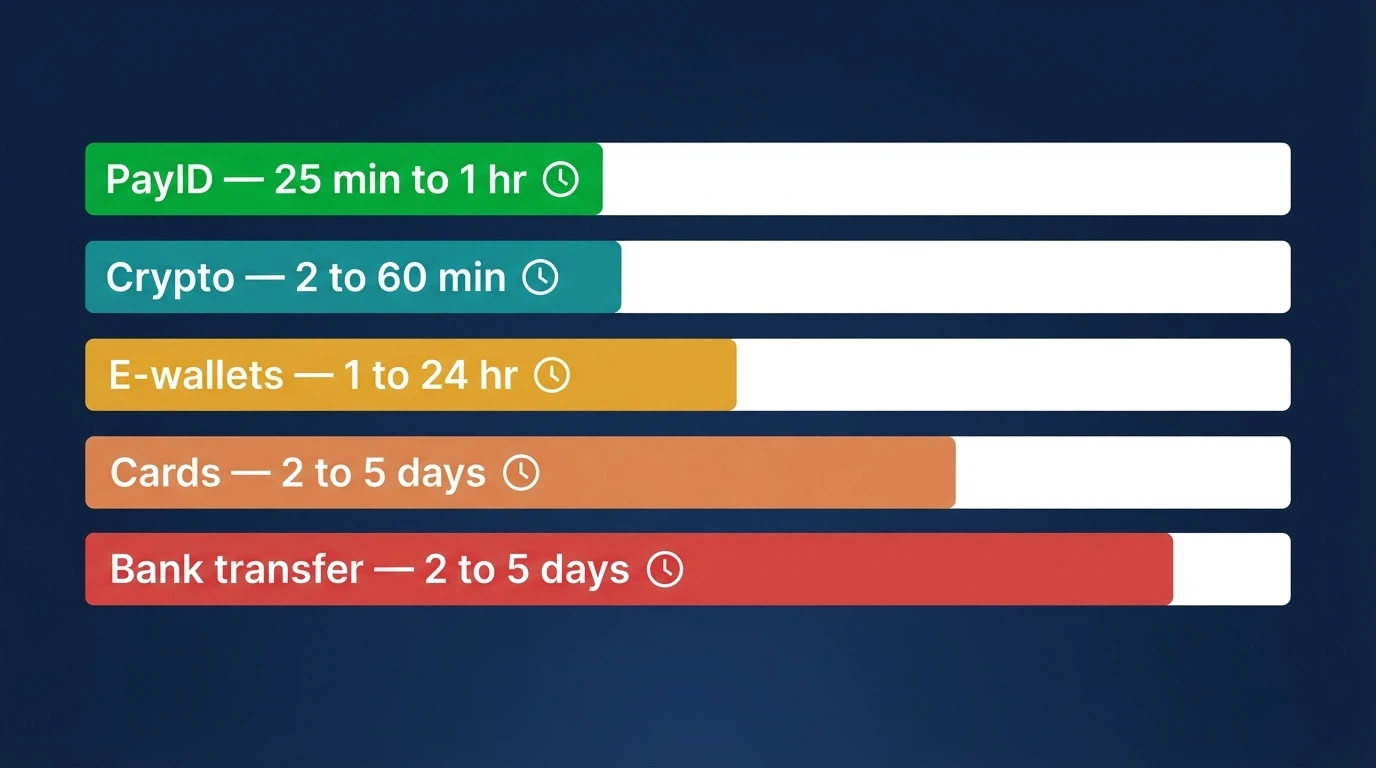
The fastest legitimate AUD-native rail in 2026 testing is PayID, at twenty-five minutes to one hour for verified accounts. Crypto is faster, at two to sixty minutes, but it is banned for Australian wagering from 11 June 2024. Cards and bank transfers take two to five business days. E-wallets fall in between, at one to twenty-four hours. None of those speeds come from the casino’s marketing copy; they come from the rail.
The Australian Instant-Payout Landscape in 2026
Every online casino accessible from Australia in 2026 runs from offshore. There is no Australian online casino licence — not federally, not in any state or territory — and the Interactive Gambling Act 2001 makes it an offence to provide casino games to a person physically in Australia. That is why “instant payout” carries a sharper edge here than in markets with local regulators. If a withdrawal stalls at a Malta-licensed brand, a player can complain to the Malta Gaming Authority. If it stalls at an offshore casino accessible from Australia, the only recourse is the operator itself.
The Australian Communications and Media Authority — the ACMA — investigates breaches and blocks sites, but it does not arbitrate disputes or recover player funds. That fact recurs throughout this page, because every brand ranked below is offshore and every dollar at stake sits outside the Australian legal framework.
Why Your 2026 Payout Still Takes Longer Than You’d Think
Three things stand between a player and a cleared withdrawal, and they are not equal. Identity verification is the silent killer on first cashouts. The pending period is the operator’s choice. The payment rail is the method the player picked.
KYC is where most “instant” payouts actually stall. The casino has to confirm who the player is, what address they live at, and that the payment method belongs to them. On a verified account that has already supplied ID and proof of address, a subsequent withdrawal is fast. On a first withdrawal where verification has not yet happened, the cashout sits in a review queue while the player hunts for a utility bill and a photo of their card.
PayID Is the Quickest AUD-Native Option — Here’s What Testing Found
PayID and Osko together form the fastest legitimate way to move Australian dollars out of an offshore casino. The 2026 testing rounds published by independent reviewers put PayID withdrawals at twenty-five minutes at Hell Spin, thirty-five minutes at Lucky7, and up to one hour at LuckyVibe. The rail is the same — Osko settlement through the New Payments Platform — but the casino’s pending window still applies on top of it. Osko settles in near real time once the bank accepts the payment, and most operators cap their PayID withdrawals below the threshold at which extra bank-side checks fire.
PayID wins on regulation. It is a legal deposit route for licensed wagering. Offshore casinos offering it are not bound by Australian rules — the payment rail works the same, but the regulatory cover does not transfer with it. A PayID withdrawal moves through the same banking system whether the casino is licensed in the Northern Territory or in Curaçao. What changes is who recovers the funds if the withdrawal stalls.
The KYC Bottleneck: Why Your First Withdrawal Always Takes the Longest
Every offshore casino in the AU-facing set applies know-your-customer verification. What they ask for varies — typically government ID, proof of address dated within three months, and a screenshot or photo of the payment method used to deposit. What the player experiences varies more. SkyCrown, the one operator in this set with verified published timing data, lists one to four hours for a verified-account PayID withdrawal and twelve to forty-eight hours for a first withdrawal.
The lesson is mechanical. Verification done at sign-up, before a withdrawal is needed, removes the bottleneck on the day a player actually wants their money. Verification done after the first big win is when the casino takes its time. The KYC queue is the operator’s friend on a first cashout. It is the only stage where the casino can lawfully delay payment. It is where the marketing copy runs out of road.
Moonbet, a smaller operator in the broader AU-facing market, tested as settling a crypto withdrawal in about four minutes with no ID check on amounts under A$2,000. Above that threshold the audit fires and the speed disappears. That data point demonstrates the variability of crypto processing.
Real-Money Instant Payouts: What the Term Means When Cash Is on the Line
Real-money withdrawals go through more checks than demo-mode credits do. The phrase “instant payout casino real money” is its own search cluster because the speed people read about on affiliate pages almost always refers to the time between click and credit, not the time between click and a usable dollar in a bank account. The legal frame here is also different from demo play. The Interactive Gambling Act 2001 prohibits providing real-money casino games to a person in Australia, which is what makes every AU-accessible casino offshore and what makes the payout promise fall outside any local complaint path.
A demo spin settles in real time because no money is on the line. A real-money withdrawal is a financial transaction between an offshore entity and an Australian player, governed by no Australian consumer law. That distinction is the one the marketing tends to blur.
No-Deposit Bonuses at Instant-Payout Casinos: Small Print, Smaller Payouts
A no-deposit bonus looks like free money. The numbers do the deflation.

The typical offer at an Australian-facing offshore casino sits between A$5 and A$25 in cash credit, or ten to fifty free spins on a named pokie. The wagering requirement is thirty-five to fifty times the bonus amount. The maximum withdrawal is capped at A$50 to A$300, regardless of how much a player wins. The bonus itself expires after twenty-four to seventy-two hours. The wagering window runs seven to thirty days. Every one of those numbers is in the small print, and the small print is where the bonus stops being a bonus.
Welcome bonuses at deposit-gating PayID casinos run heavier, typically matching 100% to 300% of the first deposit. The wagering and the cashout cap follow the same shape as the no-deposit offer, just at higher dollar values.
What a No-Deposit Bonus Is Actually Worth — Worked Example
Take the top of the offer range — A$25 in bonus cash, with a 50x wagering requirement. The player must turn over A$25 × 50 = A$1,250 before any of it becomes withdrawable. At a representative online pokie RTP of 96.5%, the expected loss over that turnover runs to A$1,250 × (1 − 0.965) = A$43.75.
That is the statistical cost of clearing the bonus, assuming the full A$1,250 of wagering happens on pokies at 96.5% RTP and assuming only the bonus amount is wagered. It is an average across many spins, not a guaranteed outcome for any player. It promises no win, no payout, no return.
Then the cashout cap arrives. Even at the lowest end of the A$50-to-A$300 ceiling, the cap is A$50 — close to the expected loss itself. A “free” A$25 bonus that returns the player an average of about A$6 to A$19 after the wagering and the cap run their course is a marketing line, not a giveaway. The wagering takes most of it. The cap takes the rest.
Crypto Withdrawals Are the Fastest Route — But You Cannot Use One
Crypto clears in minutes. Australian law banned it as a wagering payment method on 11 June 2024.
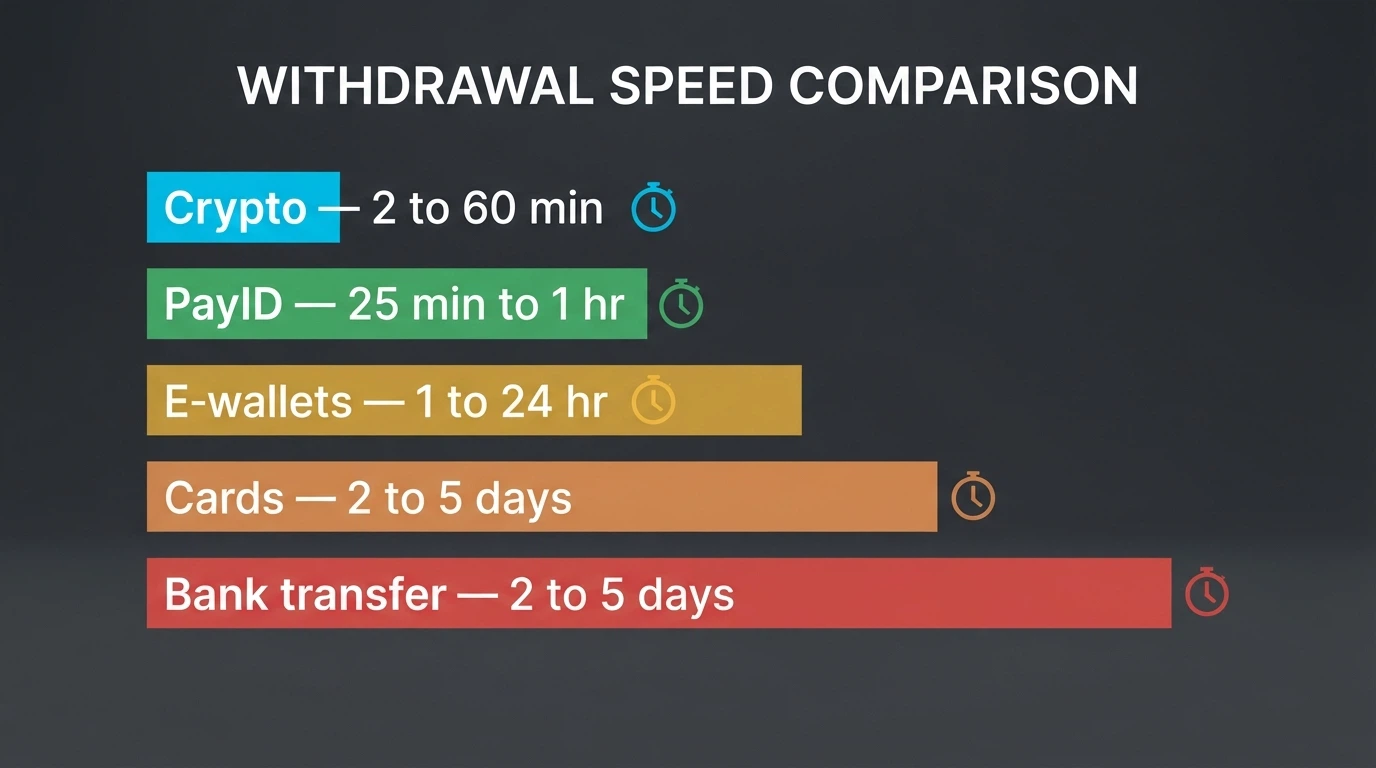
The speed gap is real and structural. Crypto withdrawals at offshore casinos typically settle in two to sixty minutes once approved, with some smaller operators clearing in under five minutes on small amounts. The reason is the absence of any bank rail, card scheme or intermediary holding the funds. A USDT or BTC transfer moves on the blockchain and lands when the network confirms it. Australian players are not supposed to be using it for wagering. The Interactive Gambling Amendment (Credit and Other Measures) Act 2023 prohibited credit cards, credit-related products and digital currency as payment for online wagering from 11 June 2024. An operator that fails to enforce the ban faces penalties of up to A$247,500.
That is the primary paradox of the offshore “instant payout” promise: the fastest withdrawal route is legally inaccessible to Australian users.
Bitcoin Casinos and Instant Payouts: The Speed Gap
Bitcoin is the benchmark for fast offshore cashouts because its settlement is independent of any payment rail a bank controls. The two-to-sixty-minute window for crypto at offshore casinos sits in stark contrast to two-to-five business days for Visa, Mastercard and bank transfers, and one to twenty-four hours for Skrill and Neteller. Altcoins settle faster than Bitcoin on some networks. USDT on Tron clears in seconds once the casino releases it. Bitcoin remains the term the marketing uses, because the speed gap to fiat is what the marketing is selling.
Crypto wins on speed. It loses on every other axis that matters to an Australian player.
The Operator’s Dilemma: Offer Crypto and Break AU Law, or Drop It and Lose the Speed Edge
An offshore casino accepting crypto from an Australian account is breaking Australian law. The Interactive Gambling Act targets the provider, not the player, but the 2024 amendment’s penalty of up to A$247,500 per breach gives an operator a concrete reason to refuse the deposit. Those that still offer crypto to Australian accounts are making a choice: the speed advantage over PayID is worth more to them than the regulatory exposure. The Interactive Gambling Amendment (Gambling Reform) Bill 2026, which commences on 1 January of the year after 2026, gives banks and payment providers express authority to block transactions to illegal gambling operators, closing the loop further on crypto deposits from Australian bank accounts.
The operator that offers crypto to AU players has decided the speed edge is worth the legal risk. That is the operator’s call, not the player’s. The player who funds it in AUD carries the bank-side risk of the transaction being blocked under the new authority.
The Pokies That Pay: Highest-RTP Titles for Australian Players
RTP — return to player — is the long-run percentage of every dollar wagered that a pokie pays back. A 99% pokie returns 99% of wagers, whereas a 94% pokie returns 94%. This is a significant difference for a player who treats the bankroll as a session budget.
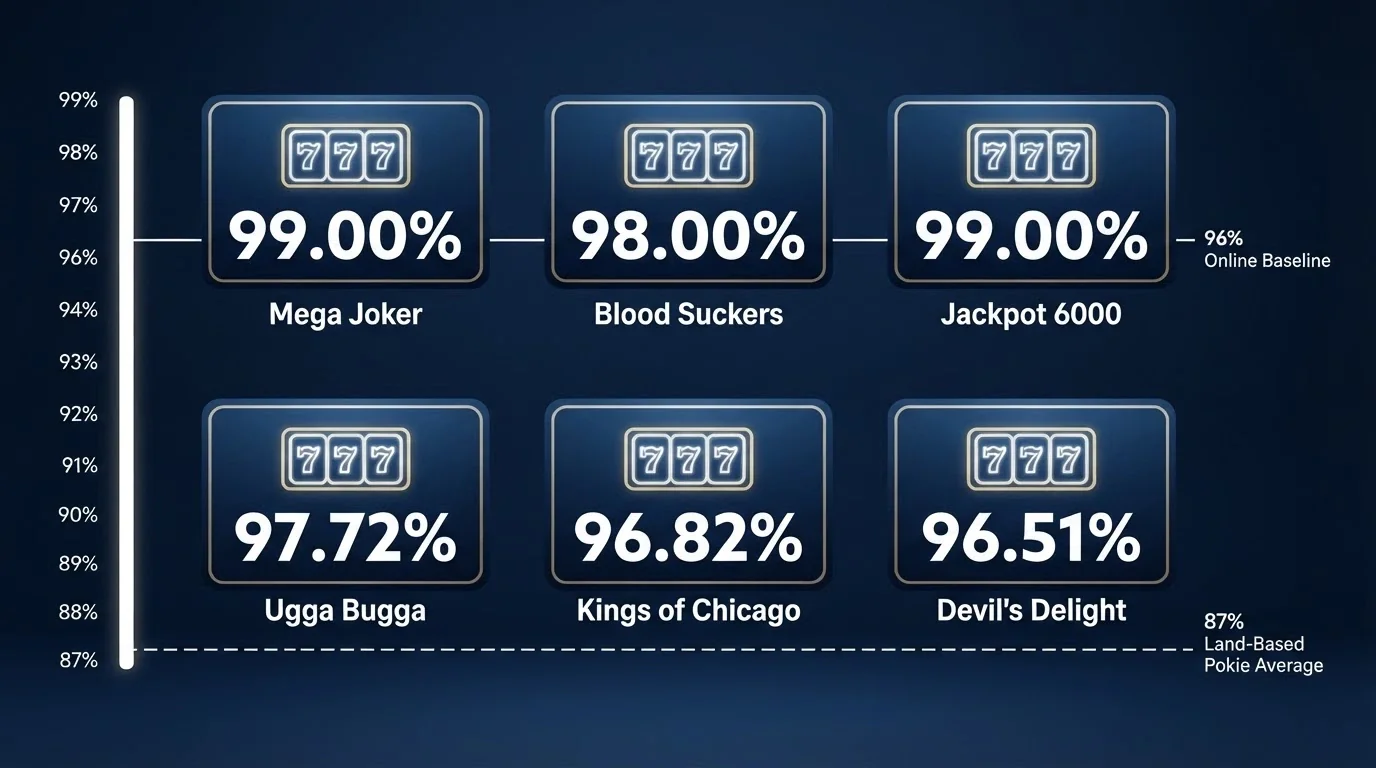
Good online pokies sit in the 96% to 97.5% RTP band. The titles below sit above that band, and each carries a verified figure from independent 2026 review testing. The volatility column matters separately from RTP. High volatility means the bankroll lasts longer per spin but pays out rarely and massively. Low volatility pays steadily at lower per-spin amounts.
High-RTP Pokies: The Numbers by Title
| Pokie Title | Provider | RTP | Volatility | Max Win |
|---|---|---|---|---|
| Mega Joker | NetEnt | 99.00% | Medium | 2,000x |
| Blood Suckers | NetEnt | 98.00% | Low | 900x |
| Book of 99 | Relax Gaming | 99.00% | High | 12,075x |
| White Rabbit Megaways | Big Time Gaming | 97.72% | High | 13,029x |
| Dead or Alive 2 | NetEnt | 96.82% | Very High | 111,111x |
| Sweet Bonanza | Pragmatic Play | 96.51% | High | 21,100x |
| Gates of Olympus | Pragmatic Play | 96.50% | High | 5,000x |
| Wolf Gold | Pragmatic Play | 96.01% | Medium-High | 2,500x |
| Big Bass Bonanza | Pragmatic Play | 96.71% | Medium-High | 2,100x |
| Book of Dead | Play’n GO | 96.21% | — | — |
Mega Joker hits 99% RTP only in Supermeter mode, which is the high-stakes bonus round rather than the base game. Book of 99 from Relax Gaming pairs the same 99% RTP with a 12,075x max win and high volatility, a profile that gives a player the longest bankroll per dollar at the cost of patience. Dead or Alive 2 from NetEnt carries a 111,111x max win ceiling, the largest in this set, against an RTP just above the floor of “good”. Money Train 4 from Relax Gaming tops the offshore market with a 100,000x max win, though no published RTP sits alongside that figure for the same title.
Australian Pokies vs International Slots: Same Reels, Different Rules
Pokies is the Australian term for slot machines. The titles that dominate AU-facing casinos — Gates of Olympus, Big Bass Bonanza, Wolf Gold, Sweet Bonanza — are the same games played in international markets, just branded and bundled for Australian players.
The bigger gap is between land-based pokies and online. Australian land-based pokies in clubs and pubs sit in the 87% to 90% RTP range, sometimes lower depending on the venue and the jurisdiction. Online pokies at 96% to 97.5% return roughly 50% more per dollar wagered, over the same number of spins, than the machines in a Sydney pub. That is the structural reason online has eaten the local market, and why every affiliate page in this niche lists the same RTP-first titles.
Book of Dead from Play’n GO ships with two RTP configurations — 96.21% as the default and 94.25% as a reduced option operators can choose. A player who sees Book of Dead advertised at the lower figure is not getting the same game the developer intended.
Online Casino Is Prohibited in Australia — Here Is What That Actually Means
The Interactive Gambling Act 2001 makes it an offence to provide online casino games, online pokies and in-play sports betting to a person in Australia. There is no licence for online casino anywhere in the country. Not federally. Not in any state or territory. Every operator an Australian player can access is breaking the law by offering the service. The player is not prosecuted; the IGA targets the provider. But the player bears the risk of operating outside the Australian legal framework, because none of the protections that attach to a licensed Australian service apply.
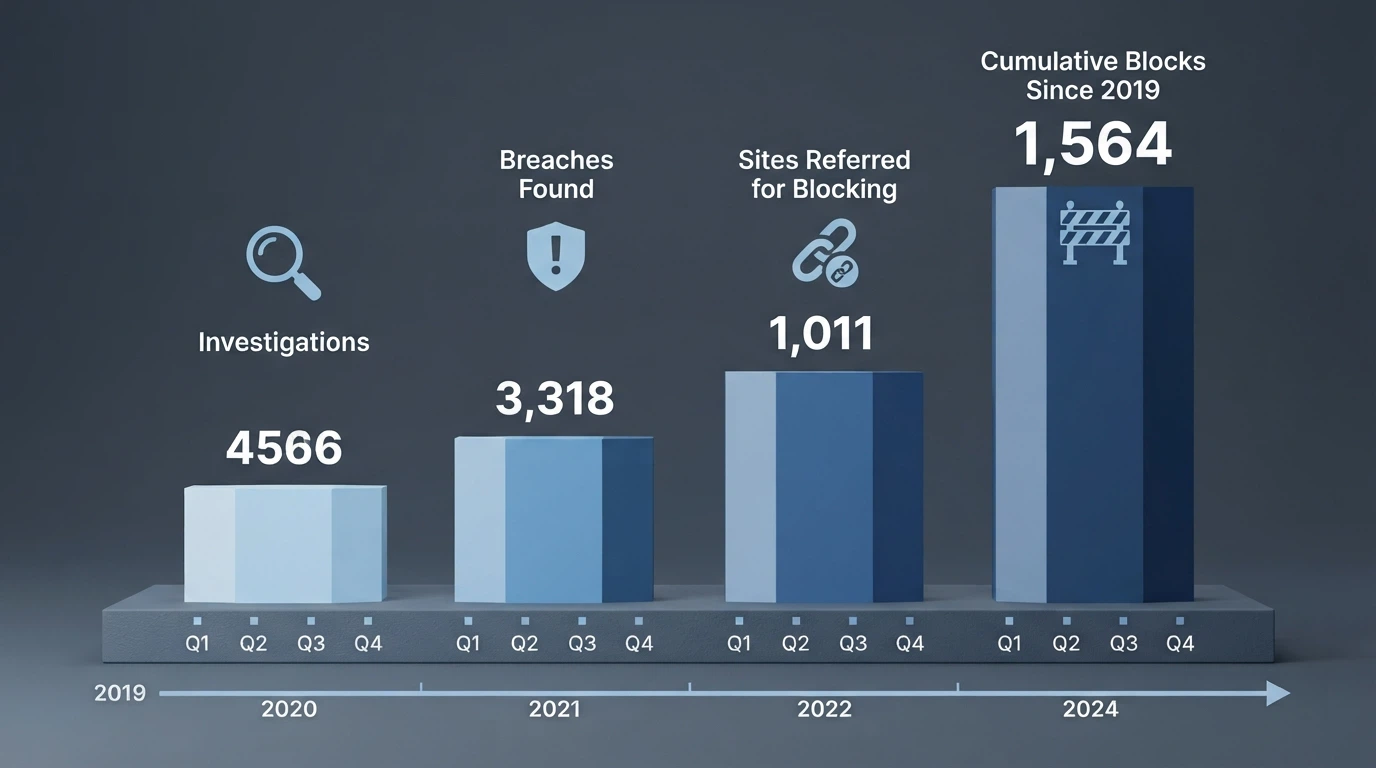
The ACMA enforces the prohibition. Since its first blocking request in November 2019, the authority has had 1,564 illegal gambling and affiliate websites blocked by Australian ISPs. In Q4 2025 alone, the ACMA actioned 483 enquiries and complaints, completed 23 investigations into 45 gambling sites, found 69 breaches of the IGA, and referred 133 websites to ISPs for blocking. Q2 2025 added another 73 referrals on top of that. More than 225 illegal services have withdrawn from the Australian market since the 2017 amendment strengthened enforcement.
Civil penalties for providing prohibited interactive gambling services can be up to A$2,475,000 per day for an individual and A$12,375,000 per day for a corporation. On 16 January 2026, the ACMA issued 8 infringement notices to Tabcorp Holdings totalling A$158,400 for an in-play betting service prohibited under section 15(2A) of the IGA. The enforcement machinery is real, active and accelerating.
No Australian Casino Licence Exists — Not Federally, Not in Any State
There is no path to a legal online casino in Australia. What is licensed is wagering on races and sport placed before the event begins, lotteries and keno, through operators licensed by a state or territory. The Northern Territory Racing and Wagering Commission, administered through Licensing NT, is the de facto national licensor for online wagering. The large online bookmakers — Sportsbet, bet365, Ladbrokes, and around fifty others — hold NT licences. The minimum age for any commercial gambling in Australia is eighteen.
Crown and The Star are state-licensed land-based casinos. They are a real part of the Australian gambling landscape but they have no online casino licence. Their online operations sit offshore, just like every other brand on this page.
The offshore casinos Australian players actually use hold licences from Curaçao, Anjouan and similar offshore regulators. None of those licences is recognised by any Australian authority. None grants any protection to an Australian player. None connects to BetStop. The licence number on the casino’s footer is the only handle a player has to verify any of it.
BetStop Does Not Cover Offshore Casinos
BetStop is Australia’s National Self-Exclusion Register, launched on 21 August 2023. A single registration excludes a person from every licensed online and phone wagering provider in the country — around 150 brands, in one step. To the end of Q3 of FY 2025–2026, 59,830 people had registered. As of 31 March 2026, 37,247 of those registrations were still active. Seventy-eight per cent of registrants were under forty, and thirty-eight per cent chose a lifetime exclusion.
BetStop binds Australian-licensed wagering services only. An offshore casino is not connected to the register and will keep accepting a self-excluded person’s deposits. The offshore gap is the most concrete harm of the offshore route. A player who has decided to stop can still find themselves betting at a brand BetStop cannot reach.
What the 2026 Reform Changes — and What It Does Not
The Interactive Gambling Amendment (Gambling Reform) Bill 2026 passed Parliament on 19 August 2026. Its measures commence on 1 January of the year after 2026. Three changes matter to a player weighing offshore casino access.
First, banks and payment providers gain express authority to block transactions to illegal gambling operators. The ACMA’s existing blocking power sits with ISPs. The new power puts the bank in the loop, which is the lever that actually closes deposit routes for offshore casinos advertising to Australian accounts. Second, wagering advertising is capped at three ads per hour between 6 am and 8:30 pm, with a live-sport blackout from fifteen minutes before a live event until five minutes after. Athletes, celebrities and influencers are barred from promoting wagering products. Third, inducement marketing is prohibited for fourteen days after a customer signs up, indefinitely for customers flagged as at-risk, and for three months after a person deregisters from BetStop.
What the reform does not change: online casino remains prohibited. The offshore operators remain unlawful. The BetStop gap with offshore casinos remains. The bank-blocking power makes access harder. It does not make offshore casinos legal, safe or licensed.
If the ACMA Blocks Your Casino, Your Balance Goes With It
ACMA blocking is directed at ISPs — DNS-level and IP-level, applied to the Australian internet. The site stops resolving for Australian users, often within hours of the referral. The ACMA does not notify players, does not freeze player balances, and does not arbitrate who gets the money still on the site. There is no Australian complaint body that recovers funds from a blocked offshore operator.
That is the most concrete risk of playing offshore, and the one no marketing page mentions. A site with a five-figure balance can be blocked mid-session with the funds still held by an operator that the player now cannot reach. The 1,564 sites blocked since November 2019 are not an abstract number. They are sites someone had money on.
Responsible Gambling: The Tools That Exist and the Ones That Do Not for Offshore Play
Australia has world-class responsible-gambling infrastructure. Almost none of it reaches an offshore casino player.
The National Gambling Helpline is 1800 858 858 — free, confidential and staffed twenty-four hours a day, seven days a week, Australia-wide. Gambling Help Online provides free twenty-four-hour chat and email counselling. BetStop, the National Self-Exclusion Register, excludes a person from every licensed wagering provider in the country in a single step, with minimum periods from three months up to lifetime. These are the strongest player-protection tools available in any market the size of Australia’s.
About 2.1% of Australian adults — roughly 430,000 people — experience problem gambling. The Australian Institute of Health and Welfare put high-risk gambling at 1.8% in 2022. Australians lose approximately A$25 billion on legal forms of gambling each year. In 2022, 11% of Australians had gambled online in the previous six months, up from 8% in 2020. These are the prevalence numbers behind the harm, and they sit underneath every offshore casino banner whether the banner acknowledges them or not.
Deposit Limits, Time-Outs and Self-Exclusion: What an Offshore Casino Might Offer
Offshore casinos sometimes offer their own responsible-gambling tools — deposit caps, cool-off periods, self-exclusion at that single brand. They are voluntary, inconsistent across operators, and unenforceable at the brand-on-brand level. A player who self-excludes at one offshore casino is still on every other offshore casino, and the same offshore casino has no link to BetStop if the player decides to come back. None of these tools substitutes for the register.
The help-seeking patterns in 2026 review data tell the other side of the story. Of at-risk regular online bettors, 37.9% called a helpline, 35.8% browsed a gambling help website, and 30.5% sought help from family or friends. Financial problems were the key reason at-risk online bettors sought help, cited by 60%. The tool exists. It works for the people who pick it up.
The Problem-Gambling Number That Should Make Every Player Pause
Four hundred and thirty thousand Australians. That is the number sitting underneath every offshore casino banner — the share of Australian adults the AIHW classifies as experiencing problem gambling. The high-risk category adds another 1.8% of adults. Online participation has grown from 8% in 2020 to 11% in 2022. The legal gambling industry takes roughly A$25 billion a year out of Australian pockets.
For someone weighing offshore casino play, the number is not an argument against offshore specifically. It is an argument for treating the bankroll as disposable income that cannot be replaced, and for picking up the support tools before depositing rather than after. The three Australian-licensed tools every player should have on hand:
- National Gambling Helpline: 1800 858 858 — free, confidential, 24/7, Australia-wide
- Gambling Help Online — free 24/7 chat and email counselling
- BetStop — single-step self-exclusion from every licensed wagering provider, with minimum periods from three months to lifetime
Offshore casinos connect to none of them.
The 10 Offshore Casinos Australian Players Turn to for Fast Payouts
Every brand in the table below is offshore. None holds an Australian licence — none can, because no Australian online casino licence exists. Five hold a confirmed Curaçao licence. The other five could not be verified in this evaluation and carry an unverified offshore status.
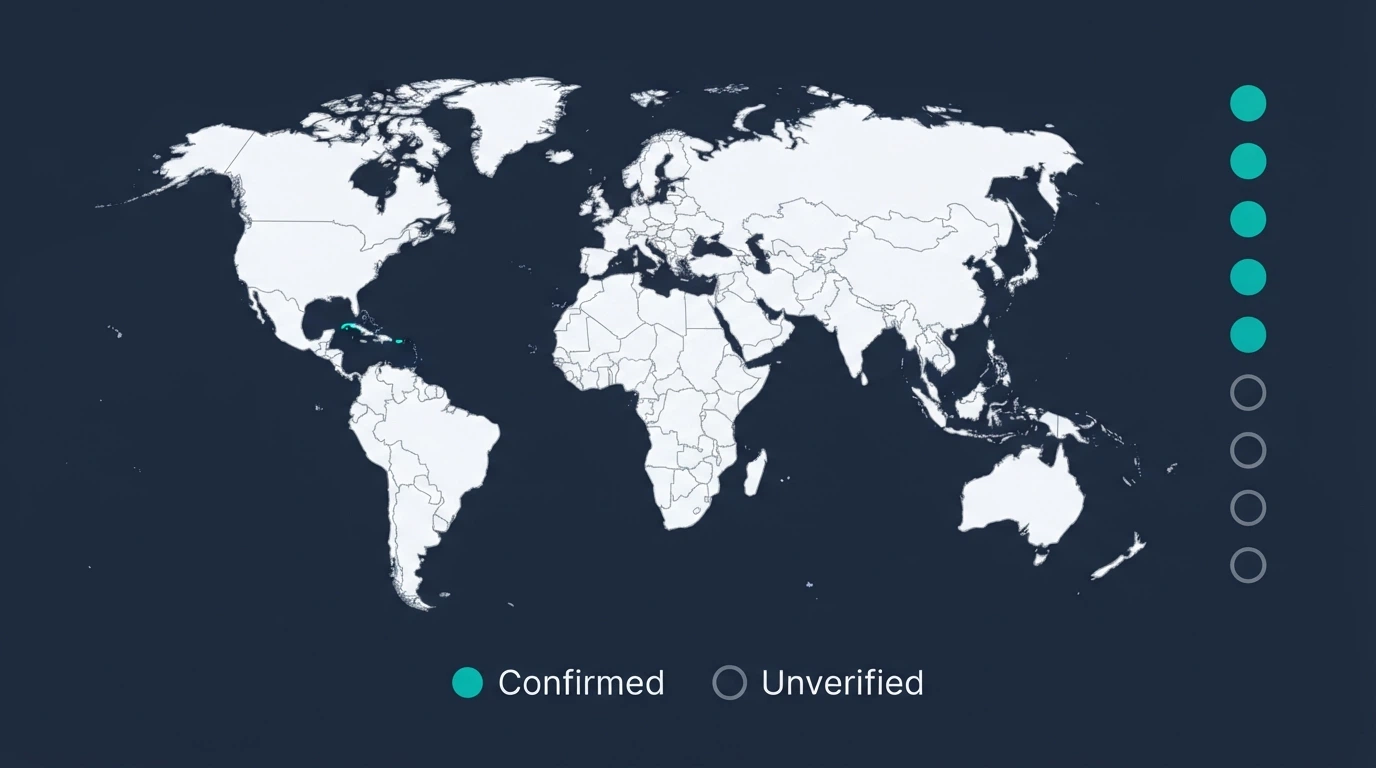
| Casino | Licensed in Australia | Offshore Licence |
|---|---|---|
| Rocket Play | No | Curaçao (unverified date) |
| SkyCrown | No | Curaçao (unverified date) |
| Royal Reels | No | Unverified |
| WinSpirit | No | Unverified |
| Stake | No | Curaçao (unverified date) |
| Rainbet | No | Unverified |
| Scream Casino | No | Unverified |
| FairGO | No | Curaçao (unverified date) |
| Bizzo Casino | No | Unverified |
| Rocket Casino | No | Curaçao (unverified date) |
What the table cannot show: per-operator welcome bonus terms, free-spin terms, wagering multiples and game-provider lists were not confirmed in the operator sweep this evaluation ran. The five verified Curaçao licences are date-unverified. The five unverified entries are listed because the AU traffic is real, not because anyone has independently checked the licence.
Rocket Play
Rocket Play is the largest AU-facing offshore casino in the featured set, drawn from AU-market traffic data. It holds a Curaçao licence, though the date of issue remains unverified. We did not confirm specific game providers or bonus terms during our review.
What a player should verify before depositing: the licence number on the Curaçao Gaming Control Board register, the bonus terms at the cashier screen, and the withdrawal queue stated in the terms rather than on the homepage. The homepage tells a player what the casino wants them to read. The terms tell them what they have agreed to.
Verdict: Market presence does not equal regulatory standing. Rocket Play leads our traffic data, but players should verify the licence number directly with the Curaçao Gaming Control Board.
SkyCrown
SkyCrown is the one operator in the set with verified published withdrawal data. The brand holds a Curaçao licence (date unverified), and 2026 testing by independent reviewers put PayID withdrawals at one to four hours for a verified account and twelve to forty-eight hours for a first withdrawal. That gap is the KYC penalty in concrete hours.
Verdict: SkyCrown is our benchmark for AUD-native payout speed. Completing verification at sign-up is the single most effective way to accelerate your first cashout.
Royal Reels
Royal Reels is a high-revenue operator in the AU-facing set. We have not verified its licence or game library during our research.
Verdict: This brand lacks the verifiable licensing of major operators. Approach with caution until you can confirm its credentials personally.
WinSpirit
WinSpirit draws significant AU traffic, yet its regulatory details remain opaque. We did not confirm its licence or bonus library.
Verdict: Independent due diligence is mandatory here. Without a confirmed licence, players must be prepared to verify its standing directly through the regulator.
Stake
Stake is a globally recognised brand running on a Curaçao licence (date unverified). Its platform is crypto-native, which sits in direct tension with the 2024 ban on digital currency as a wagering payment method in Australia. An operator accepting crypto from an Australian player is taking on the regulatory exposure under section 15 of the IGA and the penalty of up to A$247,500 per breach under the Credit and Other Measures Act.
Game providers, welcome bonus structure, free-spin terms and wagering multipliers were not confirmed in the operator sweep.
Verdict: Stake pays fast on crypto. Australian players cannot use crypto for wagering without putting the operator in breach. That is the deal — speed at the cost of legality on one side of the transaction.
Rainbet
Rainbet is a smaller operator in the AU-facing set. It does not appear on the licensing registers we consulted for this evaluation.
Verdict: As an unverified operator, Rainbet lacks the transparency of licensed brands. We recommend prioritising operators where the licence is publicly and clearly available.
Scream Casino
Scream Casino attracts Australian users, but operates without a licence we could verify. We recommend checking its credentials on the Curaçao Gaming Control Board register before signing up.
Verdict: Transparency is a key indicator of reliability. With no verifiable licence, players should exercise extra care with this brand.
FairGO
FairGO markets itself with an Australian-flagged name and brand voice. It operates on an offshore Curaçao licence, though the issue date is unverified.
Verdict: While the branding is locally focused, the licence is offshore. Always verify these details on the operator’s own site before depositing.
Bizzo Casino
Bizzo Casino remains an unverified operator in this evaluation, with no accessible licence register we could confirm.
Verdict: A lack of verifiable licensing is a significant gap in transparency. We suggest verifying the details directly with the operator before creating an account.
Rocket Casino
Rocket Casino holds a Curaçao licence (date unverified). The brand sits in the same family as Rocket Play — separate operator, shared branding DNA — and the evaluation here is for Rocket Casino on its own. Game providers, welcome bonus structure, free-spin terms and wagering multipliers were not confirmed in the operator sweep.
Verdict: Rocket Casino is licensed separately from Rocket Play, despite sharing a brand family. The Curaçao entry covers each operator on its own. A player choosing between the two should verify both licences.
How We Evaluated These Casinos
The ten operators are drawn from the AU operators shortlist — casino brands with measurable Australian traffic, ranked by market presence. Sports bookmakers licensed in Australia — Sportsbet, Tab, bet365, Ladbrokes, TABtouch, PointsBet, Neds, Betr, Picklebet, Betfair — are excluded because they do not offer online casino games. They appear in search results alongside the offshore casinos. They are not what this page is about.
The licensing benchmark is the ACMA register and the IGA framework. Every brand was checked against the fact that no Australian online casino licence exists. The offshore regulator was checked against the public licence register where one was verifiable. Five of the ten brands returned a confirmed Curaçao licence. The other five returned no verifiable licence detail in this run. They are listed because the AU traffic is real. The licence gap is itself part of what the player should know.
Payout speed data is drawn from published 2026 testing by independent reviewers — PokiesAustralia on PayID, Gambling360 on crypto, e-wallets and bank transfer, Stage and Cinema on first-withdrawal KYC timing. Affiliate pages vary in rigour. The figures carried here are the ones cross-referenced across multiple reviews. Where a single source supplied a figure (Moonbet’s four-minute crypto withdrawal, for example), the single source is named in the prose.
Bonus terms — the no-deposit offer structure, the wagering multiples, the cashout caps — come from affiliate reviews of the AU-facing market rather than from individual operator pages. Per-operator bonus terms were not confirmed in this run, so the operator write-ups do not quote specific bonus numbers for specific brands. The market-level numbers in the no-deposit bonus section (A$5–A$25 typical offer, 35x–50x wagering, A$50–A$300 cashout cap) are the ones research verified across the set.
What this evaluation could not fill: the operator-specific bonus terms, the licence dates for the five Curaçao-licensed brands, the per-operator game provider lists, and the welcome-offer wagering multiples. A second sweep on operator pages and Curaçao register entries would close those gaps. That is what a player who is serious about a particular brand should run before depositing.
What Australian Players Should Actually Do About Instant-Payout Casinos
Given the prohibition, the offshore risks and the verified payout data, here is what a player who still chooses to proceed should actually do.
Verify the offshore licence yourself before depositing. The Curaçao licence number is on the casino’s footer. The entry that matches it is on the Curaçao Gaming Control Board’s register. Five of the ten featured operators could not be verified this run. That is itself the answer for those brands. A casino that refuses to display a licence number has already told you what it is.
Complete KYC at sign-up, not at withdrawal. The SkyCrown numbers tell the story: one to four hours for a verified-account PayID withdrawal, twelve to forty-eight hours for the first one. Verification done in advance is the difference between a same-day cashout and a two-day hold. The casino’s KYC queue is the operator’s friend on a first cashout. Verification done after a big win is when the queue runs longest.
Pick a payment method with the fastest tested rail. PayID clears in twenty-five minutes to one hour in the best tested cases. Crypto clears faster but is banned for AU wagering. E-wallets take one to twenty-four hours. Cards and bank transfers take two to five business days. The fastest legitimate AUD route is PayID on a verified account.
Treat the bankroll as money that can be blocked. The ACMA has had 1,564 sites blocked since November 2019, and 133 sites were referred for blocking in just Q4 2025. A site with the bankroll on it can be blocked mid-session with no Australian complaint body able to recover the funds. The risk is not theoretical.
Use the responsible-gambling tools that exist. The offshore casino’s own deposit cap, cool-off and self-exclusion are voluntary and brand-specific. They do not substitute for BetStop. The helpline is 1800 858 858, free and confidential, 24 hours a day. Gambling Help Online and BetStop are the Australian-licensed counterparts. The offshore casino cannot reach any of them. BetStop cannot reach the offshore casino.
Winnings are not assessable income for ordinary punters, and losses are not deductible. That is the tax position under section 6-5 of the ITAA 1997, unless the player is carrying on a business of betting. The casino’s edge is the operator tax — a 5% NT wagering tax plus state point-of-consumption tax of 10–15% of net wagering revenue. Not the player’s return.
Save the number 1800 858 858. It is the single most important resource for anyone concerned about gambling, and should be kept on hand regardless of your betting history.
Frequently Asked Questions
How long does a PayID withdrawal actually take at an online casino?
Tested PayID withdrawals at Australian-facing offshore casinos in 2026 ranged from twenty-five minutes (Hell Spin) to about one hour (LuckyVibe). Osko settlement via the New Payments Platform moves in near real time once the bank accepts. The casino’s own pending period is the variable. SkyCrown’s twelve-to-forty-eight-hour first withdrawal versus one-to-four-hour verified-account cashout is the gap.
Why do some casinos advertise instant payouts but still take hours or days?
“Instant” is the fastest tier the casino offers, not real-time settlement. Three stages stand between click and cleared funds: the approval queue (minutes to hours), the casino’s pending period (zero to forty-eight hours) and the payment rail itself (minutes for PayID, hours for e-wallets, days for cards). No AU-accessible casino skips the approval queue.
What are the typical wagering requirements on no-deposit bonuses?
No-deposit bonuses at Australian-facing offshore casinos carry wagering requirements of thirty-five to fifty times the bonus amount. The cashout cap — A$50 to A$300 — is what actually limits what the player keeps, since the expected loss from clearing a typical bonus runs to about half the cap at a 96.5% pokie RTP.
What happens to my money if an offshore casino gets blocked by the ACMA?
When the ACMA directs ISPs to block an illegal gambling site, player balances stay with the offshore operator. The site stops resolving in Australia. The funds do not move. The ACMA does not arbitrate disputes or recover player money. There is no Australian body that can claw back funds from a blocked offshore casino.
Do I have to pay tax on online casino winnings in Australia?
No — for ordinary punters. Betting and gambling winnings are not assessable income under section 6-5 of the ITAA 1997, and losses are not deductible under section 8-1, unless the person is carrying on a business of betting. Operators pay the tax: a 5% NT wagering tax plus state point-of-consumption tax of 10–15% of net revenue.
Does BetStop actually block access to offshore casino sites?
No. BetStop excludes a person from every licensed wagering provider in Australia — about 150 brands — in a single step. Offshore casinos are not connected to the register and keep accepting a self-excluded person’s deposits. A player who has decided to stop can still bet at a brand BetStop cannot reach. That is the offshore gap.