
Reload bonuses in Australia: what the offshore offers really cost the player
Current as of 16 October 2026 — verified against the ACMA blocked-sites list and the Interactive Gambling Act 2001.
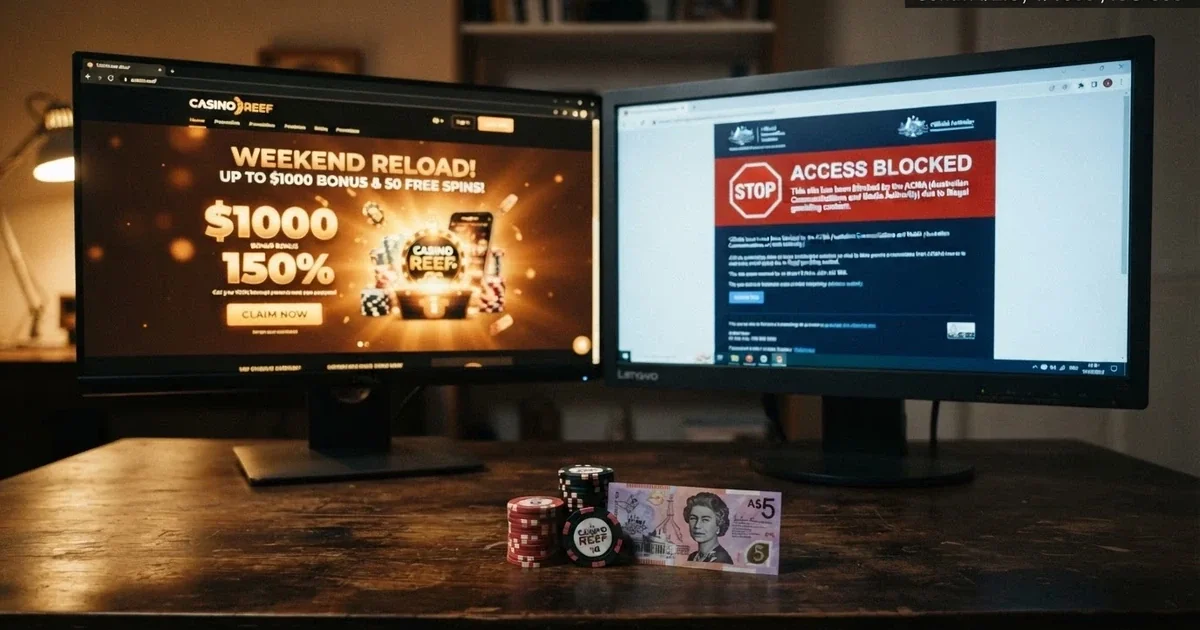
Online casino is prohibited in Australia under the Interactive Gambling Act 2001 — no licence for it exists anywhere in the country. Every reload bonus advertised to an Australian player is being offered by an operator the law does not recognise, served through payment methods the law does not permit. The offer looks like a deal. The trade beneath it is the subject of this page.
Table of Contents
- A reload bonus is not a welcome bonus — here is what sets it apart
- Not all reload bonuses are worth claiming — how to separate the real value from the hook
- 10 Offshore Casinos With Reload Bonuses for Australian Players
- Why online casino is prohibited in Australia — and what that means for your reload bonus
- Responsible gambling tools that offshore reload casinos cannot offer
- How we evaluated these operators
- What the offshore reload bonus really costs you — and what to do instead
- Frequently asked questions
A reload bonus is not a welcome bonus — here is what sets it apart
A reload bonus is a casino’s way of paying a player to come back. The word “reload” is the giveaway: the player tops up an account that has already been opened, and the operator credits bonus funds on top of that second, third or tenth deposit. A welcome bonus, by contrast, is paid for the player’s first deposit only — the cost of acquisition, charged once. A reload bonus is paid for the player’s loyalty, charged repeatedly.
Where a welcome bonus is the operator buying a new depositor it has never met, a reload bonus is the operator keeping a depositor it already has. The first is marketing spend; the second is closer to a retention fee. The two look alike on a promotions page — a percentage number, a maximum cap, sometimes a free-spin bundle — and the same player can claim them both. The player lifecycle is what tells them apart.
Where the reload sits in the casino bonus timeline
A casino bonus chain runs in roughly three stages. First the welcome offer, sized to win a fresh sign-up and large enough to move the needle on the player’s first session. Then the reload, smaller and recurring, sized to bring the player back on a schedule the operator chooses — a weekly cycle, a weekend boost, sometimes a daily nudge. Then the loyalty or VIP tier, paid in cashback, faster withdrawals or a personal account manager, awarded to the players who keep depositing at scale.
The reload is the middle step. The welcome offer is generous because the operator has not yet learned what this customer is worth; the loyalty reward is generous because the operator already knows. The reload sits in between, paying a smaller amount more often, on terms that assume the player has already cleared a welcome bonus once and is familiar with the small print.
This is why reload terms tend to be tighter than welcome terms. The same player has been through the welcome bonus — knows what a wagering requirement does to a balance — and the operator assumes that player will accept stricter conditions in exchange for being rewarded to return. A reload with standard wagering conditions is more common than a welcome bonus with similar terms for exactly this reason.
Deposit match, free spins and cashback — three ways a reload lands
Three reload formats dominate the market. The deposit match is the simplest: the operator credits a percentage of the player’s deposit as bonus funds, usually capped at a stated maximum, on a percentage that ranges from modest to aggressive. A 50% reload up to a stated cap is the typical shape; the exact percentage varies, and the cap is what keeps a large deposit from converting into a disproportionate bonus balance.
The free-spin reload is the second format: the operator credits a fixed number of spins on a named slot or a small set of slots, often with the value of each spin fixed by the operator rather than by the player. Free-spin reloads are usually bundled onto a deposit, sometimes issued alone as a token-deposit reward. They are the format players find easiest to read, because the only number on the page is the number of spins — though the wagering requirement attached to spin winnings is the figure that actually decides what the offer is worth.
The cashback reload is the third format, structured differently from the other two. Rather than paying a percentage of the deposit, the operator credits a percentage of net losses over a defined period — a week, sometimes a day — back to the player as bonus funds or, less often, as withdrawable cash. Cashback is the reload format that rewards the player for losing, which makes it the only one of the three that does not require a fresh deposit to trigger.
Why casinos fund reload bonuses — retention over acquisition
The economics behind a reload bonus are different from the economics behind a welcome bonus. Acquiring a new depositor is expensive — the operator pays for the marketing, the identity verification, and the welcome bonus itself. Retaining a depositor the operator already has is cheaper. A reload is the operator paying a fraction of what it spent to win the customer in the first place, to keep that customer from drifting to a competitor after the welcome bonus has cleared.
Reload frequency is itself a loyalty signal. A daily reload keeps the player in a routine — log in, deposit, play, log out — that becomes harder to break than a weekly cycle. A weekly reload gives the player more time between offers and more chance to forget the operator exists. Cashback reloads, paid on losses, are the operator’s way of keeping the relationship intact through a bad run: the player has lost, the operator refunds a percentage, and the player has fresh bonus funds to keep playing with. Each schedule is a different bet on what kind of player the operator wants to keep.
Reload terms differ from welcome terms because the player is different. A welcome bonus is sold to a stranger who has not yet decided whether to trust the casino; a reload is paid to a player who has already decided. The terms can be tighter because the player is less likely to leave over them — and the operator can spend less per dollar of bonus because the customer is already on the books.
Not all reload bonuses are worth claiming — how to separate the real value from the hook
Every reload bonus is a marketing offer, and every marketing offer has terms that determine its real cost to the player. A 100% match rate means nothing without the wagering multiple that sits beside it; a “free” spins offer means nothing without the cashout cap that sits at the bottom of the page. The labels are similar across the market. The cost is not.
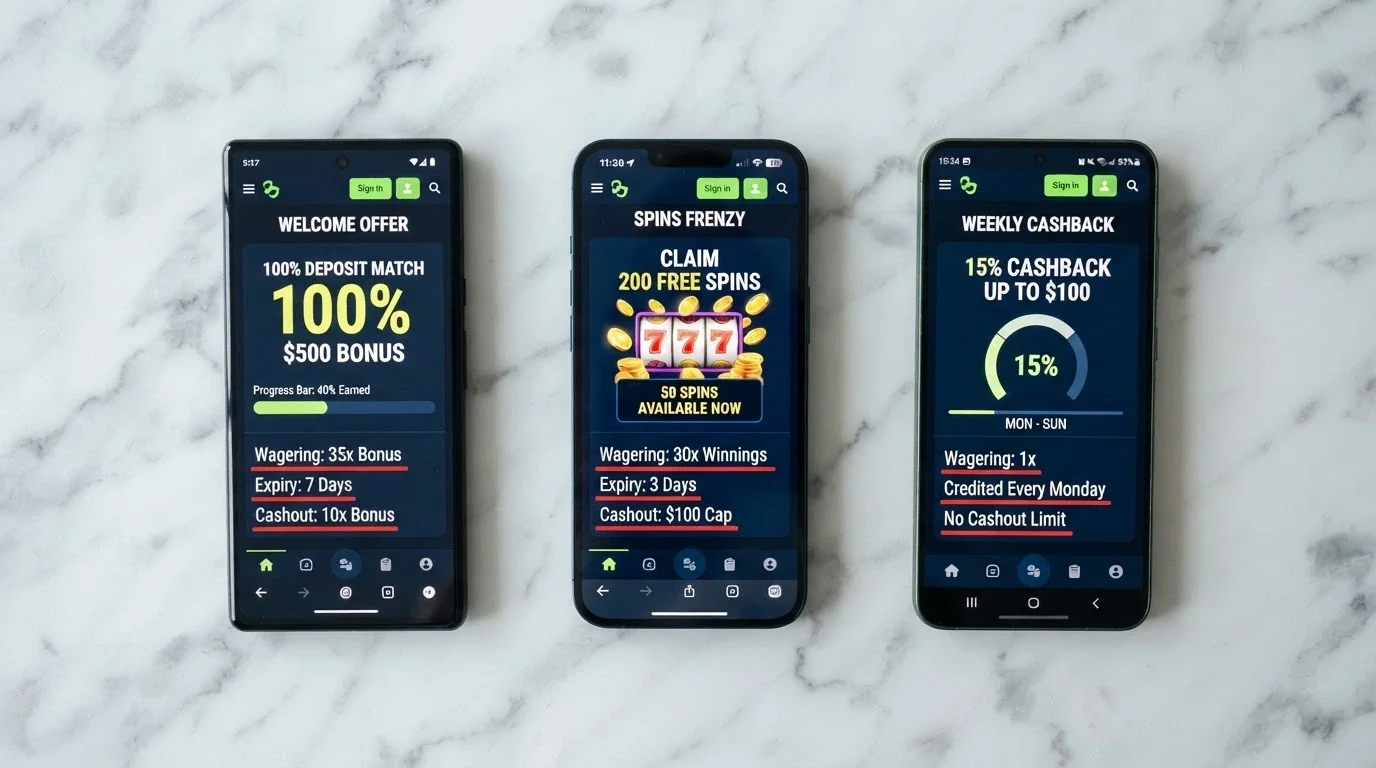
For Australian players the picture is sharper than for most markets, because no Australian licence backs any of these offers. The reload bonus is real — it credits, it can be played, and a win can sometimes be withdrawn — but the operator offering it is not answerable to any Australian regulator. A player who signs up claims the offer on the operator’s terms, in the operator’s jurisdiction, with the operator’s dispute process if anything goes wrong. The protection an Australian licence provides does not travel with the bonus.
The no-deposit reload — rare, small, and tightly capped
A no-deposit reload bonus is offered without requiring the player to deposit first. It is uncommon because the cost is one-sided: the operator pays bonus funds or spins to a player who has not put any of their own money on the line, on the chance that player stays long enough to deposit later. No-deposit reloads exist, but they tend to be small — a token bonus amount, a handful of spins, sometimes a free-play voucher — and the terms are tight by design.
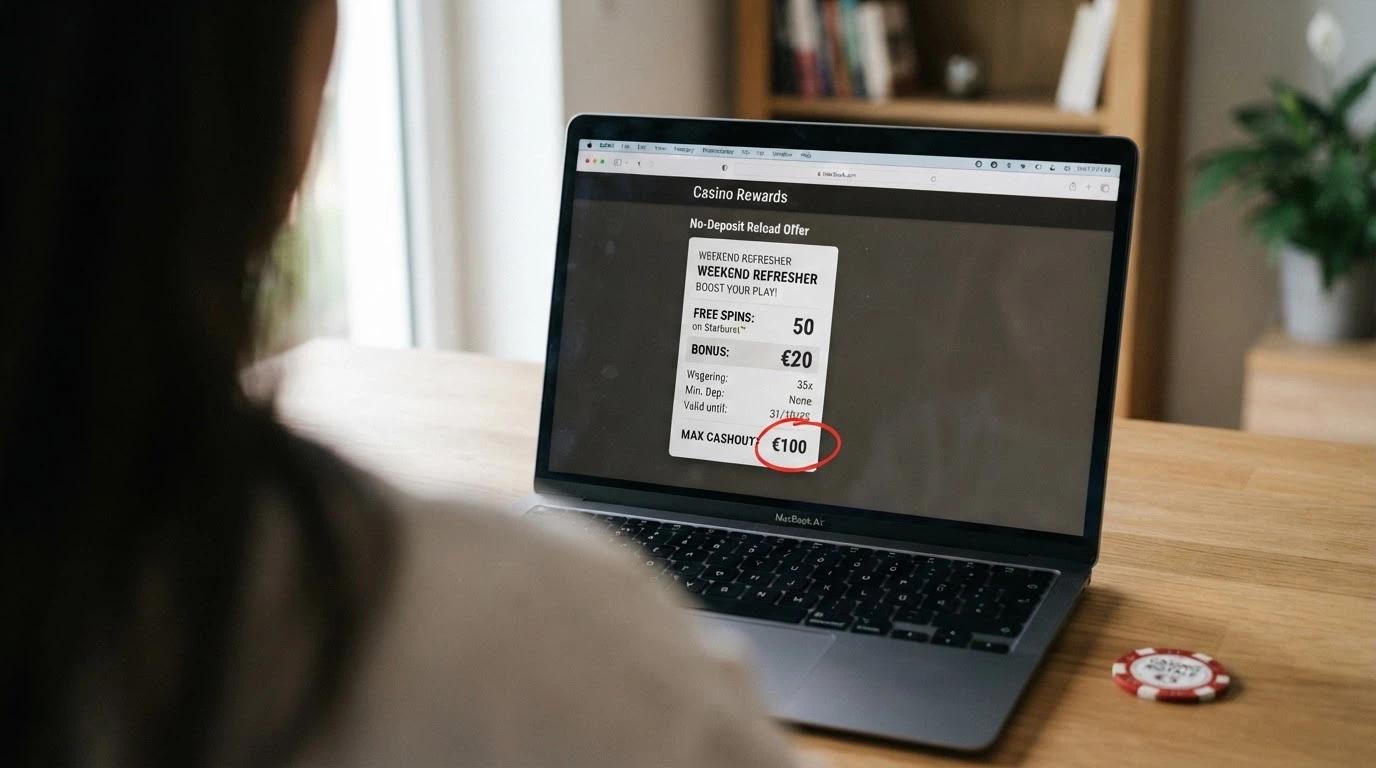
The cashout cap is the term that decides the offer’s real value. A no-deposit bonus is typically credited with a maximum amount that can be withdrawn from any winnings it produces — often a low fixed figure, sometimes a multiple of the bonus itself. The wagering requirement runs higher than on deposit-triggered reloads, because the operator has to recover the cost of giving away something for nothing. The token-deposit variant — where the player “verifies” a payment method with a small charge that is then refunded — sits in the same category: the player is not funding a real bankroll, but the operator is still extending credit, and the cap is still the ceiling.
Pokies and slots reloads — what the spin-based offers look like
Pokies are the dominant reload category for an Australian-facing audience, and most reload bonuses are structured around them. The free-spin bundle is the simplest version: a fixed number of spins on a named slot, sometimes a small set of slots, with each spin’s value set by the operator. The deposit match reload, where it exists in a pokies context, often comes with a contribution rate attached — not all slots contribute to wagering at the same rate, and the reload’s terms usually name the contributing games or categories.
A game-restricted reload is one tied to a specific slot or studio. The operator is using the bonus to push a particular title, often a new release, and the terms lock the player into that game or set of games. The wagering contribution is full — typically 100% for slots — but the player has no choice about which game they are playing. A non-restricted reload, by contrast, lets the player apply the bonus across the lobby, sometimes with different game categories contributing at different rates.
The contribution rate is the term that turns a 35x wagering multiple into a much larger number in practice. A bonus applied at a 100% slot contribution requires 35x the bonus in slot wagers to clear; a bonus applied at a 10% table-game contribution requires 350x. Pokies reloads are usually the cleanest of the formats for that reason — what the wagering multiple says is what the player has to do.
PayID reloads, crypto reloads and why the payment method is a signal
The payment method a reload bonus advertises is the cleanest signal of whether the operator is inside or outside Australian rules. PayID is a legal deposit route for licensed wagering — a fast bank transfer through the New Payments Platform, settled in seconds. A reload offer advertised for PayID deposits, by an operator that the bank rails will accept, is one thing. A reload offer advertised for crypto deposits is the opposite signal entirely.
Crypto is banned as a payment method for online wagering in Australia. The Interactive Gambling Amendment (Credit and Other Measures) Act 2023 made credit cards, credit-related products and digital currency unlawful to use for online wagering, with the ban commencing 11 June 2024. An operator that asks an Australian for a crypto deposit is not licensed in Australia — the payment method itself proves it. The same is true of a credit card request: any operator asking for one is operating outside the rules the licensed Australian wagering market runs on.
The legal deposit routes for licensed wagering are debit card, bank transfer, PayID/Osko and BPAY. An Australian-facing reload bonus that runs on any of these is at minimum using a permitted payment rail — though the operator still needs an Australian licence to be legal, and no online casino holds one. A reload bonus that runs on credit card or crypto is operating outside Australian rules from the deposit step forward, and the player’s protection under Australian consumer law does not apply.
The terms that shrink your return — wagering, expiry and cashout caps
The wagering requirement is the multiplier that decides how much of the player’s own money has to flow through the games before bonus funds convert to withdrawable cash. A typical wagering requirement on a bonus requires a multiple of the bonus amount in qualifying wagers before the bonus balance is cleared. The volume it demands is large in practice.
The expiry window is the second term that matters. A reload bonus typically comes with a validity period — 7 days, 14 days, sometimes 30 — within which the wagering requirement must be cleared. A bonus that expires before the player can clear it is a bonus the player has effectively paid for without ever collecting. The shorter the window, the larger the deposit-to-clear ratio the player has to run in a tight timeframe.
The maximum cashout is the third term, and the one that puts a hard ceiling on what the offer can ever pay. Some reloads credit bonus funds with no cap on what they can convert to — the bonus can be played through and the winnings withdrawn in full. Others cap the conversion: the bonus can be played, the wagering cleared, but only up to a stated maximum can be withdrawn, and anything above that figure is forfeited. The cap is the term that turns a generous-looking offer into a small one.
The three terms interact. A high wagering multiple combined with a short expiry makes the bonus nearly impossible to clear; a generous percentage match combined with a low cashout cap means the offer pays little even when it clears. The player who reads only the headline figure — the percentage match, the number of free spins, the cashback rate — is reading the smallest number on the page.
Weekly, daily and cashback reloads — how the schedule shapes the value
Reload schedules are a trade between frequency and generosity. A daily reload keeps the player depositing every day, but the per-deposit bonus tends to be small — a percentage on the low side, a low cap, sometimes a fixed free-spin bundle. A weekly reload gives the player more time between offers, but the per-deposit bonus can be larger because the operator is not paying it as often. The monthly schedule, rarer, tends to be the most generous of the recurring cycles.
Cashback reloads sit on a different axis. The schedule is set by the loss-period the operator uses — a week is common, a day is rarer, a month the longest — and the cashback percentage is typically lower than a deposit-match percentage, because the operator is paying on losses rather than on deposits. Cashback reloads are the format that rewards the player for a bad run rather than a good one, and they are the format most resistant to wagering requirements: cashback paid as withdrawable cash, with no playthrough, exists at the high end of the market and is the closest a reload gets to a no-strings offer.
The effective value of a schedule depends on the player’s pattern. A daily reload rewards the player who plays every day; a weekly reload rewards the player who plays on weekends; a cashback reload rewards the player who plays long enough to lose enough. Each schedule is a different bet on what kind of player the operator wants to retain, and the schedule that fits the player’s actual pattern is the one that delivers the most value.
Australia-specific reload deals — what the AU-facing brands advertise
Reload bonuses directed at Australian players carry the conventions of the market: AUD-denominated offers, Australian-English marketing language, sometimes deposit thresholds expressed in dollars rather than the offshore default of euros or US dollars. The brands that tailor to an Australian audience — using local spelling, naming PayID in their payment lists, framing their promos around the sporting calendar — are brands that have decided the AU player is worth a localised pitch.
The pitch does not change the underlying offer. A 50% reload up to a stated cap is the same offer whether it is advertised in AUD or USD; a free-spin bundle is the same bundle whether the slot is named in Australian English or American English; a wagering requirement of 35x is 35x regardless of the currency it is denominated in. The localisation is in the marketing, not in the math.
What the localisation often hides is the offshore status. A brand that uses Australian-themed imagery, AUD figures and Australian English is not, for that reason, an Australian-licensed brand. No online casino holds an Australian licence, and an Australian-themed marketing pitch is a sign the operator wants Australian players, not that the operator has any standing to offer them a product. The pitch is a recruitment tool; the licence — which does not exist — would be the protection.
10 Offshore Casinos With Reload Bonuses for Australian Players
Ten operators reach Australian players with offshore reload bonus offers. Every one of them operates outside Australian rules. None holds an Australian licence. None connects to the National Self-Exclusion Register.
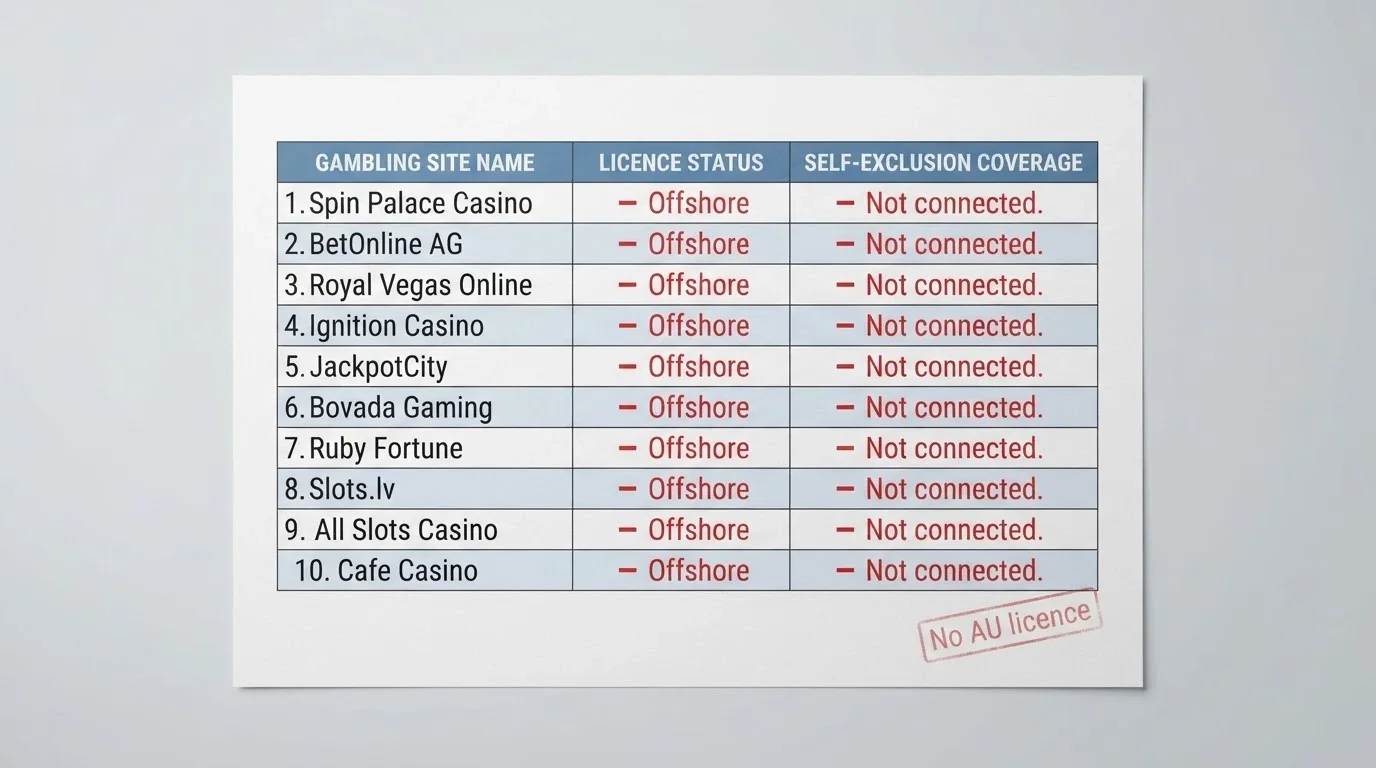
| Operator | Licence Status in Australia | BetStop Coverage |
|---|---|---|
| Rocket Play | None — offshore | Not connected |
| Skycrown | None — offshore | Not connected |
| Royal Reels | None — offshore | Not connected |
| WinSpirit | None — offshore | Not connected |
| Stake | None — offshore | Not connected |
| Rainbet | None — offshore | Not connected |
| Scream Casino | None — offshore | Not connected |
| FairGO | None — offshore | Not connected |
| Bizzo Casino | None — offshore | Not connected |
| Rocket Casino | None — offshore | Not connected |
Reload bonus terms — exact percentages, caps, wagering multiples, validity windows and cashout ceilings — could not be confirmed in current sources for any of the operators below. The descriptions are qualitative and based on the promotions structure visible on each site; the precise small print has to be read at the point of claim.
Rocket Play
The largest AU-facing offshore casino by player reach among those in this review. Rocket Play operates from outside Australia, holds no Australian licence and is not connected to the BetStop self-exclusion register. Its promotions page carries the standard reload formats — deposit match, free spins, cashback — though the specific terms (percentage, cap, wagering multiple, validity window, cashout ceiling) could not be confirmed in current sources. The reload bonus advertised to Australian players is an offshore product, paid on the operator’s terms, in the operator’s jurisdiction.
Reach leads this set; legal standing does not.
Skycrown
A high-reach offshore casino in the AU-facing market. Skycrown operates offshore. The reload bonus structures on its promotions page were not detailed in confirmed sources — the offer shapes visible on the site follow the standard deposit-match, free-spin and cashback patterns, but specific terms are unconfirmed at time of writing.
Second on player volume; tied with the rest on legal standing.
Royal Reels
A mid-tier offshore casino with meaningful Australian player traffic. Royal Reels operates offshore. Reload bonus specifics were not confirmed in current sources; the operator’s promotions follow the standard reload formats.
Holds a measured slice of the Australian market from outside its rules.
WinSpirit
An established offshore casino with sustained Australian traffic. WinSpirit operates offshore. The reload bonus terms were not confirmed in current sources.
An established name offshore, an absent one in the Australian register.
Stake
A well-known offshore brand with Australian reach. Stake operates offshore. The brand’s wider market profile is high; the Australian-facing reload offers carry the same general structure as the rest of the offshore set, with terms not confirmed in current sources.
The brand is global; the Australian protection is not.
Rainbet
A growing offshore casino with rising Australian player traffic. Rainbet operates offshore. Reload bonus specifics were not confirmed.
A newer entrant at the same legal remove as the rest of the set.
Scream Casino
An offshore casino with Australian player traffic. Scream Casino operates offshore. Reload terms were not confirmed in current sources.
Smaller reach, identical exposure.
FairGO
An offshore casino with Australian-themed branding. FairGO operates offshore. The Australian branding is a marketing choice, not a regulatory one — the name and theme pitch to local players without the local licence. Reload terms were not detailed in current sources.
The marketing is Australian. The licence is not.
Bizzo Casino
A smaller offshore casino with Australian player reach. Bizzo Casino operates from outside Australia, holds no Australian licence and is not connected to BetStop. Reload specifics were not confirmed in current sources.
A modest Australian footprint, the same offshore status as the rest.
Rocket Casino
A separate operator from Rocket Play despite the similar name. Rocket Casino operates from outside Australia, holds no Australian licence and is not connected to BetStop. Reload terms were not confirmed.
Distinct from Rocket Play in name; identical in standing under Australian law.
Why online casino is prohibited in Australia — and what that means for your reload bonus
Online casino games, online pokies and in-play sports betting are prohibited in Australia under the Interactive Gambling Act 2001. There is no licence for any of these products — not federally, not in any state or territory. The product every offshore casino in this review offers to an Australian player is the product the IGA makes it an offence to provide.
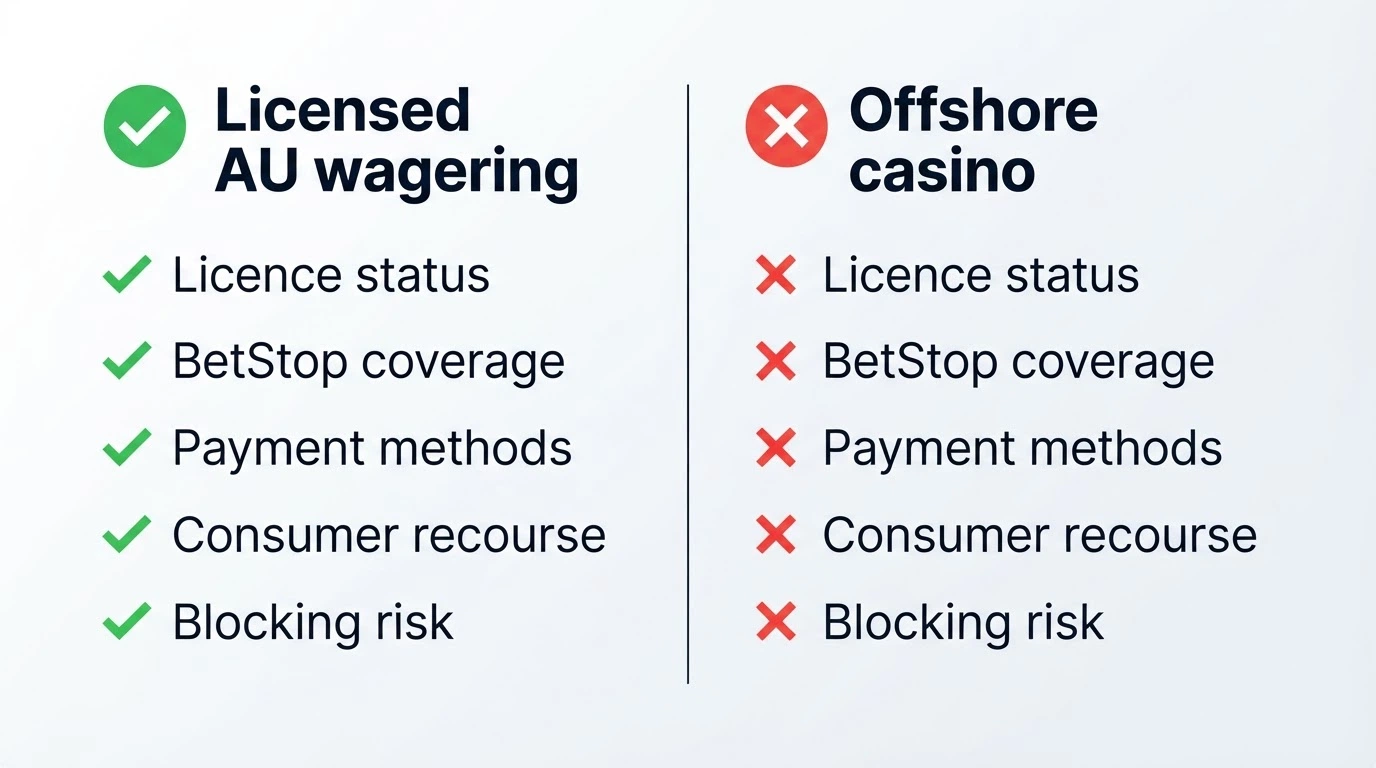
The five protection dimensions below frame what the rest of this section unpacks. The licensed side is what an Australian licence delivers; the offshore side is what an Australian player gives up by playing at an unlicensed casino instead.
| Protection | Licensed AU wagering | Offshore casino |
|---|---|---|
| Australian licence | Yes — Licensing NT or state regulator | None — no Australian licence exists |
| BetStop coverage | Yes — self-exclusion enforced across all licensed operators | No — register does not bind offshore sites |
| Payment methods | Debit card, bank transfer, PayID/Osko, BPAY | Often credit card and crypto |
| Consumer recourse | Australian regulator, Australian consumer law | None in Australia |
| Blocking risk | Domain is not on ACMA’s list | Can be added to ACMA’s list at any time |
The Interactive Gambling Amendment Act 2017 strengthened the original 2001 statute by closing the loopholes offshore operators had used and giving the Australian Communications and Media Authority (ACMA) the powers it now uses to investigate, warn, fine and block. The ACMA is the federal regulator — the body that enforces the online prohibition, investigates complaints, issues formal warnings, runs civil penalty proceedings and directs Australian internet service providers to block illegal sites at the DNS level.
The Interactive Gambling Act 2001 — what it bans and who it binds
The IGA prohibits a defined set of products from being supplied to a person in Australia. Online casino games — slots, table games, live dealer — are prohibited. Online pokies are prohibited. In-play sports betting — a wager placed after a sporting event has started — is prohibited. Pre-event wagering on racing and sport is permitted and licensable, as are lotteries and keno, through state and territory licensing arrangements.
The Act targets the provider, not the player. The individual Australian who deposits at an offshore casino is not prosecuted under the IGA — the statute makes it an offence to provide a prohibited interactive gambling service to a person in Australia. The consequence of that targeting is asymmetric: the operator carries the criminal exposure, the player carries none. What the player carries instead is the absence of any Australian consumer protection — no Australian complaints body, no recourse under Australian consumer law, no ability to recover money through any Australian regulator if the operator refuses a withdrawal.
The minimum age for any commercial gambling in Australia is 18.
The ACMA’s enforcement record — 1,564 sites blocked and counting
Since its first blocking request in November 2019, the ACMA has had 1,564 illegal gambling and affiliate websites blocked by Australian internet service providers as at March 2026. The blocking is DNS-level — the site’s domain name is resolved to a block page rather than to its real server — and it applies to every major Australian ISP. A blocked site remains reachable in some cases through workarounds, but the legal protection the block represents is the visible part of the ACMA’s enforcement.
More than 225 illegal services have withdrawn from the Australian market since the 2017 amendment strengthened enforcement. Some were blocked and did not return under a different domain; some were warned and pulled out before a formal action; some were fined and left. The withdrawal figure is the ACMA’s quietest enforcement metric and the one that measures how many operators decided the Australian market was not worth the legal risk.
Licensed wagering vs offshore casino — one simple checklist
- Licence in Australia: A licensed Australian wagering operator holds a licence from Licensing NT or another state or territory regulator; an offshore casino holds no Australian licence of any kind.
- BetStop connection: A licensed operator is connected to BetStop and honours self-exclusion registrations; an offshore casino is not connected and does not honour BetStop.
- Payment methods: A licensed operator accepts debit card, bank transfer, PayID/Osko and BPAY only — credit cards and crypto are banned; an offshore casino asks for credit cards and crypto because it is not bound by the Australian payment rules.
- Consumer protection: A licensed operator is answerable to an Australian regulator and Australian consumer law; an offshore casino is not.
- Blocking risk: A licensed operator’s domain is not on the ACMA blocked-sites list; an offshore casino’s domain can be added at any time, with a player’s balance on it.
Credit cards and crypto are banned — and that is your first red flag
Credit cards, credit-related products and digital currency (crypto) are banned as payment for online wagering in Australia. The ban commenced 11 June 2024 under the Interactive Gambling Amendment (Credit and Other Measures) Act 2023. An operator that fails to enforce the ban faces penalties of up to $247,500. The penalty is one signal of how seriously the regulator treats the rule; the practical effect is that any Australian-facing operator asking for a credit card or a crypto wallet address is, by that request alone, identifying itself as outside the Australian rules.
The payment method is itself a tell. A licensed Australian wagering operator accepts debit card, bank transfer, PayID/Osko and BPAY. An offshore casino accepting Australian players accepts whatever its home jurisdiction permits, and its home jurisdiction permits credit cards and crypto because those are the methods it needs to serve a market the Australian banks will not serve. The deposit page is a regulatory disclosure the operator did not mean to make.
The 2026 reform — what changes for bonus advertising from 1 January
The Interactive Gambling Amendment (Gambling Reform) Bill 2026 passed Parliament on 19 August 2026, with its measures commencing 1 January 2027. The reform reshapes the advertising and inducement landscape for any Australian-facing wagering operator — and, by extension, for any reload bonus aimed at an Australian player.
The core changes: no more than three wagering advertisements per hour between 6:00 am and 8:30 pm, with a live-sport blackout from fifteen minutes before a live event until five minutes after it ends. Broadcasting sporting odds is banned outright. Radio wagering advertisements are barred during school drop-off and pick-up times. Online wagering advertisements may be shown only to a user who is logged in, confirmed over 18 and offered an opt-out. Athletes, celebrities and influencers are barred from promoting wagering products.
The inducement rules bite harder. Direct marketing of inducements is prohibited for fourteen days after a customer signs up. Direct marketing is prohibited for three months after a person deregisters from BetStop. An indefinite marketing ban applies to customers identified as at risk of harm. The rules target the licensed wagering market — the offshore operators running reload bonuses for Australian players are already outside the regime and the reform does not bring them inside it. What it does is tighten the legal environment around inducement-based marketing for any operator that wants to be licensed.
From the same start date, banks and payment providers gain express authority to block transactions to illegal gambling operators. A player who has been using a credit card or crypto deposit at an offshore casino will find that route harder to walk from 1 January 2026+1. The reform does not legalise anything the offshore market is doing — it makes the financial plumbing less cooperative with it.
What happens when your offshore casino gets blocked — and your balance with it
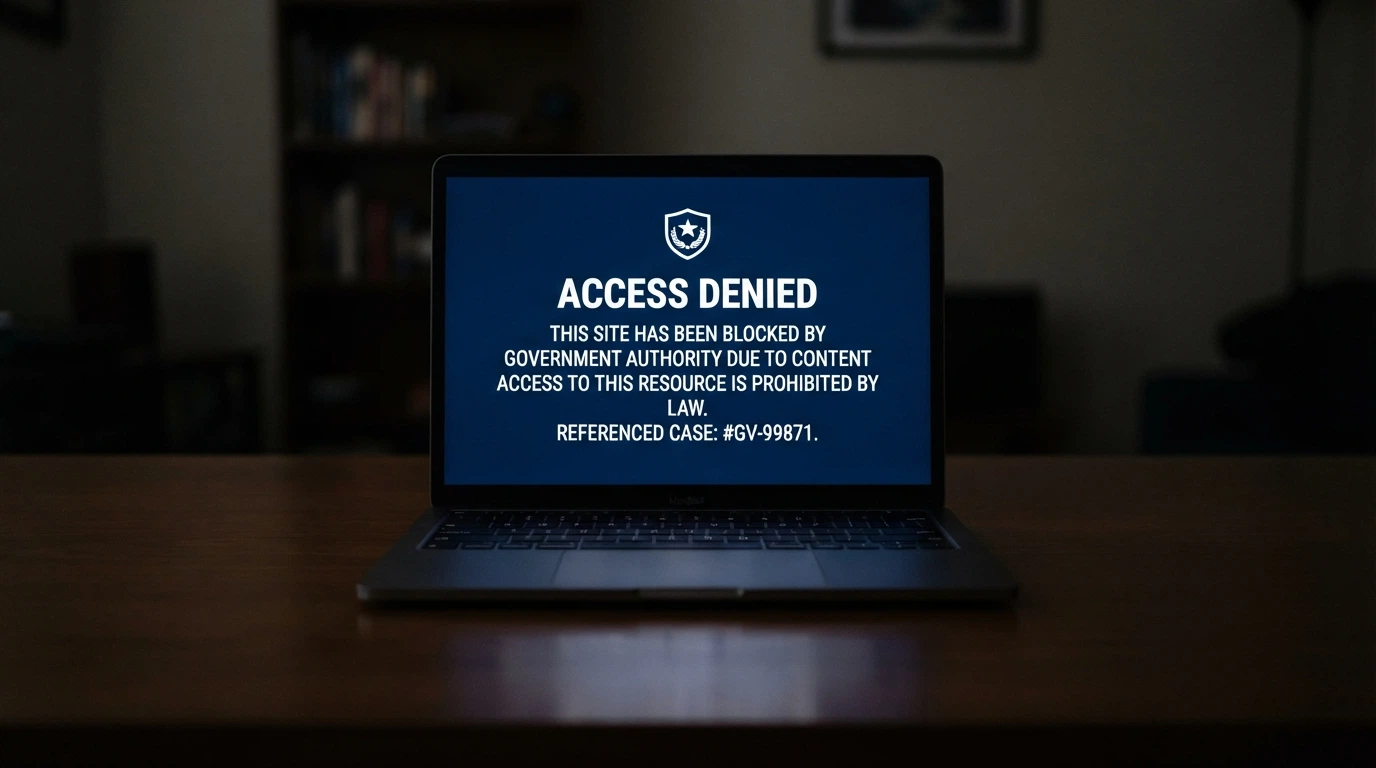
A blocking order from the ACMA directs Australian ISPs to refuse to resolve the operator’s domain. From an Australian residential internet connection, the site stops loading. The operator may continue to operate from its home jurisdiction and may continue to accept deposits from players using VPNs or alternative routing — the block is a DNS-level interruption, not a server seizure.
What the player has lost in a block is the Australian side of the relationship. The ACMA cannot recover player money; it has no power to compel a withdrawal from an offshore operator. BetStop does not cover the site, because BetStop binds only Australian-licensed operators. The Australian complaints bodies do not cover the site, because the site is not licensed in Australia. The Australian consumer law does not apply, because the operator is not subject to it. If the operator refuses a withdrawal, voids a win, or simply stops responding, the player has no Australian-side recourse. The balance that sat on the site at the moment of blocking stays on the books of an entity the Australian regulator has just publicly disowned.
Responsible gambling tools that offshore reload casinos cannot offer
The Australian responsible-gambling infrastructure was built around licensed wagering. BetStop, deposit limits, activity statements, the National Gambling Helpline — each of these tools exists because the licensed wagering market exists, and each of them stops at the licence line. An offshore casino carrying a reload bonus to an Australian player is not bound by any of these protections and provides none of them by default.
BetStop — the self-exclusion register offshore casinos ignore
BetStop, the National Self-Exclusion Register, has been live since August 2023. One registration excludes a person from every Australian-licensed online and phone wagering service. As at 31 July 2026, BetStop had 67,480 registrations, of which 41,290 exclusions were still active — more than 60% of everyone who has ever registered. 78% of registrants were under 40, and 38% chose lifetime exclusion.

BetStop binds Australian-licensed wagering services only. An offshore casino is not licensed in Australia, is not connected to the register, and will keep accepting a self-excluded person’s money. The self-exclusion mechanism that works across every licensed Australian bookmaker at the moment of registration does not extend to a single offshore reload casino. The protection is uniform within the licensed market and absent outside it.
Deposit limits, activity statements and the consumer tools you forfeit
Licensed Australian wagering operators offer a defined set of customer-side tools: customer-set deposit limits, activity statements that summarise play and spend, take-a-break and cool-off functions that pause the account for a chosen period, reality checks during play. These tools are built into the licensed platform because the licensing conditions require them.
An offshore reload casino is not subject to Australian licensing conditions and offers no equivalent by default. The deposit limit, where it exists, is set by the operator and may be adjusted by the operator; the activity statement, where it exists, is the operator’s product, not a regulator-mandated disclosure; the take-a-break function, where it exists, is voluntary on the operator’s side. None of these tools is enforceable against an offshore operator that prefers not to honour it. The licensed-platform protections assume a regulator behind them. The offshore platform has none.
Where to get help — helpline, chat and counselling
The National Gambling Helpline is 1800 858 858 — free, confidential, staffed 24 hours a day, 7 days a week. Online chat and counselling are available through Gambling Help Online at gamblinghelponline.org.au. These are the help resources for any Australian whose gambling has become a problem — licensed or not, Australian-based or offshore-based.
The prevalence data puts the scale in context. About 2.1% of Australian adults — roughly 430,000 people — experience problem gambling. The Australian Institute of Health and Welfare put high-risk gambling at 1.8% in 2022. The 67,480 BetStop registrations are drawn from that population. The offshore reload casinos reviewed on this page sit outside the help infrastructure that surrounds the licensed market. The help is available regardless of which platform the harm occurred on.
How we evaluated these operators
The ten operators reviewed here are drawn from the Australian-facing casino market, ordered by Australian player reach. None holds an Australian licence, because no online casino licence exists in Australia to hold. Each operator was checked against the ACMA’s blocked-sites list and against the absence of any Australian-issued licence. The reload bonus structures that appear on the operators’ promotions pages were the basis for the qualitative descriptions in the operator write-ups; specific terms — exact percentages, caps, wagering multiples, validity windows, cashout ceilings — could not be confirmed in current sources for any operator in the review.
The criteria that ordered the ranking were these: licence status in Australia (uniformly absent), reload bonus structure and the visibility of its terms (described qualitatively where visible), BetStop integration (uniformly absent), payment methods accepted (described qualitatively), and consumer protection available to an Australian player (uniformly absent outside the operator’s own terms). The ranking is by Australian player reach. No weighting or scoring was applied to subjective criteria.
The register checked is the ACMA blocked-sites list. The regulator that would normally license this activity does not exist, because the activity itself is prohibited.
What the offshore reload bonus really costs you — and what to do instead
An offshore reload bonus trades enforceable consumer rights for a percentage match. The trade is the same on every row of the operator table: a bonus that credits on deposit, in exchange for a deposit that goes to an operator the Australian regulator has publicly identified as illegal. The bonus is real. The protection is not.
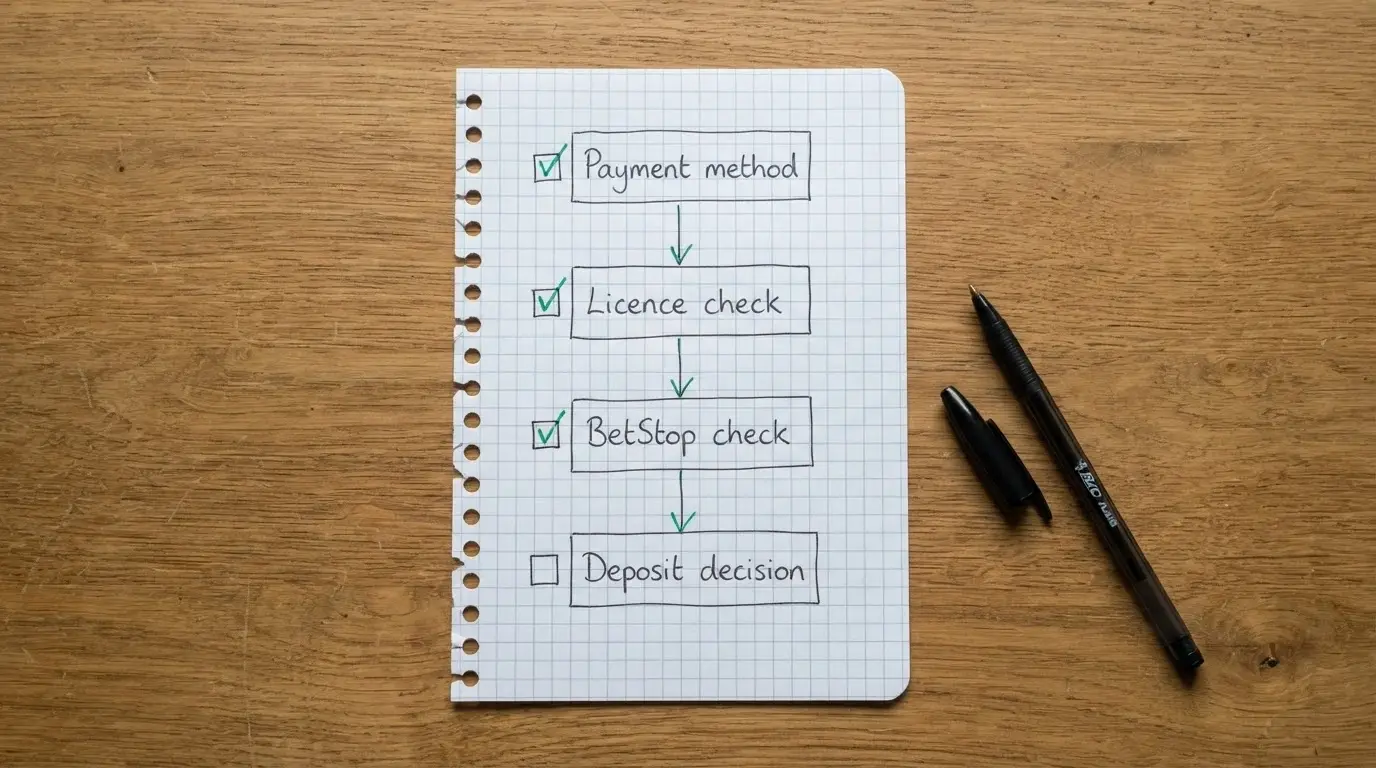
The pre-deposit checks are simple. Payment method first — credit card or crypto means offshore, full stop. Licence check second — there is no online casino licence in Australia, so any operator claiming one is misrepresenting its status. BetStop third — the operator is either connected (licensed) or not (offshore), and an offshore casino is never connected. The three checks take longer to read than to run, and they tell the player which side of the Australian rules they are on.
The risk that an offshore casino gets blocked with a balance on it is not hypothetical — the ACMA has blocked 1,564 sites since November 2019, and the list grows. A block does not return the balance. The player who decides the trade is worth it accepts that outcome as part of the deal.
The alternative is the licensed wagering market, where the product is sports and racing rather than casino and pokies, but where the protections hold: BetStop coverage, an Australian complaints process, an Australian regulator behind the operator, and deposit methods the Australian banking system will process. The reload bonus is not available there, because the reload bonus is offered by casinos, and casinos are not licensed in Australia. The choice is between a bonus with no protection and no licensed product with full protection. The page describes both honestly. Which trade is worth it is the player’s call.
Frequently asked questions
Can I claim a reload bonus with PayID at an Australian online casino?
No — no Australian online casino is licensed, because online casino is prohibited under the Interactive Gambling Act 2001. PayID is a legal deposit route for licensed wagering, but no casino accepts it under an Australian licence. Any casino offering a reload bonus to an Australian is operating offshore.
What are the typical wagering requirements for a reload bonus?
Reload bonuses typically carry higher wagering requirements than welcome bonuses — commonly 30x to 50x the bonus amount. The qualifying volume is calculated against each game’s contribution rate, which varies by category. Always check the specific multiple on the offer’s terms page.
Do reload bonuses have a maximum cashout limit?
Many do. A reload bonus may cap the amount withdrawable from converted bonus winnings as a fixed figure or multiple of the bonus. Any winnings above the cap are forfeited at conversion. The cap is one of the three terms that decide what the offer is really worth.
What happens if I use an offshore casino’s reload bonus and the site gets blocked?
The ACMA can direct Australian ISPs to block an offshore gambling site at the DNS level. Once blocked, the ACMA cannot recover player money, BetStop does not cover the site, and Australian consumer law does not apply. Any balance held at the time of blocking has no Australian-side recourse.
Are crypto reload bonuses available for Australian players?
Crypto is banned as a payment method for online wagering in Australia under the Interactive Gambling Amendment (Credit and Other Measures) Act 2023, effective from 11 June 2024. Any gambling operator accepting crypto from an Australian is operating outside Australian rules, and the crypto acceptance is itself a tell of offshore status.
How do I compare reload bonus offers between different casinos?
Compare the three terms that decide the offer’s real value: the wagering multiple (qualifying volume before conversion), the validity window (time to clear the requirement) and the maximum cashout (ceiling on winnings). A high percentage match with harsh terms is often a worse trade than a modest match with reasonable terms.