
Tether Casinos in Australia in 2026: What the Numbers Actually Show
Australian players who arrive at this page are not looking for an explanation of why online casinos exist offshore — they know. They want to know which operators accept USDT, what a deposit costs them in real network fees, whether the welcome bonus is worth the wagering burden, and where the legal line falls. The figures below come from the operator terms pages research has been able to verify, and from the ACMA’s public enforcement data. Gaps in the public record are marked, not estimated.

Current as of 28 October 2026 — verified against the ACMA register and operator terms pages.
Table of Contents
- Why USDT Casinos Are Drawing Australian Players Offshore in 2026
- The 10 Best Tether Casinos for Australians — Compared Side by Side in 2026
- Getting Your Money In and Out — Why the Network You Pick Matters More Than the Casino
- Why Your USDT Casino Bonus Looks Bigger on Paper Than It Plays
- Playing Without a Paper Trail — What No-KYC Crypto Casinos Actually Deliver
- What You Can Play With USDT — Pokies, Live Tables and the Titles Australians Actually Spin
- Tether Casino Apps and Mobile Play in 2026 — Is Your Phone Ready?
- New USDT Casinos Worth a Look in 2026
- How to Pick a Tether Casino — the Checklist No Bonus Ad Will Show You
- Is It Legal? What Australian Law Actually Says About USDT Casino Play in 2026
- Playing It Safe — Responsible Gambling Tools That Work (and the Ones That Don’t)
- How We Evaluate and Rank Tether Casinos for Australian Players
- What to Do Next — Making a Smarter First USDT Deposit
- Frequently Asked Questions
Why USDT Casinos Are Drawing Australian Players Offshore in 2026
The starting point is structural. Online casino games are prohibited in Australia under the Interactive Gambling Act 2001; no licence exists anywhere in the country for that product. An Australian player who wants to spin pokies online is, by definition, sending money to a casino that operates outside Australian law. The payment method itself confirms this: since 11 June 2024, credit cards and digital currency (which includes USDT) have been banned as payment methods for licensed online wagering. An Australian who is asked for crypto at a gambling site is being served by someone outside the Australian rules. The payment method is itself a tell.
The scale of this shadow market is not small. The Australian Communications and Media Authority has blocked 1,788 illegal gambling and affiliate websites since November 2019, and over 230 illegal services have voluntarily withdrawn from the Australian market since 2017. In the October–December 2025 quarter alone, the ACMA received 483 enquiries and complaints, found 69 breaches of the IGA, issued 10 formal warnings, and referred 133 websites for blocking. This is an enforcement regime that is active, ongoing, and indifferent to the offshore casino’s marketing budget.
Against that backdrop, USDT casinos have grown because they solve two problems offshore players hit at conventional offshore sites. The first is bank friction: Australian banks are increasingly reluctant to process gambling-related transactions, with CommBank and Westpac silently restricting outbound transfers to crypto exchanges, ANZ and NAB flagging without fully blocking, and ING and Macquarie the most permissive. The second is the speed and finality of value transfer. USDT settles in minutes on the right network, with no chargeback risk to the operator and no chargeback protection for the player either. That is not a neutral trade. It is a trade where the operator has the smoother rails and the player has fewer consumer protections.
The result is a market where Australian players search for a Tether casino because they have exhausted the licensed alternatives for the product they want. The 11% of Australians who reported gambling online in 2022 — up from 8% in 2020 — represents the population that has made that leap in some form. The question this page addresses is not whether to make it, but which of the offshore operators is the lesser of the available choices.
What a Tether Casino Actually Is — and What It Isn’t
A Tether casino is simply an online casino that accepts deposits and processes withdrawals in USDT. The acceptance model is wallet-to-casino transfer. The player sends USDT from a personal wallet or exchange account to a deposit address the casino provides, the casino credits the equivalent in play currency, and on withdrawal the casino sends USDT back to a wallet address the player controls. The mechanics look like a normal crypto transfer because they are.
What “accepts Tether” does not guarantee is anything about how the casino is run. USDT is a permissionless rail; any operator willing to set up a wallet can accept it. That includes Curacao-licensed operators with multi-provider game catalogues and withdrawal processes measured in minutes, and it includes fly-by-night sites with no licence at all and a customer service email that bounces. The acceptance of USDT tells you the operator has a wallet. It tells you nothing about the operator’s licensing, the fairness of the games, the speed of withdrawals, or the recourse available if the casino refuses a payout.
The deeper point is about the chain. USDT is not a single token. It is a token issued on multiple blockchains: TRON (TRC-20), Ethereum (ERC-20), Solana (SPL), and BNB Smart Chain (BEP-20). Each chain has its own fee structure, its own confirmation speed, and its own address format. A casino that accepts “USDT” usually accepts it on one or two specific networks, and the player’s deposit and withdrawal cost is determined by which network they pick. The network choice often costs the player more than the casino’s house edge on the games, which is the practical reason a later section returns to it.
The Australian Tether Casino Landscape in 2026
What an Australian player sees when they search for a Tether casino today is a wall of offshore brands — Rocket Play, SkyCrown, Stake, FairGO, WinSpirit, Bizzo, Rainbet and others — all of which accept Australian sign-ups, all of which operate under a Curacao or similar offshore licence, and none of which are licensed in Australia. The Curacao licence is the dominant offshore credential in this market, and what it means for player recourse is a question this page returns to in the legality section.
The ACMA enforcement context is the other half of the picture. The regulator has been blocking offshore casino sites since November 2019, and 1,788 sites have now been added to the block list. The block is DNS-level. It stops most Australian ISPs from resolving the site’s address, but it does not end a player’s existing account or recover money already on the platform. A casino that is accessible today can be on the block list next month with a balance still on it. That risk is real, and it is specific to this market in a way it is not in jurisdictions where the offshore casino sits inside a grey area the regulator tolerates.
The withdrawal of 230+ services from the AU market since 2017 is the third signal. The fact that operators leave the market voluntarily suggests the licensed-AU alternative is sufficiently unappealing, and the operators who remain are the ones whose economics tolerate the friction. That does not make them unsafe. It does mean they have been designed for a market where the legal status is not going to change in their favour, and the value they offer to an Australian player is a value calibrated to that fact.
The 10 Best Tether Casinos for Australians — Compared Side by Side in 2026
Before the operator write-ups, the table. It puts the ten brands on the same five columns: licence status, welcome bonus, wagering multiplier, USDT network support, and crypto withdrawal speed. The columns are where research has data; gaps are marked with an em dash rather than estimated. The currency and figures shown are research’s own, and the operators are listed in the order this page ranks them.

| Casino | Licence / Status | Welcome Bonus | Wagering | USDT Networks | Crypto Withdrawal Speed |
|---|---|---|---|---|---|
| Rocket Play | Offshore, Curacao (not AU-licensed) | 100% up to A$1,000 + 100 FS (1st); 200% up to A$1,000 (2nd) | 40x | BTC, ETH, USDT, LTC | 1–24 hours |
| SkyCrown | Offshore, Curacao-based (not AU-licensed) | Up to A$8,000 + 400 FS across 4 deposits | 40x | BTC, ETH, USDT (crypto deposits excluded from all bonuses) | ~10 minutes |
| Stake | Offshore, Curacao (not AU-licensed) | — | — | USDT (TRC-20 and others) | ~1h 50min |
| Royal Reels | Offshore (not AU-licensed) | — | — | — | — |
| FairGO | Offshore, Curacao eGaming, Deckmedia N.V. (not AU-licensed) | 5-tier package totalling A$1,000 | 60x | BTC, ETH, USDT, LTC | Minutes |
| WinSpirit | Offshore (not AU-licensed) | 100% up to A$300 + 100 FS (1st); 200% up to A$1,000 (2nd) | 40x | BTC, ETH, USDT, XRP, Dai, USD Coin, Dogecoin, Tron, BNB | Typically within 24 hours |
| Bizzo Casino | Offshore (not AU-licensed) | — (NDB only: 10–25 FS) | 40x (NDB) | Crypto, PayID, e-wallets | Standard crypto |
| Rainbet | Offshore (not AU-licensed; AU “fully restricted” per one T&C source) | 250% up to $2,100 + 60 FS | — | 25+ coins incl. USDT ERC-20, TRC-20 | 5–15 minutes |
| Rocket Casino | Offshore (not AU-licensed) | — | — | — | — |
| Scream Casino | Offshore (not AU-licensed) | — | — | — | — |
Three brands (Rocket Play, SkyCrown, FairGO, WinSpirit) have a fully documented welcome package with terms in the open. Three (Royal Reels, Rocket Casino, Scream Casino) have AU market presence confirmed by the operator-routing layer this evaluation draws on, but no public welcome bonus, wagering or USDT-network details to anchor a comparison against. The remaining three (Stake, Bizzo, Rainbet) sit in between — partial public data, with the gaps visible in their columns.
The critical caveat before any Australian reader scrolls further: every operator on this table is offshore and not AU-licensed. None of them is bound by Australian consumer law, none of them is covered by BetStop, and none of them has an Australian complaints body to appeal to if a withdrawal stalls. The comparison below is therefore a comparison among a constrained set, not a comparison between offshore and licensed options. There is no licensed online casino to compare against.
Rocket Play — 3,000+ Pokies and a Two-Stage AU Welcome
Rocket Play is the operator on this page whose Australian-facing terms page research has been able to document in the most detail, and that is reflected in how the table reads. The welcome package runs in two stages: 100% up to A$1,000 plus 100 free spins on the first deposit (minimum A$30), then 200% up to A$1,000 on the second deposit (minimum A$75). The wagering multiplier on both stages is 40x. The casino also supports POLi, Visa, Mastercard, and a four-coin crypto rail (BTC, ETH, USDT, LTC), with crypto withdrawals typically clearing in 1–24 hours. The pokies catalogue runs to 3,000+ titles from leading studios.
The 40x wagering is the standard burden across the documented part of the market, and the worked example later in this article shows what it costs in time. On the credit side, the two-stage structure and the 3,000+ pokies catalogue make this one of the more flexible crypto-friendly setups for an AU player who wants variety. The debit side is the licence: Curacao, not Australia, and the consumer-protection gap that comes with that.
For an Australian player who values catalogue depth and wants a documented bonus with a 40x wagering burden they can plan around, Rocket Play is the cleanest fit in the set.
SkyCrown — A$8,000 Welcome Package With a Crypto Catch
SkyCrown’s headline figure is the largest on the page: a four-deposit welcome package totalling up to A$8,000 plus 400 free spins, with a 40x wagering multiplier on each stage, 14-day validity, a maximum bet of A$7.50 while wagering, a maximum cashout of A$5,000 per bonus stage, and free-spin winnings capped at A$300. The crypto acceptance starts from around US$10 in USDT, and crypto is the quickest payout channel; bank transfer withdrawals start from A$100 and clear within three days.
The catch is in the small print. Crypto deposits are excluded from all bonuses at SkyCrown — every cent of that A$8,000 + 400 FS is unavailable to a player depositing USDT. This is the kind of rule that turns the headline figure into a figure the player cannot actually claim. An AU player arriving at SkyCrown with USDT in hand needs to read the terms page before committing any volume, because the entire bonus structure is gated off from the rail they intend to use.
The fastest crypto payouts at SkyCrown (around 10 minutes per source) make it attractive for a USDT player who values withdrawal speed over bonus value. The arithmetic favours that reader, and the operator rewards the choice.
Stake — The Biggest Name in Crypto Gambling, AU-Accessible
Stake is the brand recognition leader in this market — the operator that established crypto-native casino play at scale — and it accepts Australian players. Research has been able to confirm two specifics: Stake supports USDT on TRC-20 (the cheaper, faster network), and the average deposit-to-cashout cycle runs at approximately 1 hour 50 minutes. Beyond those two points, the welcome bonus structure and wagering terms are not detailed in the public-facing snippets research reviewed this run.
That gap is unusual for a brand this large, and the AU reader comparing options should treat it as a flag. Stake may publish its full terms at a deeper layer of the site than the snippets research surfaced; it may also have AU-specific terms that differ from the global defaults. The default assumption, until the terms are verified, is that the welcome-bonus structure is a moving target, and any figure a reader sees before signing up should be checked at the source.
For a crypto player who prioritises brand recognition, Stake remains a credible option. However, without confirmed bonus terms in writing, the burden of verification rests with the player before any deposit is committed.
Royal Reels — High AU Traffic, Thin Public Data
Royal Reels shows up consistently in the AU offshore market — research’s operator-routing layer has the brand flagged as a confirmed high-traffic destination for Australian players. Beyond that, the public-facing data this evaluation surfaced is thin: no welcome bonus, no wagering multiplier, no USDT-network confirmation, no documented withdrawal speed. The operator is offshore and not AU-licensed, but the licence jurisdiction itself is not confirmed in the snippets research reviewed.
That is a meaningful gap, not a fatal one. Royal Reels is a brand an Australian player can sign up with; the question is whether they can sign up with eyes open. This page cannot answer that question from research alone. The recommendation is the cautious one: before depositing, verify the licence, the welcome terms, the wagering multiplier, the USDT networks the casino actually accepts, and the documented withdrawal speed. If those five points are not on a clear terms page, the casino has not earned the deposit.
FairGO — RTG Catalogue and a Curacao Licence With Fast Crypto Payouts
FairGO is a smaller, more focused operator than most of the field. The game catalogue is RealTime Gaming only, running to around 280 titles, and the operator is licensed under a Curacao eGaming licence through Deckmedia N.V. The welcome is a five-tier package totalling A$1,000, with a 60x wagering multiplier — the highest in the documented part of the field — and crypto withdrawals that source material says process in minutes. Minimum deposit is A$20, minimum withdrawal is A$100.
The 60x wagering is the headline consideration. Worked through the same lens as the other offers, the wagering burden is meaningfully heavier than the 40x across most of the field. The FairGO offer also includes a no-deposit-style entry point in some sources — a typical free chip of between US$10 and US$30 has been observed in research. For an AU player who values crypto payout speed and is happy to play the RTG catalogue exclusively, FairGO’s terms are workable; for a player who values catalogue variety and a low wagering burden, the catalogue size and the 60x work against it.
WinSpirit — A Two-Stage Welcome With a No-Deposit Entry Point
WinSpirit is the only operator on this page with both a documented welcome package and a documented no-deposit bonus. The welcome runs in two stages: 100% up to A$300 plus 100 free spins on the first deposit (minimum A$30), then 200% up to A$1,000 on the second deposit (minimum A$60), at 40x wagering with a maximum bet of A$5, a 7-day bonus validity and a 31-day activation window. The maximum cashout is A$3,000 from the deposit bonus and A$300 from the free-spin winnings. The no-deposit bonus has a maximum cashout of A$50 — modest, but it lets a player test the casino before funding it.
The crypto rail is the broadest in the documented set: BTC, ETH, USDT, LTC, XRP, Dai, USD Coin, Dogecoin, Tron, and BNB — ten coins, which is more than most of the field. Deposits and withdrawals start from A$30, with a daily deposit cap of A$100,000 and a weekly withdrawal cap of A$14,000. The internal processing window can run up to seven days, though most players report faster than that.
For a player who wants to test the casino with no money down before committing, WinSpirit is the only entry on this page with that option. The A$50 NDB cashout ceiling is the constraint; the breadth of the crypto rail is the upside.
Bizzo Casino — No-Deposit Free Spins and Multi-Provider Aggregation
Bizzo’s standout feature is its no-deposit free-spin offer: between 10 and 25 free spins, with 40x wagering on spin winnings. The casino is multi-provider, which means the catalogue is broad by default. Payment methods include crypto, PayID, and e-wallets — though the specific USDT network support is not detailed in the snippets research reviewed. The welcome bonus terms (separate from the NDB) are not documented in research this run, which means an AU player should confirm them at the source before depositing.
The NDB is the offering this page can comment on with confidence: 10–25 free spins at 40x wagering on whatever those spins win, with whatever maximum cashout the operator applies. That ceiling is not documented in research, and it is the figure that determines the real value of the offer. If it sits in the A$50 neighbourhood, the offer is essentially a free trial. If higher, it is a real bonus. Confirm at the source.
Bizzo stands out for its no-deposit free spins, making it a functional test bed for new players. Those seeking a complete, publicly documented welcome package, however, will need to consult the casino’s own terms directly.
Rainbet — 7,000+ Titles and 25-Coin Support With Unresolved AU Access
Rainbet is the catalogue leader in the set: 7,000+ titles from Pragmatic Play, Hacksaw Gaming, Nolimit City, Evolution, BGaming, and Relax Gaming. The coin support is also the broadest — 25+ coins including USDT on both ERC-20 and TRC-20. Deposits credit after one blockchain confirmation, withdrawals typically process in 5–15 minutes, with no fixed crypto withdrawal cap (though daily limits of US$5,000, weekly US$50,000, and monthly US$100,000 apply). The welcome package is 250% up to US$2,100 plus 60 free spins, triggered on a US$30 deposit.
The unresolved flag is the AU access question. One source reviewed by research states that Australia is “fully restricted” in Rainbet’s terms and conditions, while other sources list Rainbet as accepting Australian players. The contradiction is not resolved in the public data. An AU player considering Rainbet should verify, before depositing, that the account is accepted from an Australian IP and that there is no clause in the active terms that voids winnings for AU-based play. This page cannot resolve the contradiction from research alone.
For a player whose priority is catalogue depth and coin flexibility, Rainbet is the strongest set of specs on this page — provided the AU access question is cleared with the operator directly before any deposit.
Rocket Casino — AU Presence Confirmed, USDT Details Pending
Rocket Casino is on this page because the operator-routing layer research draws on confirms Australian player traffic. Beyond that, the public data is thin in the same shape as Royal Reels: no welcome bonus, no wagering, no USDT-network confirmation, no documented withdrawal speed. The operator is offshore and not AU-licensed; the specific licence jurisdiction is not confirmed in snippets.
The honest framing for this operator is the same one for Royal Reels: the brand is accessible to Australian players; the five terms an AU player needs to see (licence, welcome terms, wagering, USDT networks, withdrawal speed) are not on the public surface research reviewed. Verify before depositing, and treat the absence of public terms as the absence of public accountability.
Scream Casino — Newer AU Entrant With Data Still Emerging
Scream Casino is the newest of the ten on this page and the one whose public data is the thinnest. Research’s operator-routing layer confirms AU market presence. Beyond that, no welcome bonus, wagering, USDT-network, or withdrawal speed has been documented in research this run. As with Royal Reels and Rocket Casino, the appropriate move for an AU player is to confirm the five terms directly with the operator before any deposit. Newness is not a quality signal in the offshore casino market — a recently launched site is more likely than not to be an untested withdrawal process wearing a new logo.
Getting Your Money In and Out — Why the Network You Pick Matters More Than the Casino
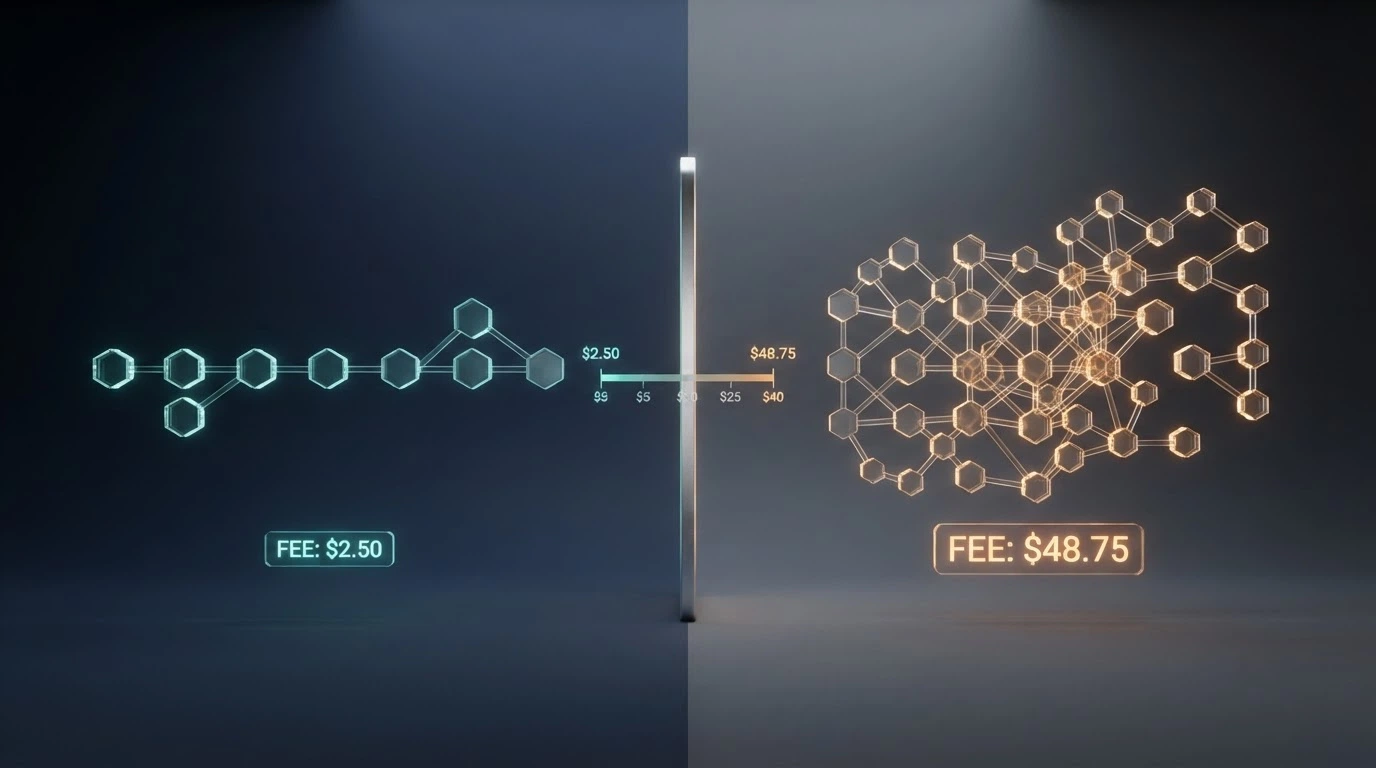
The casino choice sets the bonus terms and the licence backdrop. The network choice sets the deposit cost and the withdrawal speed. On a A$200 deposit, the network choice can be worth 5–15% of the bankroll before a single spin — a swing the casino’s house edge doesn’t approach. This section walks through the deposit flow, the withdrawal cycle, and the network comparison that decides which rail is worth using for each transfer.
Depositing With USDT — the Step-by-Step That Saves You Fees
The flow starts on an Australian exchange. An AU player buying USDT typically uses an Australian exchange such as CoinSpot or Independent Reserve, transfers AUD in via PayID or bank transfer, and receives USDT in their exchange wallet. The first friction point is the bank. CommBank and Westpac silently restrict outbound transfers to crypto exchanges; ANZ and NAB flag without fully blocking; ING and Macquarie are the most permissive. An AU player banking with the first two may find their exchange deposit declined or held for review, and the workaround — a different bank, a different exchange, or buying USDT from a peer — adds friction the marketing never mentions.
Once USDT sits in the wallet, the next decision is the network. The casino will publish a deposit address and a network label (TRC-20, ERC-20, BEP-20, sometimes SPL). The player must match the network their wallet sends on to the network the casino expects. A USDT TRC-20 deposit to a TRC-20 address on TRC-20 credits in 1–3 minutes; the same transfer on ERC-20 takes 3–5 minutes and costs substantially more in gas. The casino’s confirmation step then credits the equivalent in play currency, usually at a 1:1 USDT-to-US$ rate, and the bank trail ends there.
The irreversible mistake is the network mismatch. Sending TRC-20 USDT to an ERC-20-only address means the funds are lost — there is no reversal on the blockchain, and the casino’s support inbox will not be able to retrieve them. The check before clicking send is: does the network label on my wallet match the network label on the casino’s deposit page? If both say TRC-20, send on TRC-20. If they say ERC-20, send on ERC-20. If they say anything else, stop and re-read.
USDT Withdrawal Speed — What “Instant” Actually Means
“Instant withdrawal” in crypto casino marketing means the casino begins processing the request immediately — not that the funds arrive in the player’s wallet the moment they click withdraw. The actual cycle runs in three parts: the casino’s internal review (which can be a few minutes or up to 24 hours, depending on the operator and the player’s withdrawal history), the blockchain confirmation (a few minutes on TRC-20, slightly longer on ERC-20), and the wallet-side credit (usually instant once the network confirms). The headline figure in any operator’s marketing tends to refer to part one or part two, not the sum.
Across the featured set, the spread is meaningful. Rainbet processes crypto withdrawals in 5–15 minutes with no fixed crypto withdrawal cap. SkyCrown’s crypto is around 10 minutes for the quickest payouts. Stake’s average deposit-to-cashout cycle runs at approximately 1 hour 50 minutes. WinSpirit allows up to seven days for internal processing, though most players report faster. Rocket Play’s crypto withdrawals clear in 1–24 hours. FairGO’s crypto payouts process in minutes per source.
The figures that trip up new players are the minimums and caps. FairGO’s minimum withdrawal is A$100. WinSpirit’s daily deposit cap is A$100,000 and weekly withdrawal cap is A$14,000. Rainbet’s daily limit is US$5,000, weekly US$50,000, monthly US$100,000. None of these are deal-breakers for typical AU players, but a player who has accumulated a balance and tries to withdraw A$50 at FairGO will find the request rejected. The withdrawal minimum is the kind of figure that should be on a casino’s banking page before the first deposit, not after.
TRC-20 vs ERC-20 vs BEP-20 — the Network Decision That Costs or Saves You Real Money
The table below puts the three most common USDT networks side by side on the four columns that decide which rail to use for a casino transfer: the fee on a typical A$200 deposit, the confirmation time, the prevalence of casino support, and the practical risk.
| Network | Fee on A$200 Deposit | Confirmation Time | Casino Support | Risk |
|---|---|---|---|---|
| TRC-20 (TRON) | Under A$2 (~0.5%) | 1–3 minutes | Common at featured set | Lowest fee rail; pick this unless the casino does not accept it |
| ERC-20 (Ethereum) | A$3–A$15 when busy (5–15%) | 3–5 minutes | Common at featured set | Highest fee rail; budget for A$5–A$15 per transfer |
| BEP-20 (BSC) | Low (typically under A$2) | Fast (under 1 minute on average) | Less common at featured set | Cheaper than ERC-20, less universally supported |
The shape of the choice is simple. TRC-20 is the cheapest and fastest for casino transfers in the featured set; ERC-20 is the most expensive because Ethereum gas fees spike with network congestion; BEP-20 sits between them in cost and is faster than ERC-20 but is not as widely supported by the casinos on this page. The split between TRC-20 and ERC-20 is the practical decision — most featured operators accept both, and the fee difference on a A$200 deposit is the difference between losing A$1 and losing A$30 before a spin lands.
The fee figures in the table are not theoretical. On a A$200 deposit sent on ERC-20 during a busy period, the gas fee can consume 5–15% of the bankroll before play begins. The same A$200 on TRC-20 consumes roughly 0.5%. The network choice, repeated across multiple deposits, is worth more to the player than the casino’s house edge on most games — which is the reason this section sits before the bonus section in the article.
Why Your USDT Casino Bonus Looks Bigger on Paper Than It Plays
The headline figure on a Tether casino welcome package is the bonus amount. The figure that determines whether the bonus is worth claiming is the wagering multiplier. A A$1,000 welcome at 40x means A$40,000 must be turned over before any cent is withdrawable; the same A$1,000 at 60x means A$60,000. The bonus is real money only after the wagering is complete, and the time that takes is the real cost of the offer.
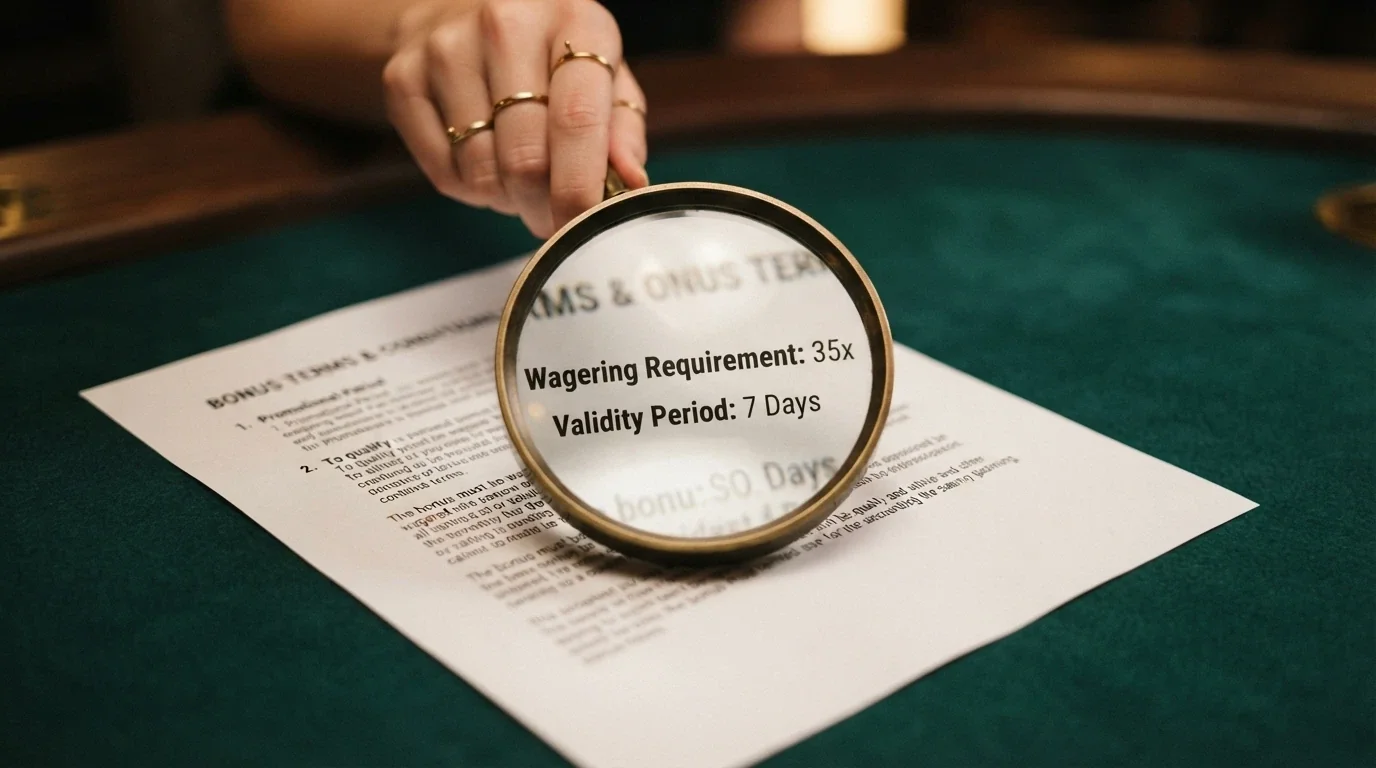
Worked through with Rocket Play’s first-stage welcome — 100% up to A$1,000 at 40x wagering — the required turnover is A$1,000 × 40 = A$40,000. At a typical A$1 spin and a five-second spin rate, that works out to 40,000 spins and roughly 56 hours of continuous play. Drop the spin size to A$0.50 and the time roughly doubles. This is an estimate, not a guaranteed outcome: actual play time depends on the games chosen, the bet size, the volatility, and how the bonus funds are spent down. It promises no win, no payout, and no return — only a sense of how much play the bonus requires before it converts to cash.
The deeper problem is not the multiplier in isolation. It is what happens when the bonus is read against the rail the AU player is actually using. At SkyCrown, crypto deposits are excluded from all four stages of the welcome, which means the A$8,000 + 400 FS headline figure is unavailable to a USDT player. At WinSpirit, the 7-day bonus validity is tighter than Rocket Play’s, and the A$5 max bet is lower. At FairGO, the 60x wagering is the highest in the documented set. The bonus terms page at each operator is the document that determines the offer’s real value, and the terms are not always what the marketing headline suggests.
No-Deposit Bonuses and Free Spins — What “Free” Actually Means at a USDT Casino
Two operators on this page offer a no-deposit entry point, and both should be read for what they actually are. WinSpirit runs a no-deposit bonus with a maximum cashout of A$50. Bizzo Casino runs a no-deposit free-spin offer of between 10 and 25 free spins with 40x wagering on spin winnings. The wagering multiplier on the spin winnings is the figure that does most of the work — a 40x turnover on whatever the spins win is a meaningful hurdle, and the maximum cashout cap determines how much of that hurdle’s completion is actually withdrawable.
The honest reading is that most featured operators do not currently offer a no-deposit bonus. That is not a gap in this evaluation; it is the state of the market. The WinSpirit and Bizzo NDBs exist as a way for a player to test the casino’s withdrawal process before funding it — and that is genuinely useful — but the A$50 and 10–25 FS ceilings mean the offer is a free trial in financial terms, not a bankroll-builder. Treating it as the latter is the kind of mistake the marketing is designed to encourage.
Welcome and Deposit-Match Bonuses — the Wagering Multiplier That Determines the Real Cost
The welcome packages across the featured set fall into two shapes: a single high-percentage deposit match with a flat wagering multiplier, and a multi-stage package where each stage has its own bonus, wagering, and validity window. Rocket Play and WinSpirit run two-stage packages; SkyCrown runs a four-stage package up to A$8,000 + 400 FS; FairGO runs a five-stage package totalling A$1,000; Rainbet runs a single 250% match up to US$2,100 + 60 free spins.
The wagering burden ranges from 40x (Rocket Play, SkyCrown, WinSpirit) to 60x (FairGO). The validity windows matter as much as the multipliers: SkyCrown’s 14-day window, WinSpirit’s 7-day window, and the A$5 / A$7.50 max-bet rules during wagering all shrink the set of games and bet sizes a player can use to clear the bonus. Rainbet’s wagering on the welcome is not detailed in research — another case where the player must verify at the source before claiming.
The SkyCrown crypto-exclusion is the case study that earns repeating. A USDT player who sees the A$8,000 + 400 FS headline figure and deposits without reading the terms will find, at the point of claiming, that the entire four-stage bonus is unavailable. That is the way a welcome package can be worth zero to the player who actually intends to use the rail the casino advertises on its deposit page. The rule is simple and unkind: read the terms page before the first deposit, not after.
Playing Without a Paper Trail — What No-KYC Crypto Casinos Actually Deliver
“No-KYC” at a Tether casino usually means no ID upload is required at sign-up. The player registers an email, picks a password, and starts depositing USDT. That is the experience, and for low-volume play it is largely accurate. The boundary the marketing tends not to mention is where KYC actually kicks in.
The first boundary is the withdrawal threshold. Most offshore casinos will request identity verification before processing a withdrawal above a certain amount — typically several thousand dollars, but the threshold varies by operator. The second boundary is the AUSTRAC Travel Rule, which kicks in at A$10,000 on crypto transfers and requires reporting by the exchange or wallet provider involved. Below A$10,000 per transfer, the Australian crypto leg of the deposit is not reported. Above it, a paper trail begins to form.
The third boundary is the bank trail. Buying USDT on an Australian exchange from an Australian bank account is the on-ramp the AU player is most likely to use, and that transaction is visible to the bank, the exchange, and (above the A$10,000 threshold) AUSTRAC. The casino itself may never see the player’s ID, but the exchange and the bank have it. The anonymity a USDT player enjoys at the casino is therefore not full anonymity end-to-end — it is partial anonymity at the operator, full visibility at the financial entry point.
The trade-off the player is making is privacy for consumer protection. A licensed Australian wagering operator is required to verify identity, set deposit limits, and offer dispute resolution; the offshore crypto casino is required to none of these. The privacy the player gains at the casino is the same privacy they would have at any operator that does not enforce those rules. The blockchain itself adds a layer of provable fairness for games that publish their seeds on-chain, but the casinos on this page are centralised platforms — the blockchain verifies the deposit and withdrawal ledger, not the game outcomes.
What You Can Play With USDT — Pokies, Live Tables and the Titles Australians Actually Spin
The game catalogues behind the featured operators fall into two shapes. The aggregators — Rocket Play, Stake, Bizzo, Rainbet — pull in thousands of titles from dozens of providers, with the catalogue depth ranging from 3,000+ at Rocket Play to 7,000+ at Rainbet. The boutique operators — FairGO with 280 RTG titles — run a single-studio catalogue that is narrower but consistent. For an AU player who wants variety, the aggregators win on volume; for a player who wants the RTG catalogue specifically, FairGO is the option.

The providers that matter are the ones that drive the player experience: Pragmatic Play, Hacksaw Gaming, Nolimit City for slots; Evolution and Ezugi for live dealer; BGaming and Relax Gaming for the long tail of table games and crypto-native titles. A casino whose provider list includes these names has the catalogue an AU punter expects; a casino whose provider list is thin or single-studio has chosen a different value proposition.
Online Pokies and Slots — What 3,000+ Titles Actually Means for Your Bankroll
A 3,000+ or 7,000+ pokies catalogue is not a quality signal on its own — it is a breadth signal. The figures that matter for a player’s actual experience are RTP (return to player, expressed as a percentage of wagering returned over time) and volatility (the variance of the payout pattern). Research has not surfaced per-title RTP figures for the featured set, so this section does not pretend to publish them. The honest move for a player is to check the RTP of any specific pokie before committing volume — most providers publish the figure on the game’s information page, and a pokie running below 96% RTP is paying back less than the field average.
The catalogue size affects the player’s experience in three ways. A larger catalogue means more game mechanics to choose from, which means more variance in volatility to pick from; it means the casino has relationships with more providers, which is a soft signal of operator stability; and it means a higher chance the player’s preferred pokie is on the platform. A 280-title RTG catalogue at FairGO gives the player the full RTG lineup and nothing else; a 7,000+ catalogue at Rainbet gives the player the RTG lineup plus the rest of the modern slot market.
Live Dealer Tables and Table Games — Blackjack, Roulette and the Studios Behind the Stream
The live-dealer experience at the featured operators is dominated by two studios: Evolution and Ezugi. Rocket Play runs both studios; Rainbet’s provider list includes Evolution. The studios stream blackjack, roulette, baccarat, and the game-show formats (Monopoly Live, Dream Catcher, Crazy Time) from studios in Europe and Asia, and the player experience is functionally identical to a licensed land-based venue’s live-dealer floor.
The crypto angle on live-dealer play is mostly invisible to the player. The bet is placed in play currency, the cards are dealt by a human dealer on a physical table, and the win or loss is credited in play currency. The USDT rail enters at the deposit and exit at the withdrawal, and the live-dealer floor in between operates on the same RNG and studio infrastructure a fiat-funded player sees. For an AU player who wants the live-dealer experience without a fiat on-ramp, the crypto-accepting aggregators on this page deliver the same product a fiat-funded player gets at a licensed venue.
Table games outside the live-dealer context — RNG blackjack, baccarat, roulette, casino poker variants — are also part of the catalogue at the multi-provider operators. Single-studio catalogues like FairGO’s RTG lineup also include the RNG table games, which is one reason the boutique operators remain relevant for players who don’t need 7,000+ titles.
Tether Casino Apps and Mobile Play in 2026 — Is Your Phone Ready?
The short answer is no — and that is by design. Offshore crypto casinos do not appear in the Australian Apple App Store or Google Play store, because Apple’s and Google’s policies prohibit licensed apps for real-money gambling in AU from the stores, and offshore operators don’t have the local licence those policies require. The mobile experience at every operator on this page is therefore browser-based: the player navigates to the casino’s URL in Safari or Chrome, logs in, and plays through the mobile site.

The browser experience at the major operators is good — the games are written in HTML5, the layout collapses to phone screens without major friction, and the deposit and withdrawal flows work the same way they do on desktop. The degradation is mostly in the live-dealer streams, where a smaller screen compresses the betting interface, and in some of the older RTG titles, where the HTML5 conversion is less polished than the desktop client. None of this is a deal-breaker for an AU punter playing on a modern phone.
The USDT deposit flow on mobile is the same as on desktop: copy the deposit address, choose the network, send from the wallet, wait for confirmation. The bank’s role in funding the wallet is unchanged, and the network choice still determines the fee. The mobile experience is, in practical terms, the desktop experience with a smaller screen — and the same rules about network selection apply.
New USDT Casinos Worth a Look in 2026
The newest operators on this page are Scream Casino and, to a lesser extent, Rocket Casino. The newness is real but, in this market, it is rarely a quality signal. Offshore casinos rebrand and relaunch more often than they genuinely launch, and a fresh domain with no operational history is more likely to be an untested withdrawal process wearing a new logo than a credible new entrant.
What an AU player should evaluate on a new casino is the same five things they should evaluate on any operator on this page: the licence jurisdiction, the bonus terms (wagering, validity, max bet, max cashout), the crypto-exclusion clauses, the USDT networks actually accepted, and the documented withdrawal speed. New operators sometimes run more generous welcome bonuses to attract early depositors, which is the marketing case for trying one; the operational case is that an untested withdrawal process is the single biggest risk on this page.
The pool of genuinely new Tether casinos accepting Australian players is small. The page’s recommendation is the conservative one: a new brand should be evaluated on its licence and its provider mix, not on its novelty. The bonus headline is the easy thing to publish; the withdrawal record is the hard thing to verify, and the verification takes time a new casino has not yet had.
How to Pick a Tether Casino — the Checklist No Bonus Ad Will Show You
The five checks below are the ones an AU player should run before sending a single USDT to any offshore casino. They are not a guarantee — offshore casinos change terms without notice — but they are the difference between choosing with eyes open and choosing on the marketing.
- Licence verification. The Curacao eGaming framework is the baseline offshore credential in this market; it is not a gold star. A casino with a documented Curacao licence has accepted some baseline of regulatory scrutiny; a casino without one has not. The licence number should be on the casino’s footer, and it should resolve at the regulator’s public register. No licence, no deposit.
- Bonus terms — read them before claiming. Wagering multiplier, validity window, max bet, max cashout, free-spin winnings cap, and (the SkyCrown case study) crypto-exclusion clause. A 40x wagering is the field baseline; 60x is heavier than that baseline. A 7-day validity is tighter than a 14-day one. A crypto-exclusion clause disqualifies the entire bonus for a USDT player. The terms page is the document that determines the bonus’s real value.
- Withdrawal speed evidence. “Instant” in marketing means processing starts immediately, not that funds arrive in the wallet. Look for operator-published withdrawal timeframes, third-party review data, and player reports. The spread in this set runs from Rainbet’s 5–15 minutes to Stake’s ~1h 50min to WinSpirit’s up to seven days. The figure you can verify is the figure you should plan around.
- Game-provider quality. Pragmatic Play, Hacksaw Gaming, Nolimit City, Evolution, Ezugi, BGaming, Relax — these are the providers an AU punter expects at a credible offshore casino. A single-studio catalogue (RTG at FairGO) is a deliberate choice, not a red flag, but a thin or unknown provider list is worth treating cautiously.
- AU-specific risk flags. The ACMA block list is at acma.gov.au; the casino’s URL can be checked against it before sign-up. BetStop does not cover offshore casinos — a player using BetStop must recognise that the self-exclusion does not extend to the operators on this page. A player banking with CommBank or Westpac may hit outbound-transfer friction at the exchange leg of the deposit; ING and Macquarie are the most permissive. None of these flags is a reason not to play, but they are reasons to know what the player is choosing.
Is It Legal? What Australian Law Actually Says About USDT Casino Play in 2026
The legal picture is not a grey area. Online casino games are prohibited in Australia under the Interactive Gambling Act 2001; no licence for the product exists anywhere in the country. The Interactive Gambling Amendment (Credit and Other Measures) Act 2023 extended that framework in 2024 to ban credit cards and digital currency (crypto, which includes USDT) as payment methods for licensed online wagering, with operator penalties of up to A$247,500 per breach. The Interactive Gambling Amendment (Gambling Reform) Bill 2026 passed Parliament on 19 August 2026; its measures commence 1 January 2027, and from that date banks and payment providers gain express authority to block transactions to illegal gambling operators.
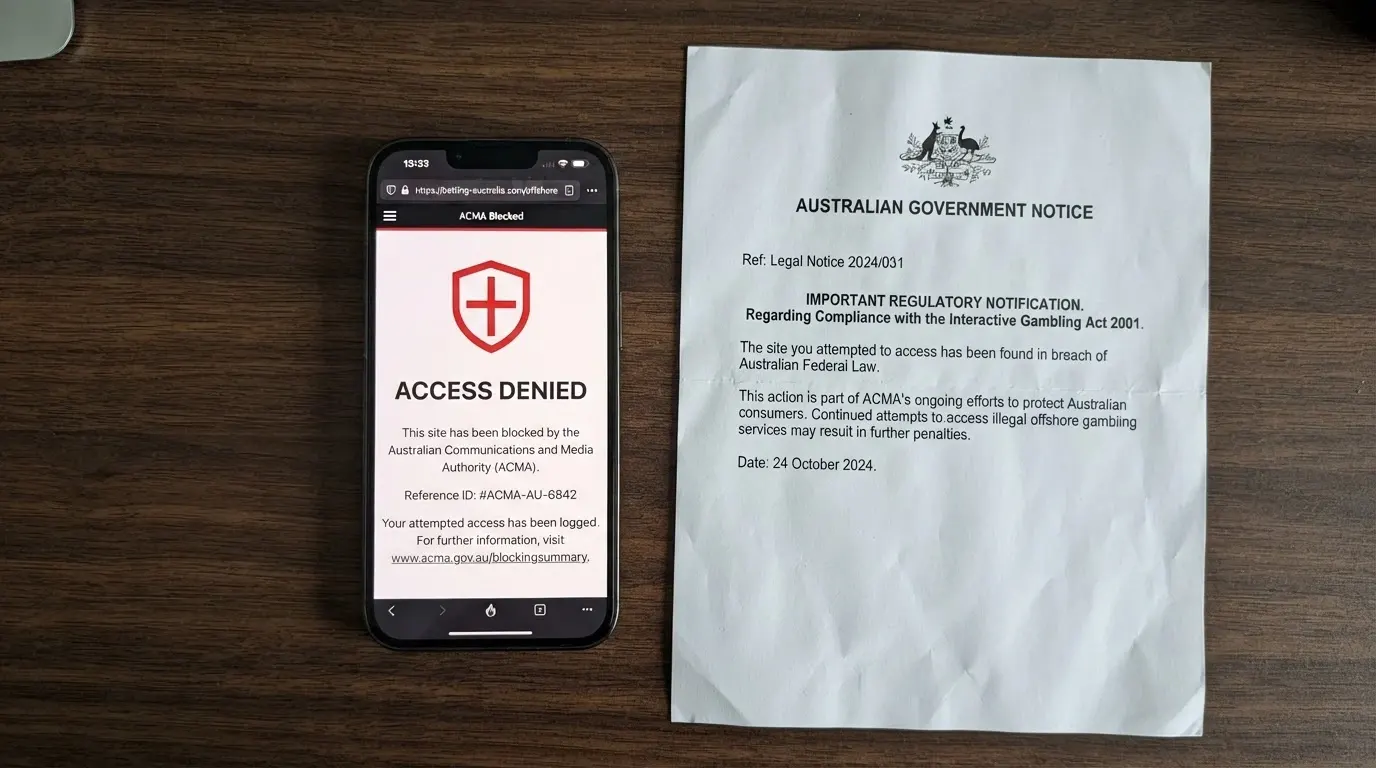
The Australian crypto casino play is legal for the player; the operator-side prohibition under the IGA 2001 is not a player-side prohibition. There is no record of an Australian individual being prosecuted for playing at an offshore crypto casino. What the player loses is not legal status but consumer protection. No Australian consumer law applies, no Australian complaints body can mediate a dispute, BetStop does not cover the operator, and ACMA enforcement tools (blocking, civil penalties, formal warnings) target the provider, not the punter. A casino refusing a withdrawal is a civil dispute between the player and an offshore operator, with the player holding whatever leverage the casino’s licence authority and reputation provide.
Civil penalties for providing prohibited interactive gambling services reach up to A$2,475,000 per day for an individual and A$12,375,000 per day for a corporation. The penalty is on the operator. An Australian asked for a credit card or a crypto deposit by a gambling site is being served by someone outside the Australian rules, and the payment method is itself a tell.
Licensing and Regulation — What a Curacao Licence Actually Means for Your Money
Every casino on this page is licensed by an offshore authority, and the dominant offshore credential is Curacao eGaming. The Curacao framework has tightened over the last few years — the GCB (Curacao Gaming Control Board) and the more recent LOK (Landsverordening op de Kansspelen) regime replaced the older master-licence structure — but it remains a sub-jurisdiction by global standards. What it gives a player is some level of regulatory backstop in the form of a licence authority that can (in theory) act on complaints, and what it does not give is anything resembling the recourse available through a UK Gambling Commission or Malta Gaming Authority complaint.
The ACMA’s enforcement tools do not include player mediation. The regulator can block sites at the DNS level (1,788 sites since November 2019), issue formal warnings (10 in the October–December 2025 quarter alone), pursue civil penalties against the provider, and refer sites for blocking. None of those actions recover a disputed withdrawal or unfreeze a player balance on a blocked site. A player with a complaint against an offshore casino has the casino’s own support and, in some cases, the offshore licence authority. They do not have the ACMA.
The ACMA’s October–December 2025 quarter saw 483 enquiries and complaints, 23 investigations into 45 gambling sites, 69 breaches of the IGA found, 10 formal warnings issued, and 133 websites referred for blocking. The numbers are an enforcement regime at scale — but they are enforcement against operators, not resolution for players.
Provably Fair, Audited Payouts and the Blockchain Promise
Provably fair is a cryptographic mechanism by which the player can verify, after a spin or hand, that the outcome was determined by the seeds the casino published before the bet was placed. The mechanism is real and it works for the games that implement it — typically crypto-native dice, crash, plinko, and a handful of slots from providers like BGaming. It is not implemented across the live-dealer floor at Evolution and Ezugi, where the outcome is determined by physical cards on a physical table, or across the bulk of the slot catalogue at the featured operators.
What the blockchain adds to the picture is a verifiable ledger for deposits and withdrawals. The USDT transaction is on-chain; the player can confirm the casino received the deposit and sent the withdrawal; the amounts and timestamps are public. What the blockchain does not add is verification of game outcomes at the centralised operators on this page. The casino’s own server determines the outcome of a slot spin, and the player’s recourse on a disputed outcome is the casino’s support inbox, not the blockchain.
Third-party RNG audits (the kind an Evolution or a NetEnt publishes) are a separate signal. The featured operators whose provider lists include the major studios inherit some measure of that audit work, but the casino itself does not always publish a casino-wide audit certificate. Where research has not surfaced a specific audit claim, this page does not invent one.
Playing It Safe — Responsible Gambling Tools That Work (and the Ones That Don’t)
The responsible gambling tools at an offshore Tether casino are operator-dependent and not enforceable by any Australian regulator. A player who sets a deposit limit at one of the casinos on this page is relying on the operator to honour it; the operator has no obligation to do so beyond its own terms. A player who self-excludes at an offshore casino is relying on the operator not to let them back in. BetStop, the National Self-Exclusion Register, does not extend to offshore operators — a self-excluded person’s deposits will still be taken if they sign up at any of the casinos on this page.
The tools that work regardless of where the casino is licensed are the ones outside the casino entirely.
- National Gambling Helpline — 1800 858 858. Free, confidential, 24 hours a day, 7 days a week. The line is staffed by counsellors trained in gambling-related harm, and it is the single safety net that works whether a casino is licensed in Australia, licensed in Curacao, or unlicensed entirely.
- Gambling Help Online — gamblinghelponline.org.au. Live chat and online counselling, run in parallel with the helpline, for people who prefer text-based support or who are not in a position to make a phone call.
- BetStop — betstop.gov.au. The National Self-Exclusion Register binds Australian-licensed wagering services only. As of Q3 FY 2025–2026 (31 March 2026), 59,830 Australians had registered with BetStop and 37,247 had active exclusions. The protection is real at licensed operators and stops at the offshore boundary.
- The A$10,000 AUSTRAC Travel Rule as a self-check. A player moving more than A$10,000 through a crypto exchange on the way to a casino leaves a paper trail, and the act of stopping to consider whether the volume they are moving is the volume they intended is itself a useful intervention.
About 2.1% of Australian adults (roughly 430,000 people) experience problem gambling; the Australian Institute of Health and Welfare put high-risk gambling at 1.8% in 2022. The minimum age for all commercial gambling in Australia is 18. None of these figures is specific to USDT casinos, and none of them changes the basic fact that offshore crypto gambling carries a higher exposure to harm than the licensed alternatives — because the licensed alternatives do not include casino games at all, and the consumer-protection machinery has no jurisdiction offshore.
How We Evaluate and Rank Tether Casinos for Australian Players
The ranking on this page is built from a defined set of inputs. The sources are the operator-facing terms pages research reviewed at the time of writing, the ACMA’s public enforcement register, third-party review platforms, and player reports where research’s evaluation surfaced them. The criteria that ordered the ranking, in order of weight, are: USDT support robustness (which networks, any exclusions, any withdrawal friction); bonus-term fairness (wagering multiplier, validity window, max bet, max cashout, crypto exclusion); withdrawal-speed evidence (operator-published timeframes, third-party data, player reports); game-provider quality (the studios an AU punter expects); and AU-specific risk flags (ACMA blocking status, BetStop gap, banking friction).
What this ranking cannot do is guarantee the future behaviour of an offshore operator. Terms pages change without notice; licences are updated and revoked; withdrawal processes that worked for early depositors degrade under volume. The ranking is a snapshot, not a contract. An AU player who uses this page to choose an operator should treat the choice as the start of their own verification, not the end of it.
The gap markers in the comparison table — the em dashes where research could not confirm a welcome bonus, a wagering multiplier, a USDT-network confirmation, or a withdrawal speed — are honest gaps. They reflect what the public-facing data research was able to verify, not an editorial decision to suppress positive figures. Three of the ten operators (Royal Reels, Rocket Casino, Scream Casino) have AU market presence confirmed but limited public terms on the surface research reviewed, and the recommendation for those three is the cautious one: verify before depositing, and treat the absence of public terms as the absence of public accountability.
What to Do Next — Making a Smarter First USDT Deposit
The three checks before any first deposit are network choice, bonus terms, and withdrawal minimum. Pick the network that costs the least per transfer (TRC-20 for most of the featured operators) and check that the casino accepts it before buying USDT. Read the bonus terms page in full before claiming — the SkyCrown crypto-exclusion case study is the reason. Confirm the withdrawal minimum and any weekly or monthly caps, and plan around them rather than discovering them after a balance has accumulated.
The next move is a small test deposit and a small test withdrawal. A$30 to A$100 in, a withdrawal request for the minimum, and a wait through the full cycle from request to wallet credit. The test does two things. It proves the casino’s withdrawal process works for the player’s specific wallet and network, and it establishes a withdrawal history at the casino — both of which smooth the path for any larger volume that follows.
The limits of this page’s advice are real. Offshore casinos change terms without notice; the bonus multiplier or the max cashout cap in effect today may be different in a month. The bank trail on the AU side can change as banks tighten or loosen their outbound-crypto-transfer policies. The ACMA can block a casino the reader has signed up with. No review replaces reading the operator’s own terms before depositing. The figures on this page are the figures research has been able to verify at the time of writing, and they are the starting point for a player’s own verification — not the last word.
Frequently Asked Questions
Can I legally use Tether (USDT) at online casinos in Australia?
Using USDT at an online casino is not a criminal offence for the Australian player; the Interactive Gambling Act 2001 targets the operator, not the punter. The deeper point is that no Australian online casino licence exists, which means every casino on this page is offshore and unlicensed — the payment method is the tell.
Which online casinos accept USDT deposits from Australian players?
Rocket Play, SkyCrown, Stake, FairGO, WinSpirit, Bizzo Casino and Rainbet accept USDT from Australian players in this evaluation, with TRC-20 the cheapest network and ERC-20 the most expensive. Royal Reels, Rocket Casino and Scream Casino have AU market presence but no public USDT terms on the surface research reviewed.
What is the difference between USDT TRC-20 and ERC-20 for casino deposits?
TRC-20 runs on TRON and costs under A$2 per transaction, confirming in 1–3 minutes. ERC-20 runs on Ethereum and costs A$3 to A$15 when busy, confirming in 3–5 minutes. On a A$200 deposit, ERC-20 fees can eat 5–15% of the bankroll — TRC-20 eats roughly 0.5%. Both settle irreversibly.
Do Tether casino bonuses work when depositing with crypto?
Most casinos on this page accept USDT toward their welcome — Rocket Play, WinSpirit and Rainbet all do. At SkyCrown, crypto deposits are excluded from all four bonus stages, which makes the A$8,000 + 400 FS headline figure unavailable to a USDT player. Read the terms before claiming any bonus.
What happens if an offshore casino blocks my withdrawal — can I complain to the ACMA?
The ACMA cannot recover money from an offshore operator. The regulator’s enforcement tools are DNS-level blocking, formal warnings, and civil penalties against the provider — not mediating disputes. A player whose withdrawal is refused has no Australian complaints body to appeal to, only the casino’s own support and the offshore licence authority.
Can I use BetStop to self-exclude from crypto casinos accepting Australian players?
No. BetStop binds Australian-licensed wagering services only. An offshore crypto casino is not connected to the register, and a self-excluded person’s deposits will still be taken. To Q3 FY 2025–2026, 59,830 Australians had registered with 37,247 active exclusions — meaningful protection at licensed operators, none at the ones on this page.
Is my money safe if an offshore USDT casino gets blocked in Australia?
DNS-level blocking does not close existing accounts or withdraw balances. A casino accessible today can be on the ACMA block list next month with a player balance still on it. The 1,788 sites blocked since November 2019 are that risk at scale, and the 230+ voluntary withdrawals show the same outcome by another route.