
Anonymous Crypto Casinos in Australia: What the No-KYC Pitch Hides and What It Delivers
 Available in AU
An anonymous crypto casino lets you open an account with an email address and play real-money pokies without ever typing your name into a registration form. That description is accurate, and it is also where most of the marketing copy stops — which is exactly why this page exists. The hard parts of the proposition are quieter: a soft KYC checkpoint arrives somewhere between A$2,000 and A$5,000 in cumulative withdrawals; the operator is almost certainly offshore and unlicensed in Australia; and the crypto you bought on CoinSpot or Swyftx has your real name attached to it before a single satoshi reaches the casino.

This page covers the mechanics, the operators Australians actually use, the bonus economics, the regulatory landscape, and the responsible-gambling infrastructure that works regardless of where you play. Verified as of 18 October 2026 against the ACMA enforcement record, AUSTRAC’s exchange identity-verification regime, and operator terms published on each casino’s site.
Current as of 18 October 2026. Licence and enforcement claims verified against the Australian Communications and Media Authority (ACMA) public register and the Curaçao Antillephone licence validator.
Table of Contents
- Anonymous Crypto Casinos Explained: What They Are and How Australians Access Them
- Why Australian Players Are Turning to Offshore Crypto Casinos
- Anonymous Pokies and Real-Money Play — What Is Actually on Offer
- The Pokies Australians Play Most — Verified RTP and Volatility
- How Crypto Keeps You Anonymous — and Where the Privacy Actually Ends
- Which Cryptocurrencies Australian Players Can Use at Anonymous Casinos
- How a Crypto Deposit Keeps Your Name Off the Casino’s Books
- The Soft KYC Trap — Why “No Verification” Casinos Eventually Ask for Your ID
- How AUSTRAC Links Your Crypto Wallet to Your Real Name
- The Top 10 Anonymous Crypto Casinos for Australian Players in 2026
- Stake — The Crypto Giant with a KYC Catch
- Rocket Play — The High-Volume Operator with a Two-Tier Deposit Match
- Skycrown — Curaçao-Verified with a Player-Friendly Wagering Structure
- Royal Reels — 5,400+ Pokies and a Genuine No-Deposit Entry Point
- WinSpirit
- Rainbet
- Fair Go — The RTG Specialist with the Lowest Wagering in the Set
- Scream Casino
- Bizzo Casino — 8,000+ Games and a Crypto-Specific Welcome Bonus
- Rocket Casino
- Why Your 2026 Anonymous Casino Bonus Costs More Than It Pays
- No-Deposit Bonuses and Free Spins — What Australian Players Can Actually Claim
- What a Welcome Bonus Actually Costs — The 2026 Expected-Loss Calculation
- Are Anonymous Crypto Casinos Legal in Australia? No — and Here Is What That Actually Means
- Australia’s Online Casino Ban — What the Interactive Gambling Act Actually Prohibits
- ACMA’s Enforcement Record — 1,788 Sites Blocked and Counting
- What the 2026 Gambling Reform Means for Offshore Casino Access from 2026
- Licensed vs Offshore — What Australian Players Give Up at a Glance
- Playing Safely When No One Knows Who You Are — Responsible Gambling at Offshore Casinos
- BetStop, Deposit Limits and Self-Exclusion — Why None of It Covers an Offshore Casino
- Where to Get Help — Australian Gambling Support That Works Regardless of Where You Play
- How We Evaluated and Ranked These Anonymous Crypto Casinos
- Frequently Asked Questions About Anonymous Crypto Casinos in Australia
- Should You Play at an Anonymous Crypto Casino? What Australian Players Need to Weigh Up
Anonymous Crypto Casinos Explained: What They Are and How Australians Access Them
An anonymous crypto casino is an online casino that takes deposits and processes withdrawals in cryptocurrency, registers new accounts with only an email address and a password, and does not require a driver’s licence, passport or proof of address at signup. The “anonymous” half of the name refers to the player–operator boundary: the casino does not learn who you are, because you have not told it. It refers to nothing else, and the rest of this page is largely about what “nothing else” means in practice.

The contrast with the licensed Australian wagering system could hardly be sharper. A licensed Australian online bookmaker — TAB, Sportsbet, Ladbrokes, bet365 AU — cannot legally accept your deposit unless you have completed identity verification at account opening, and the only payment methods available to you are debit card, bank transfer, PayID/Osko, and BPAY. Since 11 June 2024, credit cards and cryptocurrency are banned as payment methods on any Australian-licensed wagering service, with civil penalties of up to $247,500 for operators who fail to enforce it. If a gambling site asks for a credit card or crypto, the payment method alone tells you the operator is running outside Australian rules.
That is the structure this product lives in. Australians who want to play online casino have no licensed option — the Interactive Gambling Act 2001 prohibits online casino games and online pokies to people in Australia, and no licence for online casino exists federally or in any state or territory. Land-based venues like Crown Melbourne or The Star Sydney are state-licensed but irrelevant to an online player. Anyone sending crypto to an offshore site is one of an estimated several hundred thousand Australians doing the same thing, which is why the offshore market is large enough to build a real industry around — and why pages like this one exist to document how it actually works.
Why Australian Players Are Turning to Offshore Crypto Casinos
The licensed Australian product offers pre-event sports and race wagering, lotteries and keno, and a heavily regulated environment. It does not offer online casino. Anything Australians want beyond that bracket — blackjack, roulette, live dealer games, pokies — cannot be acquired through an Australian-licensed operator. The credit-card and crypto payment ban of 11 June 2024 widened the gap by closing the two rails most likely to appeal to a player who already wants crypto-native access.
A licensed Australian wagering account works, friction-wise, like a bank account. You sign up with your real name, you upload documents before your first deposit clears, the operator checks your identity against public databases, and you fund the account through PayID or a debit card that is already in your name. That is the regulatory model: friction is a feature, not a bug. For an Australian who already uses a debit card to bet on the AFL, the friction is invisible. For an Australian who wants to play a Bitcoin pokie at 11 p.m. on a Wednesday without handing over a driver’s licence, the friction is the product, and “anonymity” is what they are paying for.
Crypto dissolves the friction. A non-custodial wallet is opened in two minutes without a name attached; a deposit is a wallet-to-wallet transfer; the casino sees an alphanumeric address and a balance, not a person. Australians who already hold crypto on a local exchange — CoinSpot, Swyftx, Independent Reserve, Coinbase AU — can move a balance to an offshore casino faster than they can deposit at Sportsbet. The cultural fit is real: where the licensed product treats the player as a verification problem to be solved before they can gamble, the anonymous product treats the player as a customer. The licensed product is right to do so; the unlicensed product sells the gap.
That enthusiasm should not travel without company. None of the offshore operators reviewed on this page hold an Australian licence. None of them are connected to BetStop. Several of them can be, and have been, blocked by the ACMA without warning and without refund. The speed and privacy are real. The protection is not.
Anonymous Pokies and Real-Money Play — What Is Actually on Offer
Pokies dominate the game libraries at anonymous crypto casinos — not by a little, but by a margin that turns “casino” into a misnomer at most of these operators. Live dealer tables exist; jackpot slots exist; provably fair games exist. None of them account for the volume that real-money pokies draw. Every site on this page carries thousands of pokies; some carry thousands more.
Two titles appear at every major crypto casino reviewed here, and across the broader crypto-pokie market in 2026 they are the two most-played Bitcoin slots globally. Gates of Olympus and Sweet Bonanza, both from Pragmatic Play, are the closest thing the offshore crypto market has to a default. Both run on a 6×5 grid with a scatter-pays or tumble mechanic, both go hard on the multipliers, and both are released with bonus-money-friendly volatility. A player walking into an offshore casino’s lobby will meet these two within the first page; a player who has spent ten minutes at one has almost certainly already played them.
Live dealer tables — blackjack, roulette, baccarat, game-show hybrids — sit alongside the pokies at most operators, streamed from studios run by Evolution, Pragmatic Play Live and a handful of competitors. The experience is functionally identical to what an Australian might find at Crown, with two material differences: the studio is offshore, and the wager settles in BTC or USDT, not AUD. Provably fair games, where the result can be independently verified against a cryptographic seed, are the genuinely crypto-native offering. They are not where the volume is, but they are the product an “anonymous crypto casino” pitch can defend on its merits.
Real-money play means staking actual cryptocurrency against the house edge. A pokie spin at A$0.20 per line costs $0.20 in whatever coin the casino denominates the wager in. Wins pay into the same balance. Demo mode is universal but pointless at a casino you came to use; it exists to let a player learn a game’s mechanics without committing funds.
The Pokies Australians Play Most — Verified RTP and Volatility
| Slot Title | RTP | Provider | Volatility | Max Win |
|---|---|---|---|---|
| Gates of Olympus | 96.50% | Pragmatic Play | High | 5,000x stake |
| Sweet Bonanza | 96.51% | Pragmatic Play | High | 21,175x stake |
Gates of Olympus — Published hit frequency 28.57%; independently observed hit rate of 37.1% for payouts of 2x and above across 124 tracked spins at 20 casinos (RTPspy). The slot uses a 6×5 grid, a scatter-pays payout structure (no traditional paylines), and stacks cumulative multipliers during the free-spins round. Betting range runs from $0.20 to $125 per spin. The 5,000x cap on maximum win is what separates a session that ends profitably from one that doesn’t, and it can take a long grind to find it.
Sweet Bonanza — Identical 6×5 grid with a tumble mechanic in which winning symbols disappear and new symbols drop in to fill the gaps. The multiplier bomb symbols (2x up to 100x) appear during the free-spins round and stack onto a running multiplier that applies to every tumble win. The 21,175x maximum win is an outlier in cryptocurrency pokies — high enough that even an Australian player staking a tenth of a cent could in principle clear a meaningful withdrawal on a single sequence, though the math on hitting it is brutal.
Both titles are high-volatility games, which is the part the marketing tends to leave out. A 96.50% RTP means a 3.50% house edge spread across thousands of spins — not across any individual session. A session can ride below the theoretical return, especially when the bonus-buy feature has been triggered and the free-spin round fails to land its multipliers. The volatility column tells a player what to expect over time, not what to budget for a session. RTP is a long-run average; variance is a short-run reality.

Verified RTP matters more at an unregulated offshore casino than at a licensed Australian operator. The licensed Australian market publishes a return-to-player figure as part of a state-level regulatory regime, with regulators and testing agencies looking over the operator’s shoulder. Offshore operators carry no equivalent assurance. The Pragmatic Play RTP above is what the game publishes; what an offshore casino serves up is harder to audit. A player who sticks to games published by name — Pragmatic Play, Evolution, Hacksaw, NetEnt — is buying the studio’s reputation, not the casino’s promise.
How Crypto Keeps You Anonymous — and Where the Privacy Actually Ends
Anonymity at an anonymous crypto casino is real, and it is also narrow. The casino does not know your name. The blockchain does not know your name either — every wallet on the ledger is a string of letters and numbers, not a person. The privacy holds between the player and the casino, in both directions, until one of three things happens: a withdrawal crosses the soft KYC threshold, an Australian financial regulator pulls a thread back from the wallet, or the casino decides it wants them anyway.
Most “no KYC” Bitcoin casinos require only an email and a password to open an account. Crypto deposits land at a unique deposit address the casino generates per user; credit at the account is internal ledger balance the casino maintains without checking who owns the wallet that sent it. A player can deposit, play, and request a withdrawal with no identity document in sight. That is the model.
The privacy starts to thin at the soft KYC threshold. Across tested AU-accessible casinos in 2026, the range is approximately A$2,000 to A$5,000 in cumulative lifetime withdrawals — below it, withdrawals process automatically; at or above it, a verification request lands in the player’s inbox. Curaçao- and Anjouan-licensed casinos set this trigger under their anti-money-laundering obligations at approximately EUR 2,000 to EUR 10,000 cumulative. The threshold is built into the withdrawal flow, not the registration flow, because the casino’s licence requires customer due diligence at some point and the operator has chosen to delay it. The delayed verification is not optional, and it is not a marketing lie — it is a structural feature of how offshore licensing works.
The Australian context changes the geometry. AUSTRAC, Australia’s financial intelligence agency, requires every Australian-registered cryptocurrency exchange to verify customer identity as part of its Digital Currency Exchange registration. CoinSpot, Swyftx, Independent Reserve and Coinbase AU all comply. When an Australian player buys Bitcoin and sends it to a casino, the player’s name is attached to the wallet at the exchange level, regardless of what the casino can see. The casino does not know who you are, but the Australian financial system does. Anonymity is casino-deep, not Australia-deep.
Which Cryptocurrencies Australian Players Can Use at Anonymous Casinos
Bitcoin and Ethereum are universally supported; Litecoin is close to universal; Tether (USDT) is the coin most sites settle into when a player wants to dodge crypto-volatility on the way out. Some operators carry Solana, Dogecoin, XRP, and a roster of smaller coins. The variation is real but the practical decision comes down to a narrower question: which coin moves fastest and costs least during the cashout window.
USDT on the TRON network, not Ethereum, processes in under a minute and avoids the price volatility that the original asset carries during the seconds between a win and a withdrawal. For an Australian player sitting on a USDT balance at an offshore casino, the recommended cashout is TRON USDT — the funds arrive at the wallet in a single block confirmation, and the value has not moved relative to the US dollar while in transit. Ethereum gas fees make ETH withdrawals uneconomical below a few hundred dollars in stake; TRON fees are effectively nil.
Stake accepts BTC, ETH, LTC, USDT, DOGE, XRP and ten or more other coins. Anon Casino accepts BTC, ETH, LTC, SOL, USDT and XRP. The menu varies, but the practical takeaway for an Australian player does not. A non-custodial wallet holding BTC and USDT-on-TRON will deposit and withdraw at every operator on this page.
Network choice matters as much as coin choice. Bitcoin on the Lightning network is fast and cheap for small transfers but not every casino supports it. Ethereum on the mainnet is reliable but slow and expensive. TRON is fast and effectively free. Solana splits the difference. For a player staking single-digit to low-double-digit dollars per spin, the network fee can eat a meaningful share of a small withdrawal; TRON and Lightning are the two rails that protect the small-stakes player from this.
How a Crypto Deposit Keeps Your Name Off the Casino’s Books
The mechanics of a no-document casino deposit are simpler than the marketing copy makes them sound. A player opens a non-custodial wallet, generates or copies a deposit address from the casino’s cashier page, and sends the chosen amount from the wallet to that address. The wallet-to-wallet transfer settles on the underlying blockchain in minutes. The casino’s internal system credits the player’s account as soon as the confirmation lands, without knowledge of the sender’s identity and without storing a name it has never been told.
The registration flow at a no-KYC crypto casino is just as bare. Email address, password, optionally a username — that is the full onboarding. No driver’s licence, no proof of address, no selfie with the licence held next to the face. The casino sees what every other casino sees on its end of the wallet: a balance, a transaction history, an IP address. The casino does not see a person. The customer support team has nothing to look up.
Compare this to a licensed Australian wagering account, where the operator checks the new customer’s identity against public databases before letting the first dollar land. The two models share a real-money product and not much else. The licensed product treats identity as a prerequisite; the offshore product treats identity as a future requirement if any. The contrast is exactly why an Australian player would choose one over the other — and exactly the contrast that explains why the offshore product is illegal in Australia to provide.
The Soft KYC Trap — Why “No Verification” Casinos Eventually Ask for Your ID
The phrase “no verification casino” describes the onboarding, not the lifetime of the account. The casino has registered you with an email and a password; the casino has accepted your deposit and let you play; the casino has not asked for a document. None of this exempts the casino from its licence obligations. Curaçao- and Anjouan-licensed operators are required to conduct customer due diligence on their players, and the way most of them meet that obligation is by deferring it to the withdrawal threshold.
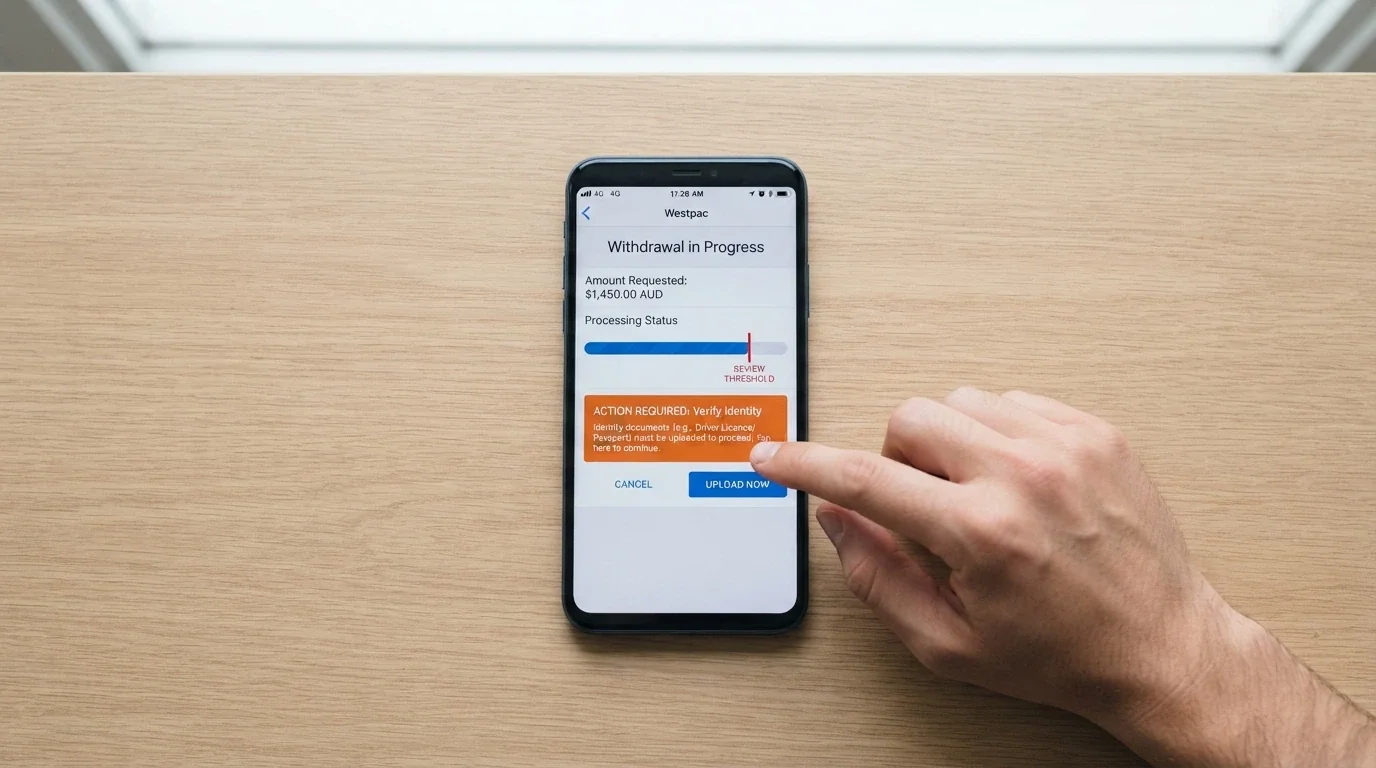
Across tested AU-accessible casinos in 2026, that threshold sits in the A$2,000 to A$5,000 range for cumulative lifetime withdrawals. Below it, withdrawals process automatically — crypto lands in the player’s wallet without further questions. At or above it, a verification request reaches the player. The standard set: a government-issued photo ID, a proof of address (utility bill or bank statement under three months old), a source-of-funds declaration, sometimes a selfie holding the ID. The casino averages one to three business days to review. The withdrawal sits in the queue until the review is closed, and the player is no longer anonymous at this point — they have handed the operator their full identity, which is now in a database sitting in a jurisdiction with weaker privacy law than Australia’s.
“There is no permanent exemption from identity verification. The casino’s licensing obligations (Curaçao, Anjouan) require them to conduct customer due diligence — the operator has simply built that requirement into a withdrawal threshold rather than the registration flow.” That framing is worth keeping in mind whenever a casino pitches itself as “no KYC.” It means no KYC at signup, not no KYC forever. The threshold is not an if but a when, and the longer a player avoids it the more consequential the friction becomes — by the time the verification request arrives, the balance under review can be several thousand dollars the player has been counting on.
Refusing the request does not end the verification requirement. The casino freezes the balance pending compliance, declines the withdrawal, and in extreme cases claws back winnings derived from play after the threshold was crossed. The player’s account remains blocked until the documents are provided. The casino, technically, is following its own licence terms — which is precisely the point: no player is exempt from this obligation, only delayed.
How AUSTRAC Links Your Crypto Wallet to Your Real Name
AUSTRAC, Australia’s financial intelligence agency, requires every Australian cryptocurrency exchange to verify customer identity under its Digital Currency Exchange registration regime. The big four — CoinSpot, Swyftx, Independent Reserve, Coinbase AU — comply; every smaller Australian exchange with registration does too. The KYC happens at the exchange, at the moment a player completes signup and tries to fund the account. An Australian can’t buy Bitcoin on an Australian exchange without giving the exchange a name.
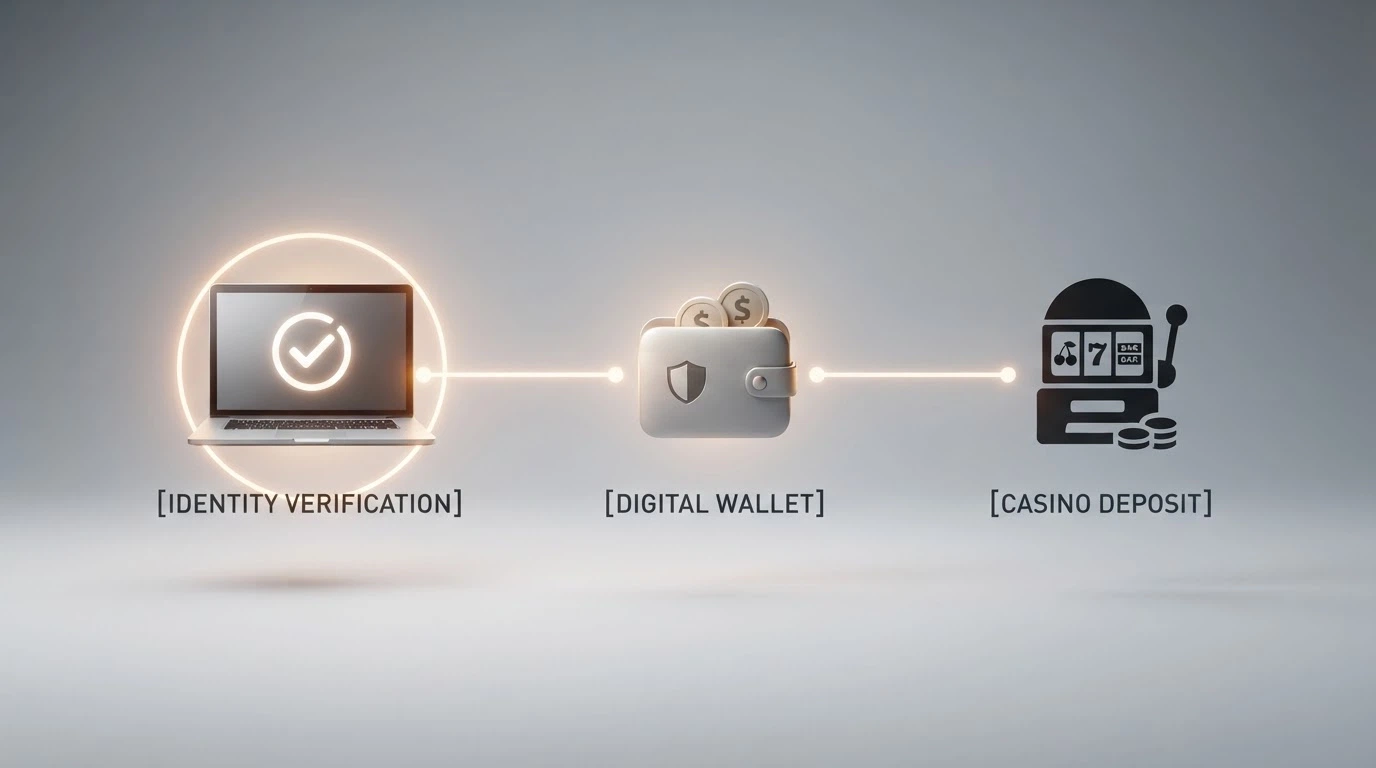
That identity follows the Bitcoin. When the player sends the Bitcoin to the offshore casino’s deposit address, the blockchain records the transfer — and the player’s exchange has a record of the wallet that was funded. AUSTRAC, with the right cause, can pull the chain of custody from the casino’s deposit address back to the exchange, then to the player’s verified identity. The casino never learned anything; the Australian financial system learned everything at the moment the player bought the first coin.
This is what makes the privacy claim conditional. An “anonymous” crypto casino is anonymous in the sense that the operator does not know who you are. It is not anonymous in the sense that the player is invisible to Australian financial oversight — because no real Australian player is invisible to AUSTRAC. The crypto you bought on a local exchange has your passport attached to it before it reaches the wallet, and a casino cannot undo what an exchange has already done.
Bitcoins bought peer-to-peer, on a non-Australian exchange, or via an ATM create different identity trails. The casino cannot tell which of these funded your deposit — and neither, in many cases, can the casino. The AUSTRAC link is strongest at the registered Australian exchange end. A player who legitimately wants to be invisible from the Australian financial system would need to acquire crypto through offshore or peer-to-peer channels — at which point the practical difficulties shift the problem rather than solving it. For most Australians, the casino-deep anonymity is the only anonymity available, and that is the one any “anonymous crypto casino” pitch is really selling.
The Top 10 Anonymous Crypto Casinos for Australian Players in 2026
| Operator | Licence | AU Market Share | Welcome Bonus | Wagering | Crypto Accepted | Game Library |
|---|---|---|---|---|---|---|
| Rocket Play | Curaçao (offshore; no AU licence) | 9.40% | 100% up to A$1,000 + 100 FS (1st); 200% up to A$1,000 (2nd) | 40x on bonus only | BTC, ETH, LTC, USDT | Multiple studios |
| Skycrown | Curaçao — Hollycorn N.V., verified via Antillephone validator (offshore; no AU licence) | 8.55% | Multi-deposit welcome package | 40x on bonus only | BTC, ETH, LTC, USDT, others | Multiple studios |
| Royal Reels | Curaçao (offshore; no AU licence) | 2.51% | A$2,500 + 50 FS across 3 deposits; A$10 no-deposit after phone verification | 35x on bonus only | BTC, ETH, USDT | 5,400+ pokies, 40+ providers |
| WinSpirit | Curaçao (offshore; no AU licence) | 1.55% | — | — | — | — |
| Stake | Curaçao (offshore; no AU licence) | 1.28% | 200% up to $2,000 | 40x on deposit + bonus | BTC, ETH, LTC, USDT, DOGE, XRP, 10+ others | 50+ studios |
| Rainbet | Curaçao (offshore; no AU licence) | 1.28% | — | — | — | — |
| Scream Casino | Curaçao (offshore; no AU licence) | 0.99% | — | — | — | — |
| Fair Go | Curaçao (offshore; no AU licence) | 0.80% | 5 × 100% up to $200 each ($1,000 total); $15 no-deposit free chip | 30x on deposit + bonus | BTC, LTC, others | RTG primarily |
| Bizzo Casino | Curaçao (offshore; no AU licence) | 0.57% | Up to A$7,250 + 175 FS across 4 deposits; 200% crypto bonus up to A$800 (1st deposit 125% up to A$2,500 + 125 FS) | 40x on bonus tiers | BTC, ETH, USDT, others | 8,000+ titles |
| Rocket Casino | Curaçao (offshore; no AU licence) | 0.57% | — | — | — | — |
The ranking is built on AU market-share tracking data (BLASK BRANDS), not editorial preference. The dollar figures attached to each entry are revenue that lands from Australian players — which is to say, dollar figures worth treating as a sign of operator scale and reach, not an endorsement. Larger AU share means more Australian accounts; it does not mean better odds, faster payouts or any kind of Australian licence.
What the table does not contain, and what would matter more than any welcome bonus figure, is the answer to one question: does this operator hold an Australian licence? None of them do. No online casino licence exists in Australia. Every operator in this ranking is operating outside Australian law. The Curaçao or Anjouan licence it carries — when verifiable — covers its regulatory obligations in its home jurisdiction, not in Australia. For an Australian player using the site, the licence functions as one piece of operational background, not as consumer protection.
BetStop — the National Self-Exclusion Register — is the most concrete example. Registered members of BetStop are excluded from every Australian-licensed wagering service. Offshore casinos are not licensed services, are not connected to the register, and a registered self-excluder who creates an account at any operator on this page will have the account accepted and funded without flag. The licensed protection disappears exactly where the unregulated product begins.
Stake — The Crypto Giant with a KYC Catch
Stake runs the largest crypto-native casino operation in the world, and the 200% deposit match up to $2,000 reads like exactly the kind of welcome bonus a no-document casino is supposed to offer. The structure underneath is less forgiving. Wagering requirement sits at 40x on the combined deposit and bonus — the harsher of the two structures, and roughly twice the effective cost of a 40x-on-bonus-only offer at the same headline number. The minimum deposit is $100; the maximum cashout is not capped.
The KYC requirement is the catch most reviewers underreport. Stake requires KYC Level 2 — full identity and document verification — before the welcome bonus is credited. The player requests the bonus through support, completes the deposit, then waits 24 to 48 hours for both the account review and the bonus crediting. A player who wants the headline bonus has to consent to the full verification before any benefit lands. The casino is “no-KYC at signup” in the strict sense, and old-school crypto casino marketing copy sells that framing, but the welcome bonus does not live in that world.
Game library is one of the broadest in the set: 50+ studios including Pragmatic Play, Evolution, Hacksaw and others. Pokies, live dealer, table games, sports — the operator runs a casino-plus-sportsbook hybrid. Crypto support runs wider than most competitors: BTC, ETH, LTC, USDT, DOGE, XRP and ten or more others. AU market share sits at 1.28% with $115.67M in revenue — a fraction of Rocket Play’s reach but a real presence at the top of the offshore crypto market.
The verdict on Stake for an Australian player is conditional. The product is large, the game library is deep, and the welcome bonus is competitive on the headline — but the KYC-on-bonus requirement disqualifies it from the “no verification” framing that gives anonymous crypto casinos their market. A player who has decided to accept full verification at a Curaçao-licensed operator gets one of the industry’s larger and better-engineered crypto casino experiences. A player who came for anonymity should choose an operator whose welcome bonus pays out under the soft-KYC threshold.
Rocket Play — The High-Volume Operator with a Two-Tier Deposit Match
Rocket Play is the operator Australian players actually use most. Its 9.40% AU market share and $632.69M in revenue put it ahead of every other entry in the offshore crypto space by a wide margin, and the size alone tells an Australian player something useful: the operator has the operational scale to be processing Australian-traffic withdrawals inside an explicit regulatory framework, whatever that framework is in Curaçao.
The welcome package gives the most generous first deposit of the set: 100% match up to A$1,000 plus 100 free spins on the first deposit, then a 200% match up to A$1,000 on the second. Wagering requirement sits at 40x on the bonus amount only — the better of the two structures and a meaningful difference from Stake’s deposit-plus-bonus layout on a comparable headline number. Maximum bet while wagering is capped at $5 per spin, which is standard for the market.
Crypto support covers BTC, ETH, LTC and USDT. The minimum deposit varies by promotion but is low enough to be accessible at casual stakes. Game library runs multiple studios including Pragmatic Play and BGaming, with the standard offshore spread of pokies, live dealer and table games.
The verdict on Rocket Play is straightforward: the largest AU player base in the set means the most tested Australian-facing flow, the most-practised crypto withdrawal pipeline, and the operator whose underlying licensing practices are exposed to the most Australian-account scrutiny. The wagering structure is the better of the two common formats. The bonus is competitive, the crypto coverage is standard, and the operational scale is the genuine article. A player who wants both an offshore crypto casino and the operator with the deepest Australian track record is looking at Rocket Play.
Skycrown — Curaçao-Verified with a Player-Friendly Wagering Structure
Skycrown is run by Hollycorn N.V. and licensed in Curaçao — and Skycrown is one of the few operators on this page whose licence could be independently verified through the Antillephone licence validator during research. That fact is a small but specific marginal advantage in a market where licence claims are routine and verification is rare.
The wagering requirement is 40x on the bonus amount only — the better of the two structures. Maximum bet while wagering is A$6.50 per spin, going above which voids winnings. Withdrawal limits are A$7,500 per week and A$15,000 per month, which is on the looser end of the offshore market and meaningful for high-stakes players. The welcome package is a multi-deposit structure whose exact current terms vary; readers should check the operator’s promotions page for current detail.
The licence verification matters more in practice than it might sound. A Curaçao licence confers no Australian consumer protection. What it does is verify that the operator has cleared the Curaçao licensing body’s basic operator checks (corporate standing, AML procedures, complaint handling) and is subject to ongoing monitoring. Skycrown’s licence is current, validating through a public infrastructure rather than a claim on the website. Most operators reviewed here do not match that.
AU market share of 8.55% with $436.07M in revenue puts Skycrown in second place in the set — well behind Rocket Play, well ahead of everyone else. The verdict for an Australian player is favourable for the verifiable licence and the bonus-only wagering structure. The name is one to take seriously on operational grounds. The welcome terms are not reproduced here because they vary; a player interested should go to the site directly.
Royal Reels — 5,400+ Pokies and a Genuine No-Deposit Entry Point
Royal Reels runs the largest verified pokies library in the set: 5,400+ pokies from 40+ software providers. That figure is meaningful. A player browsing the lobby can spend longer moving through it than most operators’ entire inventory combined. Live dealer, table games and instant-win titles are present, but the operator’s centre of gravity is the pokie room and that is what it has optimised for.
The welcome pack spans three deposits: 100% up to A$500 first, 75% up to A$750 second, 100% up to A$1,250 third — A$2,500 total plus 50 free spins. Wagering is 35x on bonus only, which is the lowest in the set on the better-of-the-two-structures basis. Maximum bet while wagering is A$5 per spin.
The genuinely useful offer is the no-deposit bonus: A$10 after phone verification, 30x wagering. The phone verification is a partial KYC event that buys a player real money at the casino with no deposit risk; the wagering requirement is achievable on a small bonus; the legitimacy of the offer passes the published-terms sanity check. For a player who wants to test a no-KYC casino without funding anything, Royal Reels has the strongest entry point in the set.
Royal Reels offers instant crypto and PayID withdrawals — practical for a player who wants to use a mix of rails — and runs a 10-tier VIP program for returning players. AU market share of 2.51% with $243.99M revenue makes it the fourth-largest operator in the set. The verdict is clear: best for a player who values a no-deposit trial, a deep pokie library, and bonus-only wagering under 40x.
WinSpirit
WinSpirit holds 1.55% AU market share with $110.3M revenue — meaningful traffic from Australian players, well into the offshore top 20, justifying the entry. The licence is Curaçao, which is consistent with the rest of the set but was not independently verifiable through a public validator during research.
Most of the standard specifications were not independently verified during research: the welcome bonus, the wagering structure, the game’s library, the crypto support. The operator is included in the ranking because the AU market-share data confirms Australian player traffic. Terms for this operator vary; players should consult the site directly.
The verdict is honest-qualitative. WinSpirit is an offshore Curaçao-licensed casino with confirmed Australian player use. Specific terms at the time of this review were not verifiable, and players should treat the operator as one for the bonus and wagering details to be confirmed before funding.
Rainbet
Rainbet matches Stake on AU market share — 1.28% each — with $83.13M revenue. It is a crypto-native operator, which is the meaningful positioning: the platform was built for crypto players from the outset rather than retrofitted, and the user experience is built around wallet-first interaction rather than the card-and-document model.
Most published specifications were not independently verified at the time of review. The operator is included on the strength of its market share, not its terms. Players should check the operator’s site directly for current bonus and wagering detail.
The verdict is straightforward. Rainbet is a crypto-native offshore casino with confirmed Australian reach. Confirmation of bonus, wagering and game library details requires checking the operator’s site directly; the Australian-facing traffic is real but the published terms were not researchable at the time of this review.
Fair Go — The RTG Specialist with the Lowest Wagering in the Set
Fair Go is the standout for two reasons: 30x wagering on deposit + bonus is the lowest multiple among all ten featured operators, and the $15 no-deposit free chip gives an Australian player a genuine zero-cost trial of the casino.
The welcome package is unusual: five consecutive 100% deposit matches up to $200 each, totalling $1,000. A player who keeps depositing claims the full $1,000 over five deposits, with each tranche at the same 30x-on-deposit-plus-bonus structure. The minimum deposit to qualify is $20 — the lowest in the set among the verified operators. There is no maximum cashout on the welcome deposit bonuses, which is rare.
The $15 no-deposit free chip carries 60x wagering and a $180 maximum cashout, both of which sound punishing until the no-deposit framing lands: the player risked nothing, the only stake is the time it takes to clear $900 in turnover at nominal pokie stakes, and the upside is a $180 cashout for a player who cleared it. That math is not favourable, but it is not deceptive.
The game library centres on RealTime Gaming (RTG) primarily, which is a narrower studio profile than the 50+-studio platforms at the top of the set. Crypto support includes BTC and LTC among others. The trade-off is straightforward: a player who is happy with RTG’s catalogue and wants the lowest wagering in the set has a clear answer. A player who wants variety of studios goes somewhere else.
The verdict on Fair Go: lowest wagering in the set, lowest minimum deposit, real no-deposit offer, and a familiar RTG catalogue. The $180 cashout ceiling on the no-deposit chip tells the player what the operator thinks of the offer they are giving away — and is honest about it. A player looking for a smooth, low-friction offshore experience has a defensible case for Fair Go; a player looking for a deep multi-studio library does not.
Scream Casino
Scream Casino holds 0.99% AU market share with $94.87M revenue — meaningful enough to confirm Australian player reach. The licence is Curaçao, consistent with the rest of the set. Most published specifications were not independently verifiable at the time of research; the operator is included because the AU market-share data is concrete and indicates real Australian use.
The verdict is qualitative. Scream Casino is a Curaçao-licensed offshore operator with confirmed Australian traffic. Detailed bonus, wagering and game-library terms were not verifiable at the time of this review, and a player interested in the specific terms should consult the operator’s site directly.
Bizzo Casino — 8,000+ Games and a Crypto-Specific Welcome Bonus
Bizzo runs the largest game library in the set after Royal Reels’ verified pokies count: 8,000+ titles across multiple studios. The welcome package is unusually aggressive: a four-deposit pack totalling up to A$7,250 and 175 free spins, with a standalone 200% crypto bonus of up to A$800 on the first crypto deposit.
The 200% crypto-only welcome is the headline. A player funding the first deposit in BTC, ETH or USDT can claim a larger bonus than the equivalent fiat deposit would unlock — which is one of the few places the cryptocurrency premium is handed back to the player rather than absorbed by the operator. Minimum qualifying deposit is A$30. Wagering requirement is 40x across all tiers.
AU market share is 0.57% with $51.38M revenue — the second-lowest in the verified list — so the Australian reach is small. The product behind that share is competitive: a massive game library, an aggressive welcome package, and a crypto-specific bonus that rewards exactly the deposit method this page is about.
The verdict on Bizzo: best for a player who wants the largest game library in the set and is willing to fund a Bitcoin or USDT deposit to unlock the bigger bonus. The wagering structure is standard 40x, the terms are not visibly better than Rocket Play’s on the comparable headline, and the absolute number is high enough that the player should think hard about the budget they’re staking across four qualifying deposits.
Rocket Casino
Rocket Casino holds 0.57% AU market share with $43.22M revenue — small but non-trivial Australian presence. Curaçao-licenced. Most specifications were not independently verifiable at the time of research. The operator is included on the strength of its market share, and players should consult the site directly for current terms.
The verdict is qualitative. Rocket Casino is a smaller Curaçao-licensed operator with confirmed but limited Australian reach. Detailed terms were not verifiable at the time of this review.
Why Your 2026 Anonymous Casino Bonus Costs More Than It Pays
A welcome bonus at an anonymous crypto casino carries a real cost that the headline number does not advertise. The headline says “200% up to $2,000” or “100% up to A$500 plus 100 free spins” — and the player reads that as free money. It is not. It is money that the player is expected to recycle many times before any portion is allowed to leave the building.
Wagering requirement, the multiplier the player must hit in total bets before the bonus balance converts to withdrawable cash, is the single most important number on the welcome package. The math is straightforward: required turnover = bonus amount × wagering multiple. A 40x requirement on a A$500 bonus means A$20,000 in total bets before the remaining balance is withdrawable. A 35x requirement on the same bonus means A$17,500.
The structure of the wagering requirement matters as much as the multiplier. Two formats exist in the offshore market. “Wagering on deposit + bonus” charges turnover against the player’s deposit and the bonus combined — so a 40x on a A$500 deposit and A$500 bonus means A$40,000 in turnover. “Wagering on bonus only” charges turnover against the bonus alone — so the same bonus setting the same 40x against the A$500 bonus means A$20,000 in turnover, half the volume. Stake’s deposit-plus-bonus structure sits at the harsher end; Rocket Play’s bonus-only structure sits at the more favourable end. The headline number is the same; the effective cost is doubled.
The sample calculation grounds the cost in real numbers. A 40x wagering requirement on a A$10 bonus produces A$400 in required turnover. At 96% RTP on a typical pokie spin, the player loses approximately 4% of every dollar wagered to the house edge — so the expected balance after clearing the bonus is roughly A$4 to A$6. The player who came in with A$10 has A$4 to A$6 left, has spent several hours of continuous play hitting the wagering requirement, and now has a small enough withdrawable balance that the soft KYC threshold is not yet in play.
The economics explain the offer’s existence. Casinos spend $200 to A$500 to acquire one new player through paid advertising. A no-deposit offer that costs the casino A$5 to A$20 in expected payouts is dramatically cheaper than a Google or affiliate slot — which is why no-deposit offers exist at all, and why they all carry terms heavy enough to almost guarantee the player does not cash out at full value. The casino is paying A$5 to A$20 to put a player inside the lobby, where the player is expected to keep depositing. The bonus is marketing; the math was settled before the promotional page went live.
Validity windows compress the math further. Bonuses expire. The standard window is seven days from activation, which is short enough that a casual player is likely to lose the bonus to expiry before finishing the playthrough. A player who lets a bonus expire forfeits both the bonus and any winnings derived from it — turning an unsuited promotion into a guaranteed loss.
No-Deposit Bonuses and Free Spins — What Australian Players Can Actually Claim
Several no-deposit offers worth their detail exist in the offshore set reviewed here. None of them should be read as generous. They are designed to put a paying player inside the lobby cheaply, and the terms on each one are the evidence.
Royal Reels’ A$10 no-deposit bonus requires phone verification. Phone verification is a partial KYC event, but it is not the full document-based KYC of the soft KYC threshold — and the 30x wagering is the lightest in the set on this type of offer. It is the most accessible free-trial entry.
Fair Go’s A$15 no-deposit free chip carries 60x wagering and a A$180 maximum cashout. The wagering is heavy, the cashout cap is real, and the combination is typical of a no-deposit offer from an operator whose cheapest acquisition path is a free chip.
Offshore operators outside the reviewed set offer comparable structures. BitKingz offers 50 free spins on registration with no deposit, 45x wagering, a EUR 50 maximum cashout for non-depositing players, and a EUR 20 deposit requirement before any withdrawal can be processed. FortuneJack offers 150 no-deposit free spins with 0x wagering — no turnover requirement at all — but requires a deposit equal to winnings before any cashout can be processed, and the spins must be used within a 24-hour window. The 0x wagering is the headline; the deposit-equal-to-winnings requirement is the catch.
No-deposit offers cost the casino A$5 to A$20 in expected payouts to deliver; the operator is not losing money on them. They are acquisition tools that earn their keep when a player returns to deposit, and the publishable terms ensure that the average player walks away with the experience instead of the cash. A player who reads the terms carefully and treats the no-deposit bonus as a way to evaluate the platform rather than as a way to make money has the right framing.
What a Welcome Bonus Actually Costs — The 2026 Expected-Loss Calculation
The expected loss from a welcome bonus is the dollar amount a statistically average player would lose by completing the bonus playthrough. Mathematically, it equals the required turnover multiplied by the house edge. The input is the wagering multiple, the bonus size and the game RTP — three numbers any published bonus page carries.
A 40x wagering requirement on a $10 bonus produces $400 in required turnover. At 96% RTP on pokies (the standard for a high-volatility Pragmatic Play slot, of which every offshore casino’s lobby is full), the house edge is 4% — meaning the player loses 4 cents on every dollar wagered to expected value. The expected loss is $400 × 4% = A$16. The bonus was $10. The player’s expected balance after clearing is therefore $10 minus $16, and the player is roughly A$4 to A$6 in the red — close to the $4 to A$6 expected balance reported by independent trackers.
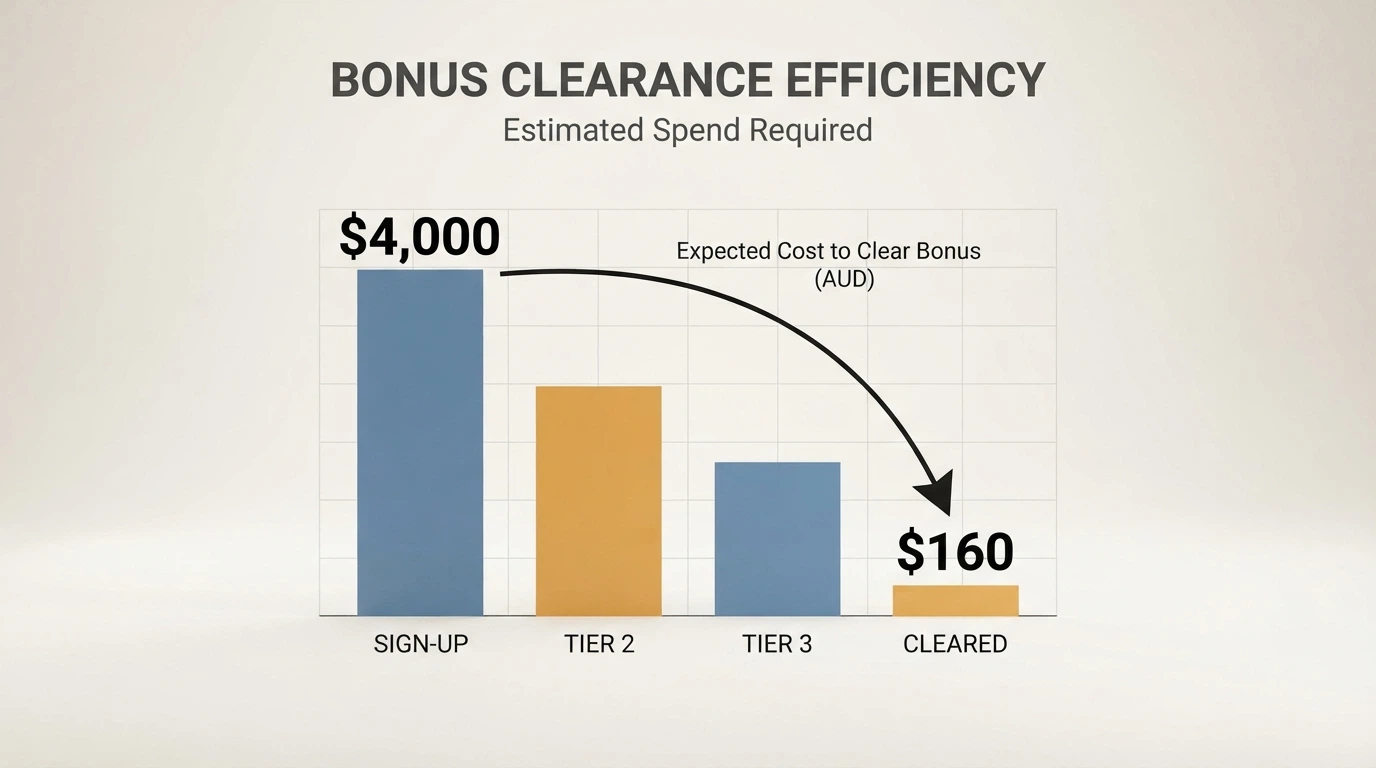
The same logic scales to a much larger bonus. A 40x-on-deposit-and-bonus offer like Stake’s, claimed by a player who deposits the A$2,000 maximum and receives a A$6,000 bonus (200% match up to A$2,000 means the bonus is $4,000, but the structure is the same), requires A$400,000 in turnover. The house edge on the standard pokie portfolio is on the order of 4%. The expected loss is A$16,000.
That figure is the price of the bonus. It is what the casino expects to make, in aggregate, across all players claiming it. A player who plays with the bonus balance over thousands of spins at the published RTP loses the expected loss and walks away with whatever remains after the wagering is complete. A player who finishes well in front is the rare outcome the marketing exists to advertise; a player who finishes where the math says is the average outcome no promotion page mentions.
These are statistical estimates across many spins under the stated assumptions; they are not predictions of any single session. A player who hits a multiplier sequence in the first hundred free spins can clear a bonus ahead. A player who hits nothing in ten thousand spins can clear a bonus deep in the red. The estimate describes the average, not the session.
A player who treats the welcome bonus as a way to extend their bankroll across more playtime is reading it correctly. A player who treats the welcome bonus as free money is the operator’s target customer; the expected-loss calculation is what tells them so.
Are Anonymous Crypto Casinos Legal in Australia? No — and Here Is What That Actually Means
The legal position is unambiguous and easy to misread: anonymous crypto casinos are prohibited to provide to a person in Australia under the Interactive Gambling Act 2001 (IGA). They are not in a grey area. They are not subject to a permitting regime nobody applied for. The activity is illegal at the operator end; the operator simply is not in Australia, which is why the enforcement action runs at the provider rather than the player.
No Australian licence for online casino exists. Not federally, not in any state or territory. The Northern Territory Racing and Wagering Commission (NTRWC) via Licensing NT is the de facto national licensor for wagering operators, but the licence is for wagering — race betting, sports betting — not for casino. Crown Melbourne and The Star Sydney are state-licensed land-based venues that do not constitute online casino licences and cannot offer their product remotely. A site claiming to be “licensed in Australia” and offering online casino is a fabrication.
The IGA 2001 prohibits online casino games, online pokies, and in-play sports betting to people in Australia. The Interactive Gambling Amendment Act 2017 closed loopholes used by offshore operators and gave the ACMA enforcement and site-blocking powers. Section 8-1 of the ITAA 1997 treats recreational gambling as non-assessable income and losses as non-deductible — meaning there is no Australian tax consequence to play one way or another, but no Australian tax framework protects the player either, because no licensed Australian framework exists.
The individual player is not prosecuted under the IGA. The Act targets the provider, not the customer — the ACMA’s enforcement is directed at the operators and affiliate sites that funnel Australians toward them, not at the Australian who clicked the link. The practical reality is that an Australian who plays at an offshore crypto casino is not facing a criminal record. What they are facing is the absence of every protection the Act would have provided if the operator were local.
What an Australian player loses by playing offshore:
- No Australian consumer protection. A licensed Australian operator is held to Australian consumer law. An offshore Curaçao operator is held to whatever the Curaçao regulatory regime provides, plus the operator’s own published terms. The realistic best-case dispute path is an arbitration through the Curaçao regulator — slower, less familiar, and operating under different commercial law.
- No BetStop coverage. BetStop is the National Self-Exclusion Register, live since August 2023. As of 31 March 2026, 59,830 people had registered and 37,247 had active exclusions. None of those exclusions reach an offshore casino. A registered self-excluder opening an account at an offshore operator has the account accepted and funded.
- No mandatory deposit limits, activity statements, or take-a-break tools. Licensed Australian operators are required to offer customer-set deposit limits and activity statements. Offshore operators typically offer similar tools as opt-in features or not at all.
- No protection from refusal to pay. A licensed Australian operator that refuses to pay a legitimate withdrawal faces ACMA action and commercial penalty. An offshore operator that refuses to pay faces its own enforcement regime, with the player dependent on a slow complaint path through a foreign regulator — or on the goodwill of the operator.
- Real risk of being blocked. The ACMA has blocked 1,788 illegal gambling and affiliate websites since November 2019 (as of 20 August 2026), and Australian ISPs are required to enforce the blocking. An offshore casino a player deposited at last week can be on the blocklist next week, with the player’s balance intact but unreachable.
“Even if a service looks legitimate, it’s unlikely to have important customer protections. This means Australians who use illegal gambling services risk losing their money.” That is the Australian Communications and Media Authority’s framing, and it is the framing Australian players should read before depositing. It is exactly correct, and exactly what the offshore casino market does not want to advertise.
Australia’s Online Casino Ban — What the Interactive Gambling Act Actually Prohibits
The Interactive Gambling Act 2001 separates Australian-regulated gambling into the licensable and the prohibited. The licensable side includes pre-event wagering on racing and sport, lotteries, and keno — all operated under state and territory licences and administered by regulators like the Northern Territory Racing and Wagering Commission. Online casino games, online pokies and in-play sports betting (a wager placed after a sports event has started) are prohibited to people in Australia. No licensed channel exists for them.
The rationale is straightforward. Online casino products were considered to carry specific harm characteristics — continuous-play availability, deposit immediacy, isolating environment — that justified tighter regulation than the pre-event wagering model. In-play betting was added to the prohibition under the same reasoning in 2017. The amended Act gave the ACMA its enforcement and site-blocking powers.
The audience for legal Australian wagering is constrained by these prohibitions. Licensed operators offer a real-money product with customer-set deposit limits, identity verification at account opening, full transaction visibility to the operator, mandatory dispute resolution paths, and ACMA oversight. An Australian betting on the Melbourne Cup through a licensed operator has every protection the framework provides. An Australian wanting to play blackjack against a live dealer has no licensed channel at all.
The minimum age for all commercial gambling in Australia is 18. Land-based venues operate under state-level conditions that include age verification at entry, harm-mitigation staff, mandatory responsible-gambling signage, and self-exclusion registers that bind the venue. None of these land-based protections extend to the offshore product, because the offshore product is not a land-based venue and is not Australian-licensed.
The 2026 reform package — passed 19 August 2026 and commencing 1 January 2027 — does not legalise online casino. It tightens the existing prohibitions and extends them into new areas (advertising, inducements, payment-blocking). Online casino remains prohibited; the new laws give the existing prohibition sharper teeth.
ACMA’s Enforcement Record — 1,788 Sites Blocked and Counting
The Australian Communications and Media Authority is the federal regulator enforcing the online prohibition. It investigates complaints, issues formal warnings, brings civil penalty proceedings, refers operators for enforcement, and directs Australian ISPs to block illegal sites. The blocking is administrative rather than criminal; the penalty regime runs through the federal courts.
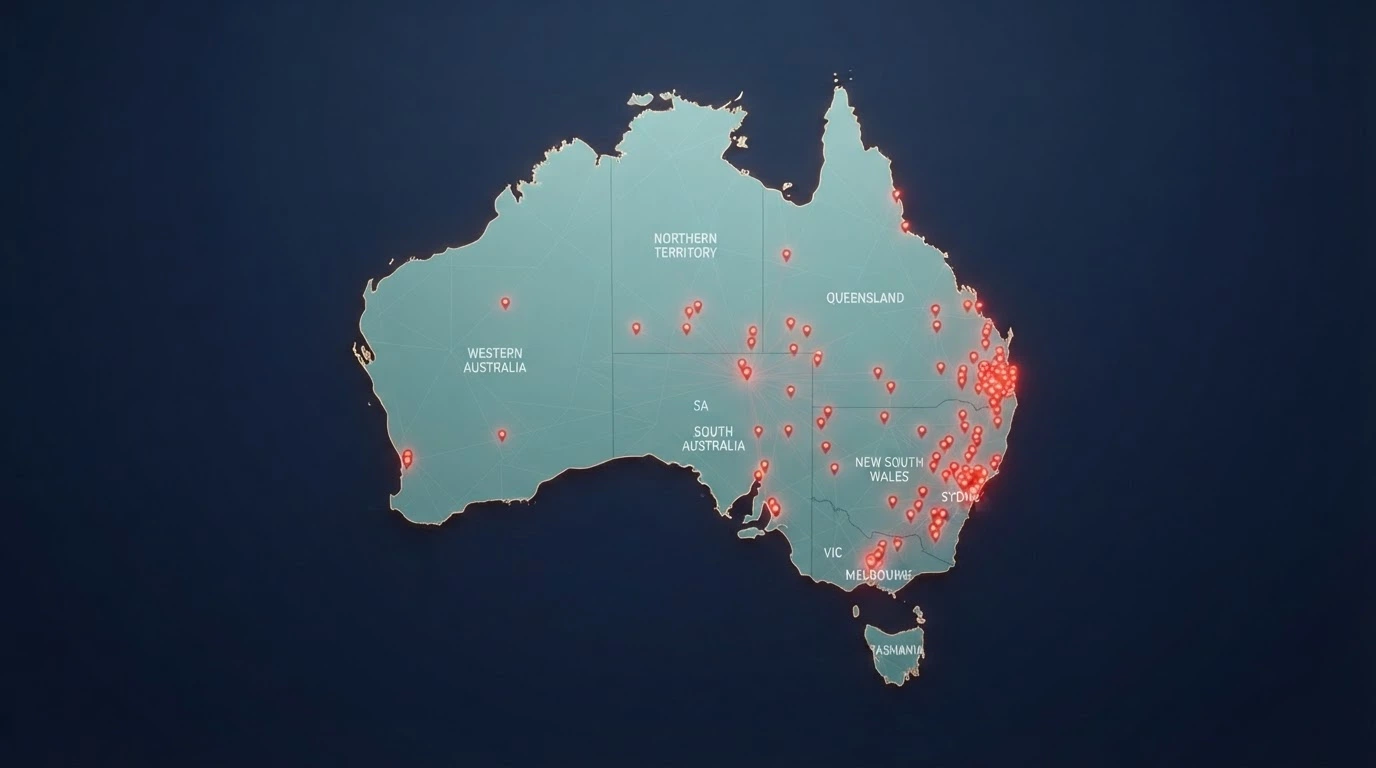
The headline number is the blocklist. Since the first blocking request in November 2019, the ACMA has blocked 1,788 illegal gambling and affiliate websites (as of 20 August 2026). The blocklist is dynamic; sites that come back under new domains are blocked again, and affiliate pages that funnel traffic to offshore operators are blocked alongside the operators themselves. Over 230 illegal gambling services have voluntarily withdrawn from the Australian market since the ACMA began enforcing strengthened offshore gambling rules in 2017, which is a different data point but speaks to the same regulatory pressure.
The penalty figures for breach of the IGA are concrete: civil penalties up to A$2,475,000 per day for an individual and A$12,375,000 per day for a corporation. These are not hypothetical. The ACMA has brought proceedings against multiple offshore operators for their continued provision of services to Australians, with settlements in the multi-million-dollar range. The penalty regime is calibrated to make the Australian market uneconomical for operators who fall within reach of the regulator.
Q4 2025 (October to December) saw the ACMA look into 483 enquiries and complaints, complete 23 investigations covering 45 gambling sites, find 69 breaches of the IGA, issue 10 formal warnings, and refer 133 websites for blocking. These figures come from the ACMA’s Action on Interactive Gambling quarterly report and are illustrative of the regulator’s current operating tempo.
The implication for an Australian player is operational. The casino a player deposits at today can be on the blocklist tomorrow. The block happens at the ISP level; the casino’s domain stops resolving on Australian networks; the player’s balance sits in the casino’s internal accounting system, untouched but unreachable. The genuine-everyday-use risk is not dramatic, but it is real, and a player who has funded an account at an offshore casino should treat any balance above what they need for near-term play as if it might become inaccessible at any moment.
What the 2026 Gambling Reform Means for Offshore Casino Access from 2026
The Interactive Gambling Amendment (Gambling Reform) Bill 2026 passed Parliament on 19 August 2026 and commences 1 January 2027 — which means an Australian player reading this page is reading it in the window where the new law exists in law but is not yet in force. The commencement date is the date the new provisions become enforceable.
The reform package tightens the existing prohibition in three material directions. First, advertising: from 1 January 2027, wagering advertising is limited to no more than three ads per hour between 6:00 am and 8:30 pm, with a live-sport blackout running from 15 minutes before a live event until 5 minutes after it ends. Athletes, celebrities and influencers are barred from promoting wagering products, and wagering advertising is banned inside sports venues and on the uniforms of players and officials. The advertising restrictions apply to licensed operators; they do not directly restrict offshore marketing, but they reshape the licensed-operator competitive landscape.
Second, direct marketing of inducements: from 1 January 2027, direct marketing of inducements is prohibited for 14 days after a customer signs up, for three months after a person deregisters from BetStop, and indefinitely for customers identified as at-risk of gambling-related harm. The licensed-operator bonus engine takes a sharp haircut. Offshore operators, by definition, are not bound by these inducement rules.
Third, payment-blocking: from 1 January 2027, banks and payment providers gain express authority to block transactions to illegal gambling operators. This is the most consequential change for readers of this page. The current system blocks offshore domains at the ISP level; the new system extends the block to the financial system. An Australian bank’s customer attempting to move funds to a known illegal gambling operator may find the transaction declined at the bank’s discretion.
Crypto-specific implications are not yet fully articulated. The reform authorises banks and payment providers to block transactions to illegal operators; whether crypto on-chain transfers fall within the scope depends on subsequent regulatory guidance. What is clear is that the legal direction of travel makes the financial path from Australian accounts to offshore crypto casinos narrower every policy cycle.
Licensed vs Offshore — What Australian Players Give Up at a Glance
| Player Protection Feature | Licensed Australian Wagering | Offshore Anonymous Crypto Casino |
|---|---|---|
| Regulator | ACMA (federal) + state/territory regulator | Curaçao or Anjouan (offshore) |
| BetStop coverage | Yes — exclusions enforced across all licensed services | No — register does not reach offshore operators |
| Identity verification | Required at account opening | Generally not required at signup (deferred to withdrawal threshold) |
| Deposit methods | Debit card, bank transfer, PayID/Osko, BPAY | BTC, ETH, LTC, USDT, others |
| Credit/crypto deposits | Prohibited since 11 June 2024 | Accepted |
| Customer-set deposit limits | Mandatory under state/territory conditions | Operator-dependent; not universal |
| Activity statements | Mandatory | Not universal |
| Dispute resolution | ACMA complaint and investigation path | Operator’s own complaint path; foreign regulator arbitration |
| Take-a-break tools | Required | Not universal |
| Self-exclusion reach | All licensed services simultaneously | Per-operator, manual, unenforced |
| Tax treatment of winnings | Not assessable income (section 6-5 ITAA 1997) | Not assessable income (section 6-5 ITAA 1997) |
| Site-blocking risk | None — licensed | Active — 1,788 sites blocked to date |
The table reads as a long row of “yes” for licensed and “no” or “operator-dependent” for offshore, which is the honest summary. The licensed product offers a framework of protection the offshore product does not match. The offshore product offers payment methods, registration speed and game libraries the licensed product does not. Neither side is the obvious answer — both are the answer to a different question.
The protection gap is not theoretical. ACMA’s own public framing is that “even if a service looks legitimate, it’s unlikely to have important customer protections.” BetStop enrolment is meaningless at an offshore site. A complaint about a refused withdrawal is a complaint to a Curaçao-licensed operator in a jurisdiction where Australian consumer law does not apply. These are not hypotheticals; they describe the standard offshore gambling experience.
Playing Safely When No One Knows Who You Are — Responsible Gambling at Offshore Casinos
The Australian harm figures are not abstract. About 430,000 Australians — 2.1% of the adult population — experience problem gambling. The annual social cost of gambling-related harm in Australia is approximately A$7 billion: A$2.1 billion in lost productivity, A$1.4 billion in healthcare costs, A$1.2 billion in crime and justice costs, A$1.2 billion in welfare payments, A$800 million in family services, and A$300 million in financial counselling. Australians lose approximately A$25 billion annually to gambling, with the average problem gambler losing A$28,500 per year and carrying average debt of A$52,000. High-risk gambling prevalence in 2022 was 1.8% per the Australian Institute of Health and Welfare.
These are the population-wide stats the licensed Australian wagering system tries to mitigate. BetStop, deposit limits, activity statements, mandatory take-a-break tools, and the regulator-driven consumer protection framework all exist against the background of these numbers. An Australian who plays at an offshore crypto casino has removed themselves from the protective framework — and the harm statistics have not reduced their relevance. If anything, the offshore product accelerates the relevant risk factors. Continuous-play availability is built into the product. Deposit immediacy is the entire point. Identity verification at signup is the friction being removed, and the friction is part of what slows a player down.
The practical implication is that an anonymous crypto casino account is exactly the kind of edge case the protection framework is built around — and exactly the kind of edge case the framework does not reach. BetStop does not cover offshore operators. An Australian-registered self-excluder who opens an account at one of the operators on this page will be accepted and funded.
The supports that work regardless of where the gambling happens:
The National Gambling Helpline is 1800 858 858, free, confidential, staffed 24 hours a day, 7 days a week. Calls are answered by counsellors, not call-centre staff. Online chat and counselling are available through Gambling Help Online at gamblinghelponline.org.au. Financial Counselling Australia runs a hotline at 1800 007 007. Lifeline, at 13 11 14, is the appropriate crisis contact.
These services are not offshore-operator-specific. They exist because the harm exists across the entire gambling landscape, licensed and unlicensed. Anyone affected by gambling harm in Australia should call the line, regardless of where the gambling happens.
BetStop, Deposit Limits and Self-Exclusion — Why None of It Covers an Offshore Casino
BetStop — the National Self-Exclusion Register — launched on 21 August 2023. As of 31 March 2026: 59,830 registrations and 37,247 active exclusions. Seventy-eight percent of registrants are under 40; thirty-eight percent chose lifetime exclusion. The register is comprehensive within the licensed wagering industry; one registration excludes a person from every Australian-licensed online and phone wagering service simultaneously.
BetStop’s scope is bounded. The register binds Australian-licensed wagering services only. An offshore casino is not an Australian-licensed service, is not connected to the register, and the registration flow does not check for self-exclusion status. A person registered with BetStop can open an account at Rocket Play and Stake and Skycrown and Royal Reels and Bizzo and still deposit crypto and play. The protection the register provides ends exactly at the boundary between licensed and unlicensed operators — which is the boundary this entire page concerns.
Self-imposed safeguards are the practical alternative for offshore players. A player who knows they are at risk can do several things the offshore product does not block:
- Set deposit and staking limits at the operator level — most offshore casinos honour customer-set limits, even when they are not legally required to.
- Maintain a self-imposed cooling-off period between sessions — close the browser, log out, change the wallet password to a randomised value for a set period so that re-depositing requires deliberate effort.
- Cap the balance held at any offshore casino. The smaller the bankroll on the platform, the smaller the maximum loss available.
- Keep the gambling helpline number saved in the phone — 1800 858 858 — and call it before the wallet is funded again if play has spun beyond the budget.
- Avoid depositing at the operators named at the top of this page unless the constraint of self-exclusion has been considered. The whole product removes friction, and the friction the product removes was part of what was protecting the player.
The 2026 reform introduces one direct-marketing protection: from 1 January 2027, direct marketing of inducements is prohibited indefinitely for customers identified as at risk. The protection runs through the licensed operator side and does not reach offshore marketing — but the underlying move, an identification of at-risk behaviour, is the licensed market catching up to what the player ought to set themselves. Until that framework extends, the offshore player’s responsibility for the constraint is their own.
Where to Get Help — Australian Gambling Support That Works Regardless of Where You Play
The free, confidential, 24-hour infrastructure for gambling-affected Australians works regardless of whether the gambling happens at a licensed TAB, an offshore crypto casino, or anywhere else. The gambling-helpline network is built on the harm, not on the regulatory status of the operator.
The National Gambling Helpline — 1800 858 858 — is the central call point. Free, confidential, available 24 hours a day, 7 days a week. Calls are answered by trained counsellors who can route the matter into online chat, financial counselling, or face-to-face support depending on what the caller needs.
Gambling Help Online — at gamblinghelponline.org.au — extends the same service into a chat and counselling interface. Online chat is the practical entry for a player who does not want to speak aloud about what is happening, or who is reading this page in the middle of a session and needs a confidential channel right now.
Financial Counselling Australia — 1800 007 007 — is the right line for the financial side of the problem. The A$52,000 average debt figure is not a hypothetical; it is the median for problem gamblers in Australia, and financial counsellors work specifically with gambling-related debt.
Lifeline — 13 11 14 — is the appropriate crisis contact for anyone whose gambling has reached a point where the next decision feels unmanageable.
These supports are not offshore-operator-specific. They exist because the harm exists across the entire gambling landscape. A player reading this page who has been using offshore crypto casinos and is worried about their gambling has the same access to support as a player at a licensed TAB. The phone number is the first action — anyone affected by gambling harm in Australia, at any operator, should call 1800 858 858.
How We Evaluated and Ranked These Anonymous Crypto Casinos
The featured-operator list was built on AU market-share tracking data rather than editorial preference. Specifically, traffic data from BLASK BRANDS, cross-referenced against Australian-facing review-tracking sources and operator terms pages. The two things this produces are (a) a list of offshore operators who actually reach Australian players, and (b) the relative ordering of those operators by Australian traffic volume. The list is what it is because the traffic data says it is — the ranking is the data’s output, not the writer’s preference.
The evaluation criteria, in order of weight:
- Licence jurisdiction and verifiability. Curaçao and Anjouan are the licences carried by the entire offshore crypto market. Where the licence was verifiable through a public tool (the Antillephone validator, primarily), the operator received a marginal advantage in the descriptive text. Where the licence was a claim only, the text marked it as such. None of the operators reviewed hold an Australian licence; that fact is unconditional and front-loaded in the operator profile section.
- Bonus terms and wagering structure. This is where the numbers diverge. Some operators run 40x on bonus only; some run 40x on deposit and bonus; Royal Reels runs 35x on bonus only; Fair Go runs 30x on deposit and bonus. The ranking does not reward the most aggressive bonus — it rewards the most transparent and player-friendly terms. Where wagering was not publicly verifiable, the operator text says so.
- Game library and crypto coverage. Game library matters because the lobby is the product, and an 8,000-game library is materially different from a 5,400-game library is materially different from a single-studio RTG catalogue. Crypto coverage matters because not every operator settles in TRON USDT, and the player experience depends on which coin the casino denominates the wager in.
- Operational track record with Australian players. AU market share data was the proxy for this. A larger share means more Australian deposits and withdrawals have actually cleared. It is not a guarantee of payout speed, but it is evidence that the operator has a working Australian-facing pipeline.
The verification process: each operator’s bonus terms were checked against the operator’s published bonus page and against independent review sources (CryptoSlate, Tech-Insider, CasinoAudit, AustralianGamblers, SlotBonuses, Maliyaat, The Walkman, FreeExtraChips, BonusOracle, BitcoinChaser). Where the operator and an independent source agreed on a number, the number went into the profile. Where only the operator’s site carried the figure, it was treated as the operator’s claim rather than as a verified fact. Where neither source carried the figure, the profile noted that the detail was not independently verifiable.
The methodology used by the strongest third-party review sources was hands-on testing: real crypto deposits, timed withdrawals, soft KYC observation. The ranking here took the underlying data those reviews produced and combined it with the AU market-share data, but did not itself run independent testing. A player judging the ranking should know it is built on published terms and traffic data, not on a fresh round of deposits.
Frequently Asked Questions About Anonymous Crypto Casinos in Australia
Do anonymous crypto casinos really not require ID verification?
No KYC at signup is accurate for most operators in this set — email and password carries the registration, and crypto deposits process without identity documents. The verification typically arrives at the withdrawal stage, somewhere in the A$2,000 to A$5,000 cumulative-withdrawal range, where Curaçao and Anjouan licensing obligations to perform customer due diligence take over. Stake is an outlier, requiring KYC Level 2 before the welcome bonus is credited. No operator reviewed here grants permanent exemption from ID verification.
How fast are crypto withdrawals at no-KYC casinos?
Crypto withdrawals below the soft KYC threshold typically process in minutes to a few hours, depending on the network and the operator’s internal wallet-confirmation flow. USDT on the TRON network processes in under one minute after the operator releases the funds, which is the typical fastest route. Bitcoin on the mainnet averages 10 to 60 minutes after release. Withdrawals crossing the soft KYC threshold hold for the duration of the document review (one to three business days, sometimes longer). All of this is below the threshold the user is below.
What happens when a no-KYC casino asks for my documents?
The casino sends a verification request once cumulative withdrawals reach the operator’s threshold (typically A$2,000 to A$5,000). The standard request includes a government photo ID, a proof of address (utility bill or bank statement under three months old), a source-of-funds declaration, sometimes a selfie holding the ID. The casino reviews within one to three business days. The withdrawal sits in the queue until approval. Refusing or ignoring the request freezes the balance; the casino’s licence requires the verification, and no player is exempt.
Are anonymous crypto casinos connected to BetStop or any Australian self-exclusion register?
No. BetStop binds Australian-licensed wagering services only. None of the operators reviewed here are licensed in Australia, and none checks BetStop at the registration flow. A person registered with BetStop can open an account at any operator on this page, deposit, and play — exactly the kind of player who most needs the protection BetStop does not reach. BetStop remains a powerful protection within the licensed market; its absence at offshore operators is itself a reason to stay within the licensed market where possible.
How does AUSTRAC affect crypto deposits from Australian exchanges to offshore casinos?
AUSTRAC requires every Australian registered cryptocurrency exchange to verify customer identity as part of its Digital Currency Exchange registration. CoinSpot, Swyftx, Independent Reserve and Coinbase AU all comply. When an Australian player buys crypto on a local exchange and sends it to an offshore casino, the player’s name is attached to the wallet at the exchange level. The casino sees only a wallet address; the Australian financial system sees the chain of custody back to the verified identity. Anonymity holds between the player and the casino; it does not hold between the player and Australian financial oversight.
What responsible gambling support is available for Australians who use offshore casinos?
The National Gambling Helpline (1800 858 858) is free, confidential and available 24 hours a day, 7 days a week. Online chat and counselling are available through Gambling Help Online at gamblinghelponline.org.au. Financial Counselling Australia can be reached at 1800 007 007; Lifeline crisis support is at 13 11 14. These services exist independently of any operator’s licensing status and are appropriate for any Australian affected by gambling harm, regardless of where the gambling occurs. The right next step for a player concerned about their gambling is to call.
Should You Play at an Anonymous Crypto Casino? What Australian Players Need to Weigh Up
The genuine part of the pitch is real. Signup takes two minutes and asks for an email and a password. Crypto deposits land within minutes. Pokies load, live dealer studios connect, withdrawals process in minutes below the threshold. The experience moves at the speed of crypto and the lobby is exactly what the marketing promises. For an Australian player who wants online casino games — a product the licensed market does not provide — the offshore product delivers within its operating envelope.
The genuine part of what you give up is just as real. No Australian consumer protection applies. No BetStop coverage. ACMA site-blocking is real and ongoing — 1,788 sites to date. An unstable balance held offshore is no more stable than the casino that holds it. A withdrawal at A$2,000 to A$5,000 cumulative is the most consequential single moment in any player’s tenure at an offshore casino, because it is the moment the soft KYC threshold arrives and the verification request lands. The marketing language of “no verification” describes the onboarding; the reality of “we will verify you when it suits our compliance obligations” describes the withdrawal flow. Both are true, and they are true at the same operator at the same time.
The AUSTRAC exchange link is the quietest of the constraints and the most durable. An Australian player who buys crypto on a local exchange has their identity attached to the wallet before any of it reaches a casino. The casino may not know who they are, but the Australian financial system does. The privacy a no-KYC casino sells is real between the player and the operator, and stops the moment a financial regulator wants to look.
The practical position this page takes is this. Anonymous crypto casinos are not a grey area; they are prohibited to provide to a person in Australia under the Interactive Gambling Act 2001, and the prohibition targets the operator end of the supply chain. Players are not prosecuted, but they are unprotected, and the product carries operational risks that a licensed Australian wagering account does not. An Australian choosing to play at an offshore crypto casino should weigh the appeal of speed, payment-method flexibility, and access to online casino games against the loss of every Australian consumer protection that does not extend to the offshore market.
If a player has weighed that and is choosing to proceed, the responsible framing is short and specific. Keep deposits small. Withdraw frequently, and well below the soft KYC threshold. Never carry a balance at the casino that you cannot afford to lose. Save the gambling helpline number in the phone before the first deposit — 1800 858 858, free, confidential, 24/7. Recognise that the marketed “no verification” framing is a description of the onboarding, not a guarantee of the lifetime of the account. The page does not recommend offshore play, and it does not condemn the players who use it. It gives the facts and lets the Australian reader make the call.
Published by the RTP Pokies Australia team.