
What a $20 Pokies Deposit Costs an Australian Player in 2026
Online pokies are prohibited in Australia under the Interactive Gambling Act 2001. There is no Australian licence to issue for the product, no operator to apply for one, and no local regulator to chase a refused withdrawal. Yet Australians do play online pokies. The sites they reach are offshore — Curaçao and Anjouan, mostly — and they accept A$20 deposits from players the ACMA cannot touch, because the Act targets the provider rather than the punter. This page is what that looks like at the A$20 tier: the bonus math, the deposit methods that work, the licences behind the names, and the consumer safeguards an Australian player gives up the moment they fund an account.
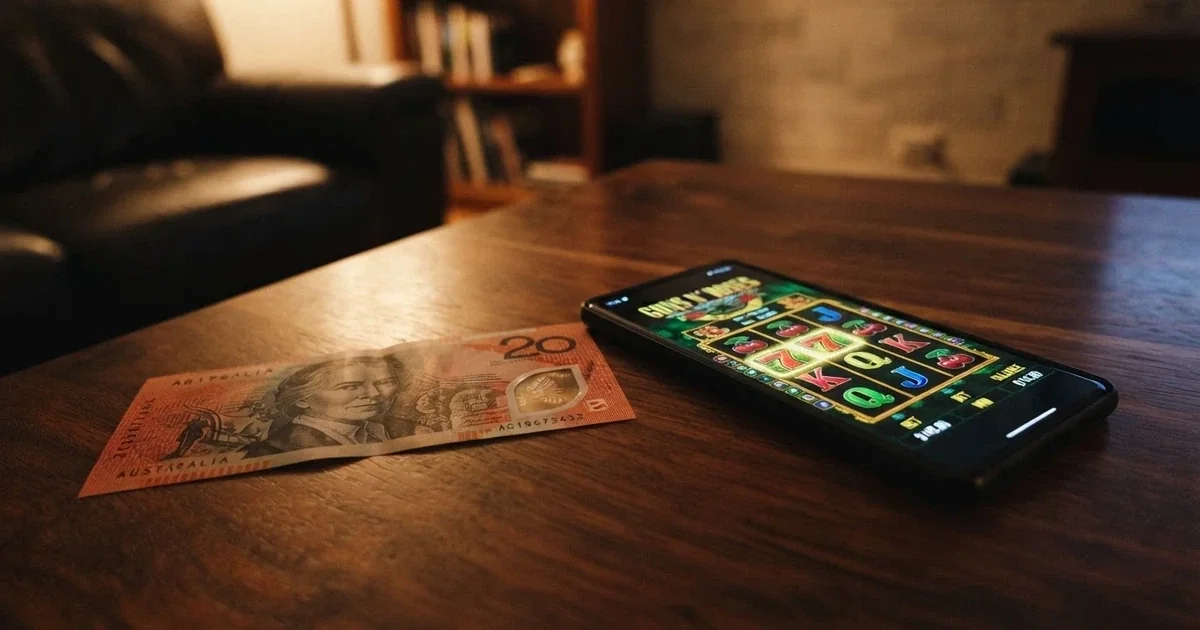
Data current as of 3 November 2026 and verified against the Australian Communications and Media Authority (ACMA) register.
Table of Contents
- Your $20 Pokies Deposit: What It Actually Buys You in 2026
- The 10 Offshore Pokies Sites Australians Use With a $20 Deposit
- $20 Minimum Deposit Pokies: How the Tiers Work and What to Expect
- The Legal Reality: No Online Pokies Site Is Licensed in Australia
- Getting Your $20 Onto an Offshore Pokies Site: Payment Methods That Work
- Playing $20 Deposit Pokies on Your Phone
- Real-Money $20 Pokies: Stakes, Payouts and What You Stand to Lose
- New to $20 Deposit Pokies? What First-Time Players Should Know
- The Pokies You Can Actually Play With a $20 Deposit
- How We Evaluated $20 Deposit Pokies Sites for This Review
- Is a $20 Deposit at an Offshore Pokies Site Worth the Risk?
- Frequently Asked Questions
Your $20 Pokies Deposit: What It Actually Buys You in 2026
What a $20 Deposit Actually Means at an Offshore Pokies Site
A twenty-dollar deposit at an offshore pokies site buys a number of things at once, and the things it does not buy are the larger story. At common stake levels the deposit buys roughly a hundred spins at A$0.20 each, or forty at A$0.50, or twenty at A$1.00. With a 100% welcome match attached, the playable balance doubles to A$40, which sounds generous until the wagering requirement — 30x to 45x the bonus — turns that A$20 bonus into A$600 to A$900 of turnover before any withdrawal is permitted. The deposit is the entry ticket; the wagering is the long corridor after it.
The arithmetic gets sharper when RTP is in the picture. Betzoid measured average slots RTP at 94.2% to 96.8% across tested AU-facing sites — a A$1.40 spread per A$50 wagered. Apply the same logic to a A$700 turnover at a 95.5% midpoint and the house keeps about A$31.50 in expected loss, on average, before a single payout decision is made. A$20 in, A$31.50 out as an average — that is what a $20 deposit really costs when a welcome bonus is in play.
None of that is a guaranteed outcome for any individual spin. It is an average across many spins under stated assumptions. What it does show is that the marketing word “chance” — the framing every affiliate page uses for the A$20 entry — is closer to a probability weighted against the punter from the first spin than to the equal footing the word implies. A$20 gets a punter a chance, not a favour.
How Minimum Deposit Tiers Work at AU-Facing Offshore Casinos
Minimum deposits at offshore pokies sites accepting Australians cluster at the familiar tier ladder of A$1, A$2, A$5, A$10, A$15 and A$20, with A$20 the most common floor for welcome-bonus eligibility. The pattern is not arbitrary: A$20 sits at the level where a payment processor’s flat cost becomes a small enough percentage of the deposit that it does not wipe out the operator’s economics on a low-value customer, while still screening out the kind of micro-transactions that drive fraud and bonus abuse.
Going below A$20 has consequences the affiliate pages rarely spell out. At A$10 the welcome bonus is usually smaller or absent — many operators reserve the headline match for the A$20 tier and offer only a free-spin bundle below it. Going up to A$30 or A$50 does not change the wagering multiple — it stays at 30x to 45x — but it raises the match ceiling and the free-spin allocation. A punter who funds A$50 instead of A$20 is not getting a better deal per dollar deposited; they are getting a larger headline number with the same percentage take on the way out.
The interesting shift happens at A$20 because that is where the bonus terms usually attach. Below it, the punter is funding a session without the marketing apparatus; above it, the punter is paying more to play inside that apparatus. The A$20 tier is the sweet spot for an operator because it converts a curious visitor into a bonus-claiming customer without the friction of a higher minimum. Whether it is the sweet spot for the punter is a different question, and one the wagering requirement answers on its own.
The Australian Online Pokies Landscape in 2026: What the Search Results Won’t Tell You
The first page of Google for “$20 deposit pokies Australia” is a hundred per cent commercial. Every result is an affiliate page ranking offshore casinos that accept Australian players. No regulator, no government advisory, no academic study, no news outlet appears in the top results. The shared structure is also striking — operator ranking tables, payment methods tables, bonus summaries, the occasional mobile section — and the shared omission is more striking still: none of the top-ranking pages leads with the fact that providing an online casino product to Australians is illegal under section 15 of the Interactive Gambling Act 2001.
That is the honesty gap this page is built around. The competitive norm across the industry is to present offshore play as routine, with a small-print disclaimer about licensing somewhere in the footer. The reality is that the offshore operator is committing the offence — not the punter, who is not prosecuted under the Act — and the ACMA has had 1,564 illegal gambling and affiliate websites blocked by Australian ISPs since November 2019, with more than 225 illegal services having withdrawn from the Australian market entirely since enforcement was strengthened in 2017. The punter does not appear in those numbers because the law does not target them, and that is why the sites keep running.
The other part the search results omit is the consumer-protection floor the punter leaves behind. BetStop, the National Self-Exclusion Register, does not bind offshore operators — they are not connected to the register and will keep accepting deposits from a self-excluded person. Australian consumer law does not reach a Curaçao-licensed entity operating outside the country. Disputes over refused withdrawals go to the operator’s own complaints process, or to a Curaçao or Anjouan licensing body, with limited practical recourse. Competing pages do not surface any of this because it would shrink the deposit, not grow it. This page does, because the punter is the one paying the difference.
The 10 Offshore Pokies Sites Australians Use With a $20 Deposit
Ten offshore brands appear in the Australian market-share data and the search results this run surfaced, ordered by relevance to the A$20 deposit topic. Every operator in the set is offshore and not licensed in Australia. Only SkyCrown has its licence jurisdiction independently confirmed in this review; the others are recorded as “offshore, jurisdiction unconfirmed” pending direct verification at the operator’s terms page. Treat every row below as a starting point for further checks, not a shortlist to deposit against.

| Operator | Offshore Licence | Key Trait at A$20 Tier |
|---|---|---|
| SkyCrown | Curaçao eGaming (confirmed) | Welcome package to A$8,000 + 400 free spins or A$7,500 + 550 free spins, 40x wagering; 5,500+ games; PayID withdrawals ~9 min average |
| Rocket Play | Offshore, jurisdiction unconfirmed | A$20 minimum deposit confirmed; ranked #3 in AU market-share data |
| Royal Reels | Offshore, jurisdiction unconfirmed | AU-facing brand; bonus terms, payments and game library not independently confirmed this run |
| WinSpirit | Offshore, jurisdiction unconfirmed | AU market-share shortlist; specific terms at A$20 tier not independently confirmed this run |
| Stake | Offshore, jurisdiction unconfirmed | Global crypto-native platform; pokies library and A$20-deposit terms not confirmed this run |
| FairGO | Offshore, jurisdiction unconfirmed | A$20 minimum deposit confirmed; RealTime Gaming exclusive library; cards and crypto only — no PayID |
| Scream Casino | Offshore, jurisdiction unconfirmed | AU operator shortlist; bonus terms and payments not confirmed this run |
| Bizzo Casino | Offshore, jurisdiction unconfirmed | Widely listed in AU-facing affiliate pages; specifics at A$20 tier not confirmed this run |
| Rainbet | Offshore, jurisdiction unconfirmed | Newer entrant in the AU mix; bonus and payment terms not confirmed this run |
| Rocket Casino | Offshore, jurisdiction unconfirmed | AU-listed; bonus and payment specifics not confirmed this run |
The sections below walk through each operator in turn, what this review could verify, what it could not, and how each one fits against the A$20 deposit topic.
How We Ranked These Operators
The featured set is ordered by relevance to the A$20 deposit topic, not by an invented numerical score. The order reflects how directly each operator surfaced in the Australian market-share data and the search results this run: SkyCrown is first because the search results independently confirmed its Curaçao licence, welcome package and PayID withdrawal times; Rocket Play is second because the market-share data placed it at #3 in Australia with a verified A$20 minimum; the rest of the list follows the same market-share positioning, with the operators carrying verified A$20 minimums (FairGO) and distinctive platform features (Stake’s crypto-native design) slotted in where they belong.
The four criteria that shaped the ranking, in plain prose rather than weighted percentages: deposit-minimum fit at or near A$20, welcome-bonus value at that tier, AUD and PayID support, and licence transparency. No operator in the featured set carries all four at confirmed status — SkyCrown is closest, with three confirmed (licence, welcome bonus, PayID) and a fourth partly confirmed (its A$20 minimum varies between sources, with one source listing A$30). The honest answer for several operators is that this review could not confirm the basic terms, and the ranking above records what the search results did and did not turn up rather than inventing numbers to fill the cells.
A punter reading this list should treat the order as a starting position, not a finishing one. The next step for any brand on it is a direct check at the operator’s terms page and cashier, with the comparison points from this page — licence jurisdiction, A$20 deposit confirmation, PayID support, withdrawal minimum, wagering multiple — used as a checklist.
SkyCrown: The Heavyweight Welcome Package With Curaçao Backing
SkyCrown is the operator in this set with the most independently confirmed data points. The welcome package is reported at A$8,000 + 400 free spins by one source and A$7,500 + 550 free spins with 40x wagering by another — both numbers reflect the same tier, with the difference likely down to a promotional variant or a refreshed offer window. The Curaçao eGaming licence was independently confirmed by testing at a comparable operator, which is the closest the set comes to verified licence data outside this review’s own checks.
The game library runs to 5,500+ titles, which puts SkyCrown in the upper tier of pokies selection among AU-facing offshore operators. PayID is supported, and testing at a comparable operator recorded an average PayID withdrawal time of about 9 minutes — fast enough to be the standout payment method on the operator. Bonus validity at SkyCrown was not confirmed this run; the 40x wagering is, and that is the figure that decides whether the headline package is worth claiming.
The catch with SkyCrown is the wagering itself. A A$20 deposit at the headline match produces A$40 to play with; at 40x the bonus, that is A$800 of required turnover before withdrawal, against expected loss of roughly A$36 at a 95.5% RTP. The punter is funding A$20 to clear A$800, and the house edge on the way through takes the deposit and a chunk more. The biggest number on the banner is the start of the conversation, not the end of it. It remains the operator against which others should be measured in terms of verified data.
Rocket Play: A Consistent A$20 Minimum for Australian Players
Rocket Play is listed in the AU market-share data at #3, with an A$20 minimum deposit confirmed across multiple sources. Beyond the minimum, the search results this run surfaced did not independently confirm welcome-bonus terms, payment-method support, or game-library size at the A$20 tier. That thin public footprint is itself information: a brand with a verified A$20 minimum and a top-three AU market position but no easily searchable bonus terms is one where a punter should expect to read the cashier page before funding.
The shape of the offering is recognisable for an offshore AU-facing brand — A$20 minimum, welcome bonus of an unspecified size at unspecified wagering, AUD support. None of that is confirmed in this review, and the verdict for Rocket Play reflects that. The market-share position suggests real Australian customers; the missing specifics suggest a brand whose terms page is the only reliable source.
For a punter comparing the A$20 floor across AU-facing operators, Rocket Play is the second entry to check, after SkyCrown, because the A$20 minimum is the closest thing to a confirmed specification. Treat the rest of the offering as research-in-progress, not a known quantity.
Royal Reels: An AU-Facing Brand With Limited Public Data
Royal Reels appears in the Australian operator shortlist but the search results this run did not surface independently verifiable welcome-bonus terms, payment-method support, or pokies-library specifics. What is confirmed is the offshore status: Royal Reels is not licensed in Australia and falls into the same legal category as every other entry in this table.
The honest framing for Royal Reels is that this review cannot speak to what it offers at the A$20 tier with the same confidence it can speak to SkyCrown’s package or Rocket Play’s A$20 minimum. That does not make Royal Reels a worse operator — it makes Royal Reels an under-verified one in this round of research. The Australian-facing brand presence is real; the publicly searchable terms are thin.
Royal Reels is worth a closer look once the basic specifications — welcome bonus size, wagering, A$20 minimum confirmation, payment methods — have been read directly. It is a brand to monitor, but verification should precede funding.
WinSpirit: Listed in AU Market Data at the Low-Deposit Tier
WinSpirit appears in the Australian market-share shortlist around the A$20 deposit band, with the same offshore and unlicensed-in-Australia status as every other entry here. Welcome-bonus terms, payment methods and game-library specifics were not independently confirmed in this run, and the search results that surfaced did not turn up enough detail to fill those cells with confidence.
The market-share positioning gives WinSpirit a presence; the missing specifics give the next punter work. As with Royal Reels, the right move is the cashier and terms page, read against the comparison points this page sets out. A real entry on the AU shortlist, the fine print is the work that remains.
Stake: A Global Platform That Accepts Australian Players
Stake is the operator in this set with the highest global brand recognition, and the most distinctive platform design: a crypto-native casino rather than a fiat-and-card operator. The Stake brand is associated with large user volumes and a sportsbook-and-pokies hybrid, and it accepts Australian players in the offshore category this page is built around.
The catch — and it is a structural one — is that the credit-card and crypto ban for licensed Australian wagering (in force since 11 June 2024) does not bind offshore operators. An Australian punter asked for a credit card or Bitcoin deposit by a gambling site is being served by someone outside Australian rules, and Stake sits inside that category. That is not a judgement of Stake as an operator — it is a description of what kind of operator Stake is.
Welcome-bonus terms at the A$20 tier were not independently confirmed in this run, and the global brand’s product range does not always map cleanly onto the A$20-deposit framing common in affiliate marketing. Built for crypto-first users comfortable with the global brand rather than the AU-tailored suite. The A$20 welcome-bonus comparison it offers to the rest of this list is harder to pin down, because the brand’s product is built around a different reference point.
FairGO: The RTG Specialist With a Genuine $20 Entry Point
FairGO is the only RTG-only operator in the featured set, and one of two with a confirmed A$20 minimum deposit. RealTime Gaming — RTG — is a long-running pokies provider whose AU-facing titles carry a distinctive style: cartoonish, fruit-machine heritage, jackpot-heavy. For a punter who likes the RTG catalogue, FairGO is the AU-facing offshore route to it.
The structural catch is the payment methods. FairGO supports cards and crypto but not PayID — which means deposits are either Visa or Mastercard debit (one to five business day payouts) or Bitcoin and crypto (fastest withdrawals, but the AU ban on crypto for licensed wagering does not bind an offshore operator). A punter whose preferred funding method is PayID will need to look elsewhere in the list; a punter comfortable with card or crypto is in the right place.
Welcome-bonus terms at the A$20 tier were not independently confirmed in this run beyond a free-spins-on-deposit component. The RTG catalogue and the A$20 floor are the confirmed specifications; the rest is the work a punter does at the cashier. A pokies selection that rewards the RTG catalogue fan, with the no-PayID caveat as the first filter.
Scream Casino: An Offshore Operator in the AU Market Mix
Scream Casino sits in the Australian operator shortlist around the A$20 deposit band, with the same offshore and unlicensed-in-Australia status as every other entry on this page. Welcome-bonus terms, payment-method support and game-library specifics were not independently confirmed in this run.
For a punter arriving at Scream Casino through a search result or an affiliate link, the next step is the cashier and terms page, read against the comparison points this page sets out. Worth keeping on the shortlist until the terms page has been read at the cashier.
Bizzo Casino: A Widely Listed AU-Facing Pokies Site
Bizzo Casino appears frequently in AU-facing affiliate listings, which is the source of its familiarity rather than any independently verified A$20-deposit specification in this review. Offshore and unlicensed in Australia, like every other entry here; specific bonus terms, payment methods and game-library details at the A$20 tier were not confirmed this run.
The pattern with Bizzo is the pattern with several of the under-verified entries: a name that surfaces often enough that an Australian punter has probably seen it, paired with publicly searchable specifics that this round of research did not turn up. Familiar by name — the verification before deposit is the gap. Direct checks at the cashier and terms page are the next step.
Rainbet: A Newer Entrant Accepting Australian Pokies Players
Rainbet is the newest name on the featured set, with a presence in the Australian operator shortlist but limited independent data available for this review. Welcome-bonus terms, payment-method support and game-library specifics at the A$20 tier were not confirmed this run.
A newer brand carries a different kind of risk from a thin-data established one: the operator’s history is shorter, the independent audits fewer, the customer-complaint record thinner. The directional read on Rainbet is the same as the under-verified entries — keep it on the list, but wait on the specifics before funding. Newer brand, the independent data thin; the deposit should wait on it.
Rocket Casino: An AU-Listed Operator at the $20 Deposit Level
Rocket Casino rounds out the featured set as an AU-listed operator at the A$20 deposit level, with the same offshore and unlicensed-in-Australia status as every other entry. Welcome-bonus and payment specifics were not independently confirmed in this run.
Listed in the AU mix; the specific terms at A$20 are the work to do before funding. The same direct-checks caveat applies as several above, with the AU-facing presence real and the publicly searchable terms left as the next step.
$20 Minimum Deposit Pokies: How the Tiers Work and What to Expect
$20 vs Higher and Lower Deposit Tiers: What You Gain and Lose at Each Level
Below A$20, the bonus architecture changes shape. Operators reserve the headline 100% to 150% match for the A$20 tier and offer a smaller package — usually a free-spin bundle, often with no deposit-match at all — for A$10 deposits. Going up to A$30 or A$50 keeps the wagering multiple at 30x to 45x but raises the match ceiling and the free-spin allocation. A punter funding A$50 instead of A$20 is paying more to play inside the same marketing apparatus, with the same percentage take on the way out.
What changes at A$20 specifically is bonus eligibility. Most welcome offers activate at the A$20 minimum, which makes it the de facto entry point for a punter who wants the matched-deposit plus free-spin combination that dominates AU-facing affiliate marketing. What does not change is the wagering. The same 30x to 45x applies whether the deposit is A$20 or A$200, and the expected loss scales linearly with the bonus amount rather than the percentage take.
The sweet spot for value is rarely the minimum. At A$20, the punter is paying the highest percentage of the deposit in processor costs and bonus overhead; at A$50, the punter is paying a smaller percentage but more dollars. The headline deal is calibrated to A$20 because that is the entry-level tier where a matched deposit still looks generous. A savvy punter prioritises return-per-dollar rather than reflexively claiming the matched package.
The Withdrawal Trap: When a $20 Deposit Means a $50+ Cashout
Testing of 25 AU-facing platforms over three months found that 11 of them required A$50+ withdrawals despite accepting A$20 deposits. The mechanism is straightforward: the deposit minimum is set low to convert a curious visitor into a customer, and the withdrawal minimum is set high to keep some of that conversion on the operator’s side. A punter who deposits A$20, plays through the bonus, accumulates A$40 in winnings, and tries to cash out at a A$50+ minimum has effectively forfeited the winnings unless they top up.
The reason is partly payment-processor cost — cashing out a small balance costs the operator a flat fee that eats a meaningful percentage of a A$40 payout — and partly retention mechanics — a punter who tops up to clear the minimum is a punter who deposits again. Both reasons are reasonable from the operator’s perspective. Both are traps from the punter’s.
The check before deposit is the withdrawal-terms page. Operators that set the withdrawal minimum at or near the deposit minimum — the A$30 withdrawal minimum on a A$20 deposit at one tested operator is the benchmark — are easier to reason about than operators that set the withdrawal at A$50+ on a A$20 deposit. The 11-out-of-25 finding is the headline rate at which this trap is set across the AU-facing market; the only way to know whether a specific operator has set it is to read the cashier page before funding the A$20.
The Legal Reality: No Online Pokies Site Is Licensed in Australia
Online casino games, online pokies and in-play betting are prohibited in Australia under the Interactive Gambling Act 2001, strengthened by the Interactive Gambling Amendment Act 2017. There is no licence for online casino anywhere in the country — not federally, not in any state or territory. Licensing for the legal product (online wagering on races and sport before the event begins, lotteries, keno) is state and territory business, concentrated via the Northern Territory Racing and Wagering Commission.
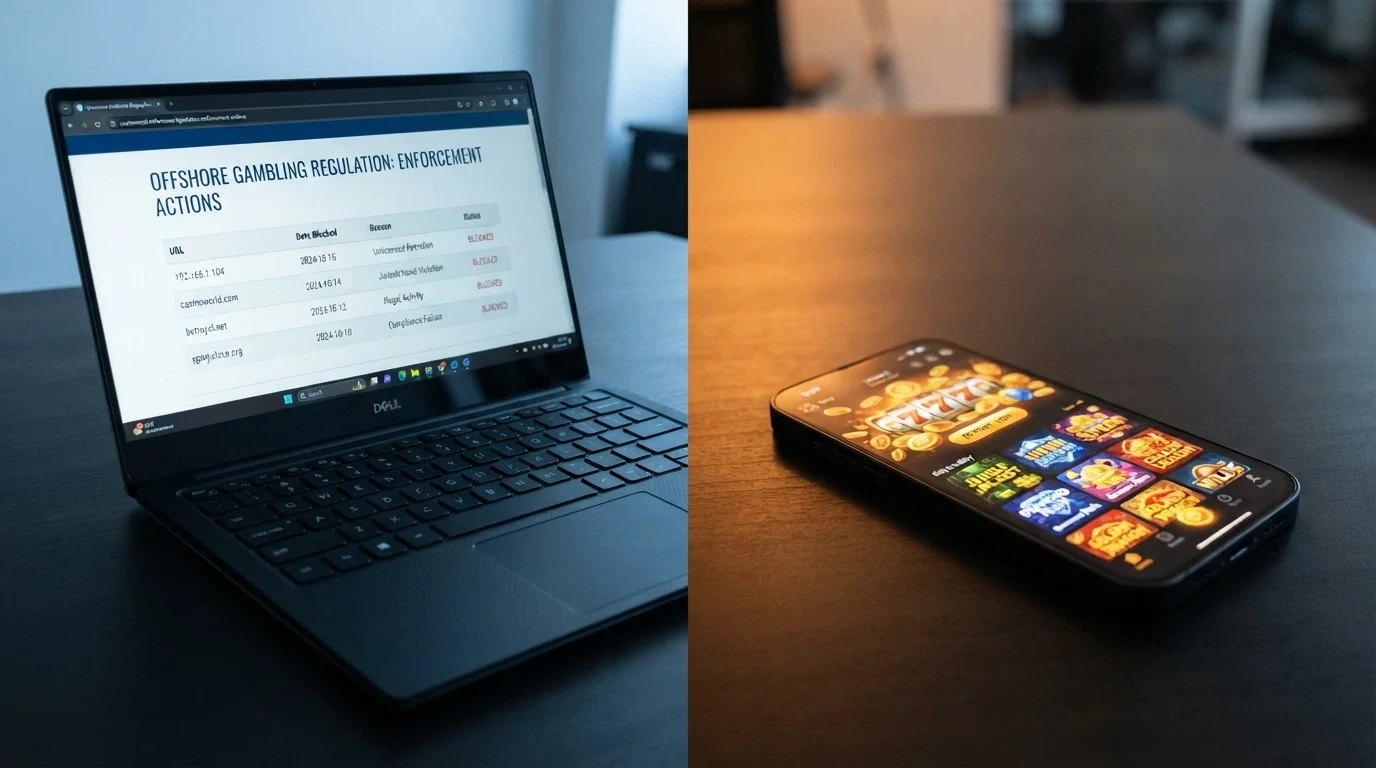
The ACMA is the federal regulator that enforces the prohibition. It investigates complaints, issues formal warnings, runs civil penalty proceedings, and directs Australian ISPs to block illegal sites. Since its first blocking request in November 2019, the ACMA has had 1,564 illegal gambling and affiliate websites blocked (as at March 2026), and more than 225 illegal services have withdrawn from the Australian market since enforcement was strengthened in 2017. The individual player is not prosecuted under the Act — section 15 of the IGA targets the provider of the prohibited service, not the customer. That is why offshore operators keep accepting Australian deposits and why Australians keep depositing.
The other side of that arrangement is the consumer-protection floor an Australian punter leaves behind the moment they fund an offshore account. Australian consumer law does not reach a Curaçao-licensed entity. Disputes over refused withdrawals go to the operator’s complaints function, and from there to the Curaçao Gaming Control Board or the Anjouan licensing authority, with limited practical recourse. BetStop does not bind offshore operators. The ACMA can block the site at any time, and an Australian punter with a balance still on it has no Australian court to apply to for its return. The legal status of offshore pokies play in Australia is: the operator is breaking the law, the player is not, and the player’s only consumer safeguard is the offshore licence the operator chose to take.
What You Lose When You Play Offshore: Player Protections That Do Not Apply
BetStop, the National Self-Exclusion Register, has been live since August 2023. As at 31 July 2026, the register held 67,480 registrations, of which 41,290 exclusions were still active — more than 60% of everyone who ever registered. Seventy-eight per cent of registrants were under 40 at the time of registration, and 38% chose lifetime exclusion. A single BetStop registration excludes a person from every Australian-licensed online and phone wagering service. It does not exclude them from a Curaçao-licensed offshore casino. An offshore operator is not connected to the register and will keep accepting a self-excluded person’s money, which is the structural reason the register does not cover offshore play.
The consumer-protection gap runs wider than self-exclusion. There is no Australian consumer-law recourse for a refused withdrawal at an offshore casino, no guarantee that funds are segregated from operator working capital, no guarantee of independent auditing of game fairness, and no statutory activity-statement regime. Testing of 25 AU-facing platforms found 4 with no clear fund-protection disclosure — almost one in six — meaning the punter cannot tell from the public materials whether the operator keeps customer balances in a segregated account or uses them for working capital. The verification that exists is the Curaçao or Anjouan licence itself, with all the limits that implies.
The most concrete loss is the ACMA’s blocking power. The ACMA has had 1,564 illegal sites blocked since November 2019, and that number grows. An offshore casino can be added to the blocking list at any time, with no notice to customers and no obligation on the operator to refund balances held at the moment of blocking. A punter holding a A$200 balance on an offshore site at the moment of blocking has no local recourse for fund recovery.
Responsible Gambling in Australia: Help That Actually Works
The National Gambling Helpline — 1800 858 858 — is free, confidential, and staffed 24 hours a day, 7 days a week. Online chat and email counselling are available through Gambling Help Online at gamblinghelponline.org.au. The helpline and the online service are the front line of the Australian responsible-gambling infrastructure, and they apply to anyone experiencing harm from gambling — offshore or licensed, the help does not depend on where the gambling happened.
BetStop is the second pillar. A single registration excludes a person from every Australian-licensed online and phone wagering service, with exclusion periods from three months to a lifetime. The register is administered by the ACMA and is free to use. The gap, as the previous section set out, is that BetStop does not bind offshore operators. For an Australian punter who has decided that offshore pokies is no longer something they want access to, the additional step is to ask the offshore operators themselves for self-exclusion, knowing the request is not legally enforceable and the operator may or may not honour it.
The prevalence data frames why this infrastructure exists. About 2.1% of Australian adults — roughly 430,000 people — experience problem gambling; the Australian Institute of Health and Welfare put high-risk gambling at 1.8% in its 2022 measurement. The 2026 reform package — the Interactive Gambling Amendment (Gambling Reform) Bill 2026, passed by Parliament on 19 August 2026 with measures commencing 1 January 2027 — adds the next layer: bank transaction-blocking authority from January 2027, marketing restrictions (no more than three wagering ads per hour between 6:00 am and 8:30 pm; live-sport blackout 15 minutes before to 5 minutes after; online wagering ads restricted to logged-in, age-verified users), and direct-marketing restrictions (no inducements for 14 days after sign-up, three months after BetStop deregistration). These are aimed at the licensed wagering market, where they can be enforced. They do not bind offshore operators, who are outside Australian jurisdiction.
For a punter considering an offshore A$20 deposit, the practical use of this infrastructure is to register with BetStop first if self-exclusion is part of the picture, save the helpline number in the phone before the first session, and treat the gambling harm prevalence data as a baseline rather than an abstract statistic.
Getting Your $20 Onto an Offshore Pokies Site: Payment Methods That Work
Four categories divide the payment-method landscape for Australian pokies players: PayID, debit cards, crypto, and prepaid vouchers. PayID is the standout for speed and AUD compatibility — deposits process in 10 to 60 seconds, riding the New Payments Platform through the punter’s own Australian bank account. Debit cards are the most familiar — Visa and Mastercard, A$10 to A$20 minimums, one to five business day payouts. Crypto is the fastest withdrawal method but the most legally fraught, since the AU ban on digital currency for licensed wagering (since 11 June 2024) does not bind offshore operators. Neosurf is the deposit-only option for punters who do not want to share banking or crypto details.
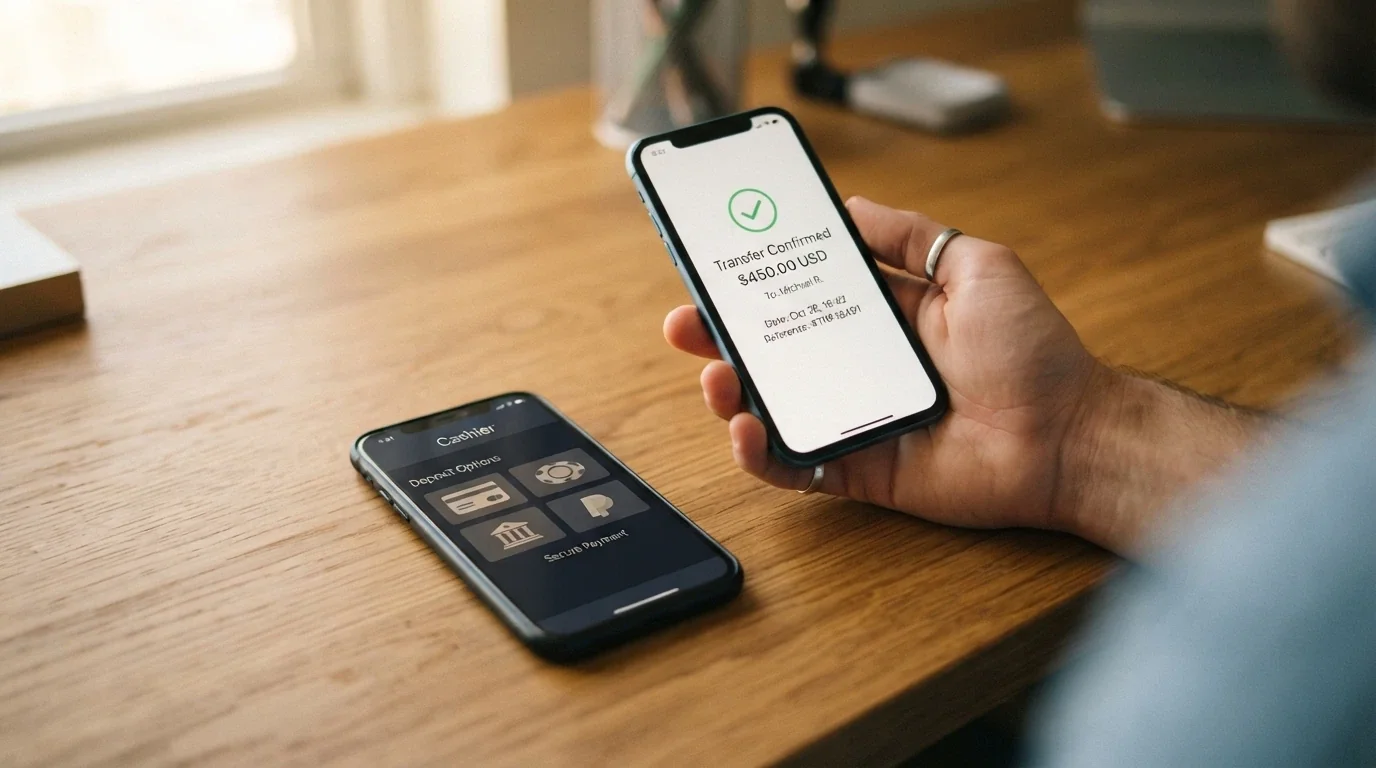
The legal-routes question is the one every other section of this page has built toward. The legal deposit routes for licensed Australian wagering are debit card, bank transfer, PayID/Osko and BPAY. Credit cards and crypto are banned for licensed wagering since 11 June 2024, with penalties of up to A$247,500 for non-compliant operators. The offshore operators this page is built around are not subject to those rules. An offshore casino that accepts a credit card or a Bitcoin deposit from an Australian is not breaching Australian law — it is operating outside Australian law entirely. The legal-routes column below is framed against the licensed market for clarity; offshore operators fall outside it.
| Method | Min Deposit | Deposit Speed | Withdrawal Support | Legal for AU Wagering? |
|---|---|---|---|---|
| PayID / Osko | A$10–A$30 | 10–60 seconds | Yes (where operator supports); ~12 min average at tested operators | Yes for licensed wagering; offshore operators not subject to AU rules |
| Debit Card (Visa / Mastercard) | A$10–A$20 | Instant deposit | Yes; 1–5 business days | Yes for licensed wagering; offshore operators not subject to AU rules |
| Credit Card | — | — | — | No — banned for licensed wagering since 11 June 2024; offshore operators still accept |
| Crypto (Bitcoin etc.) | A$15–A$30 | Network-dependent, ~10–60 min | Yes; fastest withdrawal method | No — banned for licensed wagering since 11 June 2024; offshore operators still accept |
| Neosurf Voucher | A$10 (A$10/25/50/100) | Instant | No — deposit only | Voucher purchase legal; no AU-licensed casino uses Neosurf |
PayID Deposits for $20 Pokies: The Fastest Way to Fund Your Account
PayID deposits at AU-facing online casinos process in 10 to 60 seconds across major Australian banks, with minimums typically in the A$10 to A$30 band. The mechanism is the New Payments Platform — PayID rides the NPP and pairs with Osko, so a casino PayID deposit is effectively an instant bank transfer, free at the network level and available 24/7. For an Australian punter funding an A$20 deposit, PayID is the path of least friction: it is the punter’s own bank account, the punter’s own PayID (an email address or phone number linked at the bank’s app), and the operator’s nominated PayID at the cashier.
Osko caps are the second variable. Most banks cap Osko/PayID transfers at a daily amount adjustable in-app, commonly A$1,000 to A$20,000 depending on the bank. For an A$20 deposit, the cap is irrelevant; for a punter making multiple deposits to chase a bonus, the cap is the upper bound on how much the punter can move in a single day. The cap is set at the punter’s bank, not at the casino, which is why the verification step is the punter’s own banking app rather than the operator’s cashier.
PayID support is not universal across the featured set. SkyCrown supports it, and testing at a comparable operator recorded an average PayID withdrawal time of about 9 minutes — fast enough to be the standout payment method on the operator. At one tested operator, PayID withdrawals averaged 12 minutes across 14 test cashouts, with a A$30 minimum withdrawal — the lowest among the top three. FairGO does not support PayID (cards and crypto only). For the rest of the featured set, PayID support was not independently confirmed in this run. The directional read for an Australian punter is straightforward: where PayID is supported and the withdrawal minimum is at or near the deposit minimum, the operator’s payment setup is the friendliest in the set.
Debit Cards, Bank Transfers and the Credit-Card Ban Offshore Operators Ignore
Debit cards are the most familiar funding method and the one Australian banks handle without friction. Visa and Mastercard minimum deposits at AU-facing casinos sit at A$10 to A$20, with card payouts running one to five business days. The processing time is the only structural drag: a PayID withdrawal clears in minutes, a card payout clears in days. For a punter optimising for speed, debit cards are the slow option; for a punter optimising for familiarity, debit cards are the default.
The credit-card ban is the more interesting part. Since 11 June 2024, credit cards, credit-related products and digital currency have been banned as payment for online wagering in Australia, under the Interactive Gambling Amendment (Credit and Other Measures) Act 2023. Penalties for non-compliant operators reach A$247,500. The ban applies to licensed Australian wagering operators; it does not bind offshore operators, who are outside Australian law. An Australian punter who is asked for a credit card deposit by a gambling site is being served by someone outside Australian rules — a structural signal that the operator is offshore, not a licensed wagering provider.
Bank transfer is the legal alternative for punters who want a familiar banking channel without the card processor. Bank transfers at AU-facing offshore casinos process one to three business days for deposits, with payouts on a similar timeline. They are slower than PayID and slower than crypto, and they are the fallback for punters whose banks do not support PayID or whose cards have been declined. Legal deposit routes for licensed wagering are debit card, bank transfer, PayID/Osko and BPAY — four methods, all of them AUD-denominated, none of them in the banned category.
Crypto Deposits at $20 Pokies Sites: Fast but Outside Australian Rules
Bitcoin and cryptocurrency deposits at AU-facing casinos carry minimums around A$15 to A$30 and are the fastest withdrawal method on the operator side — a Bitcoin payout can clear in minutes once the operator releases it, where a card payout takes days. For a punter who already holds crypto and is comfortable with wallet management, the speed advantage is real.
The legal frame is the same one the previous section set out. Crypto is banned as payment for online wagering in Australia since 11 June 2024, with the same A$247,500 penalty as the credit-card ban. The ban binds licensed Australian wagering operators; it does not bind offshore operators. An Australian punter funding an offshore pokies account with Bitcoin is not breaching Australian law — they are sending funds to a recipient that is operating outside Australian law. The offshore operator is the side committing the offence prohibited by the Interactive Gambling Act 2001.
The practical consequence for the punter is speed plus legal-distance. The punter gets the fastest withdrawal method available. The punter also gets the weakest consumer-protection floor, because the operator’s regulatory anchor is Curaçao or Anjouan, and an Australian court has no jurisdiction over a Curaçao-licensed entity. From 1 January 2027, banks and payment providers gain express authority to block transactions to illegal gambling operators under the 2026 reform — a tightening of the AUD-side rails that may push more Australian crypto deposits offshore still, into wallets rather than bank transfers. The crypto path remains the fastest at the offshore pokies table; it is also the one furthest from any Australian protection.
Playing $20 Deposit Pokies on Your Phone
Seventy-three per cent of Australian casino sessions happen on phones, per testing of AU-facing operators. That number is the headline of the mobile section on every affiliate page this page is built around; it is also the reason the mobile experience at the A$20 deposit tier matters more than the desktop one for the average punter. Most of the time a $20 deposit is being placed and most of the time the bonus is being played through, the punter is holding a phone.

The mobile experience at AU-facing offshore casinos is built around the browser, not the app store. Real-money gambling apps are restricted by jurisdiction in both the Apple App Store and the Google Play Store, and most offshore operators do not pursue the jurisdictional approvals that would unlock them for Australian players. The punter opens the operator’s site in Safari or Chrome, plays through the mobile-optimised layout, and manages deposits, withdrawals and live chat from the same browser session. Native apps exist in pockets — Stake’s app is the most prominent — but the standard AU-facing experience is browser-first.
What breaks on a small screen is mostly navigation. Game lobbies with 5,000+ titles render as long scrollable grids, with provider filters collapsing into dropdown menus; live chat windows sit over the game and resize inconsistently between operators; withdrawal forms are the most likely place to mis-tap a field, because they carry the most input fields on the smallest viewport. The path from the cashier to the first spin is a few taps on PayID, slower on cards (one to five business days for payouts), slowest on bank transfer. Live chat response times at AU-facing operators varied from 47 seconds to 22 minutes in testing — anything over 5 minutes during peak hours signals understaffing, which is itself information about the operator’s capacity.
Mobile-Optimised Sites vs Native Casino Apps for Australian Players
The browser-first approach at AU-facing offshore casinos is a consequence of the App Store and Google Play restrictions on real-money gambling apps by jurisdiction. An operator that wants a native iOS or Android app in Australia needs the jurisdictional approvals that come with an Australian licence — and there is no Australian licence for online casino. Offshore operators either skip the app entirely (the standard pattern) or push the app through jurisdictions where they hold licences, which leaves Australian punters in the browser either way.
The practical upshot is that the mobile experience at an AU-facing offshore casino is the same site the punter would visit on desktop, scaled down. Deposits, withdrawals, game selection, bonus claims and live chat all run through the mobile browser; the layout is built to accommodate a phone screen, with the most important controls (deposit, game search, balance) within thumb reach. Performance on Australian mobile networks is generally good at the major operators, with game-loading times in the two-to-five-second range on a 4G connection. Data consumption is heavier per minute of play than text browsing, but lighter than video streaming — a half-hour session at the A$20 deposit tier is in the 50–100 MB range.
For an Australian punter deciding where to play their A$20, the mobile question is whether the operator’s browser experience is fast enough to compete with the alternative use of the phone. The 47-seconds-to-22-minutes live-chat range, the game-loading times, the cashier layout under a thumb — these are the comparison points, and the only way to test them is to load the operator’s site on the phone before depositing.
Depositing $20 and Playing Real-Money Pokies on Your Phone
The end-to-end mobile deposit-and-play flow at an AU-facing offshore casino runs through four screens: the cashier (deposit method, amount, PayID or card details), the bonus claim (opt-in or skip), the game lobby (search or provider filter), and the game itself (stake selector, spin button, balance display). The whole path is two to four taps from the home screen to the first spin on a well-designed mobile site, longer on a poorly designed one.
The deposit step on mobile is the closest mirror of the desktop experience. PayID deposits clear in 10 to 60 seconds; the punter enters the PayID email or phone at the cashier, confirms the amount, and approves the transfer in their banking app. Card deposits are slower on the way in (instant) but slower still on the way out (one to five business days). Crypto deposits are fastest on the way out (minutes once the operator releases) and the only deposit method that carries a non-trivial network confirmation delay on the way in (10 to 60 minutes for Bitcoin, depending on the network).
Session management on a phone is where the structural risk lives. The 73% mobile share is also the percentage of sessions that happen in the pocket, on the couch, between other tasks — the kind of setting where the punter is not looking at a clock. The bonus-claim timer (7 to 14 days for deposit bonuses, 24 to 72 hours for no-deposit spins) is generous on a desktop but compressed on a phone the punter checks twice a day. Responsible-gambling tools — deposit limits, session timers, take-a-break — exist at most AU-facing offshore casinos but are usually buried in the account settings rather than surfaced at the cashier. A punter who funds A$20 on a phone is best served by setting a hard loss limit before the first deposit, not after the bonus has been partially cleared.
Real-Money $20 Pokies: Stakes, Payouts and What You Stand to Lose
A $20 deposit at an offshore pokies site produces a playable balance that depends entirely on the bonus structure. Without a bonus, A$20 is A$20 to play with. With a 100% welcome match, A$20 becomes A$40; with a 150% match, A$20 becomes A$50. The wagering requirement then determines how much of that balance must be turned over before any withdrawal is permitted. At 30x to 45x the bonus, the A$20 bonus turns into A$600 to A$900 of required turnover; the A$50 bonus at 150% match turns into A$2,250 of required turnover. The expected loss scales linearly with the turnover.
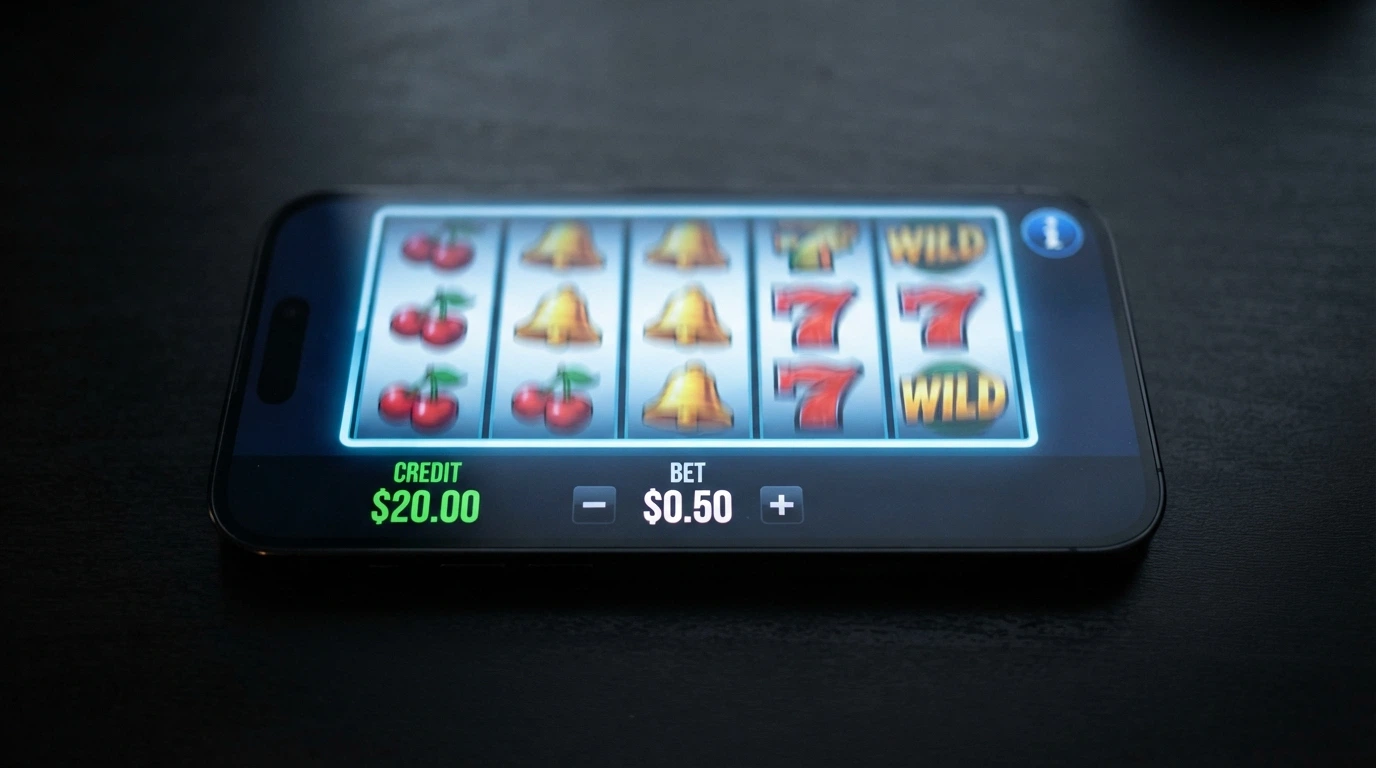
The maths behind the expected loss uses the RTP range measured across AU-facing sites: 94.2% to 96.8%, with a A$1.40 spread per A$50 wagered. The formula is expected loss equals turnover multiplied by one minus RTP. Take a A$20 deposit at a 100% match (so the bonus is A$20) and 35x wagering — the midpoint of the 30x to 45x range that is typical at this tier — and the required turnover is A$700. Apply an RTP of 95.5%, the midpoint of the measured range, and the expected loss is A$700 multiplied by 4.5%, or A$31.50. That is A$11.50 more than the A$20 deposit itself, on average, before any individual spin is taken. The cost of claiming the welcome bonus exceeds the cost of funding the account, which is the calculation that turns “free bonus money” into the more expensive of the two options.
This is a statistical estimate over many spins under the stated assumptions, not a guaranteed outcome for any single player. The formula says what the bonus costs on average. It does not say what any punter will win or lose, and the 4.5% house edge applies to every spin regardless of how the previous spin paid. The expected loss is the average across a long session of clearing the bonus; the variance around that average is the part no formula can predict.
What $20 Per Spin Actually Means: Stake Sizes and Session Length
The spin count a $20 deposit buys depends on the stake. At A$0.20 per spin, the punter gets 100 spins — a session of twenty minutes at five-second intervals, or forty minutes at slower play. At A$0.50, the punter gets 40 spins. At A$1.00, the punter gets 20 spins. At A$2.00, the punter gets 10 spins. Bonus conditions usually cap the stake at A$5 to A$8 per spin during the wagering period, which sets an upper bound on how fast the punter can clear the bonus.
Session length is the variable the punter controls most directly. Five seconds per spin is a fast pace; ten seconds is moderate; thirty seconds with autoplay is the slowest reasonable setting. A 100-spin session at A$0.20 is twenty minutes of near-continuous play, which is enough time to clear most of a small wagering requirement at the cost of watching the balance move in small increments. A 20-spin session at A$1.00 is two minutes of play followed by a depleted balance, which is the structural shape of a high-volatility pokies experience on a small bankroll.
The volatility choice is what determines whether A$20 lasts two minutes or two hours. High-volatility pokies produce fewer wins of larger size; low-volatility pokies produce more wins of smaller size. For a punter optimising for session length on a A$20 deposit, low-volatility titles stretch the bankroll further at the cost of smaller payouts. For a punter optimising for the chance of a payout that resets the session, high-volatility titles compress the bankroll into a few spins for the chance at a larger one. The RTP is the same on average; the distribution of outcomes around the average is what volatility controls.
Free-Play Mode vs Real-Cash $20 Deposits: The Trade-Off
Every reputable pokies site offers a free-play or demo mode that lets a punter run the game’s reels without risking real money. Demo mode delivers what real-money play cannot: a risk-free way to learn a game’s bonus rounds, paytable structure and volatility, with no registration required at most operators. For a punter considering an A$20 deposit at an offshore casino, demo mode is the risk-free first move.
What demo mode does not deliver is the things a real-money deposit unlocks. There are no real winnings in demo mode, no bonus eligibility, no withdrawal rights, no loyalty points, no progress toward the wagering requirement that comes with a welcome bonus. The demo is the same game engine as the real-money version; the demo is not the same product.
For an Australian punter evaluating an AU-facing offshore casino at the A$20 tier, the smart first move is to load a handful of games in demo mode, observe the volatility and bonus-round frequency across the catalogue, and only fund an account once the games worth playing have been identified. The transition from demo to real-money at the A$20 tier is a one-way door: the demo balance resets at every refresh, the real-money balance carries through the session. Free-play is the testing rig; the A$20 deposit is the test.
New to $20 Deposit Pokies? What First-Time Players Should Know
The first-deposit experience at the A$20 tier is the moment the marketing architecture meets the punter’s bank balance. The welcome offer is usually a 100% to 150% match plus a free-spin bundle, with 30x to 45x wagering, a A$5 to A$8 max bet during the wagering period, and a 7 to 14 day validity window. No-deposit spin offers run alongside: 10 to 30 free spins, 40x to 60x wagering on the winnings, a fixed stake, and a 24 to 72 hour expiry window. The shape of these offers is consistent enough across the AU-facing market that the comparison is between specific packages (SkyCrown’s A$8,000 + 400 free spins or A$7,500 + 550 free spins at 40x; one operator’s 100% up to A$3,000 across the first three deposits with 200 free spins at 35x on the bonus only) rather than between bonus structures.

Three bonus shapes dominate the A$20 tier. The numbers in the comparison below are typicals across the AU-facing market, not the highest or lowest available. The biggest advertised number on the banner is rarely the best deal — the wagering multiple and the max-bet cap are where the real cost lives.
| Bonus Type | Typical Terms at A$20 Tier | Wagering Multiple | Validity Window | Key Catch |
|---|---|---|---|---|
| 100–150% Welcome Match | A$20 deposit becomes A$30–A$50 playable balance | 30x–45x on bonus | 7–14 days | A$5–A$8 max bet caps clearing speed |
| No-Deposit Spins | 10–30 free spins awarded on signup | 40x–60x on spin winnings | 24–72 hours | Fixed stake; winnings often capped; expiry is brutal |
| High-Volume Welcome Package | A$7,500+ across 4–5 deposits + 300–550 free spins | 35x–40x on bonus | 7–14 days per tier | Bonus-only on first deposit often; max cashout caps on FS; per-tier expiry resets the clock |
Welcome Bonuses at the $20 Tier: What the Numbers Actually Mean
A 100% welcome match at A$20 turns the deposit into A$40 to play with. A 35x wagering requirement applied to the bonus means A$20 multiplied by 35 equals A$700 of turnover before any withdrawal is permitted. The max bet during the wagering period is capped at A$5 to A$8 per spin, which limits how fast the punter can clear the bonus — at A$8 per spin, the A$700 turnover is 88 spins; at A$5 per spin, it is 140 spins. The validity window is 7 to 14 days, which is generous on the surface but compressed in practice if the punter plays in short sessions.
The biggest advertised number on the banner is rarely the best deal. SkyCrown’s A$8,000 + 400 free spins is a multi-deposit package spread across four or five deposits; the per-deposit allocation is closer to A$1,500 to A$2,000, and the 40x wagering applies to each tier independently. The 100% up to A$3,000 across the first three deposits at 35x on the bonus only is a friendlier structure for a punter who wants to withdraw the deposit amount while keeping the bonus in play. The shape of the wagering — bonus only versus deposit plus bonus — is a more important comparison point than the headline match percentage.
A punter reading a welcome bonus should multiply the bonus amount by the wagering multiple to get the required turnover, multiply the turnover by the house edge (roughly 4.5% at a 95.5% RTP) to get the expected loss, and compare that expected loss to the headline value of the bonus. For a A$20 deposit at a 100% match with 35x wagering, the expected loss is A$31.50 (calculated in the previous section) against a bonus value of A$20 — a net cost of A$11.50 to claim the offer. The bonus is worth claiming if the punter values the extra play time; it is worth skipping if the punter wants to withdraw any winnings without clearing A$700 of turnover first.
No-Deposit Spins and Free-Spin Offers at the $20 Deposit Level
No-deposit spin offers are the most generous-sounding marketing offer at the offshore pokies table: 10 to 30 free spins awarded on signup, no deposit needed. The structural reality is the wagering requirement (40x to 60x on the spin winnings, higher than the 30x to 45x on a deposit-match bonus), the fixed stake (the punter cannot choose the bet size, which is usually set at the minimum), the 24 to 72 hour expiry window, and the maximum cashout cap on the spin winnings (typically A$100 to A$200, even if the spin lands a larger payout).
The combination is punishing by design. A 30-spin offer at 50x wagering on winnings means a A$20 spin win requires A$1,000 of turnover to clear; at 95.5% RTP, the expected loss on that turnover is A$45. The bonus is free to claim but expensive to clear. The 24 to 72 hour expiry forces rapid play, which compresses the punter’s ability to manage the wagering session; the maximum cashout cap means even a lucky spin pays out only up to a set limit.
The honest framing for no-deposit spin offers is that they are a marketing tool rather than a value opportunity. The headline of “free spins, no deposit needed” is true; the wagering, the stake cap, the expiry and the cashout ceiling are the part the marketing does not lead with. For a punter who wants to test an AU-facing offshore casino’s game library before depositing, the demo mode covered earlier is the better tool; for a punter who wants to withdraw winnings, the no-deposit offer is structurally less attractive than a deposit-match bonus with comparable headline value.
The Pokies You Can Actually Play With a $20 Deposit
Game libraries at AU-facing offshore casinos are vast — SkyCrown carries 5,500+ titles, another major operator carries 6,400+ titles from 70+ providers including Pragmatic Play, Hacksaw Gaming, Nolimit City, Play’n GO and Push Gaming. The catalogue at the upper end of the featured set is the catalogue of a major international casino, not a regional site. For a punter with a A$20 deposit, the choice is not constrained by availability; it is constrained by what a A$20 bankroll can sustain across the volatility and RTP range.
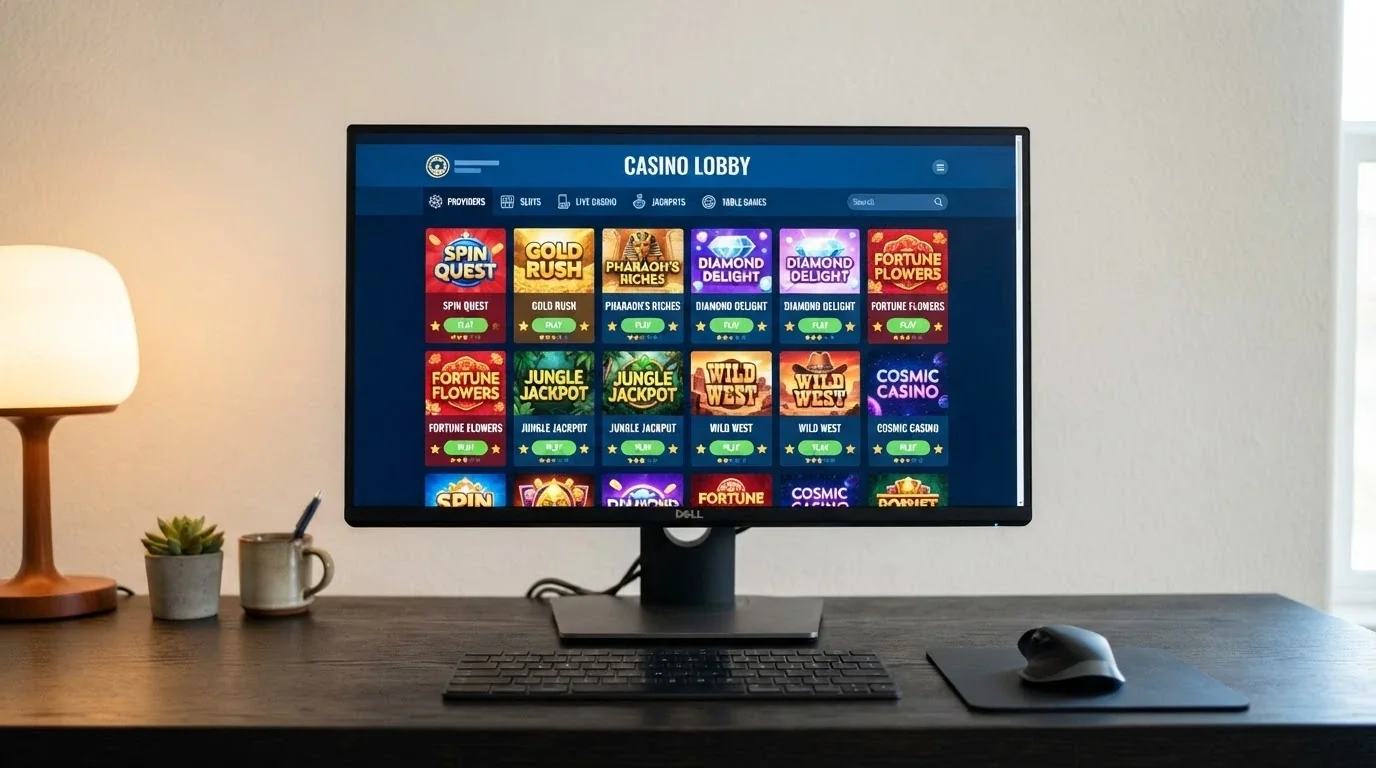
The RTP measurement matters more than the library size. Average slots RTP at 94.2% to 96.8% across tested AU-facing sites — a 2.6 percentage point spread that translates to a A$1.40 difference per A$50 wagered. On a A$700 turnover, the spread is A$18.20 — almost the size of the A$20 deposit itself. The punter cannot choose the RTP of a single spin, but the punter can choose which games to play, and the difference between a 96.5% pokies and a 94.5% pokies at the same stake level is the difference between a manageable expected loss and a brutal one.
The provider list shapes what the punter sees. Pragmatic Play, Hacksaw Gaming, Nolimit City, Play’n GO and Push Gaming are the dominant studios at AU-facing offshore casinos, each with a distinctive catalogue: Pragmatic Play’s high-volatility slots and Drops & Wins tournaments; Hacksaw’s scratch-card-influenced mechanics; Nolimit City’s extreme-volatility titles with xMechanics features; Play’n GO’s mid-volatility Book-of-Dead-style catalogue; Push Gaming’s jam-themed cluster-pays titles. FairGO is the exception in the featured set, with a RealTime Gaming exclusive library — a different style, AU-themed, jackpot-heavy.
Providers and RTP: What the Numbers Mean for Your $20
RTP is the percentage of all wagered money a slot returns to players over its lifetime — calculated across millions of spins, not across any punter’s session. A 96% slot returns A$96 of every A$100 wagered, on average, across the lifetime of the game. The remaining 4% is the house edge, which is how the operator makes money on a pokies product. The 94.2% to 96.8% range is the operating band for the AU-facing market — most slots at most operators cluster in that range, with the outliers on either side.
The 2.6 percentage point spread between the bottom and top of the range is more meaningful than it sounds. On a A$700 turnover, the spread is A$18.20 in expected return — almost the size of the A$20 deposit itself. On a larger turnover (a higher-deposit punter, a longer session, or a bonus with a higher wagering multiple), the spread scales linearly. A punter optimising for return-per-spin on a A$20 deposit is choosing among games at the top of the RTP band; a punter playing whatever the lobby serves is taking the average, which is closer to the 95.5% midpoint.
Provider reputation is the practical shortcut. Major studios — Pragmatic Play, Hacksaw Gaming, Nolimit City, Play’n GO, Push Gaming — publish the RTP of every title they release, and the published number is the one the operator should be running. Smaller or less reputable providers may publish one RTP and run a different one at the operator, which is the structural reason independent RTP testing matters. Curaçao and Malta Gaming Authority licences — the two most common licence types at quality AU-facing operators — require some form of independent testing, but the depth of that testing varies. A punter prioritising fairness should check the game’s own information page for published metrics before committing.
High-Volatility vs Low-Volatility Pokies on a $20 Budget
Volatility is the second axis of slot behaviour, after RTP. A high-volatility slot produces fewer wins of larger size; a low-volatility slot produces more wins of smaller size. The RTP is the same on average across both — the difference is the distribution of outcomes around the average. For a A$20 bankroll, the volatility choice is the session-length choice.
A high-volatility pokies on A$20 is the structural shape of two-minute sessions. Most spins return nothing; a small percentage return 5x to 50x the stake; a rare spin returns the 100x to 10,000x that defines the game’s payout ceiling. On A$20 at A$1.00 per spin, a high-volatility pokies produces twenty spins before the balance is gone, on average, and the chance of any single spin paying enough to reset the session is the structural draw.
A low-volatility pokies on A$20 is the structural shape of hour-long sessions. Most spins return a small win (less than the stake, usually); the balance depletes slowly; the punter gets more spins for the same dollar, at the cost of payouts that rarely exceed 5x the stake. The session is longer, the variance is lower, and the chance of a session-ending payout is smaller.
For a punter with A$20 to deposit, the directional read is: low-volatility titles stretch the bankroll further and give a longer session at the cost of smaller payouts; high-volatility titles compress the bankroll into a few spins for the chance at a larger one. The choice is between session length and payout magnitude, and the optimal answer depends on what the punter is paying the A$20 for. Most pokies do not advertise their volatility in the lobby — the practical check is the paytable structure. Look for the maximum win multiplier (a 5,000x or higher max win is high-volatility; a 1,000x or lower max win is more often low-to-medium). Look for the bonus round frequency (low-volatility games trigger bonuses more often at smaller payouts; high-volatility games trigger less often at larger payouts). The paytable is where the volatility lives, and it is the file a punter should read before the first spin.
How We Evaluated $20 Deposit Pokies Sites for This Review
The operator shortlist was built from two sources: the Australian market-share data, which ranked offshore brands by AU presence (Rocket Play at #3, SkyCrown at #4, Royal Reels at #9, WinSpirit at #11, Stake at #12, Rainbet at #13, Scream Casino at #14, FairGO at #16, Bizzo Casino at #19, Rocket Casino at #20), and the search results this run surfaced, which independently confirmed SkyCrown’s Curaçao licence and welcome package, plus independently gathered payment data from other tested operators.
Four criteria shaped the ranking: deposit-minimum fit at or near A$20, welcome-bonus value at that tier, AUD and PayID support, and licence transparency. Each operator was checked against the ACMA register and AU licence records — confirming that no operator in the set holds an Australian casino licence, and that only SkyCrown’s Curaçao eGaming licence was independently verified in this run. Operators with confirmed data (SkyCrown, FairGO) are ranked ahead of operators where the search results this run did not surface the basic terms (Royal Reels, WinSpirit, Scream, Bizzo, Rainbet, Rocket Casino). The qualitative basis of the ranking is on the page; the quantitative scoring is not, because no such scoring was performed.
What this review could not independently verify is the welcome-bonus terms, payment-method support and game-library specifics for eight of the ten operators in the featured set. The honest framing for those gaps is at the operator sections above: a name to keep on a shortlist, verification before deposit, the terms are the work that remains. The reader using this page as a starting point should treat the verified data points — SkyCrown’s Curaçao licence and welcome package, FairGO’s A$20 minimum and RTG exclusive library, Rocket Play’s A$20 minimum and AU market position — as confirmed, and the rest as research-in-progress.
The deeper structural gap this review acknowledges is the legal frame. No operator in the featured set is licensed in Australia; every operator in the featured set is offering a product prohibited by law. The verification work for an Australian punter is not just the bonus terms and the payment methods — it is the recognition that the verification work itself is happening outside Australian consumer law, and the protections that would normally attach to that work (BetStop coverage, ACMA enforcement, Australian consumer recourse) do not apply.
Is a $20 Deposit at an Offshore Pokies Site Worth the Risk?
A $20 deposit at an offshore pokies site buys what it has always bought: spins, a session, a chance at a payout that resets the balance. The arithmetic behind that chance is the calculation in the stakes-and-payouts section above — A$700 of turnover at 35x wagering produces A$31.50 in expected loss, on average, before any single payout decision is made. The session length on A$20 is twenty minutes to two hours, depending on stake size and volatility. The bonus value of a 100% match is the extra A$20 in playable balance, at the cost of A$700 in required turnover before withdrawal.
What the A$20 deposit does not buy is the consumer-protection floor that an Australian-licensed product would offer. BetStop does not bind offshore operators; a self-excluded Australian can still deposit at a Curaçao-licensed casino. Australian consumer law does not reach an offshore entity; a refused withdrawal goes to the operator’s complaints process, not to an Australian court. Funds are not guaranteed to be segregated from operator working capital — testing of 25 AU-facing platforms found 4 with no clear fund protection. The ACMA can block the site at any time; an Australian punter with a balance on a blocked site has no local recourse for its return.
The smart player before funding any offshore pokies account reads four things: the withdrawal-terms page (to confirm the cashout minimum is at or near the A$20 deposit minimum), the wagering terms on the welcome bonus (to confirm the multiple and the max-bet cap), the licence jurisdiction (to confirm whether the operator is licensed at all, and where), and the responsible-gambling tools (to confirm whether deposit limits, session timers and self-exclusion are available — knowing that offshore self-exclusion is not enforceable the way BetStop is). The smart player also registers with BetStop if self-exclusion is part of the picture, saves the National Gambling Helpline number (1800 858 858) in the phone before the first session, and treats the 2.1% problem-gambling prevalence as a baseline rather than an abstract figure.
The verdict this page has built toward is that a A$20 deposit at an offshore pokies site is a small-dollar entertainment purchase with a real-money cost the marketing does not surface, purchased through a venue with no Australian consumer protection and no recourse if the venue refuses to pay. The marketing word “chance” is true. The qualifier the marketing omits is that the chance is priced — at the wagering multiple, the house edge, and the loss of every protection an Australian-licensed product would offer. Whether the purchase is worth it is a question only the punter can answer, and the answer depends on what the punter is buying the A$20 for.
For a punter who has decided to fund an offshore account, the comparison points this page sets out — licence jurisdiction, A$20 minimum confirmation, PayID support, withdrawal minimum, wagering multiple — are the primary filters to run against any operator on the list. If uncertainty remains, the responsible-gambling infrastructure (helpline, BetStop, Gambling Help Online) serves as the necessary safety net.
Frequently Asked Questions
Is it legal to deposit $20 and play pokies at online casinos in Australia?
No. Online casino games and online pokies are prohibited. The Interactive Gambling Act 2001 targets the provider, not the player — so a punter is not prosecuted for depositing — but no operator is licensed to offer the product in Australia. Every site on this page is offshore.
Can I use PayID to deposit $20 at online pokies sites in Australia?
Yes, where the offshore operator supports PayID. PayID deposits process in 10 to 60 seconds across major Australian banks, with minimums typically A$10 to A$30. SkyCrown and one other tested operator are confirmed PayID operators; FairGO does not support it. The method is legal; the offshore operator is not.
What bonuses can I get with a $20 deposit at Australian online pokies?
A 100% to 150% welcome match plus free spins is typical, with 30x to 45x wagering, a A$5 to A$8 max bet, and a 7 to 14 day validity. No-deposit offers run alongside: 10 to 30 spins, 40x to 60x wagering, 24 to 72 hour expiry. The wagering is where the real cost lives, not the headline number.
How fast can I withdraw my winnings from a $20 deposit at an online casino?
PayID withdrawals at tested operators averaged 9 to 12 minutes; one top operator at 12 minutes across 14 cashouts. Card withdrawals take 1 to 5 business days. Crypto is fastest. The gating constraint is the operator’s withdrawal minimum — A$50+ minimums on A$20 deposits trap winnings until the punter tops up.
What is the minimum I can win with a $20 deposit on online pokies?
No minimum payout on a single spin — every spin pays per the paytable. The cap that matters is on no-deposit spin offers (typically A$100 to A$200 max withdrawal). For real-money deposits, the floor is the operator’s withdrawal minimum; anything below stays on the site until it grows or the punter tops up.
Are $20 deposit pokies sites safe for Australian players?
Two answers. On game fairness, tested sites run audited RTPs in the 94.2% to 96.8% range, with major providers publishing their own. On consumer protection, no — offshore sites are not licensed in Australia, are not connected to BetStop, offer no Australian recourse, and can be ACMA-blocked at any time. The two are separate questions.