
120 Free Spins No Deposit in Australia: The 2026 Reality
“120 free spins” sounds like a gift. The terms say otherwise. The face value of a 120-spin no-deposit package at the standard $0.10 per spin is twelve dollars, and the marketing is doing the rest of the work. Every “no deposit” offer an Australian reader meets in 2026 carries a wagering multiple on winnings, a cap on what can be withdrawn, an expiry window measured in days and a game the casino chooses rather than the player. None of those details contradict the headline. All of them shrink it.
Data current as of 16 October 2026 and verified against the Australian Communications and Media Authority register.
Table of Contents
- 120 Free Spins No Deposit in 2026: More Marketing Than Free Money
- Why No-Deposit Free Spins in 2026 Almost Always Come With a Catch
- Separating Sign-Up Offers From No-Deposit Deals in 2026
- The Offshore Reality: 10 Casinos Australians Can Reach in 2026
- Getting Paid: Why the Deposit Method Is a Warning Sign
- 120 Free Spins on Mobile: What Changes on a Small Screen
- Promo Codes and New Casinos: What 2026’s Catalogue Delivers
- Online Casino Is Prohibited in Australia: What the Law Actually Says
- Staying Safe: Australian Responsible Gambling Tools and the Offshore Blind Spot
- How We Evaluated These Casinos
- What to Actually Do With a 120 Free Spins No Deposit Offer in 2026
- Frequently Asked Questions
120 Free Spins No Deposit in 2026: More Marketing Than Free Money
The number is the pitch. A reader sees 120 free spins, registers an account and assumes the casino is handing over a hundred and twenty chances to win real money. That assumption is the marketing working as designed. What arrives instead is a fixed number of spins at a fixed value, locked to one game, with anything won subject to a wagering requirement before it can be withdrawn — and with a hard ceiling on how much of those winnings the player will ever see.
Typical no-deposit spin packages in Australia in 2026 run smaller than the 120 figure, with most operators offering between twenty and fifty, and a few climbing to one hundred. The wider market caps withdrawals from no-deposit offers at AU$50 to AU$100, which means the headline of “120 free spins” almost always comes with a structural ceiling the player will not outrun. Spin value is rarely negotiable: $0.10 per spin is the standard, and a few promotions push to $0.20 or $0.25.
Where do these offers live? Not on any Australian-licensed platform. Online casino games, online pokies and in-play betting are prohibited under the Interactive Gambling Act 2001, and no licence for them exists anywhere in Australia. The full operator set in this article runs from offshore. That detail shapes everything else, from which payment methods the casino can legally accept to which self-exclusion register the player can lean on. It will come back repeatedly.
What “120 Free Spins” Actually Delivers
Read the terms, not the banner. The four clauses that determine what the offer is actually worth are the spin value, the game lock, the wagering multiple on winnings and the maximum cashout. Everything else is decoration.
Spin value of $0.10 is the standard for no-deposit offers in Australia in 2026, and a 120-spin package at that rate has a face value of $12. Spin values of $0.20 or $0.25 do appear, and they roughly double or two-and-a-half-times the face value — but the player does not choose which rate they get, and the casino does. A $0.25 spin at 120 spins is a $30 face value. A $0.10 spin at 120 spins is $12. Same headline, different offer.
The game lock is the clause players most often miss. The 120 spins almost always apply to a single title chosen by the casino — typically one of the high-profile Pragmatic Play or Play’n GO slots such as Book of Dead, Sweet Bonanza, Gates of Olympus, a Big Bass variant or Wanted Dead or a Wild. The player cannot spread them across multiple games, cannot pick the highest-RTP title in the lobby and frequently cannot even see the locked game’s full paytable until the spins are running. This is not an oversight on the casino’s part. It is the mechanism that lets the operator price the promotion.
Wagering on winnings is the third clause. Standard wagering multiples on Australian-aimed no-deposit offers in 2026 sit between 40× and 60×, applied to whatever the spins return rather than to the spin value itself. A 40× requirement on winnings of, say, $40 means $1,600 of qualifying wagers before withdrawal unlocks. The spin value never counts toward clearing the requirement. Only the winnings do.
The maximum cashout caps the entire exercise. Most no-deposit free spin offers in Australia in 2026 cap withdrawals at AU$50 to AU$100, regardless of what the spins return after wagering is cleared. A player who runs hot, clears a 40× requirement and has a $500 balance on screen is paid $100. The rest is forfeited by the operator. That cap is the structural reason a 120-spin offer converts to between fifty and one hundred dollars of real money in the best case, not the twelve-or-thirty-dollar face value and not whatever the reels happen to deliver.
How a Free Spins Promotion Works, Step by Step
The journey from claim to cashout is short and predictable. Each step adds friction in a way the marketing does not show.
Step one is account registration. A genuine no-deposit offer requires only an email address, a username and the usual contact fields — no payment method, no initial deposit, no commitment. A deposit-triggered offer, branded as “sign-up spins” or “welcome free spins”, will gate the spins behind a minimum deposit. The label on the offer is rarely a reliable guide to which one it is.
Step two is the claim. The spins appear in the player’s account either automatically on registration, after email verification or after the casino’s “bonus” page is visited. A small number of operators require a promo code, an opt-in toggle or a customer-support message to release the spins; this is discussed further in the section on promo codes.
Step three is play on the locked title. The player opens the named pokie and the spins run at the fixed value, on the fixed title, with no choice of stake and usually no choice of game. Some operators let the player pick between two or three locked titles at the claim stage; most do not.
Step four is wagering. Any winnings from the spins land in a bonus balance, not a cash balance, and that bonus balance is subject to the wagering multiple. Until the requirement is cleared, withdrawals are blocked or limited. The player can keep playing — the casino prefers it — and the spins keep running through the locked title until wagering clears or the balance drops below the minimum bet.
Step five is the first cashout, and this is where the friction concentrates. Offshore casinos accepting Australians require photo ID, proof of address dated within ninety days and payment-method ownership verification before the first withdrawal clears. Source-of-funds documentation kicks in at lifetime cumulative thresholds of $5,000, $10,000 or $20,000 depending on the operator. KYC review on complete documents typically wraps within twenty-four hours, but it can stall for days if the documents are blurred, expired or in an unsupported format.
Step six is the cap. The player who has cleared the wagering and survived KYC gets paid — up to the maximum cashout. The remainder is gone. This is where the offer resolves to its real-money value.
Why No-Deposit Free Spins in 2026 Almost Always Come With a Catch
The arithmetic on these offers is unforgiving. Take a 120-spin no-deposit package at $0.10 per spin with a 40× wagering requirement and an RTP near 96.5% — the figure Pragmatic Play’s portfolio clusters around. The face value of the bonus is $12. The required turnover on that bonus, applied at 40×, is $480. At a 3.5% house edge, the expected loss on that turnover comes to roughly $16.80 — assuming only the bonus amount is wagered.
That is the offer’s real cost. A player with a $12 face value faces an expected loss of about $16.80, which means the bonus costs more than it gives on average. The expected-loss figure is a statistical average across many spins under those assumptions; it promises no win, no payout and no return. It is also the single most useful number on this page, because it makes visible the gap between what the offer says it is and what the offer actually does to a bankroll.
That gap is not an accident. The four clauses above — spin value, game lock, wagering and cashout cap — exist to set it. The 120 in the headline refers to spin count, which is the variable the marketing prefers, not the variable that determines value.
No-Deposit, No-Wagering: The Offer That Barely Exists
A no-deposit offer with no wagering requirement on winnings is the unicorn of the Australian-aimed market. The combination — free, locked to nothing, withdrawable on the first cent — gives the operator no margin to extract from the player’s activity, which is why so few of them run. Standard wagering multiples sit between 40× and 60× in 2026, and wager-free no-deposit offers are the exception rather than the norm. None of the offers confirmed among checked operators in this run carry a wager-free structure, and the broader market treats the model as high-cost acquisition rather than sustainable promotion.
If a wager-free 120-spin offer ever does appear in front of an Australian reader, the spin value will probably sit well below $0.10, the cashout cap will almost certainly apply, and the eligible games will be limited to a narrow list. The absence of a wagering requirement does not turn a small, locked promotion into a serious bankroll-builder. It just removes one of the four clauses that compresses the offer’s real value.
Real-Money Withdrawals and the Cashout Cap
Even a player who clears the wagering requirement is paid only up to the cap. Cashout caps of AU$50 to AU$100 are standard on no-deposit free spin offers in 2026, with the exact figure published in the promotion’s terms. The full real-money value of a no-deposit bonus offer, including the spin component and any cash bonus, typically lands between $50 and $200 in total — not per spin, not per win, but across the entire offer.
That is the difference between the headline and the payout. The headline counts spins. The payout counts dollars, and the dollar count is set by the cap rather than the reels. A 120-spin offer that lands $80 in cleared, withdrawable cash has converted at roughly seven cents per spin in real terms — not the $0.10 face value, not the $0.20 or $0.25 some packages run at, and certainly not the multi-thousand-dollar payout a casual reader might imagine when they see “120 free spins”.
Free Spins on Sign-Up: What You Actually Get Without a Deposit
The phrase “free spins on sign-up” implies the spins arrive when the account is created, with nothing else required. That is rarely the case in practice. Most welcome packages gate the spins behind a minimum deposit, and the deposit-triggered package is then marketed with “sign-up” or “welcome” language. Genuinely deposit-free sign-up spins exist but are small and conditional.
RocketPlay’s closest match to a no-deposit free-spin offer among checked operators is twenty free spins on Book of Pyramids, earned by writing a verified third-party review. Wagering is 40× on winnings and the maximum winnings are capped at roughly AU$85. The spins themselves are genuinely deposit-free, but the trigger is an action the operator can verify, not a sign-up click. The full 100-spin package RocketPlay advertises alongside that review-spins offer is a deposit-triggered bonus requiring a minimum deposit of AU$25.
KYC applies before any withdrawal across this market, regardless of whether the spins were deposit-free. Photo ID, proof of address and payment-method ownership are the standard three-document set, and source-of-funds documentation arrives at higher cumulative thresholds. The first cashout is also where the first real wait begins.
Pokies Only: The Game Restrictions on Free Spins
The 120 spins work on exactly one title the casino chooses. Spreading them across multiple games is not an option the player gets. The titles most commonly locked to free-spin offers on sites accepting Australian players include Book of Dead, Sweet Bonanza, Big Bass variants, Gates of Olympus and Wanted Dead or a Wild, with Pragmatic Play titles dominating the locked-game catalogue because of their broad distribution and recognisable branding.

The table below covers the locked titles where the available data carries an RTP, volatility class or maximum win figure. Empty cells are empty for a reason: research confirms the figure for some titles and not others, and an em dash is the honest answer where the figure is missing.
| Slot Title | Provider | RTP | Volatility | Max Win |
|---|---|---|---|---|
| Gates of Olympus 1000 | Pragmatic Play | 96.50% | High | 15,000× |
| Sugar Rush 1000 | Pragmatic Play | 96.53% | High | — |
| Starlight Princess 1000 | Pragmatic Play | 96.50% | — | — |
| Pinup Girls | Pragmatic Play | 96.44% | High | 3,000× |
| Bigger Barn House Bonanza | Pragmatic Play | 96.50% | — | 25,000× |
Pragmatic Play’s portfolio averages around 96.5% RTP across its catalogue, with most titles sitting in the 94% to 96.7% range and most classified as high volatility. High volatility means the locked title will produce long quiet stretches punctuated by occasional larger hits — a profile that looks punishing on a small spin budget and that the player cannot escape, because the spins are not transferable to a lower-variance game. The locked title is almost never the highest-RTP game in the lobby, and it is never the player’s choice.
The locked-game clause is not the operator protecting the player from a bad decision. It is the operator pricing the promotion. A spin on a 96.5% RTP game is a 3.5% house edge. The casino knows exactly what it is selling.
Separating Sign-Up Offers From No-Deposit Deals in 2026
The bonus landscape conflates three distinct product types under the same banner. A reader who sees “welcome bonus” on one page and “no-deposit bonus” on another is not necessarily looking at two different things — they may be looking at two terms for the same offer, or at two genuinely different products marketed to look similar. The distinction matters, because the deposit question is the one that changes everything else.
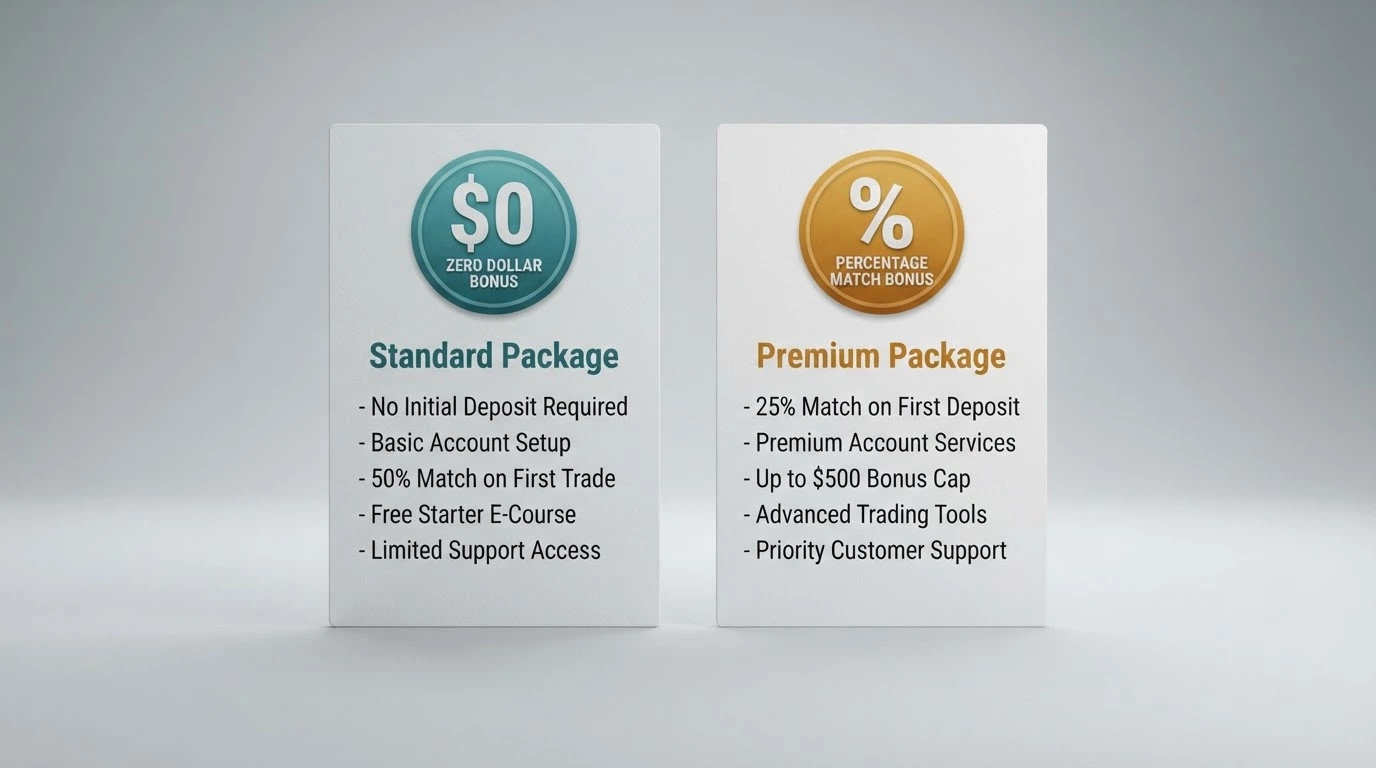
A no-deposit offer asks for nothing upfront and typically caps the withdrawal below $100. A deposit match multiplies what the player puts in but ties up the player’s own money until the wagering requirement clears. A deposit match plus free spins packages both — match percentage on the deposit plus a fixed number of spins at a fixed value — and is by far the most common welcome offer across the offshore casinos serving Australian players.
| Offer Type | Typical Wagering | Max Cashout | Typical Expiry | Real 2026 Example |
|---|---|---|---|---|
| No-Deposit Free Spins | 40×–60× | $50–$100 | 3–14 days | RocketPlay 20 FS for verified review (40×, ~$85 cap) |
| No-Deposit Cash Bonus | 30×–40× | — | — | Royal Reels AUD 10 no-deposit |
| Deposit Match + Spins | 40× | — | 14 days | RocketPlay 100% + 100 FS ($25 min) |
The third column is empty on the cash and deposit-match rows because the available data does not state a maximum cashout for those specific offer types. The implied read across the market is that cash bonuses carry similar caps to spin bonuses and that deposit-match offers, because the player has funded the bonus with their own deposit, often have looser withdrawal ceilings — but neither figure is confirmed for the operators in the featured set.
Why a Deposit Match With Free Spins Is Not a No-Deposit Offer
The industry routinely markets deposit-triggered packages alongside no-deposit language, and the deposit is the dividing line. A minimum-deposit threshold is the gate the player walks through to unlock the offer, and once through, the player has funded the bonus themselves.
Royal Reels gates its 100% welcome match up to AUD 500 behind a minimum deposit of AUD 30. RocketPlay’s 100% match plus 100 free spins sits behind a minimum deposit of AUD 25. SkyCrown’s $4,000 plus 350 free spins welcome package is fully deposit-gated, distributed across the first five deposits rather than concentrated on the first. None of these are no-deposit offers by any reading of the term, even though they appear on affiliate pages labelled “no deposit casino” when the affiliate wants a higher click-through.
The deposit changes the risk calculus for the player. A no-deposit offer costs the player nothing but their time. A deposit match costs the player real money that they cannot withdraw until the wagering clears — and at 40× on the bonus amount, the required turnover is large enough that the deposit and the bonus are both at stake across the clearing period.
Cash Bonus or Free Spins: How No-Deposit Offers Vary
A no-deposit bonus can arrive as spins or as a small cash credit, and the two formats behave differently. Free spins are locked to one game at a fixed value, with wagering applied to whatever they return. A cash credit is more flexible — usable across multiple games, sometimes withdrawable after a lower wagering multiple — but it is also smaller, because the operator is handing over fungible money rather than locked promotional spins.
Royal Reels’ AUD 10 no-deposit bonus for new sign-ups is genuinely deposit-free and arrives as cash rather than spins, with wagering requirements of 30× to 40× on the bonus amount. RocketPlay’s 20-spin no-deposit offer is genuinely deposit-free but arrives as spins, with the game lock and the spin value built into the structure. The cash bonus gives the player more control over which games they play. The free spins give the player less friction at the claim stage but more restriction on what they can do once the spins land.
For a player with a small bankroll, the cash bonus is usually the better deal — fewer restrictions, more game choice, often a lower wagering multiple. For a player who wants to test the casino’s pokies without committing funds, the free spins are the easier entry point. Neither format is unambiguously better than the other, and the right choice depends on what the player wants from the offer.
The Offshore Reality: 10 Casinos Australians Can Reach in 2026
No operator in the featured set carries a genuine 120 free spins no deposit as of 2026. The closest offers are smaller and conditional, and every operator that accepts Australian players in this market segment sits offshore. The table below ranks the ten operators from the Australian-facing offshore market by market share and makes the legal status of each explicit, because no reader should have to guess whether the site they are about to register with holds an Australian licence.
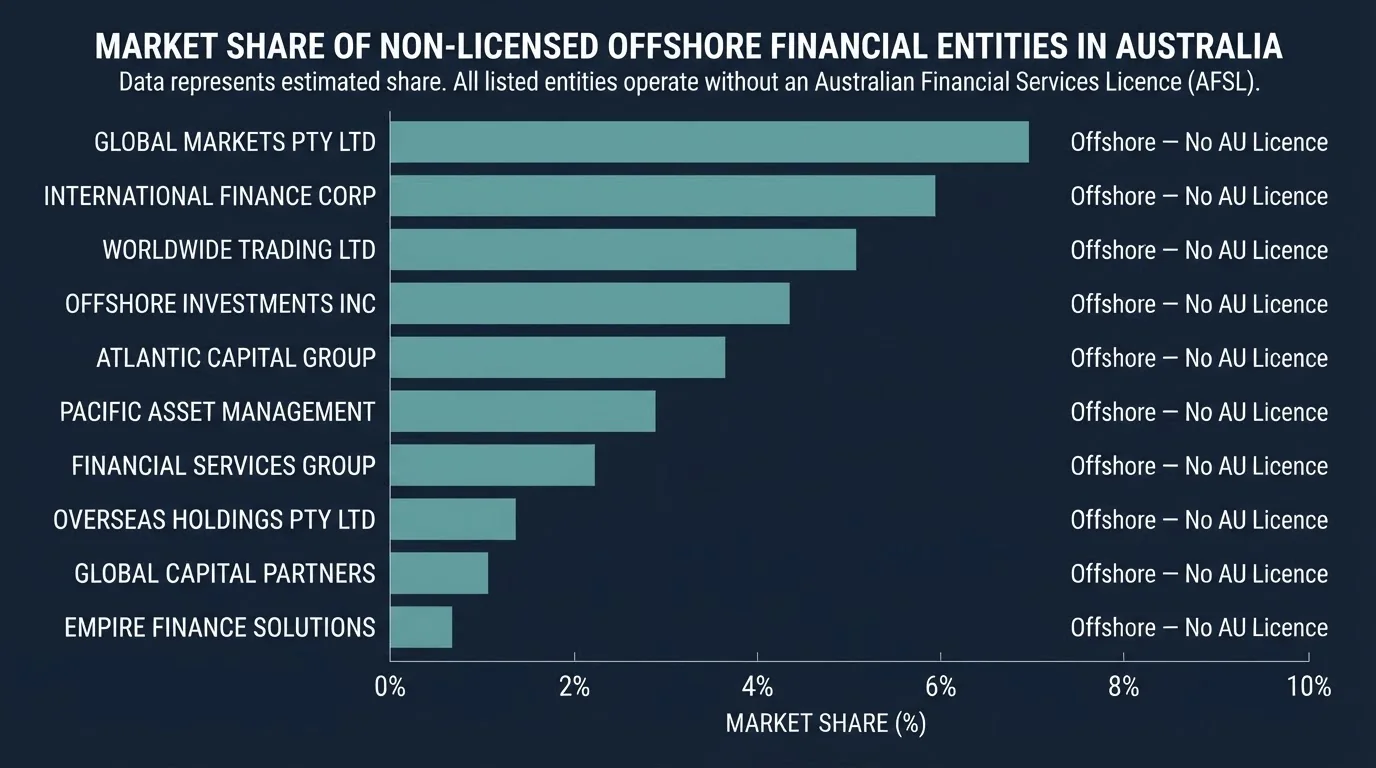
| Operator | AU Legal Status | Market Share (AU-Facing Offshore) |
|---|---|---|
| Rocket Play | Offshore — no AU licence | 9.4% |
| SkyCrown | Offshore — no AU licence | 8.55% |
| Royal Reels | Offshore — no AU licence | 2.51% |
| WinSpirit | Offshore — no AU licence | 1.55% |
| Stake | Offshore — no AU licence | 1.28% |
| Rainbet | Offshore — no AU licence | 1.28% |
| Scream Casino | Offshore — no AU licence | 0.99% |
| FairGO | Offshore — no AU licence | 0.8% |
| Bizzo Casino | Offshore — no AU licence | 0.57% |
| Rocket Casino | Offshore — no AU licence | 0.57% |
No licence for online casino exists anywhere in Australia. The product is prohibited federally, in every state and in every territory, and the offshore status column reflects that prohibition rather than any failure on the part of these specific operators to apply. Sportsbet, TAB, Bet365, Ladbrokes, TABtouch, PointsBet, Neds, Betr, Picklebet and Betfair hold Australian licences and offer wagering on sport and racing — not casino, not pokies, not in-play. They are not on this list because they are not in this market segment.
What follows is each operator, in market-share order, with what is confirmed about their offer.
Rocket Play
Rocket Play is the largest Australian-facing offshore casino at 9.4% market share, and its welcome package is the closest match to a “120 free spins” offer — though the actual numbers are smaller than the marketing suggests. The deposit-triggered welcome is a 100% match up to AUD 500 plus 100 free spins, with a minimum deposit of AUD 25, a 40× wagering multiple on the bonus amount and a fourteen-day validity window from activation.
The genuinely deposit-free offer is twenty free spins on Book of Pyramids, earned by writing a verified third-party review on a third-party platform. Wagering on those spins is 40× and the maximum winnings cap is roughly AU$85 (50 EUR at the conversion rate RocketPlay publishes). The spins are real, the trigger is verifiable and the cap is honest about how much a no-deposit player can walk away with.
RocketPlay’s withdrawal caps are the highest in the featured set: AUD 2,500 per day, AUD 7,500 per week and AUD 15,000 per month. That ceiling matters less for no-deposit bonus players — who will never approach it — than for higher-stakes depositors clearing a deposit match. Game providers include Pragmatic Play, Evolution Gaming, Yggdrasil, Hacksaw Gaming and more than thirty others.
A player who wants the largest Australian-facing offshore casino by market share and is comfortable with the offshore status gets the most generous withdrawal caps we reviewed. A player looking for a genuine 120-spin no-deposit offer will be disappointed: twenty spins for a review is the entire deposit-free structure.
SkyCrown
SkyCrown holds 8.55% of the Australian-facing offshore market and runs the largest headline welcome package in the featured set: up to $4,000 in match bonus plus 350 free spins distributed across the player’s first five deposits, with a 40× wagering multiple. The package also adds 10% crypto cashback and 1% rakeback for crypto-funded play.
SkyCrown does not have a verified no-deposit free-spin product. The welcome structure is fully deposit-gated and the headline spin count of 350 is distributed across deposits rather than concentrated on the first. A reader who wants SkyCrown’s cashback or rakeback will find both relevant; a reader searching for this offer will not find it here. A player who deposits in crypto and is comfortable with the offshore status gets the largest welcome package available here and a recurring cashback that softens the long-term edge. A reader looking for a “no-deposit” offer will come away empty-handed — which is the reality of the market for this type of promotion.
Royal Reels
Royal Reels holds 2.51% of the Australian-facing offshore market and is the only operator in the featured set with a genuinely deposit-free offer that arrives as cash rather than spins. The no-deposit bonus is AUD 10 for new sign-ups, with wagering requirements of 30× to 40× on the bonus amount. The welcome match is 100% up to AUD 500 behind a minimum deposit of AUD 30.
Royal Reels’ game library runs to more than two thousand titles from more than thirty software providers, including Pragmatic Play, Evolution Gaming, Yggdrasil and Hacksaw Gaming. That breadth matters because the AUD 10 no-deposit cash bonus is usable across the library rather than locked to a single pokie, which is the structural advantage of a cash bonus over a spins bonus.
A player who wants a small cash bonus with no deposit attached and the flexibility to choose their own game gets the cleanest no-deposit structure. A player looking for 120 free spins gets AUD 10 in cash, rather than the specific headline deal.
WinSpirit
WinSpirit holds 1.55% of the Australian-facing offshore market and runs a 200% welcome bonus plus 25 free spins with 40× wagering on promotional balances. The 200% match is the most aggressive headline percentage in the featured set, but the free-spin count is twenty-five, not one hundred and twenty, and the entire package is deposit-triggered.
No no-deposit free-spin product is confirmed at WinSpirit. A reader attracted by the 200% match will find the percentage competitive against the rest of the offshore market; a reader attracted by the twenty-five spins will find that twenty-five spins at the standard $0.10 is a $2.50 face value, not a $12 one, and that the deposit behind them is what funds the bonus.
A player who wants the largest percentage match on a first deposit and does not need the spins gets a stronger match here than at Royal Reels or RocketPlay. A player who came for the free-spin count gets a smaller offer than the promotional headline suggests.
Stake
Stake operates a crypto-first product and holds 1.28% of the Australian-facing offshore market. We have not verified specific welcome bonuses or no-deposit terms for this brand, so readers should treat this as a market-position note. As with every other offshore casino, it operates without an Australian licence.
Rainbet
Rainbet holds 1.28% of the Australian-facing offshore market. We lack confirmed data on their current welcome-bonus or no-deposit terms, and the operator shares the same unregulated legal position as other entries on this list.
Scream Casino
Scream Casino captures 0.99% of the Australian-facing offshore market. Information regarding current free-spin offers or welcome bonuses is unavailable for this brand, and its offshore legal status remains identical to the other casinos listed.
FairGO
FairGO (0.8% market share) brands itself with Australian theming, but this is a marketing choice rather than a reflection of its regulatory status. We cannot confirm current bonus terms for this brand, and it operates without an Australian licence, just like every other casino here.
Bizzo Casino
Bizzo Casino has a 0.57% share of the Australian-facing offshore market. Verified details about its current welcome package or free-spin offers are not public, and it shares the same unlicensed status as other offshore providers.
Rocket Casino
Rocket Casino (0.57% market share) is a separate entity from Rocket Play. We have not been able to verify the current welcome-bonus or free-spin terms for this brand. Readers should distinguish it from the larger Rocket Play brand discussed earlier.
Getting Paid: Why the Deposit Method Is a Warning Sign
The payment method a casino accepts is the most reliable tell of where it sits in the Australian regulatory system. Credit cards and cryptocurrency have been banned as payment methods for online wagering since 11 June 2024 under the Interactive Gambling Amendment (Credit and Other Measures) Act 2023, with penalties for non-compliance reaching $247,500. The ban applies to operators licensed in Australia — and that is precisely why it works as a tell.
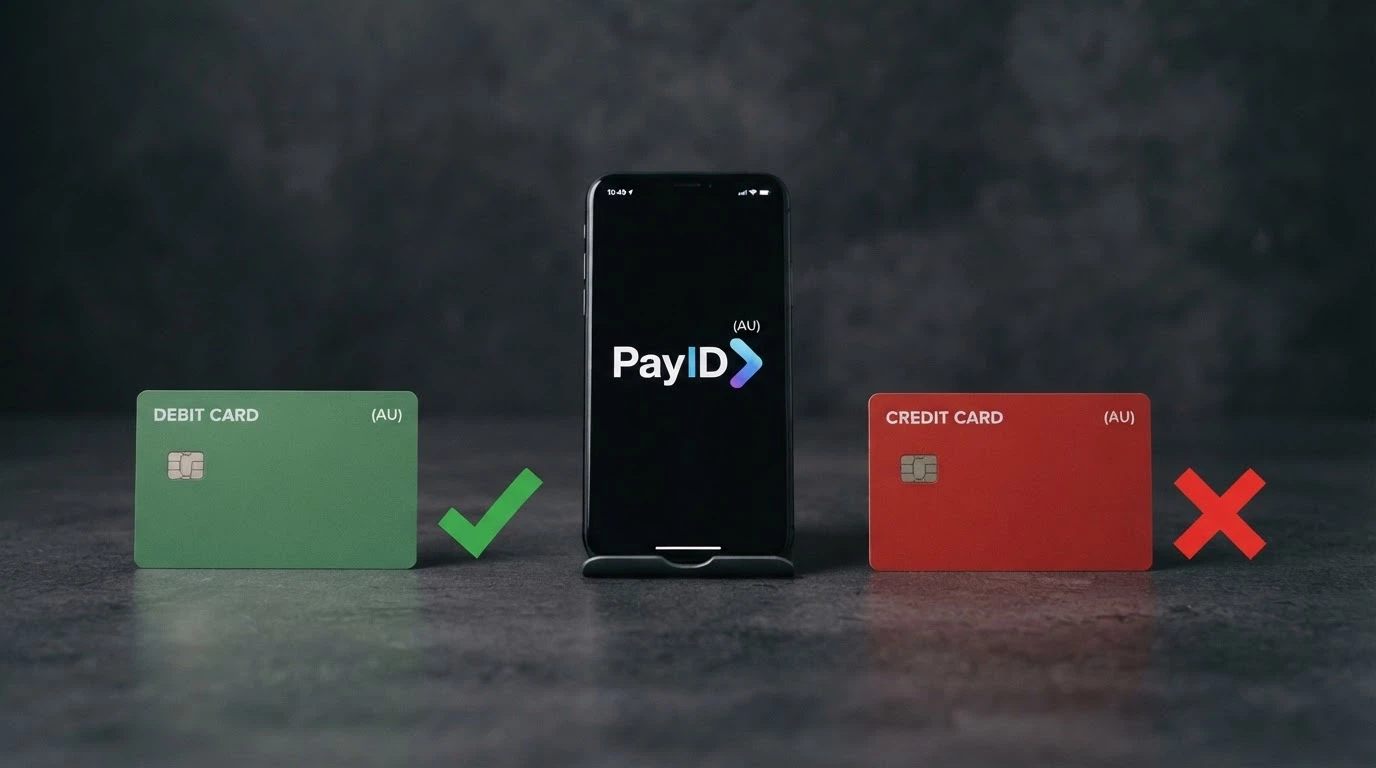
Legal deposit routes for licensed Australian wagering are debit card, bank transfer, PayID/Osko and BPAY. A site that prompts for a credit card or asks the player to fund the account in Bitcoin, Ethereum or USDT is by definition serving the player from outside the Australian rules. The payment method is not a detail. It is a signal.
What does that signal mean in practice? It means the operator is not covered by the consumer protections that apply to Australian-licensed wagering, that the ACMA cannot intervene on the player’s behalf if the operator refuses a withdrawal, and that from 1 January 2027 banks and payment providers will have express authority to block transactions to illegal gambling operators. The credit-card and crypto prompt is not an inconvenience the player should route around. It is the clearest possible confirmation of the site’s regulatory status.
Payout speed on approved methods varies by route. PayID withdrawals at Australian-aimed casinos are among the fastest available, with approved transactions completing in minutes. Crypto withdrawals typically settle within zero to two hours after approval. KYC under twenty-four hours on complete documents is the norm. None of this changes the offshore status. It just changes how long the player waits for the payout that does arrive.
KYC, Withdrawal Caps and What Slows Your Payout
The first time a player tries to cash out, the operator asks for documents. The three-document standard is photo ID, proof of address dated within ninety days and payment-method ownership verification. Source-of-funds documentation kicks in at higher lifetime cumulative thresholds — typically $5,000, $10,000 or $20,000 depending on the operator.
Approval on a complete document set typically wraps within twenty-four hours. Incomplete documents — a blurred photo, an expired utility bill, a payment-method screenshot that does not show the depositor’s name — can stall the review for days. The fastest path through KYC is preparation, not speed: have the documents ready, in the requested format, before the first withdrawal is requested.
Even after KYC clears, withdrawal caps stretch a payout over weeks for higher-balance players. RocketPlay’s daily cap is AUD 2,500, with a weekly ceiling of AUD 7,500 and a monthly ceiling of AUD 15,000. A player withdrawing AUD 15,000 from a cleared deposit-match balance faces at least a month of payouts. A player withdrawing the AUD 50 to AUD 100 cap on a no-deposit offer faces none of that — the cap is below the daily limit, so the full payout clears in a single transaction once KYC is approved.
120 Free Spins on Mobile: What Changes on a Small Screen
The offer terms do not change on a phone. Spin value, game lock, wagering multiple and cashout cap apply identically on mobile and on desktop. What changes is the practical experience: the game selection on smaller screens is sometimes narrower than the desktop lobby, the deposit flow on mobile wallets is faster for some players, and the claim flow — visiting the bonus page, opting in, opening the locked title — is condensed into fewer taps.
Australian-aimed offshore casinos almost universally run in the mobile browser. A dedicated app is the exception, and where one exists, it is usually a wrapper around the same browser experience rather than a separate product. The practical difference between an app and a mobile browser at most offshore casinos accepting Australians is the icon on the home screen, not the offer behind it.
App vs Browser: Where the Spins Actually Work
Browser-based play is the default for offshore casinos accepting Australians, and the bonus terms carry over identically. App availability varies across the featured set, and whether any of the operators in this article gate a bonus behind an app install has not been confirmed in the data available for this run. A reader who finds an operator with an app should treat the app as a convenience layer rather than a separate offer — the T&Cs will be the same as on the desktop site.
What does change on mobile is game performance at long sessions. Pragmatic Play titles in particular are heavy on the GPU at high volatility, and a phone running the locked game for the length of time it takes to clear a 40× wagering requirement will run warm. The offers do not penalise mobile play, but the device does, and a player clearing a 40× requirement on a phone should plan for breaks the desktop equivalent does not require.
Promo Codes and New Casinos: What 2026’s Catalogue Delivers
Promo codes are a distribution mechanism, not a bonus type. They let an operator track where a player came from, segment the offer to a specific affiliate or email campaign and put an expiry on a promotion that would otherwise run indefinitely. Whether a promo code is required for a 120-spin offer is a question of which affiliate page or campaign the player arrived through, not of the offer itself.
New casinos are the most likely source of a genuine no-deposit offer in any market, including Australia’s. A new operator needs players, has no track record with the audience and is willing to spend more per acquisition than an established brand. That is why no-deposit spin offers cluster at the new-casino end of the catalogue. It is also why a no-deposit offer at a brand the player has never heard of should be read alongside a licence check, a player-feedback history and a withdrawal-term review. Newness does not equal safety. Newness equals promotional aggression.
New Online Casinos and the 120 Free Spins Bait
A new casino with a 120-spin offer is doing what every new entrant in a saturated market does: spending aggressively on acquisition. The offer is real, the spins will land and the wagering requirement will apply. The question is whether the operator behind the offer is the kind of entity the player wants to deposit with.
A licence check at the operator’s footer is the fastest signal. A Curaçao, Anjouan or Kahnawake licence is the typical offshore base, and each comes with different dispute-resolution pathways. A player-feedback history on independent forums, an affiliate review site and a search for “withdrawal issues” is the second signal — and a longer track record of slow-pay or voided-win complaints is the third signal the player should weigh before registering.
Spin Dinero’s DINERO120 offer — 120 free spins on a single A$20 deposit, 40× wagering, AU$100 max cashout, three-day expiry — is the closest match to the headline among the operators we reviewed. It is also a deposit-triggered offer, not a no-deposit one, and Spin Dinero is not in the featured list. The pattern is informative: 120-spin packages exist, they are not free, and the casino offering them is rarely the one a reader already knows.
Online Casino Is Prohibited in Australia: What the Law Actually Says
The product a “120 free spins no deposit” page describes does not have a legal pathway in Australia. The Interactive Gambling Act 2001 makes it an offence to provide online casino games, online pokies and in-play sports betting to a person in Australia — no licence exists for any of those products federally, in any state or in any territory. The IGA targets the provider, not the individual player, which means a reader who registers at an offshore casino is not personally committing an offence. It also means no Australian regulator can recover the player’s money if the operator refuses a withdrawal, voids a win or simply disappears.
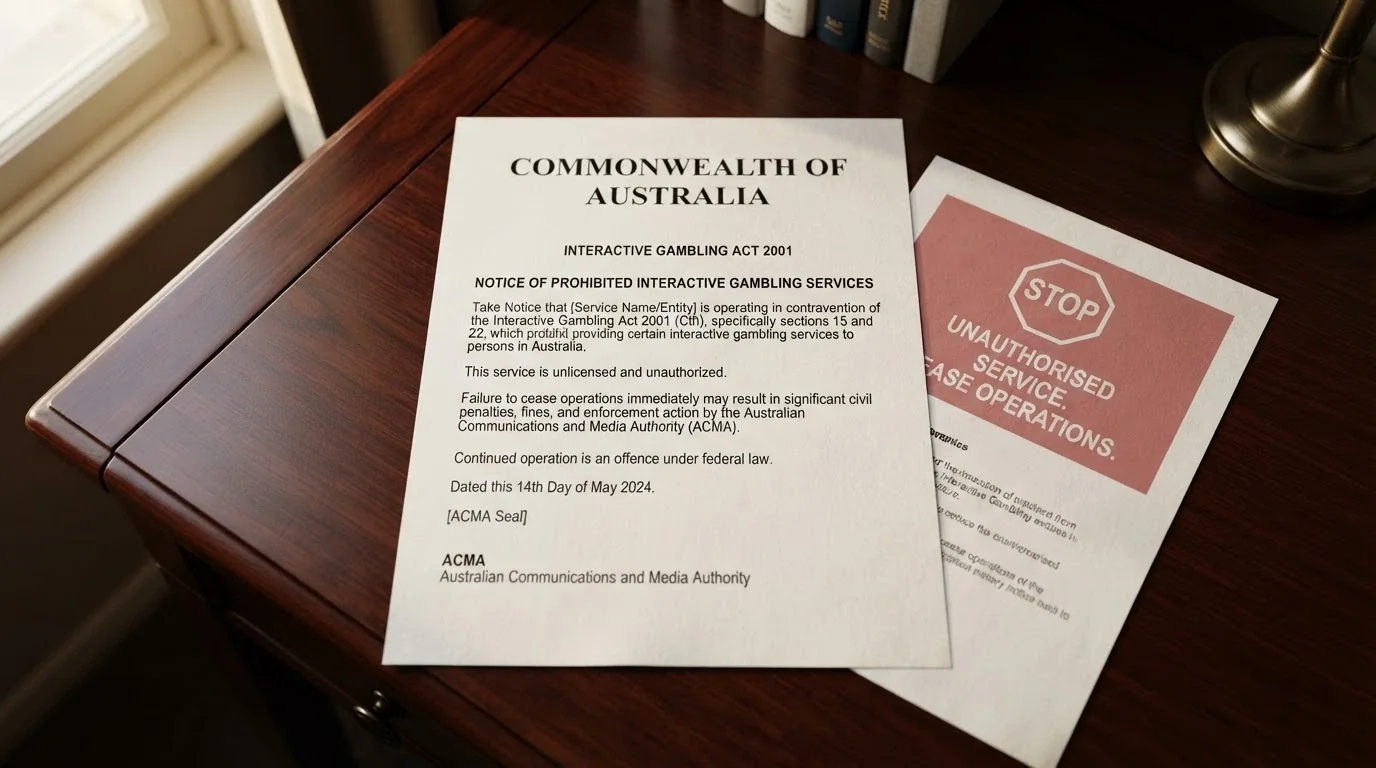
This is the part most competitor pages skip. Affiliate listicles route readers to offshore casinos without naming the legal status, because the legal status is bad for the click-through. A reader who knows the IGA is operating, who knows the ACMA is blocking sites and who knows the offshore status removes every Australian consumer protection is a reader who will be more careful about which offers they claim. That is the point of the next several sections.
The IGA, the ACMA and 2026 Enforcement
The Interactive Gambling Act is not a dormant statute. The Australian Communications and Media Authority enforces it. Since its first blocking request in November 2019, the ACMA has directed Australian ISPs to block 1,564 illegal gambling and affiliate websites — a figure that reached 1,564 by March 2026. More than 225 illegal services have voluntarily withdrawn from the Australian market since enforcement was strengthened in 2017.
The Interactive Gambling Amendment Act 2017 closed the loopholes that offshore operators had been using and gave the ACMA explicit enforcement and blocking powers. The Interactive Gambling Amendment (Gambling Reform) Bill 2026 passed Parliament on 19 August 2026 and commences on 1 January 2027. From that date, banks and payment providers gain express authority to block transactions to illegal gambling operators, and direct marketing of inducements is prohibited for fourteen days after a customer signs up, for three months after a person deregisters from BetStop and indefinitely for customers identified as at risk of gambling harm.
The 2026 reform also creates AdStop — a national wagering advertising opt-out register administered by the ACMA, backed by a cost-recovery levy on licensed interactive wagering providers. Wagering advertising is capped at three ads per hour between 6:00 am and 8:30 pm, with a live-sport blackout running from fifteen minutes before to five minutes after a live event. None of those restrictions bind an offshore casino. They bind the licensed Australian wagering market, which is a different market from the one this page describes.
Why No Online Casino Holds an Australian Licence
It is not that operators have not applied for an Australian online casino licence. The product category has no licence pathway anywhere in the country, federally or in any state or territory. The distinction between online casino and online wagering is the piece every competitor page misses, and it is the piece that explains why no casino on the operator list above can be Australian-licensed for what it is selling.
Online wagering — pre-event bets on sport and racing — is licensable. State and territory regulators issue those licences, with the Northern Territory Racing and Wagering Commission, administered through Licensing NT, acting as the de facto national licensor. NT wagering licences run for terms up to twenty years. The licensed brands in this market — Sportsbet, TAB, Bet365, Ladbrokes, TABtouch, PointsBet, Neds, Betr, Picklebet and Betfair — hold those licences and offer wagering on sport and racing. They do not offer online casino, online pokies or in-play betting. None of them is on the operator list above, because the operator list is a list of casinos, not bookmakers.
A land-based casino licence is a separate product. Crown and The Star hold state licences for physical premises. Those licences do not extend to an online casino product, and an Australian-licensed land-based casino operating an offshore casino site does not turn that site into an Australian-licensed online casino. The reader should not confuse the two.
Offshore and Unprotected: What Playing Outside the System Means
When a player registers at an offshore casino, every Australian consumer protection drops away. The ACMA cannot recover the player’s money from an offshore operator, because the ACMA’s jurisdiction stops at the Australian border. There is no Australian complaints body with authority over an offshore casino’s withdrawal disputes. BetStop, the National Self-Exclusion Register, does not bind offshore casinos, which means a self-excluded player can still deposit at every operator in the featured set. The DNS-level blocking the ACMA directs against illegal sites can drop a casino offline overnight with the player’s balance still on the books.
A player who has a winning withdrawal refused has, in practical terms, no Australian recourse. The casino’s own dispute process is the first stop, and an overseas licensing body — typically Curaçao, Anjouan or Kahnawake — is the second. A chargeback at the card issuer is the third, but chargebacks on gambling transactions are frequently declined on the basis of the terms-and-conditions acceptance the player agreed to at registration. None of those routes is fast, none is guaranteed and none returns the player to the position they would have been in had they played inside the licensed Australian system.
The site being blocked is the most underrated risk. A balance sitting at an offshore casino can become unreachable because the casino’s domain was added to an ISP block list. The DNS-level block does not always direct the player to a recovery page. Sometimes it just stops resolving.
Staying Safe: Australian Responsible Gambling Tools and the Offshore Blind Spot
Australia has harm-minimisation infrastructure that ranks among the strongest in the world. The National Gambling Helpline on 1800 858 858 is free, confidential and staffed twenty-four hours a day, seven days a week. Gambling Help Online — gamblinghelponline.org.au — provides online chat and counselling. BetStop, the National Self-Exclusion Register, went live in August 2023 and excludes a registered person from every Australian-licensed online and phone wagering service in a single step.

Every one of those tools works inside the licensed Australian system. None of them reaches the offshore casinos in the featured set. That is the blind spot this section is built around.
BetStop and the Offshore Gap: Self-Exclusion That Stops at the Border
BetStop is one of the strongest self-exclusion tools in any regulated market. One registration excludes a person from every Australian-licensed online and phone wagering service. Exclusion periods run from a minimum of three months to a maximum of lifetime. As at 31 July 2026, BetStop had 67,480 registrations across three years, with 41,290 exclusions still active — 78% of registrants under 40, 38% choosing lifetime exclusion.
BetStop binds Australian-licensed wagering services only. An offshore casino is not connected to the register and will keep accepting deposits from a self-excluded person. The practical implication is severe: a person who has registered with BetStop and is committed to stopping gambling has solved the licensed-Australian-wagering half of their problem, and the offshore-casino half is exactly as open as it was before they registered. From 1 January 2027, the 2026 reform adds a three-month ban on direct marketing of inducements to BetStop deregistrants — but that ban applies to licensed operators, and the offshore casinos were not bound by Australian marketing rules in the first place.
Deposit Limits, Reality Checks and Activity Statements
Inside the licensed Australian wagering system, operators are required to offer customer-set deposit limits and activity statements under state and territory licence conditions. A player can set a daily, weekly or monthly deposit cap, request a reality-check prompt that notifies them of time and spend at intervals, and pull an activity statement showing what they have deposited, wagered and lost over a chosen period.
Offshore casinos serving Australian players are not bound by those requirements. Some offer deposit-limit tools voluntarily. Many do not. The player who registers at an offshore casino and expects the same harm-minimisation scaffolding they would get at Sportsbet or TAB will be disappointed, and the disappointment is structural. The tools were built for the licensed market. The offshore market is not required to provide them.
The asymmetry is the cleanest summary of the regulatory difference. A player inside the licensed system gets the deposit limits, the activity statements, the self-exclusion register and the regulator’s complaints process. A player outside it gets the games.
When to Call It: Recognising Problem-Gambling Signs
The warning signs are concrete and measurable. They are not vague feelings but specific behaviours that have been linked, in clinical research and in the Gambling Help Online self-assessment, to escalating harm. The list below is not exhaustive. It is a starting point.
- Gambling with money intended for essentials like rent, groceries or bills
- Needing to bet larger amounts to reach the same level of excitement
- Chasing losses — returning to play again to recover what was lost
- Hiding the extent of play from family, friends or partners
- Borrowing money or selling possessions to fund gambling
- Feeling anxious, irritable or restless when trying to stop
- Continuing to gamble despite the harm it is causing relationships, work or study
If any of those signs resonate, the National Gambling Helpline on 1800 858 858 is free, confidential and staffed around the clock. Online chat and counselling are available through Gambling Help Online at gamblinghelponline.org.au. Harm prevalence in Australia sits at roughly 2.1% of adults — about 430,000 people — with the Australian Institute of Health and Welfare putting high-risk gambling at 1.8% in 2022. The minimum age for any commercial gambling in Australia is eighteen.
How We Evaluated These Casinos
The operator set in this article is drawn from the Australian-facing offshore market, ranked by the market-share figures available for that segment. Ten operators carry enough presence to merit ranking, and the table in the offshore-reality section above orders them from largest to smallest. The ranking is by market share among AU-facing offshore casinos, not by offer quality, because the offer landscape across these operators is too uneven to rank on terms alone.
The evaluation criteria were five. Legal status under the Interactive Gambling Act 2001 — every operator in the featured set is offshore, because no Australian online casino licence exists. The presence and terms of a free-spin or no-deposit offer, where available. Wagering fairness, measured against the 40× to 60× range typical of the wider market. Cashout caps, where stated, against the AU$50 to AU$100 band the broader no-deposit market uses. Game-provider breadth, where research carries the data, as a proxy for the locked-game catalogue the player will be steered toward.
Sources used for this evaluation include the ACMA register for legal status and enforcement data, the market-share figures surfaced for the Australian-facing offshore market, the regulation context for payment-method rules and responsible-gambling infrastructure, and the bonus and terms data confirmed for individual operators. Where current terms could not be confirmed for an operator — the six entries beyond Royal Reels and WinSpirit — the absence is stated plainly rather than filled with speculation.
A reader using this evaluation should treat the market-share ranking as a proxy for operator size and Australian player base, not as a quality judgement. The largest operator in the table is not the best offer. It is the operator with the most Australian-facing players in the data the article was built on.
What to Actually Do With a 120 Free Spins No Deposit Offer in 2026
The closing argument is shorter than the article that precedes it, because it is made from figures the page already carries. No operator in the featured set runs a genuine 120 free spins no deposit as of 2026. The closest offers are twenty spins for a verified review at RocketPlay and AUD 10 in no-deposit cash at Royal Reels. Spin Dinero’s 120-spin offer is real but deposit-triggered, and Spin Dinero is not in the featured set. The 120 figure is the marketing doing its job. The real-money ceiling — the AU$50 to AU$100 cashout cap the no-deposit market uses — is the figure that determines what the offer is actually worth.

Every operator in the featured set is offshore and outside the Australian regulatory system. A reader who encounters a credit-card or crypto prompt has confirmation that the operator is operating outside the rules. A reader who has registered with BetStop has solved the licensed-wagering half of their problem and should not assume the offshore half is closed. A reader who clears a 40× wagering requirement on a no-deposit offer and is paid up to the cap has had the offer work as designed. The reader who clears the wagering and is paid the spin value rather than the cap has had the offer fail as designed.
The smartest move with any online casino offer is reading the terms before clicking the claim button. The second smartest is recognising which sites fall outside Australian law. Both are cheaper than learning the difference at the cashout screen.
If gambling has stopped being fun, free and confidential support is available from Gambling Help Online on 1800 858 858. The line is staffed around the clock, every day of the year.
Frequently Asked Questions
How much is each free spin worth in a 120 free spins offer?
Each spin at most operators offering no-deposit free spins to Australian players is worth $0.10, with some promotions running at $0.20 or $0.25. A 120-spin package at the standard $0.10 rate has a face value of $12, and the wagering applies to anything you win rather than to the spin value itself.
What is the maximum I can cash out from 120 free spins no deposit?
Most Australian-aimed no-deposit free spin offers cap withdrawals between AU$50 and AU$100, with the exact figure stated in the promotion’s terms. Even after the wagering requirement is cleared, anything above the cap is forfeited by the operator rather than paid out — so a headline of 120 spins can convert to a maximum of about $100 in cash.
Can I use PayID or crypto to withdraw winnings from free spins?
Licensed Australian wagering operators accept PayID for deposits and withdrawals, often settling in minutes. Crypto is banned as a payment method for licensed wagering since June 2024 — an offshore casino that lets a player deposit or withdraw in crypto is by definition operating outside the Australian rules.
What happens if an offshore casino refuses to pay my winnings?
Nothing practical. The ACMA cannot recover money from an offshore operator and no Australian complaints body has jurisdiction over them. The only recourse is the casino’s own dispute process, an overseas licensing body, or a chargeback at the card issuer — and chargebacks on gambling transactions are frequently declined.
Will the 2026 gambling advertising reforms affect no-deposit bonus offers?
The 2026 reform passed Parliament on 19 August 2026 and commences on 1 January 2027. It caps wagering advertising, bans inducements to new sign-ups for fourteen days and to BetStop deregistrants for three months, and lets banks block payments to illegal operators. The provisions apply to licensed wagering, not offshore casinos.
How does BetStop protect me, and does it cover offshore casino sites?
BetStop is the National Self-Exclusion Register, live since August 2023. One registration excludes a player from every Australian-licensed online and phone wagering service for a minimum of three months, with options up to a lifetime ban. It does not cover offshore casinos — every site on the operator list in this article is unaffected by a BetStop registration.
Do You Need a Promo Code for 120 Free Spins?
Most standard free-spin offers auto-apply on sign-up or after the player visits the bonus page. A separate code is the exception rather than the rule, and where one is required, it usually appears on an affiliate page, in an email campaign or in a social media post rather than on the casino’s homepage.
The reason operators use codes at all is operational, not promotional. A code lets the operator attribute the player to a specific campaign, cap the promotion to a fixed number of redemptions and expire the offer on a known date. None of those reasons benefit the player. They benefit the operator’s tracking and segmentation.
No featured operator in this article requires a working promo code for its standard free-spin offer in the data available for this run, and the plan does not route one. A reader who encounters a code elsewhere should treat it as a campaign-specific artefact rather than a normal part of the offer.