
Crypto Casinos for Australian Players: Every Operator Is Offshore, and That Changes the Math
 Available in AU
There’s no such thing as a licensed Australian online casino. The Interactive Gambling Act 2001 bans the product outright, every crypto casino accepting Australian players does so from offshore, and the rest of this page is what that means in practice — not a list of recommendations dressed up as advice.

Data current as of 18 October 2026; licence claims verified against the ACMA register and Curaçao/Anjouan licence databases.
Table of Contents
- What a Crypto Casino Actually Is — and Why Yours Is Offshore
- The 10 Offshore Crypto Casinos Australians Are Using in 2026
- No-KYC Crypto Casinos: The Privacy Promise vs. the Paper Trail
- How Fast Do Crypto Casino Withdrawals Really Land?
- Why Your 2026 Crypto Casino Bonus Is Smaller Than It Looks
- The Pokies Worth Playing with Crypto — and the RTP Trap
- Is It Legal? What the Interactive Gambling Act Actually Says in 2026
- New Crypto Casinos in 2026: Fresh Faces, Bigger Incentives
- Playing Safely: Tools, Limits and Where to Get Help
- How We Picked and Ranked These Crypto Casinos
- Your Money, Your Call: What to Actually Do Next
- FAQ
What a Crypto Casino Actually Is — and Why Yours Is Offshore
Definition matters less than the legal frame that surrounds it, so the legal frame goes first.
A crypto casino is a casino that takes deposits and pays withdrawals in cryptocurrency — Bitcoin, Ethereum, USDT, Litecoin, sometimes a long tail of altcoins — and holds a player’s balance in that crypto rather than in fiat. The differences from a fiat online casino are mechanical: deposits clear without a bank in the middle, withdrawals skip the card network, balances are denominated in something other than AUD. The legal relationship is the same: both are online casinos.
In Australia, the legal relationship starts from a prohibition. The Interactive Gambling Act 2001 makes it an offence to provide online casino games to a person in Australia — the provider commits the offence, not the player. There is no Australian licence for online casino anywhere in the country, so when an Australian opens an account at a crypto casino, that casino is operating outside Australian rules. The 11 June 2024 ban on crypto as a payment method for online wagering reinforced the same point: any site asking an Australian for a crypto deposit is already outside the system the rest of the wagering market sits inside.
The consequences are concrete. No BetStop coverage, because the national self-exclusion register binds Australian-licensed operators only. No Australian consumer protection statute, and no complaints body with the power to chase a refund. ACMA blocks illegal sites — 1,564 illegal gambling and affiliate sites have been blocked since November 2019 — so the URL an Australian uses today can be gone tomorrow. The casino’s terms decide what recourse exists, and the casino wrote those terms. That isn’t a reason to refuse to engage. It is the reason to know precisely what an Australian is engaging with, before the first deposit clears.
How a Crypto Casino Works, Step by Step
The chain an Australian actually uses runs through a regulated on-ramp, even when the off-ramp is unregulated. Buying crypto in Australia means going through a Digital Currency Exchange registered with AUSTRAC — CoinSpot, Swyftx, Independent Reserve — and every one of them verifies identity before the first satoshi moves. So the privacy an offshore casino claims to offer is privacy about the gambling transaction, not the funding transaction; the AUD-to-crypto leg is already on the record.
Cleanest deposit route, start to finish: Australian bank account to CoinSpot or Independent Reserve, buy USDT on the TRC-20 network, send to the casino’s deposit address, the funds appear as a USDT balance within minutes. Most operators convert internally to a house currency so the player doesn’t actually hold raw coins during play. Withdrawal reverses the chain — request a payout, casino broadcasts to the blockchain, USDT lands back in the exchange, sell for AUD, transfer to bank. The friction sits at the two interface points: depositing into the casino and converting back to AUD. The middle — confirming on a blockchain — is mechanical.
Crypto cashouts take 5 to 30 minutes as a category; that figure hides the operator processing queue, which can add 10 to 20 minutes during peak hours, and the AUD off-ramp at the exchange, which can take another hour or two. PayID-style fiat withdrawals take 15 to 60 minutes. Bank transfers still run one to seven days. The crypto promise is real on the inside of the round trip and slower than it looks once the AUD on-ramp is counted in.
Crypto Casino vs. Fiat Casino: What You Gain, What You Lose
The trade-off isn’t between crypto and fiat for their own sake; it’s between two routes into the same prohibited product. Speed is the headline gain — withdrawals clear in minutes rather than days. Privacy is the marketing word, but the precise meaning is “your bank statement doesn’t show a casino transfer,” which is true. The no-bank-statement gain collapses to a footnote once AUSTRAC’s exchange-level KYC is considered: the player’s identity is on the exchange’s records from the moment crypto was bought.
What an Australian player gives up is more concrete. No Australian consumer protection, since no Australian law applies. No BetStop coverage, because the self-exclusion register binds licensed wagering only — offshore crypto casinos are not connected. No dispute-resolution body, so an operator that refuses a payout answers to its own internal review. ACMA blocks sites when directed to do so, and more than 225 illegal services have withdrawn from the Australian market since 2017. The fiat casino is also prohibited in Australia, so it isn’t a legal alternative. But licensed Australian wagering on sports and racing, where it exists, offers protections the offshore crypto route does not.
The 10 Offshore Crypto Casinos Australians Are Using in 2026
These are the ten offshore crypto casinos that research indicates are taking Australian deposits in 2026. Every one operates outside Australian law; the IGA prohibits the product they sell, and on 11 June 2024 crypto was added to the banned-payment list for online wagering. None of them holds an Australian online casino licence, and none of them is registered with AUSTRAC. The only difference between them is how that fact intersects with their game selection, their bonus design, their withdrawal speed and whether their licence number survives the most basic check.
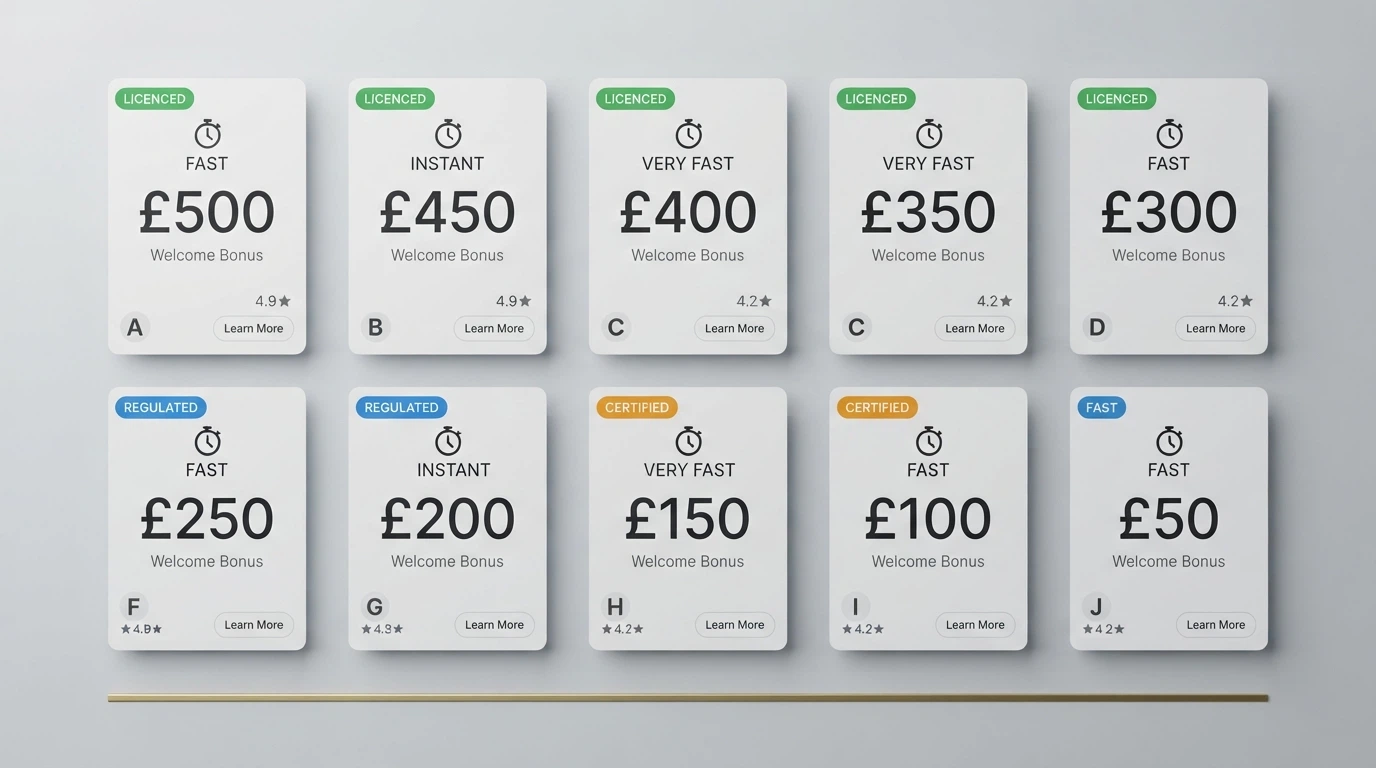
The table is the at-a-glance picture; the per-operator blocks after it carry the detail that doesn’t fit a cell. Where research couldn’t confirm a specific — welcome amount, withdrawal time, licence number — the cell reads “Not confirmed”; do not interpret a blank as a weakness unique to one operator.
| Casino | Licence | Welcome Offer | Crypto Supported | Established | Withdrawal Speed |
|---|---|---|---|---|---|
| Stake | Curaçao | VIP rakeback + A$75,000 weekly raffle | BTC and 130+ coins | — | Under 5 min (BTC) |
| BitStarz | Curaçao | Up to 5 BTC + 180 FS | 500+ coins | — | ~8–10 min |
| BC.Game | Not confirmed | Multi-tier package (amount unconfirmed) | BTC + 100+ | — | Not confirmed |
| Vave | Curaçao | Up to 4 BTC + 100 FS (4-tier) | 50+ | 2022 | Instant–30 min |
| Moonbet | Anjouan (ALSI-202605007-FI1) | Rakeback 20–40% + 4–8% weekly cashback | 50+ | — | ~4 min (BTC) |
| Jackbit | Not confirmed | 100 wager-free FS | 19 | — | Not confirmed |
| Metaspins | Curaçao | Not confirmed | BTC, ETH, LTC, DOGE | 2022 | Not confirmed |
| Cloudbet | Not confirmed | Zero-rollover (sportsbook-focused) | 30+ | — | Under 10 min (Lightning) |
| Betpanda | Not confirmed | 100% up to 1 BTC | 30+ | — | Seconds (SOL, XRP) |
| 7Bit Casino | Not confirmed | 30 no-deposit FS (Deep Sea) | Crypto + fiat | — | Not confirmed |
Stake
Stake doesn’t pretend to welcome an Australian player. Its terms forbid Australian accounts, its domain sits on the ACMA blocklist, and VPN use is banned under the same terms — so accessing Stake from Australia means bypassing a block the operator has chosen to honour in name only. That alone ends the brand for a reader who wants to play inside a set of terms they can rely on.
What Stake does well it does genuinely. The VIP programme runs from Bronze through Platinum, Diamond and Obsidian; Bronze reaches at 10,000 wager points, and each tier pays rakeback of around 0.1–0.5% on every bet, paid in cash with no wagering attached. The weekly raffle runs a prize pool around A$75,000, with one ticket earned per roughly A$1,000 wagered. For a high-volume player who can find a working route, the rakeback is genuinely the most generous recurring value in the category, and BTC withdrawals consistently clear on-chain in under five minutes.
For an Australian, the verdict is plain: don’t play here through a workaround. If the operator actively disclaims the Australian market and the regulator has blocked the site, the only consumer-protection floor left is the one the operator chose to let you keep.
BitStarz
BitStarz is the long-running Curaçao operator with the headline-grabbing welcome offer: up to 5 BTC plus 180 free spins, plus support for 500+ cryptocurrencies — the longest coin list in this set. The casino runs BGaming, Pragmatic Play, Betsoft and NetEnt, and it has been live since 2014, long enough to have weathered several crypto cycles and a Curaçao regulator shuffle.
Risk-based KYC at BitStarz means there is no fixed threshold; the casino gathers what it needs when it sees fit. Withdrawals tested by affiliate reviewers cleared in roughly 8 to 10 minutes, competitive against the casino’s Curaçao peer group. The welcome bonus is one of the largest in the category in headline terms — 5 BTC is genuinely large — but the wagering multiplier wasn’t confirmed this round, and a 5 BTC bonus carries through to a much larger required turnover than 4 BTC at Vave or 1 BTC at Betpanda.
For an Australian balancing game depth and withdrawal speed, BitStarz is a credible mainstream pick. Treat the welcome offer with the same caution any large bonus deserves: read the wagering terms before depositing, because headline value is one figure and playthrough reality is another.
BC.Game
BC.Game is the token-economy operator: 10,000+ titles, a native token (BCD), and more than 100 cryptocurrencies supported. The breadth of the catalogue and the depth of the crypto integration are real. The welcome package is described as multi-tier in its own marketing, but specific bonus amounts, wagering multipliers and withdrawal timing were not confirmed in the research round.
The lack of confirmed specifics is the point. An Australian weighing BC.Game against the rest of the field has to find those numbers on BC.Game’s own bonus page or in the bonus “Info” tab — and confirm the licence number the casino holds. The token model means there’s a second order of risk: house tokens tend to carry their own price action, and rakeback paid in BCD is a different reward than rakeback paid in BTC.
Treat BC.Game as a research project. The library depth and crypto range are there for the taking; the verification work falls to the player.
Vave
Vave is the newer Curaçao casino that opened in 2022 and has built around two numbers: 13,000+ games and a four-tier welcome package worth up to 4 BTC plus 100 free spins, broken into a 150%, 100%, 50% and 25% match across four deposits with a 20 USDT minimum. The catalogue reaches into BGaming, Betsoft, Pragmatic Play and NetEnt, and crypto withdrawals run from instant to around 30 minutes.
What separates Vave from the welcome-pack crowd is the no-deposit layer: 40 free spins on Lady Wolf Moon MEGAWAYS credited without a deposit, with winnings capped at 50 USDT and a 40× wagering requirement on those winnings. It’s a real no-deposit offer rather than a “deposit to receive” one. The cost is the bonus chain, and the calculation runs in full a few sections down — at a 96.50% RTP slot, 40× wagering on a 50 USDT win produces an expected loss of about 70 USDT, more than the cap itself.
For an Australian player who wants a no-deposit route into a real crypto casino, Vave carries both the upside and the cost of that route on its face. Read the terms before the welcome pack rather than after.
Moonbet
Moonbet is the operator that publishes its licence number on its footer and runs at the higher end of withdrawal speed: an Anjouan licence (number ALSI-202605007-FI1), BTC cashouts tested at about four minutes on-chain, no ID check for withdrawals under A$2,000. That last number is the cleanest no-KYC cap attached to a specific figure in the research round — and it is what separates Moonbet from operators who use “no KYC” as a marketing word without a threshold behind it.
The welcome model is also different. Moonbet doesn’t run a deposit match; it pays 20 to 40% rakeback on every wager and 4 to 8% cashback weekly, both with zero wagering requirements. For a player whose reason for picking a crypto casino is the recurring value, that model is more honest than a one-shot welcome offer — and it scales with how much the player actually plays. The catalogue is 50+ cryptocurrencies, with both casino and sportsbook.
For an Australian weighing licence transparency and withdrawal speed together, Moonbet is the most clearly verifiable pick in the research round. The trade is a smaller headline bonus against a published licence number and a tested cashout time.
Jackbit
Jackbit sells a wager-free welcome: 100 free spins with no wagering requirement on winnings, attached to a 9,500+ pokie catalogue featuring Pragmatic Play, Hacksaw, Big Time Gaming, Play’n GO and Nolimit City. Zero wagering is the most valuable term that can sit on a casino bonus page, and Jackbit puts it where a player can actually find it.
What research did not confirm is the licence number and the withdrawal speed. A wager-free welcome doesn’t substitute for a verifiable licence, but it does reduce the player’s exposure on the first deposit — winnings on the welcome spins can be withdrawn immediately rather than after a 35× playthrough.
For an Australian player whose priority is bonus honesty, Jackbit is the standout in the research round. The gaps are real, and they sit in the columns a regulator would fill; the bet is whether the wager-free structure compensates.
Metaspins
Metaspins sits in a slightly different place from the rest of the field. It launched in 2022 under a Curaçao licence, runs around 6,800 games from Microgaming, NetEnt and Pragmatic Play, and explicitly tolerates VPN connections from jurisdictions the operator hasn’t individually carved out. The crypto options run BTC, ETH, LTC and DOGE — narrower than BitStarz’s 500+ but wider than Jackbit’s 19.
The open questions are the welcome offer and the withdrawal speed — neither was confirmed this round. For an Australian player who works through a VPN-aware operator and doesn’t need the full coin catalogue, Metaspins is a defensible alternative; for one who can’t verify the welcome terms upfront, it’s a research project.
Cloudbet
Cloudbet is the sportsbook-casino hybrid. It runs 30+ cryptocurrencies, the withdrawal path uses the Lightning Network to clear payouts in under 10 minutes, and the no-KYC ceiling for cashouts without identity verification sits at US$2,200. The welcome bonus is zero-rollover — meaning the bonus is withdrawable immediately, with no playthrough — and the betting menu is split between AFL/NRL sports and casino games.
The Lightning Network detail is the differentiator; it changes Bitcoin from a 30-minute settlement into an under-10-minute settlement, and Cloudbet is one of the few casinos in the research round to actively implement it. The trade is the no-KYC cap: US$2,200 is enough for the casino welcome bonus and a small sportsbook run, and a player who collects above it will hit the same soft KYC wall as anyone else.
For an Australian whose priority is fast Bitcoin withdrawals and a sportsbook option in the same wallet, Cloudbet is built for that combination. The licence wasn’t confirmed this round, which is the unresolved item.
Betpanda
Betpanda runs an automated payout system that uses SOL and XRP to clear crypto withdrawals in seconds, with no withdrawal fees charged from the casino side. The welcome bonus is a clean 100% match up to 1 BTC; the catalogue covers 6,500+ games and 30+ cryptocurrencies.
What keeps Betpanda from being the obvious pick is the unconfirmed licence. The operator publishes a Curaçao-style corporate entity, but the licence number wasn’t verified in the research round. The withdrawal speed advantage is genuine — seconds on SOL and XRP beats BTC across the field — and the no-fee stance on withdrawals compounds it.
For a player who values speed above all else and is comfortable extending that trade to licence verification, Betpanda is the fastest-paying operator researched. The player who can’t verify the licence is choosing speed over proof.
7Bit Casino
7Bit’s offer is the only no-deposit welcome in the research round that breaks cleanly into the casino-and-fiat hybrid model: 30 free spins on BGaming’s Deep Sea, credited without a deposit, with winnings capped at A$50, a 45× wagering requirement on those winnings, a maximum bet of A$0.15 per spin during play, and a 3-day validity window. Crypto and fiat are both supported.
The arithmetic is the rest of the story. A 45× wagering requirement on a capped bonus with a 3-day clock is the structure of a bonus designed to be difficult to clear, and the maximum bet of A$0.15 per spin extends the time it takes. The Deep Sea is a low-stakes BGaming title, and 30 free spins on a low-volatility pokie at A$0.15 means the player is running roughly A$4.50 of stake across 30 spins before wagering even begins.
For an Australian player who wants to test a crypto casino without an upfront deposit, 7Bit is the route. Accept that the bonus terms are not generous, and that the 3-day clock is short.
No-KYC Crypto Casinos: The Privacy Promise vs. the Paper Trail
The marketing says “no KYC.” The reality is deferred verification.
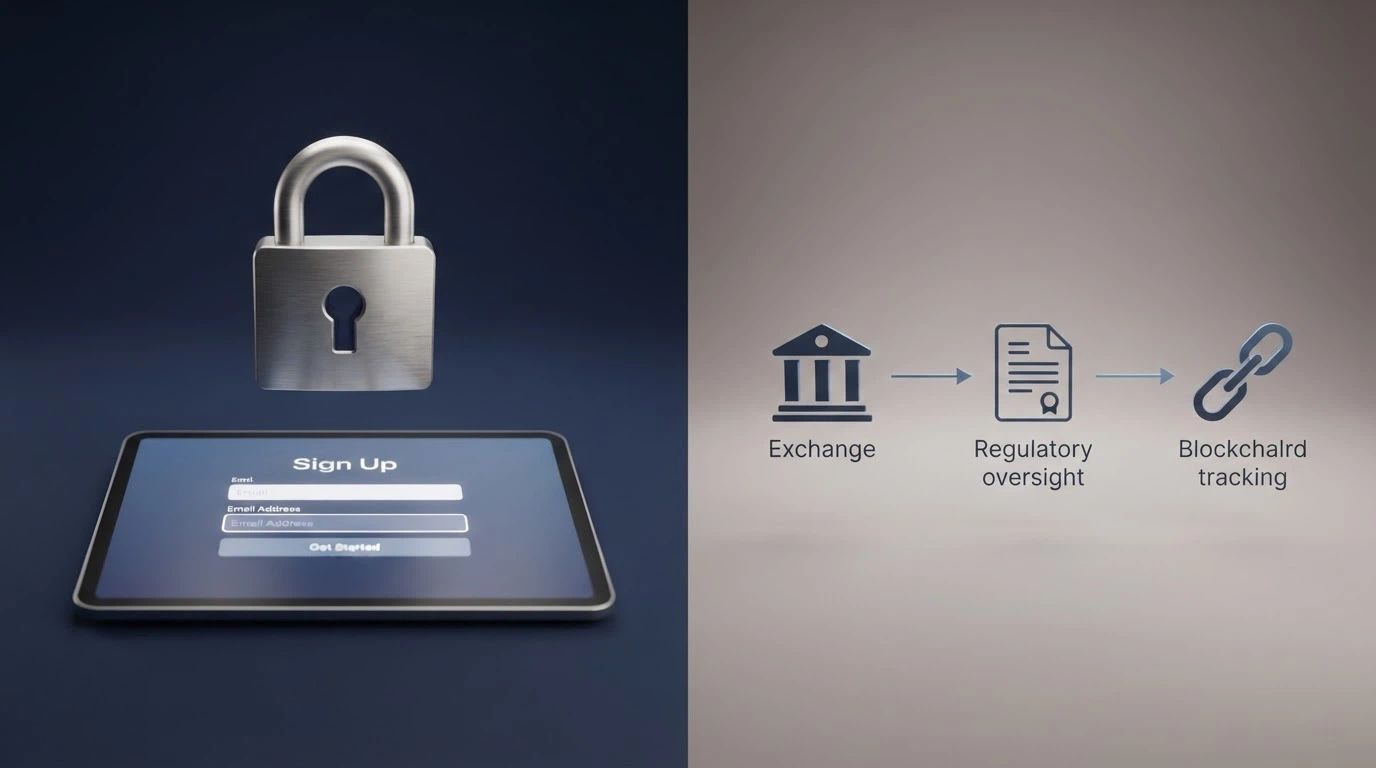
What No-KYC Actually Means at an Offshore Casino
A no-KYC casino is one that lets a player deposit, play and withdraw without uploading ID upfront. The label is honest at the front door and a deferred verification model once the player is inside. The casino has an AML policy, and that policy sets a soft threshold above which an ID check is triggered — typically after cumulative withdrawals somewhere between A$2,000 and A$5,000 in the Australian-facing market, or somewhere between EUR 2,000 and EUR 10,000 at the Curaçao and Anjouan operators themselves.
The marketing that says “anonymous” is not lying about the casino’s own behaviour; it is being imprecise about what that behaviour means for the player. The casino does not ask for an ID upfront. The casino will ask for one when its AML policy says to. The player who hits the threshold at a withdrawal queue discovers the policy the way the policy is written to be discovered.
The AUSTRAC Problem: Your Crypto Purchase Is Never Anonymous
For an Australian buying crypto to fund a casino account, the privacy question is already half-answered at the exchange. AUSTRAC requires every Digital Currency Exchange operating in Australia — CoinSpot, Swyftx, Independent Reserve and the rest of the field — to register and to verify customer identity before the first trade. The Travel Rule applies to crypto transfers at A$10,000 and above; the identity verification below that threshold is the exchange’s standing obligation under DCE registration.
The implication is direct. An Australian who buys USDT on CoinSpot, sends it to an offshore casino, plays, and withdraws back to CoinSpot has a complete paper trail at the exchange and no paper trail at the casino. The casino sees a wallet address; the exchange sees the player. Offshore casinos that accept Australian players are not AUSTRAC-regulated and do not report to it — the privacy model at these sites reflects casino policy, not Australian law.
For anyone treating crypto as the privacy layer that fiat isn’t, the exchange end of the route has already given that up. The casino’s “no KYC” stance protects only the gambling transaction, not the funding one.
When the ID Check Lands: Soft Thresholds and Deferred Verification
The thresholds cluster around three numbers, depending on which framework sets the policy. The Australian-facing market research suggests soft KYC triggers around A$2,000 to A$5,000 in lifetime withdrawals. The Curaçao and Anjouan AML policies themselves carry EUR thresholds in the EUR 2,000 to EUR 10,000 range. Two operators in this round carry explicit, published caps: Moonbet does not require ID for withdrawals under A$2,000; Cloudbet holds the same position up to US$2,200, roughly A$3,500 at current rates.
For a player whose gambling stays under the cap, the deferred verification is real. For a player whose withdrawals accumulate past it, the deferred verification becomes an absolute one — and the player discovers that an offshore casino’s “no KYC” marketing is a description of the front door, not a description of the back room.
How Fast Do Crypto Casino Withdrawals Really Land?
Crypto withdrawal speed is the category’s headline claim, and it is also the figure most often inflated in marketing.
Crypto Withdrawal Speeds by Network — and What Slows Them Down
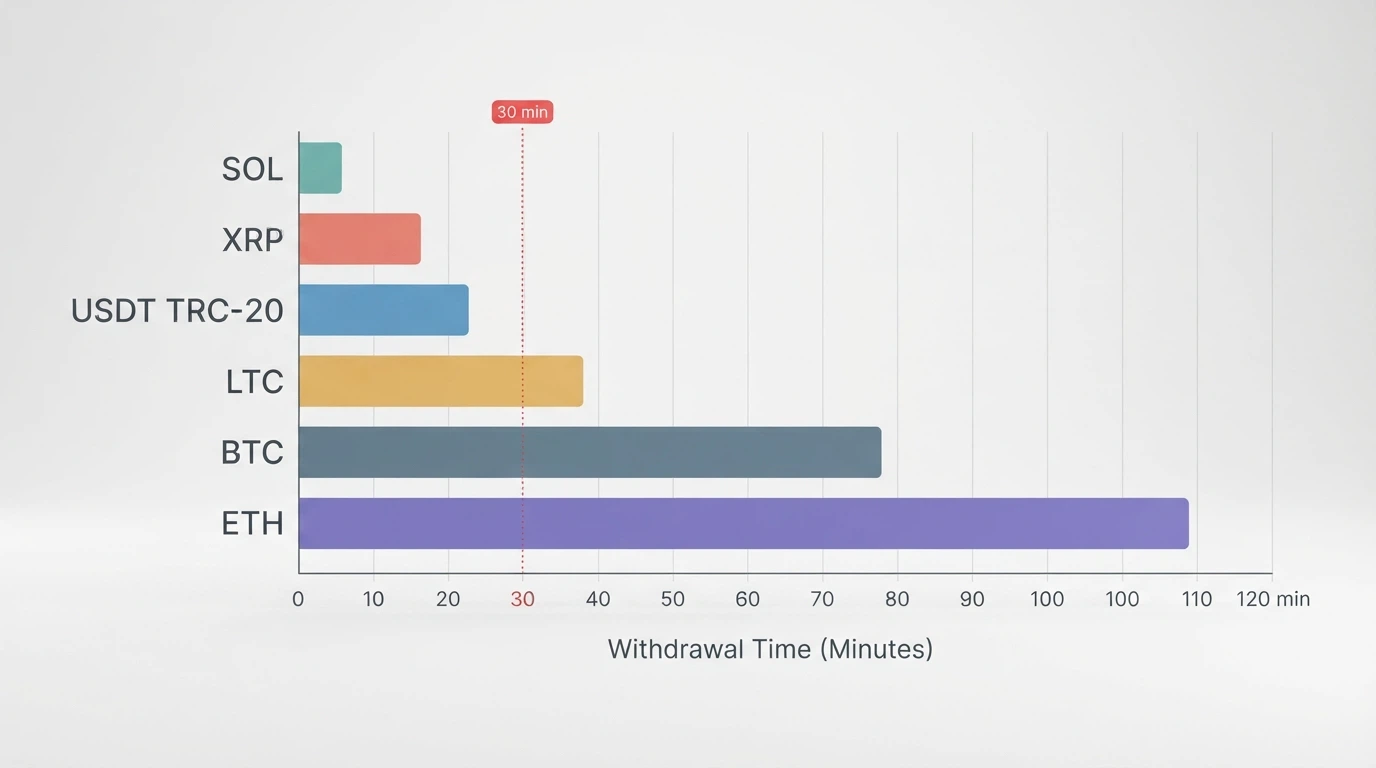
Five-second network confirmations don’t survive contact with a casino’s withdrawal queue. In practice, crypto cashouts run 5 to 30 minutes as a category; the range covers everything from LTC at the fast end to BTC at the slow end, and the operator’s processing time is the swing factor inside that band. USDT on the TRC-20 network tested fastest in the research round, with one casino paying out in 12 minutes. SOL and XRP settle in seconds by design; Betpanda’s automated payout system uses both.
What slows a withdrawal down is rarely the blockchain itself. It’s the operator’s risk review, which can be queued or automated, and the peak-hour load on whichever payment team the operator runs. The same casino can deliver in two minutes on a Tuesday morning and forty-five minutes during a Sunday-evening sportsbook payout run. The headline number is the best case; the real number is the distribution around it.
For an Australian player optimising for speed, Litecoin and USDT on TRC-20 are the cleanest two-coin play. Bitcoin is reasonable but slower; Ethereum is the slowest of the major coins when the network is busy; SOL and XRP clear in seconds where the casino’s payout system can use them.
The Fastest-Cashing Operators We Tested in 2026
Among the ten featured operators, the research round confirmed specific withdrawal speeds for five. Betpanda clears SOL and XRP withdrawals in seconds with no fee; Moonbet clears BTC in roughly four minutes on-chain; Stake clears BTC in under five minutes; BitStarz runs BTC at around 8 to 10 minutes; Cloudbet clears Lightning Network withdrawals in under 10 minutes. Vave’s crypto range runs instant to 30 minutes as a published bracket. BC.Game, Jackbit, Metaspins and 7Bit have no published test in the research round, and an Australian player should treat that absence as a research task rather than a verdict.
Against this set, the fiat-withdrawal benchmark for context: Wild Fortune’s crypto withdrawals averaged 5 hours 24 minutes across five tested cycles — a useful reminder that “crypto casino” and “fast withdrawal” are not synonyms across the operator population as a whole. The fastest ten are not the only ten.
Getting Your Crypto Back to Australian Dollars
The round trip is the part most guides skip. Depositing USDT into a casino takes seconds; converting it back into AUD in an Australian bank account takes the work. The chain that research identified as the lowest-friction route is: Australian bank to CoinSpot or Independent Reserve, to USDT TRC-20, to casino, then reverse. The exchange leg is the slowest part; the AUD turnaround can run 30 minutes to 24 hours depending on the exchange’s payment rail and its queue.
The costs sit at the exchanges, not the casinos. CoinSpot and Independent Reserve both charge spread on the AUD conversion and a withdrawal fee on the AUD transfer; the spread can be 0.5% to 1% on a major coin and worse on a less-traded one. The casino side typically charges no withdrawal fee for crypto on the operators researched here, but the AML policy at the exchange still applies: AUSTRAC’s Travel Rule triggers at A$10,000 for crypto transfers, and reporting flows from the exchange to AUSTRAC at that level. Selling USDT for AUD on an AUSTRAC-registered exchange is the moment the transaction becomes visible to Australian authorities, regardless of what the casino ever sees.
Why Your 2026 Crypto Casino Bonus Is Smaller Than It Looks
Wagering multipliers are the arithmetic every casino bonus page is built around, and the multiplier is what turns the headline offer into the actual cost.

Welcome Bonuses Compared: What Each Operator Actually Gives You
| Casino | Welcome Offer | Bonus Type | Wagering Requirement |
|---|---|---|---|
| Stake | VIP rakeback + A$75,000 weekly raffle | Rakeback (no wagering) | 0× |
| BitStarz | Up to 5 BTC + 180 FS | Deposit match + free spins | Not confirmed |
| BC.Game | Multi-tier package | Deposit match | Not confirmed |
| Vave | Up to 4 BTC + 100 FS | 4-tier deposit match | Varies by bonus |
| Moonbet | 20–40% rakeback + 4–8% cashback | Rakeback (no wagering) | 0× |
| Jackbit | 100 FS | Wager-free free spins | 0× |
| Metaspins | Not confirmed | Not confirmed | Not confirmed |
| Cloudbet | Zero-rollover bonus | Sportsbook-focused | 0× |
| Betpanda | 100% up to 1 BTC | Deposit match | Not confirmed |
| 7Bit Casino | 30 FS on Deep Sea | No-deposit free spins | 45× (on winnings) |
Three operators run no wagering on their core bonus: Stake, Moonbet and Jackbit. BitStarz’s headline bonus is large in BTC terms, but the specific multiplier wasn’t confirmed; a multi-deposit welcome at that scale typically runs 35 to 45×. Vave’s package is the most clearly-defined multi-tier offer in the table, at 150%, 100%, 50% and 25% with explicit 20 USDT minimums. 7Bit’s no-deposit offer is the most demanding bonus in the table on a wagering basis — 45× on winnings with a 3-day clock and a maximum bet cap.
The benchmark numbers from outside the featured set sit higher than the average reader expects. Wazamba’s crypto offer runs 35× on deposit plus bonus with 40× on free spin winnings and a 10-day validity. Bets.io publishes a 225% match up to 1 BTC plus 225 free spins, and the wagering that comes with an offer that size is the part to confirm before the deposit.
No-Deposit and Free-Spin Offers That Exist Right Now
Three operators in the research round run a no-deposit or wager-free free-spin layer. Vave runs 40 free spins on Lady Wolf Moon MEGAWAYS without a deposit, capped at 50 USDT in winnings with 40× wagering on the winnings. 7Bit runs 30 free spins on Deep Sea without a deposit, capped at A$50 in winnings with 45× wagering, a maximum bet of A$0.15 per spin and a 3-day validity. Jackbit runs 100 free spins with zero wagering requirement, gated behind a deposit but with no playthrough on the winnings.
The pattern is meaningful. No-deposit offers cluster at the harder-to-clear end of the market: high wagering multipliers, tight win caps, short validity windows. They exist because the casino wants to demonstrate that the player can win, not because it intends for many players to clear the bonus. A wager-free welcome is a different product — it gives the player something with no playthrough attached, and it is the closest the marketing world gets to a fair bet.
The Wagering Multiplier: What 40× Actually Costs You
Run the maths on the cleanest no-deposit offer. Vave’s 40 free spins on Lady Wolf Moon MEGAWAYS, winnings capped at 50 USDT, with 40× wagering on those winnings. Assume a player hits the cap — the bonus itself is 50 USDT. Required turnover is 50 × 40 = 2,000 USDT. At a slot with an RTP of 96.50% (Gates of Olympus is the relevant Pragmatic Play title; Lady Wolf Moon MEGAWAYS sits in the same band), the house edge is 3.5%. Expected loss on the playthrough is 2,000 × 0.035 = 70 USDT. The cap on the bonus is 50 USDT; the expected cost of clearing it is 70 USDT.
That arithmetic is the quiet centre of the whole bonus market. The headline says “free spins.” The structure says “play 2,000 USDT before you can withdraw 50 USDT.” The expected loss on the playthrough exceeds the bonus itself, and the player who clears the requirement has paid in edge what they receive in bonus — minus the entertainment value of seeing the spins land. Treat any bonus above 35× with this cost analysis in mind, and treat any bonus at 0× as the only offer that genuinely puts money back into the player’s hand.
The expected-loss figure is a statistical average, not a guarantee for any single spin sequence. It says what the bonus costs across many players; the variance on any individual run is enormous.
The Pokies Worth Playing with Crypto — and the RTP Trap
RTP is the number every slot review quotes; the version trap is what every casino review forgets to mention.

The Highest-RTP Pokies You Can Play with Crypto
| Slot Title | Provider | RTP | Volatility | Max Win |
|---|---|---|---|---|
| Plinko | Spribe | 99.00% | — | — |
| Aztec Clusters | BGaming | 97.00% | — | 10,000× |
| Aviator | Spribe | 97.00% | — | — |
| Big Bass Bonanza | Pragmatic Play | 96.71% | High | — |
| The Dog House Megaways | Pragmatic Play | 96.55% | High | — |
| Gates of Olympus | Pragmatic Play | 96.50% | High | 15,000× |
| Gates of Olympus 1000 | Pragmatic Play | 96.50% | High | 15,000× |
| Sweet Bonanza | Pragmatic Play | 96.50% | High | — |
| Book of Dead | Play’n GO | 96.21% | High | 5,000× |
| Wolf Treasure | IGT | 95.79% | High | — |
The Plinko and Aviator entries are Spribe instant-win and crash games, not pokies in the slot sense; they’re listed because they’re the two highest-RTP products on any crypto casino lobby researched. Among true pokies, Aztec Clusters at 97.00% sits at the top, then a tight cluster of Pragmatic Play titles in the 96.50% to 96.71% range, then Book of Dead at 96.21% and Wolf Treasure at 95.79%. RTP alone is the wrong ranking criterion; volatility and max win change how the same RTP plays out across an actual session.
Volatility and Max Wins: What They Mean for Your Bankroll
High volatility means a slot pays out less often, but pays larger amounts when it does. Gates of Olympus can pay up to 15,000× the stake — a real number on a real title — but the distribution of payouts is back-loaded enough that a typical session sees the balance drain before any cluster-pays hit. The 1,000× multiplier on Gates of Olympus 1000 pushes the same mechanic to a higher ceiling. Aztec Clusters caps at 10,000× on the same shape. Book of Dead caps at 5,000× with a published max-win probability of approximately 1 in 3.75 million, which is a more honest number than the max-win headline alone.
Two pokies with the same RTP can play dramatically differently. A 96.50% high-volatility slot will burn a small bankroll in pursuit of a result the same RTP would have delivered gradually on a low-volatility slot. The trade is the shape of the variance: low volatility means longer sessions, smaller swings, more spin-time for the same money; high volatility means shorter sessions, bigger swings, and a non-trivial chance of leaving with very little or very much. For a player whose session length matters, the volatility column is at least as important as the RTP column.
The RTP Trap: Why the Same Pokie Pays Differently at Different Casinos
Book of Dead is shipped by Play’n GO in at least six RTP versions: 96.21%, 95%, 92%, 91.2%, 87.2% and 84.2%. The casino chooses which version to load, and the player who doesn’t check is playing a different game than the one any review describes. A 12-percentage-point gap between 96.21% and 84.2% is the difference between losing A$3.80 and losing A$15.80 per A$100 wagered — and the casino has every incentive to load the lower-RTP version because the difference is its margin.
How to check: the in-game information panel on every slot lists the active RTP, usually under the “help” or “i” button in the bottom-left of the game window. Check it before the first real-money spin. A casino that makes the information panel difficult to find is signalling that it does not want the player to make this comparison; a casino that doesn’t show it is hiding something. Reviews list the highest published RTP by default; the actual rate is the one running on the casino the player uses.
Is It Legal? What the Interactive Gambling Act Actually Says in 2026
The IGA prohibits the product. The 2026 reform changes the framing. Neither of those things undoes the offshore facts.

The IGA 2001 Baseline: Provider Is Liable, the Player Is Not Prosecuted
The Interactive Gambling Act 2001 makes it an offence to provide online casino games, online pokies or in-play sports betting to a person physically in Australia. The provider commits the offence. The player does not. No Australian has been prosecuted for placing a bet at an offshore online casino; the IGA’s enforcement reach stops at the operator. What is licensable in Australia is wagering on races and sport placed before the event begins, lotteries and keno, through state and territory-licensed operators — primarily the Northern Territory, where Licensing NT runs wagering licences with terms up to 20 years. Minimum age is 18 for all commercial gambling.
The asymmetry matters. Online casino is prohibited; online wagering is licensed. Crypto as a payment method is banned for online wagering since 11 June 2024, with non-compliance penalties reaching A$247,500 — so an Australian depositing crypto at any gambling site is interacting with an operator outside Australian rules, regardless of whether the product is licensed somewhere else in the broader market. The licensed Australian wagering operators — Sportsbet, bet365, Ladbrokes — are licensed for sports and racing, not casino games.
The 2026 Reforms You Have Not Heard About (in Force 1 January 2027)
The Interactive Gambling Amendment (Gambling Reform) Bill 2026 passed both Houses of Parliament on 18 to 19 August 2026. Its measures commence on 1 January 2027 — they are law but not yet in force. The reform reshapes the licensed wagering market without touching offshore casinos: a national advertising opt-out register (AdStop, administered by ACMA); a cap of three wagering ads per hour on television between 5:00 am and 8:30 pm; a blackout fifteen minutes before and five minutes after live sporting events; a ban on athletes, celebrities and influencers promoting wagering; a ban on wagering advertising in sports venues and on uniforms; a ban on direct marketing of inducements for 14 days after sign-up, three months after BetStop deregistration and indefinitely for customers flagged as at-risk.
The reform also gives banks and payment providers express authority to block transactions to illegal gambling operators from 1 January 2027. That authority applies to AUSTRAC-registered financial institutions, which the offshore casino is not; the practical effect is that an Australian bank can refuse a transfer to a gambling operator on the ACMA’s blocked list. The mechanism matters less for an Australian on an offshore casino — which is already outside the regulated system — than for the licensed operators the reform actually constrains.
What You Give Up When You Play Offshore
Every protection the licensed wagering market offers stops at the regulator’s border. There is no BetStop coverage offshore; the National Self-Exclusion Register binds Australian-licensed wagering services only, and offshore casinos are not connected. BetStop had 67,480 registrations as at 31 July 2026, with 41,290 still active — which is the size of the population the offshore gap actually serves. There is no Australian consumer protection statute and no Australian complaints body with the power to chase a refund; an offshore casino’s refusal of a withdrawal is decided by the casino’s own internal review.
ACMA enforcement is real and ongoing. 1,564 illegal gambling and affiliate websites have been blocked by Australian ISPs since November 2019. More than 225 illegal services have withdrawn from the Australian market since 2017. The site an Australian uses today can be on the blocked list next month — and the operator’s customer balances travel with the block, not ahead of it. Crypto as a payment method is banned for any gambling site that wanted to operate inside Australian rules. The combination is the entire reason an Australian player is at an offshore casino in the first place: the product is prohibited, the payment method is banned, and the operators who offer both sit outside every framework an Australian would otherwise rely on.
New Crypto Casinos in 2026: Fresh Faces, Bigger Incentives
Bonus size is how a new entrant compensates for not having a track record. The trade isn’t complicated.
Bonus-Rich Newcomers Worth a Look — and the Risks They Carry
Three operators in the featured set carry the “new” tag from the research round. Metaspins launched in 2022 under a Curaçao licence, runs around 6,800 games from Microgaming, NetEnt and Pragmatic Play, and publishes a VPN-tolerant stance. Vave launched in 2022 with a 13,000-game catalogue and the 4 BTC + 100 free spins welcome package described earlier. Moonbet carries a 2026 Anjouan licence (ALSI-202605007-FI1) and the test-clean cashout time of around four minutes. None of the three has the multi-year payout data of an older Curaçao operator.
Three checks for a newcomer before depositing: the licence number should be verifiable on the regulator’s own register — Anjouan’s licence checks; Curaçao’s verifier should resolve the operator name to a corporate entity. The withdrawal-speed evidence should be from third-party testers rather than operator testimonials. Community feedback on a year or more of operation should be searchable on forums like Casinomeister, Askgamblers or the r/OnlineGambling subreddit. The bonus is a marketing offer; these three checks are the part that turns it into a decision.
Playing Safely: Tools, Limits and Where to Get Help
Offshore casinos sit outside the player-protection framework. The responsibility to set limits sits with the player, and the help infrastructure sits on the licensed side of the border.
Where to Get Help in Australia — and Why It Matters
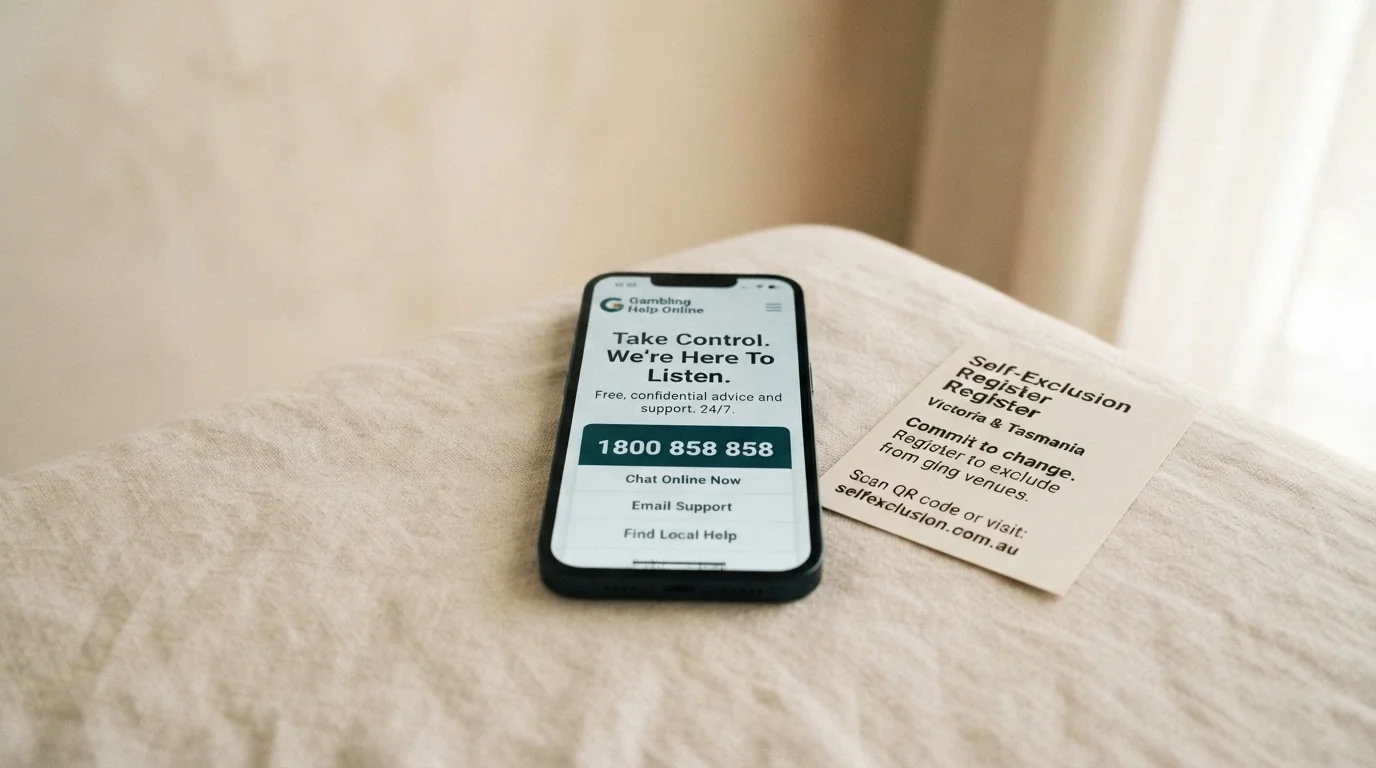
The National Gambling Helpline is 1800 858 858 — free, confidential and staffed 24/7. Online chat and free counselling run through Gambling Help Online at gamblinghelponline.org.au. BetStop — the National Self-Exclusion Register at betstop.gov.au — is the structural answer; one registration excludes the user from every Australian-licensed wagering service. None of these tools reaches an offshore crypto casino. A player who needs self-exclusion from offshore play has to use the casino’s own self-exclusion feature, set a personal deposit limit through a banking tool, or seek help through the helpline regardless of which platform they’re playing on.
The numbers frame the infrastructure. About 2.1% of Australian adults — roughly 430,000 people — experience problem gambling; the Australian Institute of Health and Welfare put high-risk gambling at 1.8% in its 2022 survey. Australians lose around A$32 billion on legal gambling every year, the heaviest per-person losses of any country on earth. The gambling-harm infrastructure exists because the harm is large; the offshore gap exists because the offshore market is unregulated; the only place those two come together is the player’s own decision-making.
How We Picked and Ranked These Crypto Casinos
The ranking is built from publicly available licence registries, tested withdrawal data published by affiliate testers, and the operator’s own published terms. Every brand’s offshore status is named upfront. The weighting is qualitative rather than scored: licence transparency and withdrawal evidence weighed heavier than catalogue size; bonus terms weighed heavier than bonus headline.
Sources consulted include the ACMA’s published enforcement totals and blocklist, the Curaçao and Anjouan licence verification pages, and affiliate-test data from PayoutVerdict, Nerdbot, Webopedia, CoinGape, Slotspeak, CasinoBonusCenter, TrueBlueCasinos and FreeSlots99. No operator paid for placement. No inside information was used. The ten operators are not the only crypto casinos accepting Australian players — they’re the ten that survived the public-data check, the licence check and the bonus-term read.
Where research confirmed a specific, it appears in the article: the Anjouan licence number on Moonbet, the 1,000× multiplier on Gates of Olympus 1000, the A$50 cap on 7Bit’s no-deposit spins. Where research did not confirm a specific — BitStarz’s wagering multiplier, BC.Game’s welcome amount, most operators’ withdrawal speed benchmarks — the cell reads “Not confirmed” rather than the column being omitted. The gaps are the point of a non-sponsored ranking; an article without gaps reads like a paid list.
Your Money, Your Call: What to Actually Do Next
Three things to verify before any deposit. The licence number should resolve to a corporate entity on the regulator’s own register — Moonbet’s ALSI-202605007-FI1 is verifiable on Anjouan’s site; the Curaçao licence number on a casino’s footer should be checkable at the regulator’s current verification tool. The active RTP on each pokie should be read from the in-game information panel before any real-money spin — the same title can run at any of half a dozen return percentages, and only the live version matters. The wagering terms should be read from the bonus page, with the multiplier, the contribution percentage, the maximum bet and the validity window all on the page before the deposit button is touched.
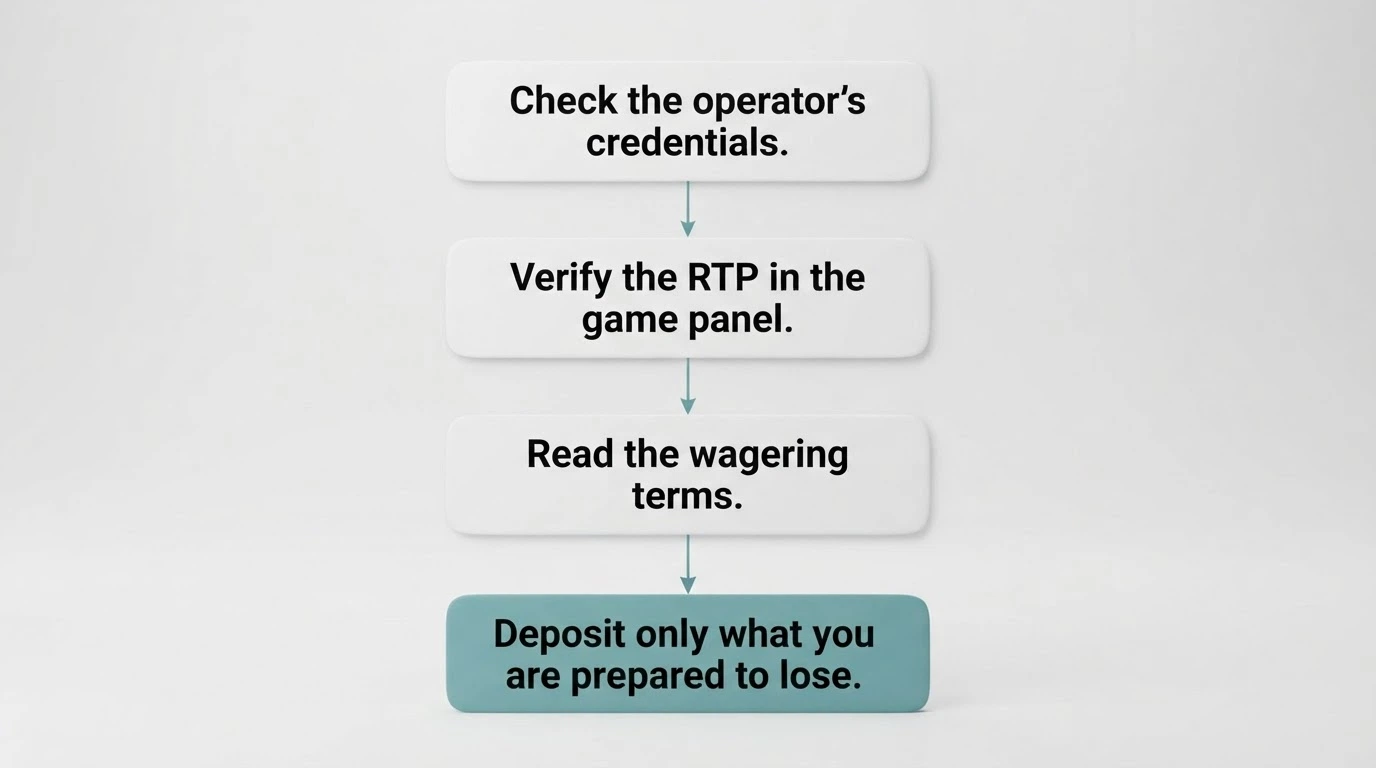
One thing a player can never get back offshore: consumer protection. No Australian regulator will help if the operator refuses a withdrawal, voids a win or closes the account. The site can be blocked with a balance on it. The crypto payment ban means the casino is operating outside Australian rules in any case. The best crypto casino on this page is the one whose terms have actually been read, whose licence number has actually been checked, and whose withdrawal limits have actually been confirmed — not the one with the loudest banner.
FAQ
How do I deposit cryptocurrency at an online casino from Australia?
Buy crypto on an AUSTRAC-registered exchange such as CoinSpot, Swyftx or Independent Reserve, send USDT on the TRC-20 network to the casino’s deposit address, and the funds arrive in minutes. The exchange verifies identity at signup, so the deposit leg is fully KYC’d even though the casino may not require ID. Avoid sending from the exchange directly without a wallet in between, because one mistyped address loses the deposit.
Does BetStop cover offshore crypto casinos?
No. BetStop binds Australian-licensed wagering services only. Offshore crypto casinos accepting Australian players are not connected to the register, so a BetStop self-exclusion does not stop an offshore account from accepting deposits. To self-exclude from an offshore casino, the player has to use that casino’s own responsible-gambling settings — and even those depend on the operator honouring them.
What happens if an offshore crypto casino refuses my withdrawal?
The player has no Australian recourse. ACMA regulates Australian-licensed wagering only; offshore casinos sit outside the regulator’s complaints process. The casino’s own terms set out the internal dispute mechanism, and the casino wrote those terms. The most the player can do is complain to the Curaçao or Anjouan regulator if the licence is real, which is a slow route that ends in a regulator’s reprimand at best.
Can I use Australian dollars at a crypto casino?
Not directly. Crypto casinos hold balances in cryptocurrency — BTC, ETH, USDT and so on — and convert internally to a house currency as needed. Some operators offer a fiat on-ramp through a payment processor that takes AUD and converts to USDT before deposit. AUD balances are not the same product; the player is exchanging AUD for crypto and back when they withdraw.
Are crypto casino winnings taxable in Australia?
Casual gambling winnings are not assessable income under section 6-5 of the ITAA 1997, and losses are not deductible under section 8-1, unless the person is carrying on a business of gambling. The same rule applies whether the win is in AUD or USDT — what matters is whether gambling is the person’s trade. Most recreational players do not owe tax on winnings and cannot claim losses against other income.
What is the safest cryptocurrency to use at an online casino?
USDT on the TRC-20 network offers the lowest fees and the fastest confirmation times in testing, and the peg to the US dollar removes the price-volatility layer that BTC and ETH carry. LTC runs close behind. Bitcoin is reasonable but slower; ETH is the slowest of the major coins under load. The “safest” coin is the one that minimises both the network-fee drag on the bankroll and the price move between deposit and withdrawal.
Provably Fair: Can You Verify a Spin?
Provably fair is the trust mechanism crypto casinos reach for as a substitute for a local regulator. The mechanism: the casino commits to a hashed server seed before the player picks a client seed, the bet’s outcome is derived from both seeds plus a nonce, and the player can re-derive the outcome after the bet to confirm it wasn’t changed. It’s a real check. It is not a complete one.
What it proves is that the operator didn’t alter a single bet’s outcome after it was placed. It does not prove the operator’s house edge is the one it advertises; the operator can still ship a slot with a lower RTP than the page claims, and provably fair is silent on that. It does not prove the operator will honour a withdrawal; the bet-by-bet integrity of the math is the one thing it demonstrates. For a crash game or a dice game, where the math is the whole product, provably fair is genuinely valuable. For a 5,000×-max-win pokie, where the outcome is already fixed by a server-side RNG that the provider controls, it’s a feel-good feature more than a guarantee.
Why it matters more offshore is the structural point. A locally licensed operator faces a regulator who can revoke the licence; an offshore operator faces a player with no regulator and no court. Provably fair is what the offshore operator substitutes for that missing oversight, and accepting it on its own terms means accepting that the operator substitutes it because the alternative is accepting nothing.
Created by the ”RTP Pokies Australia” editorial team.