Inside Brisbane’s only casino: The Star Brisbane at Queen’s Wharf
 Available in AU
Brisbane is a casino town with one casino. That sounds like a punchline, but it is the actual geography of the place in 2026: a city of more than two and a half million people, a CBD riverfront rebuilt around a $3.6 billion integrated resort, and a single licensed gaming venue that opened at the end of August 2024. The Star Brisbane at Queen’s Wharf is the only place to play table games or pokies within the Brisbane City Council area, and that single fact shapes almost every decision a visitor makes — what is on the floor, what it costs to get in, and what the alternatives are when the novelty wears off.
Current as of 18 October 2026 · Operator and licence claims verified against the Queensland Office of Liquor and Gaming Regulation register.
The rest of this guide takes that frame seriously. We start with what The Star Brisbane actually is and where it sits, then put it beside every other Australian casino of any scale. The dining, the hotel, the pool deck, the parking, the gaming floor and the responsible-gambling tools are covered on their own terms — the venue has to stand or fall on what is there, not on what the marketing copy says is there. The legal framework that closes off online casino and reshapes wagering advertising from 1 January 2027 sits in its own section because it matters even to a visitor who never intends to bet online. The responsible-gambling section is plain: BetStop does not cover this venue, the helpline does, and the prevalence figures are what they are.
Table of Contents
- Why The Star Brisbane is Brisbane’s only casino — and what that means for your visit
- Brisbane’s only casino vs Australia’s biggest venues: how they compare
- What you can actually play on the gaming floor at The Star Brisbane
- Where to eat at Queen’s Wharf: from $40 breakfasts to rooftop fine dining
- Staying at The Star Grand: five-star rooms from 40 sqm with river views
- What Australian law says about casinos: licensing, the online ban and your rights
- Responsible gambling at The Star Brisbane: what protection you actually have
- How we evaluated Brisbane’s casino
- Is The Star Brisbane worth visiting? Our verdict for 2026
- Frequently asked questions
Why The Star Brisbane is Brisbane’s only casino — and what that means for your visit
For decades, Brisbane’s casino was Treasury Brisbane, the brick complex on the north bank of the Brisbane River at the top of George Street. It opened in 1995, ran under the Treasury Casino & Hotel brand and was Brisbane’s home of table games and pokies for nearly three decades. On midnight, Sunday 25 August 2024, Treasury Brisbane closed its doors for the last time. Four days later, on 29 August 2024, The Star Brisbane at Queen’s Wharf opened as part of a staged launch, with the casino as the centrepiece of a much larger redevelopment.
That handover matters for two reasons. First, it removed the choice Bris Vegas regulars used to have — Treasury versus Jupiters Gold Coast versus Crown Melbourne — and replaced it with a single in-Brisbane option. Second, it relocated gaming from a stand-alone heritage building into a precinct where the casino is one piece of a much bigger entertainment, dining, hotel and residential puzzle. The old Treasury footprint is being redeveloped as part of the same project, but the casino floor is now downstream, on the river side of the block.
The practical consequence is a visitor’s market that has lost its price discipline. A city with one casino has no operator competing for the same customer on the same evening, and that shows up in the promotional offers a Brisbane player gets versus what the same player could expect at Crown Melbourne or The Star Sydney. The “exclusive” rewards on offer at The Star Brisbane are exclusive only because nothing else in Brisbane offers them. That is the frame every other section in this guide reads against.
The $3.6 billion Queen’s Wharf redevelopment
Queen’s Wharf Brisbane is the development that swallowed Treasury Brisbane and gave Brisbane its new casino. The Star Entertainment Group and its partners committed $3.6 billion to the integrated resort, which spans about twelve hectares of CBD riverfront between the Victoria Bridge and the Goodwill Bridge. Stage 1 of the Joint Venture Precinct (JVP) Transaction — the corporate vehicle that controls the precinct’s non-gaming assets — completed on 1 April 2026, with stage 2 expected to follow during the second half of 2026 and no later than 31 March 2027.
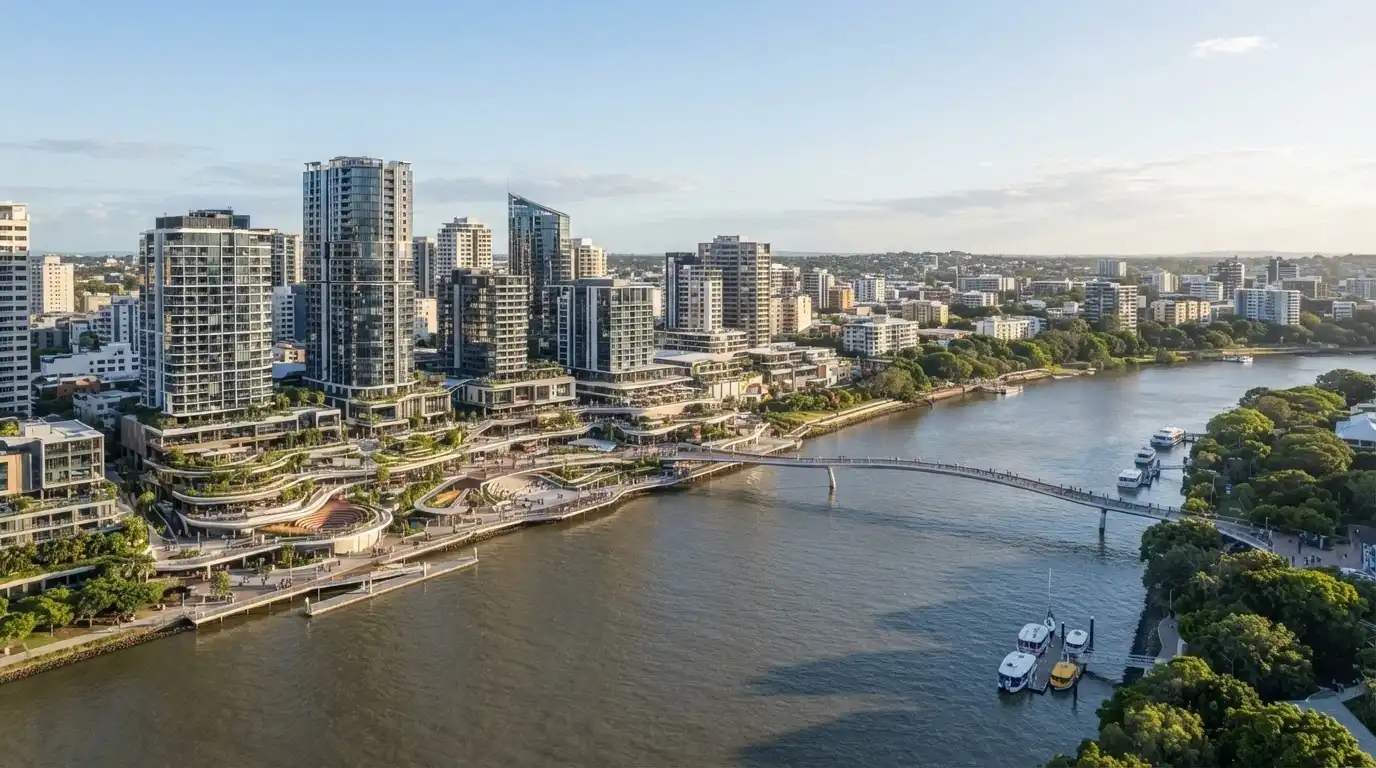
The casino floor accounts for roughly five per cent of the total precinct footprint. That ratio is the single most useful number for understanding what Queen’s Wharf actually is. The Star Brisbane is not a casino with restaurants attached; it is a mixed-use precinct with a casino in the basement and on the lower levels of one tower. Above the gaming floors sit 340 hotel rooms across two river-facing towers, a 12,000 sqm open-air Leisure Deck 37 metres above the street, a 250-metre Sky Deck 100 metres above the Brisbane River, more than fifty food and beverage outlets, residential apartments, and a pedestrian bridge — the Neville Bonner Bridge — that arcs across the river to South Bank.
The development was politically contested from the start, with critics questioning the demolition of heritage buildings on the Treasury footprint, the proportion of public open space versus private gaming space, and the long-term cost of entrenching a single gambling operator on a CBD riverfront. Those arguments did not stop the project. What they did do was push the operator into publishing figures — the five per cent gaming ratio, the $3.6 billion price tag, the public-access promenade — that a reader can use to decide whether the precinct delivers what its marketing claims.
Address, opening hours and how to get in touch
The Star Brisbane sits at 33 William Street, Brisbane City, Queensland 4000. That is the entrance most visitors use. The venue is also reachable from the CBD via the pedestrian riverside path and from South Bank via the Neville Bonner Bridge. The casino itself remains open around the clock, which puts it in the same operating tier as Crown Melbourne, Crown Perth and the major interstate competitors.
Phone enquiries route through 1800 88 88 99, and the contact email is [email protected]. The Star Brisbane also publishes a help-centre FAQ on its official site for visitors who want to confirm an operational detail before they travel. None of those channels substitute for the venue-level responsible-gambling contact — that sits separately, and the responsible-gambling section below covers it.
Age limits, dress code and entry conditions
- Entry to the gaming floor is restricted to guests aged 18 and over. Photo identification is required on entry, and security has the discretion to refuse entry to anyone who cannot produce acceptable ID.
- Queensland law sets 18 as the minimum age for all commercial gambling in Australia. The Star Brisbane applies the same floor across the floor.
- A published dress code has not been confirmed for 2026; in practice, smart-casual norms apply on the main gaming floor, with restrictions tighter in the high-limit rooms and looser on the casual pokies banks.
- Excluded persons — anyone who has self-excluded under The Star’s venue-level exclusion program, anyone listed on a state exclusion order, and anyone the venue identifies as presenting a safety or compliance risk — are refused entry.
- The casino reserves the right to refuse entry, ask a guest to leave, or impose conditions on play (including a time-out or a venue-wide exclusion) at the discretion of management.
Star Club: membership tiers, rewards and how to earn points
Star Club is the loyalty program that turns venue spend into perks. Membership is free at the counter; a guest enrols with photo ID and is issued a card that tracks Tier Points across gaming, dining and hotel spend. The program is structured in four tiers — Bronze, Silver, Gold and Platinum — with progression tied to Tier Points earned over a rolling period. Bronze and Silver are the entry tiers reached by ordinary visitors, and most of the benefits a casual guest will use sit at that level.
The single most useful Star Club benefit at the casual end is free all-day parking. From 8 January to 30 September 2026, Bronze and Silver members earn one Tier Point — for example, by spending $20 at a participating restaurant or bar — and that single point unlocks free parking for the rest of the day, provided the member earns the point between 6am and 5:59am the following day and exits the car park before that window closes. It is a small reward in dollar terms, but it converts a $40 casual-parking charge into zero, and it is the perk a visitor is most likely to use on a single-day visit.
Higher tiers bring the rewards the marketing material talks about — discounted hotel rates, priority restaurant bookings, event access, and the kind of host attention that comes with a regular play history. The exact thresholds for Gold and Platinum, and the exact benefits at each step, sit in the Star Club public materials on the operator’s site. What matters for a reader who is choosing between this venue and an interstate alternative is the program exists, the structure is tiered, and the entry-level benefit is concrete and useful.
Parking: rates, free parking tricks and height limits
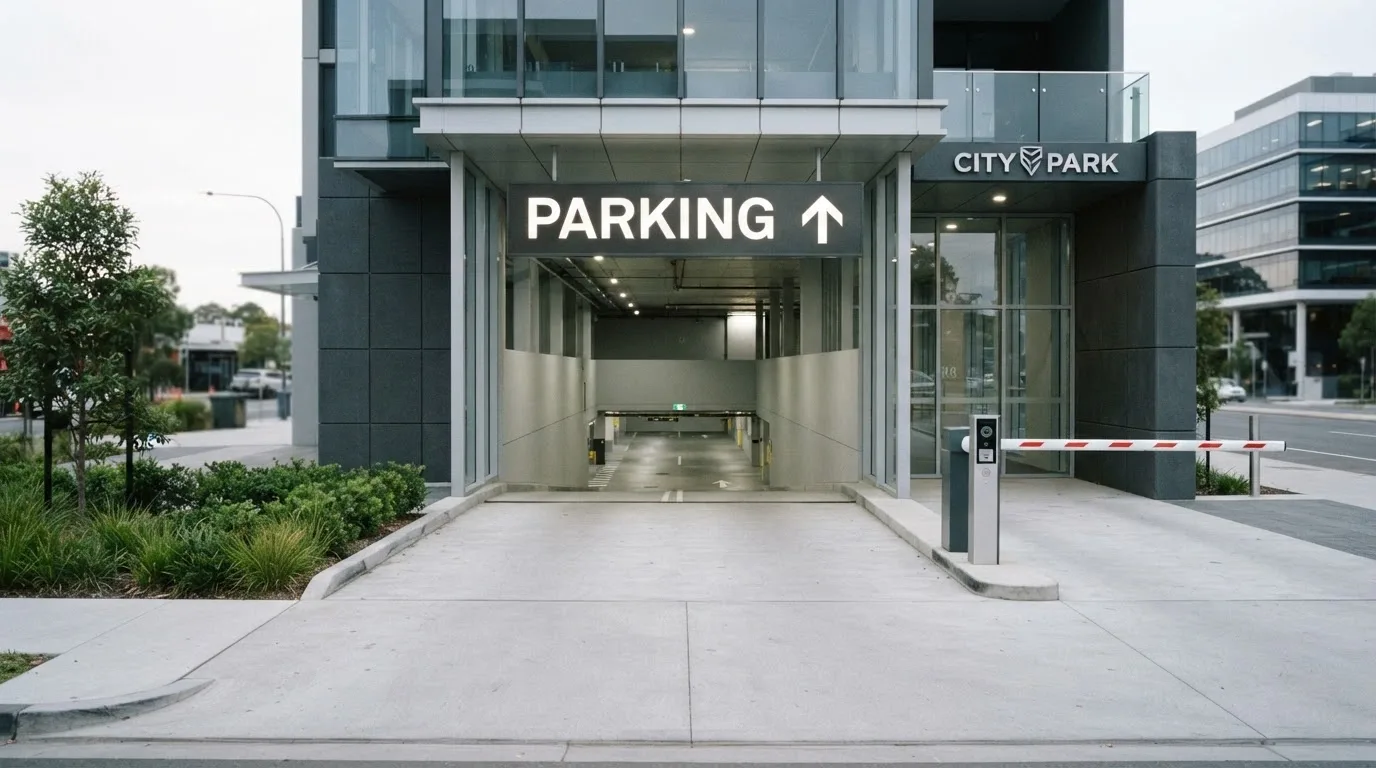
- Casual parking: complimentary for stays of 30 minutes or less; $30 for between 30 minutes and one hour; $40 for between one and two hours. Day rates rise beyond that.
- Hotel guests: a flat rate of $45 per night for guests of The Star Grand.
- Valet parking: $65 per day.
- The car park stays open continuously, every day of the year. The height limit is 2.1 metres, which excludes most vans and larger SUVs with roof accessories.
- Free all-day parking for Bronze and Silver Star Club members who earn one Tier Point within the qualifying window — a $20 restaurant or bar spend is the simplest way to do it. See the section on Star Club for the conditions.
- Three car park entrances serve the precinct, including the Queens Wharf Road entry. The Neville Bonner Bridge drop-off is for pedestrians and rideshare, not for self-park vehicles.
Events, shows and live entertainment at Queen’s Wharf
The Sky Deck is the entertainment spine of the precinct. At 250 metres long and 100 metres above the Brisbane River, it is one of the longest elevated public spaces in an Australian CBD. The deck carries restaurants, bars, event platforms and a stretch of public-access walkway; it functions as much as a piece of urban design as it does as a venue. The Leisure Deck below it, 12,000 sqm of open-air space 37 metres above street level, hosts the pools, cabanas and outdoor programming that gives the precinct its resort feel.
Live entertainment is layered across those decks. Babblers opens daily from 7am until late and takes walk-ins; Cicada Blu opens from 3pm until late Wednesday and Thursday and from noon until late Friday through Sunday, also walk-ins; Aloria takes dinner bookings on the Sky Deck. A specific 2026 event calendar was not confirmed in time for publication; the venue runs seasonal programming — long lunches, DJ series, holiday-themed events — and the operator’s official events page is the most reliable source for what is on in any given week.
Brisbane’s only casino vs Australia’s biggest venues: how they compare
The Australian casino market is small by global standards and concentrated by ownership. Two listed groups — Crown Resorts and The Star Entertainment Group — operate most of the country’s flagship venues. A handful of independents round out the set: Federal Group in Tasmania, the operators behind The Ville in Townsville, The Reef in Cairns and Mindil Beach in Darwin. Comparing The Star Brisbane against that field is not really a comparison between equals. Brisbane’s only casino sits at one end of the spectrum; Crown Melbourne’s 2,500 machines and 540 table games sit at the other; the resort casinos in Cairns, Townsville and Darwin are different products again.
The table below ranks the venues in geographic order — Brisbane first, then the rest of Queensland, then every other state and territory. The columns carry what the regulator and the operator publish; where a figure was not confirmed, the cell carries an em dash rather than a guess.
| Operator | State | Operator Group |
|---|---|---|
| The Star Brisbane at Queen’s Wharf | QLD | The Star Entertainment Group |
| The Star Gold Coast | QLD | The Star Entertainment Group |
| The Ville Resort-Casino, Townsville | QLD | — |
| The Reef Hotel Casino, Cairns | QLD | — |
| Crown Melbourne | VIC | Crown Resorts |
| Crown Perth | WA | Crown Resorts |
| Crown Sydney | NSW | Crown Resorts |
| The Star Sydney | NSW | The Star Entertainment Group |
| Wrest Point Casino, Hobart | TAS | Federal Group |
| Mindil Beach Casino Resort, Darwin | NT | — |
The rows that earn an em dash in the operator group column — The Ville, The Reef and Mindil Beach — are not unbranded venues; they simply sit with operators whose corporate parent was not independently confirmed in this review. The Star Entertainment Group owns The Star Brisbane, The Star Gold Coast and The Star Sydney; Crown Resorts owns Crown Melbourne, Crown Perth and Crown Sydney; Federal Group owns Wrest Point.
The Star Brisbane at Queen’s Wharf — Brisbane’s only casino
The Star Brisbane holds a Queensland state government casino licence and is operated by The Star Entertainment Group, which lists on the ASX under the ticker SGR. The casino floor houses approximately 1,600 electronic gaming machines and 92 table and poker games, against an entitlement to 2,500 machines that has not been fully built out — the entitlement is the licence ceiling, not the current count. The venue operates 24 hours a day and sits in the Brisbane CBD at 33 William Street. Star Club is the loyalty vehicle; it is the only loyalty program a Brisbane casino visitor has access to, and the tiered structure is what the operator offers in place of the price competition that a multi-venue market would otherwise produce.
The licence itself sits under Queensland state legislation, regulated by the Office of Liquor and Gaming Regulation. The casino operator fee from 1 April 2026 is a fixed $18 million per year payable monthly, plus performance-based incentive fees under the Casino Management Agreement — a figure that matters more to analysts than to visitors, but it does establish that this venue is operated under a long-term contractual arrangement with the state rather than a year-to-year licence.
The verdict for a Brisbane visitor is simple. This is the casino you go to if you live in or are visiting Brisbane, because it is the only casino in Brisbane. It does not need to be the best casino in Australia to be the answer to that question.
The Star Gold Coast — Queensland’s coastal alternative
The Star Gold Coast sits at Broadbeach, roughly eighty kilometres south of Brisbane and the closest competitor by road. It holds the same Queensland state licence and the same operator as The Star Brisbane — The Star Entertainment Group — so for a Brisbane visitor the venue functions less as an alternative and more as a sister property. Specifics regarding the pokies count and operating schedule for this venue were not confirmed during this review; the venue publishes a gaming floor and the standard tiered casino product, and it carries the same Star Club program so points earned in Brisbane transfer.
For south-east Queenslanders weighing a Gold Coast weekend against a Brisbane night out, the Gold Coast venue’s appeal is the resort context — Broadbeach dining, the beach, the hotel — rather than a fundamentally different casino floor. The two venues share an owner; the only real choice is the postcode.
Crown Melbourne — Australia’s largest casino floor
Crown Melbourne is the benchmark for casino scale in Australia. The venue holds a Victorian state licence, is operated by Crown Resorts, and runs 2,500 pokies and 540 table games around the clock. That is the largest gaming floor in the country and more than five times the table-game count of The Star Brisbane.
For a Brisbane visitor, Crown Melbourne is what you compare The Star Brisbane against when the question is “what is the biggest casino in Australia?”. The answer is Crown Melbourne, by a wide margin. The follow-up question — whether the bigger floor means a better experience — depends on what the visitor wants. A serious table-games player gets more variants and higher limits at Crown; a casual visitor who wants dinner and a few hours on the pokies will find The Star Brisbane plenty large enough.
The Star Sydney — Pyrmont’s gaming hub
The Star Sydney sits at Pyrmont on the western edge of the Sydney CBD, in the same complex as the Darling Harbour tourist precinct. It holds a New South Wales state licence, is operated by The Star Entertainment Group, and is the same group’s flagship venue outside Queensland. The Star Brisbane visitor who finds themselves planning a Sydney trip will be looking at a sister property — same loyalty program, same operator, broadly comparable floor.
The specific pokies count for The Star Sydney was not confirmed in this review; the venue publishes a 24-hour gaming floor with the standard range of table games and electronic machines. The relevance to a Brisbane visitor is the Star Club reciprocity — points earned in Brisbane are usable in Sydney — rather than any fundamental product difference.
Crown Sydney — VIP-focused luxury at Barangaroo
Crown Sydney is the outlier in the Crown Resorts portfolio. The venue at Barangaroo holds a New South Wales state licence but positions itself as a premium, VIP-focused property rather than a mass-market casino. The pokie count was not confirmed in this review; the venue is structured around high-limit table games, exclusive dining and a hotel that targets the premium end of the market.
The relevance to a Brisbane visitor is as a contrast. A reader who wants the largest possible casino floor flies to Melbourne; a reader who wants the most luxurious casino experience in the country flies to Sydney. The Star Brisbane sits between those two poles — bigger than Crown Sydney’s product, smaller than Crown Melbourne’s, and positioned for the mass-market visitor that neither Crown property directly targets.
Crown Perth — Western Australia’s casino giant
Crown Perth is the dominant casino in Western Australia and one of the two biggest in the country. The venue holds a Western Australian state licence, is operated by Crown Resorts, and runs more than 2,000 pokies and 240 table games around the clock. Perth is a long flight from Brisbane, but for travellers on the east–west corridor Crown Perth is the most relevant interstate benchmark after Crown Melbourne.
The venue functions as a full resort complex with hotel, dining and entertainment rather than a casino with restaurants attached; in that respect it sits closer to The Star Brisbane’s precinct model than the older stand-alone casinos do. For a Brisbane reader weighing a Perth holiday, Crown Perth delivers the same integrated-resort proposition that The Star Brisbane does, scaled up.
Wrest Point Casino — Australia’s oldest, in Hobart
Wrest Point is the historic reference point for Australian casino gaming. The venue opened in 1973 as Australia’s first legal casino, holds a Tasmanian state licence and is operated by Federal Group. The pokies count was not confirmed in this review; the venue is small by mainland standards but carries a symbolic weight no newer venue can match.
For a Brisbane visitor, Wrest Point is rarely the alternative being weighed. It is the venue that frames the industry — the place the Australian casino story begins — and a Hobart trip is its own reason rather than a casino-shopping decision.
The Ville Resort-Casino — tropical gaming in Townsville
The Ville Resort-Casino sits on the Townsville waterfront and holds a Queensland state licence. The venue runs a resort-casino product with hotel rooms, dining and a gaming floor sized for a regional city. Official figures for pokies counts and operating times are not publicly available in this review; the venue’s role in the Queensland market is to serve north Queensland rather than compete with Brisbane for south-east visitors.
For a Brisbane resident weighing a Townsville trip, the appeal is the resort context — tropical setting, waterfront hotel, holiday feel — rather than a gaming floor that competes with what is available at home.
The Reef Hotel Casino — Far North Queensland’s casino
The Reef Hotel Casino in Cairns holds a Queensland state licence and functions as the gaming venue for Far North Queensland. Data on pokies counts and opening hours were unavailable for this review; the venue’s role is to serve the Cairns tourism market and the Cape York hinterland.
The Reef is not a substitute for The Star Brisbane by any measure, but it is the only casino available to a Cairns resident and it is part of the same state licensing framework. For a tourist visiting Cairns who wants a few hours on the pokies between reef trips, it fills that role.
Mindil Beach Casino Resort — Darwin’s tropical resort casino
Mindil Beach Casino Resort sits on the Darwin harbour foreshore, holds a Northern Territory state licence and was formerly known as SkyCity Darwin. The venue runs a tropical resort-casino model with hotel rooms, dining and a gaming floor sized for a small-population jurisdiction. Statistics on pokies and operating hours are not disclosed for this analysis.
For an Australian east-coast visitor, Mindil Beach is a destination venue rather than a substitute — closer in product to a Bali or Phuket resort casino than to a metropolitan gaming floor. It belongs in this comparison as a completeness marker, not as a serious alternative for a Brisbane visitor.
What you can actually play on the gaming floor at The Star Brisbane
The Star Brisbane runs a gaming floor in two parts: a large electronic gaming machine hall and a separate table and poker games area. The headline numbers from the operator’s own materials are 1,600 pokies and 92 table and poker games against an entitlement ceiling of 2,500 machines — meaning the floor is operating at roughly two-thirds of its licence capacity, with the rest of the entitlement available for future expansion. Whether the remaining 900 machines get installed depends on demand, regulatory approval and the staging of the broader precinct build-out.
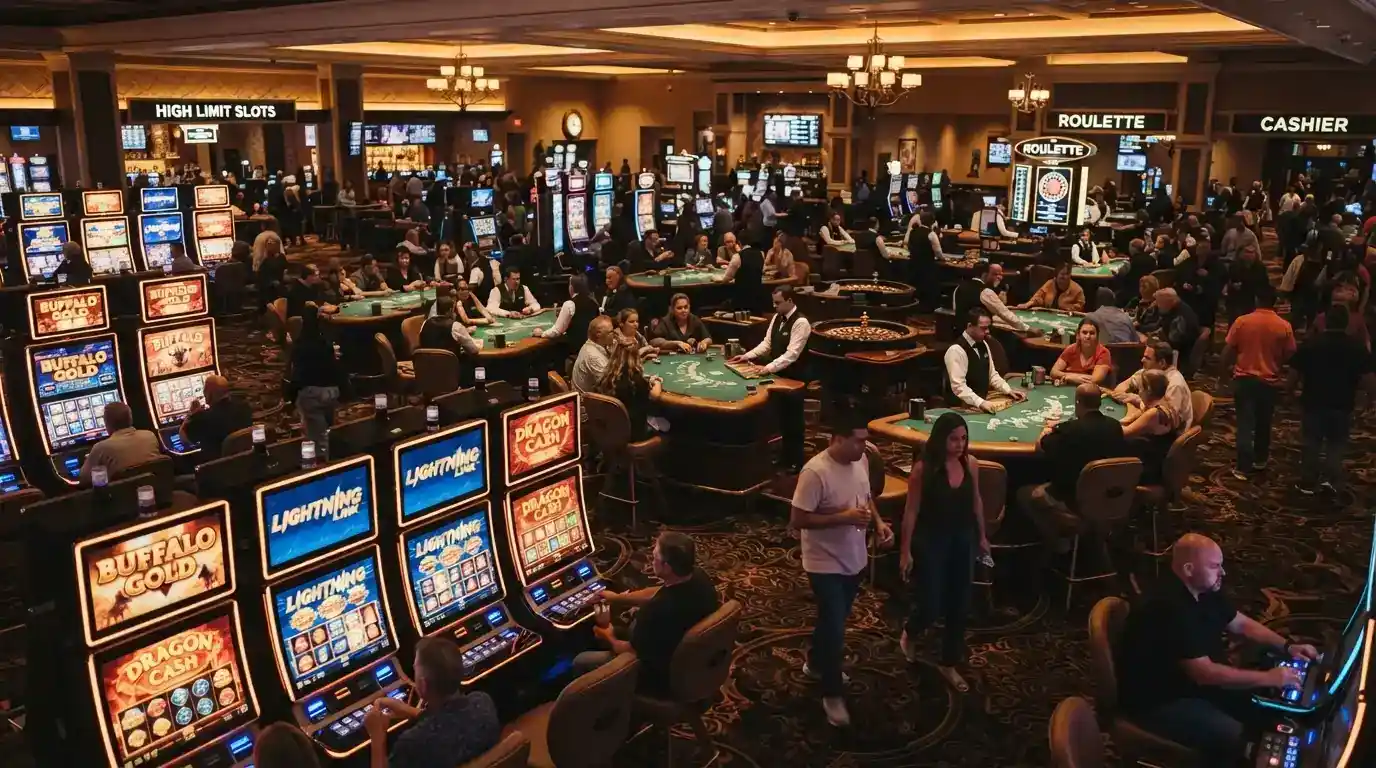
Queensland law sets a minimum Return to Player of 85 per cent on every electronic gaming machine in the state. That floor is non-negotiable — every machine on the floor pays back at least 85 cents in the long run for every dollar wagered — and it is what makes the pokies product at The Star Brisbane broadly comparable to pokies in other Australian states. The 85 per cent figure is also the most important number for understanding what the pokies cost a player: the house keeps 15 cents of every dollar on average, which over a session of meaningful size becomes a real amount of money.
Table games: blackjack, roulette, baccarat and more
The 92 table and poker games break down across the floor in a way the operator does not publish in detail. The standard Australian casino table-games lineup applies: blackjack in several variants, American and European roulette, baccarat, and a rotating selection of other games. The Star Brisbane does not publish minimum and maximum bet ranges in a form this review could verify; visitors should expect standard Australian-casino minimums — typically $10 to $25 on the main floor, with higher limits in the dedicated high-limit rooms — and the floor layout follows the convention of separating mass-market tables from premium rooms.
What is not on the floor matters as much as what is. Craps — the North American dice game that Crown Melbourne runs prominently — has a smaller footprint in Queensland venues than in some interstate competitors. The game selection at The Star Brisbane tilts toward the Asian-market favourites (baccarat in particular) and the European-derived table games, reflecting both the local demographic and the operator’s experience with the Gold Coast and Sydney floors. The exact breakdown by game is not public; visitors who want to confirm a specific table before they travel should call the venue on 1800 88 88 99.
The poker room: cash games, tournaments and what to expect
The Star Brisbane runs a dedicated poker room as part of its 92-game count. The poker offering sits under the broader Star Poker brand, which the operator runs across its venues, and cash games run alongside a tournament schedule. Specifics on stakes, variants and the daily schedule were not confirmed in this review; the operator publishes the live tournament calendar on its poker page, and that is the most reliable source for what is running on any given day.
For a Brisbane poker player, the venue is the only licensed poker room within the city. The Star Gold Coast, Crown Melbourne and The Star Sydney all run larger and more established poker rooms; for a serious tournament player the comparison comes down to travel cost versus local convenience. The Star Brisbane is the local option. It is not yet the destination option.
Pokies and electronic gaming machines: 1,600 machines at 85% minimum RTP
The pokies floor is the bulk of what a casual visitor encounters. With 1,600 machines installed against a 2,500-machine entitlement, The Star Brisbane runs one of the larger pokies floors in Queensland and a respectable size by national standards — well behind Crown Melbourne’s 2,500 and Crown Perth’s 2,000-plus, but ahead of the regional Queensland venues and roughly comparable to The Star Sydney.
The 85 per cent minimum RTP is the cost-of-play number, and it deserves to be stated plainly. Across every machine on the floor, the house keeps an average of 15 per cent of turnover in the long run. Over a $500 session on the pokies, the expected loss is $75; over $5,000, the expected loss is $750. That arithmetic does not change with the time of day, the denomination chosen or the loyalty tier a player holds. It is the structural cost of the product. Players who treat the pokies as paid entertainment — a $50 outlay for an evening of play, with any return a bonus — get the most honest version of the deal. Players who treat the pokies as a way to win money are paying the 15 per cent house edge for the privilege of being disappointed.
The remaining entitlement — 900 machines that have not been installed — is reserved for future expansion. The casino operator’s licence allows the floor to grow up to that ceiling as demand and regulatory approvals allow.
Where to eat at Queen’s Wharf: from $40 breakfasts to rooftop fine dining
Queen’s Wharf carries more than fifty food and beverage outlets across the precinct, but the casino-floor and hotel-level venues are the ones a visitor plans around. The list below covers the venues that sit inside or directly adjacent to The Star Brisbane and The Star Grand, with cuisine, level and price tier. A handful of standalone precinct venues — including the Latin American–Asian fusion Azteca Brisbane with its Saturday Aztec 1521 Brunch — sit outside the casino proper but inside walking distance.
| Venue | Cuisine | Location/Level |
|---|---|---|
| Aloria | European/Australian fine dining, rooftop | Sky Deck, Level 23 |
| Sokyo | Japanese | Sky Deck, 100 m above the river |
| Cucina Regina | Italian | Level 4 |
| Fat Noodle | Pan-Asian | The Terrace, Level 4 |
| Lúc Lắc | Asian | The Terrace, Level 4 |
| Black Hide Steak & Seafood by Gambaro | Steakhouse/seafood | The Terrace, Level 4 |
| Food Quarter | 24-hour café | Level 5 |
| Cherry | 360-degree bar | Level 5 |
| Babblers | All-day drinks | Sky Deck |
| Cicada Blu | Cocktail bar | Sky Deck |
Cucina Regina is rated the number one Italian restaurant in Brisbane by Tastes of Italia — a useful third-party signal for a venue inside a casino complex that competes with the city’s standalone Italian dining scene.
Fine dining: Aloria, Sokyo and Black Hide
The three destination restaurants at The Star Brisbane are Aloria, Sokyo and Black Hide. Each sits at a different level of the precinct, each targets a different evening, and each is the kind of restaurant that justifies the trip on its own.
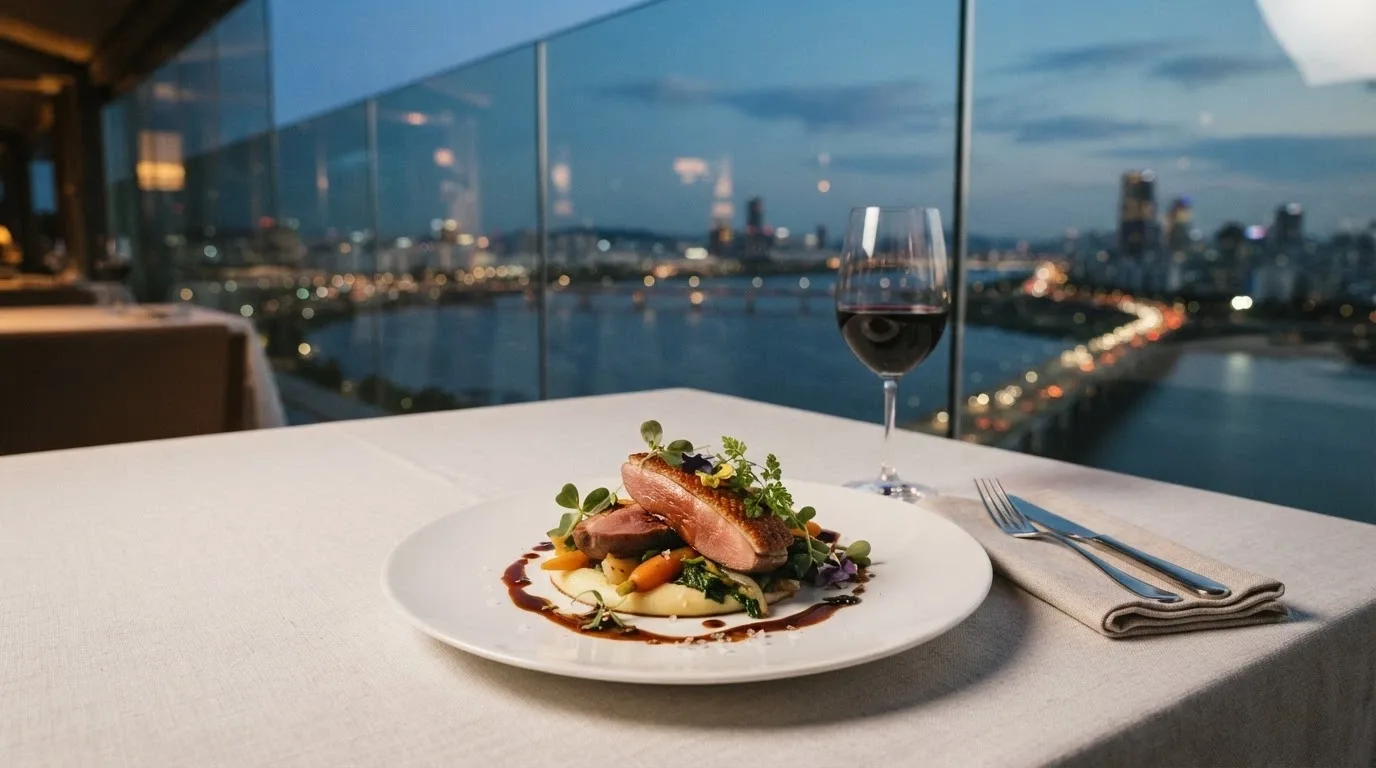
Aloria is the rooftop fine-dining flagship. It opened on 30 October 2024 on the Sky Deck at Level 23, runs a European and Australian menu and takes dinner bookings. The 12-page wine list is curated by Head Sommelier Damian Danaher and includes vintages from Château Lafite Rothschild — a marker of intent rather than price, signalling that the venue is built for a serious dining audience rather than a casual walk-in. A booking is the sensible approach.
Sokyo sits 100 metres above the river on the Sky Deck and runs a Japanese menu with the contemporary edge that defines the Sokyo brand across the operator’s venues. The setting is the appeal — the river views from the Sky Deck are the closest the precinct gets to an unobstructed Brisbane panorama — and the kitchen delivers the kind of sushi, sashimi and small plates that justify a Sky Deck booking.
Black Hide Steak & Seafood is the Gambaro family’s steakhouse concept transplanted to The Terrace at Level 4. Brisbane diners familiar with Gambaro at Petrie Bight will recognise the kitchen; Black Hide is the operator’s casino-floor iteration, with the same steak-driven menu and a wine list built around reds. It is the most accessible of the three fine-dining venues and the one a non-resident visitor can usually walk into on a weeknight.
Casual eats: Cucina Regina, Fat Noodle, Lúc Lắc and the Food Quarter
Cucina Regina is the standout in the casual tier. The venue sits on Level 4 and has been rated the number one Italian restaurant in Brisbane by Tastes of Italia — a strong third-party endorsement for a casino-floor restaurant that competes with the city’s standalone Italian dining scene. The menu is built around the kind of house-made pasta and modern Italian that has carried the Cucina brand for years.
Fat Noodle runs a pan-Asian menu that covers Vietnamese, Thai and Chinese dishes in the same way the brand does at The Star Gold Coast. Lúc Lắc sits alongside it on The Terrace with a narrower Asian focus and a slightly more contemporary edge. Food Quarter is the 24-hour café on Level 5 — the venue a guest at 3am stumbles into looking for coffee and a sandwich, and the venue a guest at 7am uses for the same reason. It is not glamorous, but it is open, and on a casino floor that runs 24/7 that has value.
Bars and rooftop drinking: Cherry, Babblers and Cicada Blu
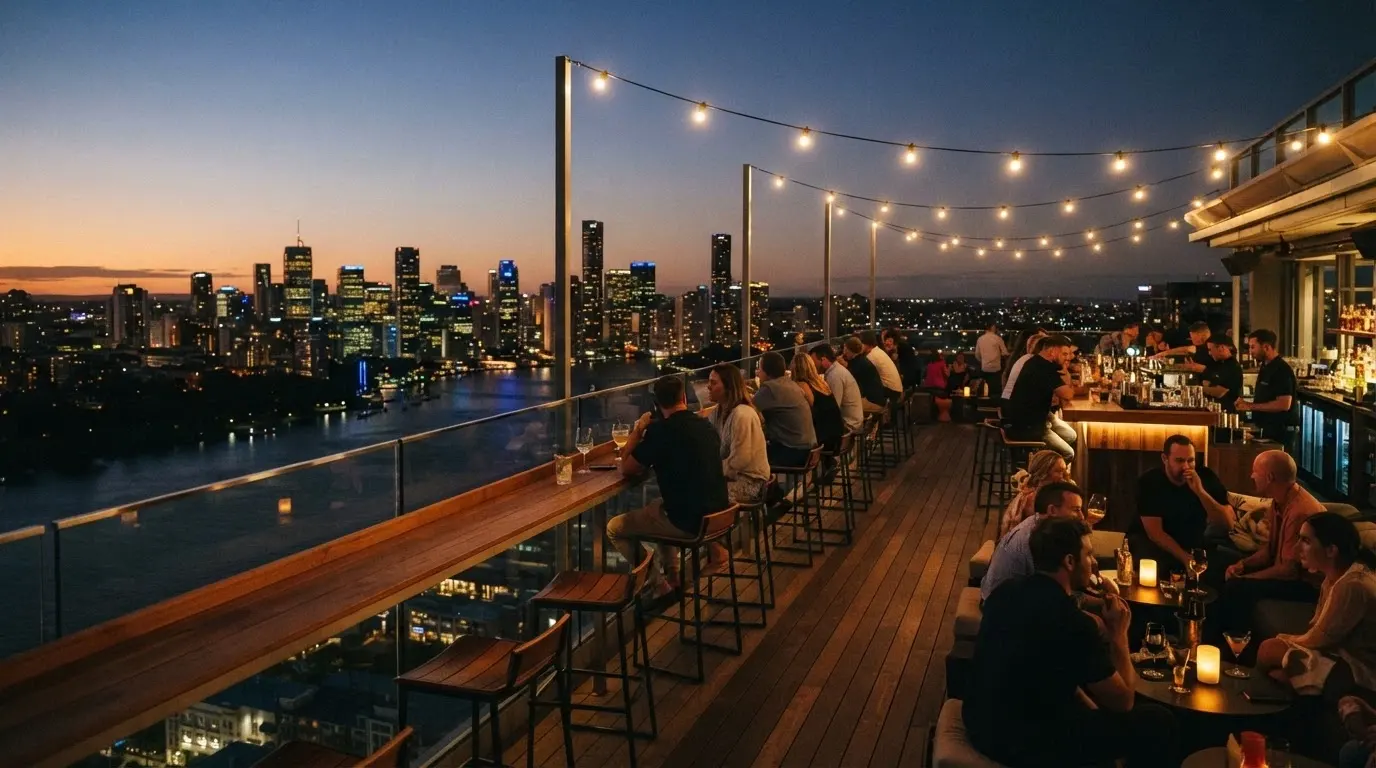
Cherry is the 360-degree bar on Level 5 — the precinct’s all-day drinks anchor, with the kind of wraparound views that justify the name. Babblers and Cicada Blu are the Sky Deck pair. Babblers opens daily from 7am until late and takes walk-ins; Cicada Blu opens from 3pm until late Wednesday and Thursday and from noon until late Friday through Sunday, also walk-ins. The Sky Deck setting — 100 metres above the river — makes both venues a step up from the Level 5 bar in atmosphere; the trade-off is exposure to the Brisbane weather, which is fine for nine months of the year and punishing in the wet-season storms.
Azteca Brisbane sits slightly outside the casino-floor venues and brings Latin American–Asian fusion to the precinct’s dining mix. Its Saturday Aztec 1521 Brunch has been a drawcard for visitors who want a daytime option with a cocktail focus.
Breakfast, buffet and coffee at The Star
Breakfast at The Star Grand runs approximately $40 AUD per person, à la carte and cooked to order. The Star Grand sits inside the resort, so the breakfast is technically a hotel restaurant rather than a casino-floor venue, but it is the breakfast a guest who has booked a room will be steered toward. Food Quarter on Level 5 is the 24-hour alternative — coffee, pastries, light meals at a fraction of the price and on the visitor’s own schedule.
A buffet breakfast was not confirmed as part of the offering for 2026 at the time of writing. Visitors who want to confirm the current breakfast format before booking should check the operator’s official page or call 1800 88 88 99.
Staying at The Star Grand: five-star rooms from 40 sqm with river views
The Star Grand is the on-site hotel and the natural choice for a visitor who wants to combine a gaming evening with a Brisbane stay. The hotel runs across Levels 8 to 17 of two river-facing towers and carries 340 rooms in total, including four penthouses. The building is rated five-star, which puts it in the same category as the major Brisbane CBD competitors — the Marriott, the Westin, the Sofitel — and the location inside the Queen’s Wharf precinct makes it the closest five-star option to the casino floor.
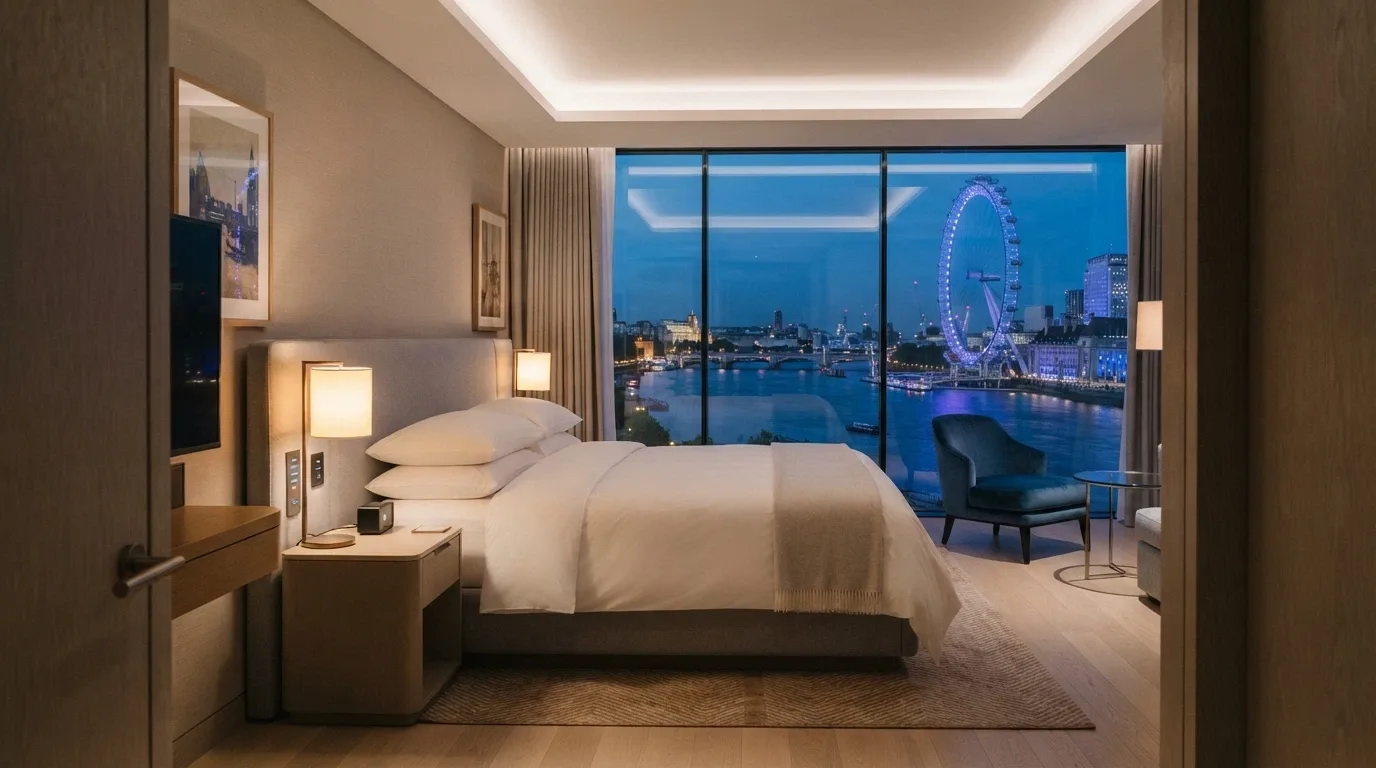
For a visitor who is not staying at The Star Grand, the precinct still delivers: there are several hotel brands within walking distance of the casino, and South Bank sits across the Neville Bonner Bridge for visitors who want a quieter riverside base.
Rooms and suites: from City King to Skyline Penthouses
The 340 rooms break down into 276 standard rooms and 60 suites. The standard rooms carry three configurations — City King, City Twin and River King — with the River King at roughly 40 sqm and the river-and-Wheel-of-Brisbane view that justifies the upgrade. The 60 suites split into 28 River Suites, 28 City Suites, four Skyline City Suites (75–113 sqm) and four Skyline Penthouse Suites (217 sqm).
The standard rooms carry the integrated smart-room controls — lighting, drapery and temperature adjustable from a bedside panel — that the operator has rolled out across its newer hotel stock. The River King is the room a visitor should book if the river view matters; the Skyline Penthouse Suite is the room a visitor should book if nothing else matters.
Resort deals and accommodation packages
The Star Grand runs standard hotel packages — dine-and-stay, show-and-stay, weekend-stay — at the price points a five-star Brisbane CBD hotel commands. Specific package pricing for 2026 was not confirmed in this review; visitors should treat the published rack rates as the starting point and the Star Club member rates as the negotiated discount. The dine-and-stay packages typically bundle a restaurant booking at one of the precinct’s headline venues with a room and breakfast; the show-and-stay packages tie to whatever entertainment is running in the precinct during the visit.
The hotel’s own booking page is the most reliable source for current rates and packages. Star Club members at Silver and above get access to member-rate pricing and the priority-availability window; Gold and Platinum members get the suite-night upgrades that make the loyalty program worth chasing.
Isoletto Pool Club, spa and gym on the Leisure Deck
The Isoletto Pool Club sits on the Leisure Deck at Level 7 — the 12,000 sqm open-air deck 37 metres above street level that gives the precinct its resort feel. The pool complex spans more than 530 sqm of swimmable water across three pools, with the featured pools heated to 28°C and a swim spa at 32°C. Cabana hire runs alongside the pools; the deck itself functions as a daytime social space with food and beverage service.
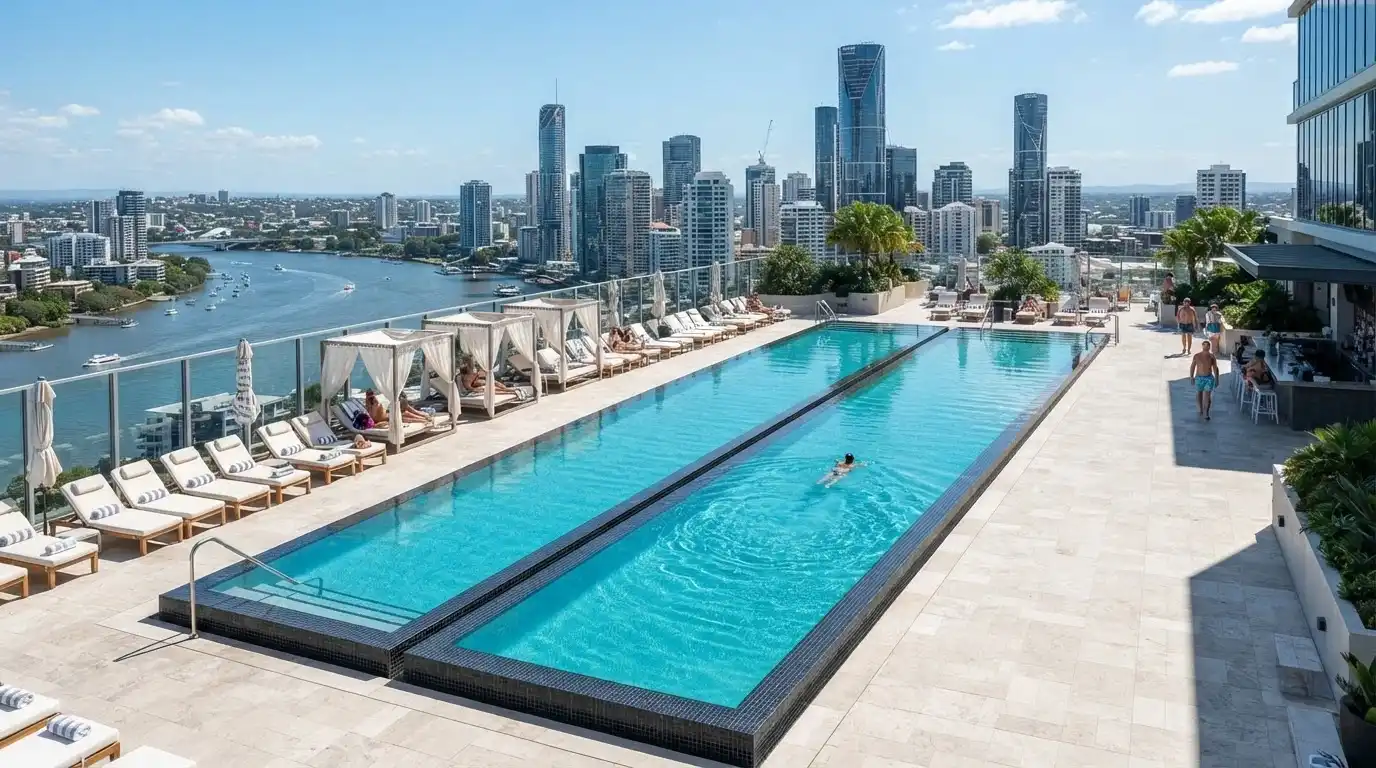
The spa and gym facilities sit on the same deck; specifics on treatment menus, gym equipment and access policies were not confirmed in this review. Visitors who want day-pass access to the pools without a hotel booking should check the operator’s official page, since day-pass policies vary between resort pools and many venues restrict access to hotel guests.
What Australian law says about casinos: licensing, the online ban and your rights
The legal framework around Australian casinos splits cleanly into two regimes: state-based land-based licensing, which is what covers The Star Brisbane, and a federal prohibition of online casino and in-play betting, which is what covers everything that is not a physical venue. A reader who visits The Star Brisbane interacts only with the first regime; a reader who considers an offshore online casino as an alternative interacts with the second.
The land-based regime is permissive at the state level. Each state and territory licenses its own casinos, regulates the operators, sets the rules for advertising and inducements within that state’s jurisdiction, and collects the casino tax. Queensland’s regulator is the Office of Liquor and Gaming Regulation (OLGR), which sits inside the Department of Justice and Attorney-General. The Star Brisbane’s licence is a Queensland casino licence granted to The Star Entertainment Group under state legislation, and the casino operator fee from 1 April 2026 is a fixed $18 million per year, payable monthly, plus performance-based incentive fees under the Casino Management Agreement.
The online regime is the opposite. The Interactive Gambling Act 2001 makes it an offence to provide online casino games, online pokies or in-play betting to a person in Australia. There is no licence for online casino anywhere in the country. The federal regulator is the Australian Communications and Media Authority (ACMA), which enforces the prohibition through ISP blocking, civil penalty proceedings and referrals. The credit-card and crypto ban for online wagering took effect on 11 June 2024 under the Interactive Gambling Amendment (Credit and Other Measures) Act 2023, and the broader Interactive Gambling Amendment (Gambling Reform) Bill 2026 passed Parliament on 19 August 2026 with most measures commencing on 1 January 2027.
The point of running the two regimes side by side in this guide is that the choice Brisbane casino visitors actually have is restricted by design. The land-based venue is licensed, regulated and taxed; the offshore alternative is none of those things.
Queensland’s casino licence: who regulates The Star Brisbane
The Office of Liquor and Gaming Regulation (OLGR) is the Queensland state regulator that oversees The Star Brisbane. The casino operator — The Star Entertainment Group — runs the venue under a Casino Management Agreement with the state, which sets the operator fee (a fixed $18 million per year from 1 April 2026, plus performance-based incentive fees), the regulatory obligations and the venue’s operating standards. The Star Entertainment Group has faced regulatory scrutiny in multiple states, including reviews of its compliance, anti-money-laundering controls and ongoing suitability assessments in both New South Wales and Queensland. That corporate context is factual rather than speculative: the operator has been under state-level review, and the outcomes of those reviews are public.
What that means for a visitor is straightforward. The Star Brisbane operates under a state-issued licence that the regulator can suspend, amend or revoke. The venue is not a private club that runs on its own house rules; it operates inside a regulated framework that publishes operator obligations, collects licence fees, and runs compliance audits. The same framework does not extend to offshore online casinos, which is the gap the next section addresses.
The specific date the current Queensland casino licence was granted to The Star Entertainment Group was not confirmed in this review. The licence exists under Queensland law; the original grant date sits in the OLGR register, and a reader who needs that exact date for compliance or commercial purposes should consult the register directly.
Why online casino is illegal in Australia — and what that means for players
Online casino is illegal in Australia in the absolute sense. The Interactive Gambling Act 2001 prohibits the provision of online casino games, online pokies and in-play betting to a person physically in Australia. There is no state or territory licence that overrides the federal prohibition; the product is banned at the federal level and remains banned regardless of where the operator is based or where the player sits.
The Australian Communications and Media Authority (ACMA) is the federal regulator that enforces the prohibition. As at March 2026, ACMA had directed Australian ISPs to block 1,564 illegal gambling and affiliate websites since November 2019, and more than 225 illegal services had withdrawn from the Australian market since 2017. Those numbers are the most visible measure of enforcement activity, and they reflect both the scale of the offshore industry’s targeting of Australian players and the regulatory response to that targeting.
What is legal online is narrower than the marketing suggests. Wagering on races and sporting events placed before the event begins is licensable through state and territory wagering operators. Lotteries and keno are licensable. Online casino, online pokies and in-play betting are not. Credit cards, credit-related products and cryptocurrency have been banned as payment methods for online wagering since 11 June 2024, narrowing the deposit routes that licensed operators can accept and pushing offshore sites further outside the regulated payments system.
The consumer protection gap is the point that matters for a reader weighing an offshore site against a land-based visit. ACMA’s blocking actions do not recover funds for individual players. The individual player is not prosecuted under the Interactive Gambling Act — the Act targets the provider, not the customer — but the player also has no recourse if an offshore operator refuses a withdrawal, voids a win, or disappears with a balance on the account. BetStop, the National Self-Exclusion Register, does not cover offshore sites, so a self-exclusion order placed with an Australian licensed operator does not extend to an offshore casino. There is no Australian deposit, loss or stake ceiling that applies to an offshore product, because the product is not legal in the first place.
That asymmetry — full regulation on one side, no regulation on the other — is the structural reason a Brisbane visitor who chooses a land-based venue ends up in a different market from one who chooses an offshore online alternative. The land-based venue pays tax, runs responsible-gambling programs, offers consumer recourse, and submits to state-level oversight. The offshore site does none of those things.
The gambling reform bill and what it changes for players in 2026
The Interactive Gambling Amendment (Gambling Reform) Bill 2026 passed Parliament on 19 August 2026 and most of its measures commence on 1 January 2027. The bill restructures the rules around wagering advertising, inducements, athlete promotion and bank-side intervention against illegal operators. The direct impact on a Brisbane casino visitor is small — the bill targets online wagering advertising and offshore enforcement, not land-based casino operations — but the indirect impact matters because it reshapes the broader gambling environment in Australia.
The headline measures from 1 January 2027 are: a cap of no more than three wagering advertisements per hour between 6am and 8:30pm; a live-sport blackout that prevents wagering ads in the 15 minutes before and 5 minutes after a live sports broadcast; radio advertising barred during school-commute times; a prohibition on broadcasting sporting odds during live sport; online wagering ads restricted to logged-in, age-verified users who have not opted out; a ban on wagering advertising inside sports venues and on player uniforms; and a bar on athletes, celebrities and social-media influencers promoting wagering brands. Banks and payment providers gain authority to block transactions to illegal gambling operators, which closes off a deposit route that has been difficult to police.
The inducement rules tighten too. Direct marketing of sign-up offers, referral bonuses and similar inducements is banned for three months after a person deregisters from BetStop — the National Self-Exclusion Register. That measure targets the worst-case path from self-exclusion back into gambling, which is the pathway offshore operators and aggressive licensed operators have historically exploited.
For a Brisbane casino visitor, none of these measures touch the gaming floor. They shape the advertising a viewer sees on television, the deposit experience at an online wagering site, and the protection available to a person who has just deregistered from BetStop. What they do establish is that the regulatory environment around Australian gambling is tightening, and that the gap between the regulated onshore market and the unregulated offshore market is widening.
Responsible gambling at The Star Brisbane: what protection you actually have
Responsible gambling at a land-based venue is a venue-by-venue proposition. BetStop, the National Self-Exclusion Register, does not extend to land-based casinos — it covers Australian-licensed online and phone wagering only. The Star Brisbane runs its own venue-level responsible-gambling measures, and a visitor who needs help has access to the same national helpline and online counselling service that an online player does.
The national data on gambling harm sets the context. About 2.1 per cent of Australian adults — roughly 430,000 people — experience problem gambling, with another 1.8 per cent at high-risk gambling, according to the Australian Institute of Health and Welfare’s 2022 prevalence data. Those figures cover all forms of gambling in all settings, and they are the numbers a reader should hold alongside any venue-specific advice.
Problem gambling in Australia: the numbers
The 2.1 per cent problem gambling rate and the 1.8 per cent high-risk rate come from the Australian Institute of Health and Welfare’s 2022 prevalence data and refer to all forms of gambling across all settings — land-based and online, casino and wagering, pokies and table games. They are not specific to The Star Brisbane or to land-based casino gambling, and they should not be read as a measure of harm at this venue. They are a measure of harm across the country.
The same data shows demographic patterns that matter for any gambling-related decision. Younger adults are over-represented in problem-gambling statistics; men are over-represented relative to women; lower-income households bear a disproportionate share of harm. The 78 per cent under-40 share of BetStop registrants is consistent with that pattern, and the 38 per cent lifetime-exclusion share tells you what the data also shows — that a significant minority of people who reach the point of self-exclusion decide they need to be excluded permanently.
For a Brisbane casino visitor, the relevance of those numbers is in framing the visit. A gaming floor of 1,600 pokies at 85 per cent minimum RTP is a product that costs the player 15 per cent of turnover on average. The cost of that product is what it is; the harm it can cause is what the prevalence data measures; the protection available is what the next section covers.
Self-exclusion, BetStop and venue-specific tools
BetStop — the National Self-Exclusion Register — went live in August 2023 and is the central piece of Australia-wide self-exclusion infrastructure. As at 31 July 2026, the register had 67,480 total registrations, of which 41,290 exclusions were still active. Seventy-eight per cent of registrants were under 40 at the time of registration, and 38 per cent had chosen a lifetime exclusion.
The limit of BetStop matters as much as its scale. BetStop binds Australian-licensed online and phone wagering operators — the Sportsbets, the bet365s, the Ladbrokes. It does not bind land-based casinos, which run their own venue-level exclusion programs, and it does not bind offshore operators, which are not connected to the register at all. A person who self-excludes through BetStop will be excluded from every Australian-licensed online wagering service; that same person can still walk into The Star Brisbane and play the pokies, because the venue-level exclusion is a separate process.
The Star Brisbane runs its own responsible-gambling infrastructure — self-exclusion orders processed at the venue, deposit-limit tools available through the loyalty program, activity statements on request, and staff training in identifying patrons who may be experiencing harm. The specifics of that program were not confirmed in this review; the operator publishes its responsible-gambling commitment on its official site, and a visitor who wants the exact policy should ask at the venue or contact the operator directly.
What the gap means in practice: a person who has recognised they have a gambling problem and wants to exclude themselves from every gambling opportunity in Australia has two separate processes to go through — BetStop for the online and phone wagering market, and a venue-level exclusion at every casino they frequent. Offshore sites are a third, unregulated layer that no Australian self-exclusion infrastructure reaches.
Where to get help: helplines, counselling and support
The National Gambling Helpline is 1800 858 858 — a free, confidential, 24-hour service staffed by counsellors with experience in gambling harm. The companion service is Gambling Help Online at gamblinghelponline.org.au, which runs online chat and email counselling for people who prefer text-based support or who are not in a position to make a phone call. Both services are available to anyone in Australia, regardless of which state they are in or which form of gambling is the issue.
State-based services exist alongside the national helpline. Queensland residents can access counselling and support through the state’s health and community services infrastructure, and The Star Brisbane’s responsible-gambling team can connect a visitor to those services on request. The licensed wagering market also offers customer-set deposit limits and activity statements under state and territory conditions — a tool that is available to online wagering customers but is not directly transferable to a land-based casino visit.
For a visitor inside The Star Brisbane who needs help, the practical path is to approach the venue’s responsible-gambling staff — usually identifiable by their uniforms and positioned at the gaming-floor entrances — and ask. Venue staff are trained to handle those conversations without judgement, to process a venue-level exclusion on the spot, and to connect the visitor with the National Gambling Helpline or Gambling Help Online if ongoing support is what is needed.
How we evaluated Brisbane’s casino
This review draws on the operator’s own published materials, the Queen’s Wharf Brisbane media releases, The Star Entertainment Group’s ASX announcements, ACMA enforcement data, the AIHW’s gambling-harm prevalence statistics, the OLGR Queensland regulatory framework, and the relevant Australian statutes — the Interactive Gambling Act 2001, the Interactive Gambling Amendment (Gambling Reform) Bill 2026 and the ITAA 1997 for the tax treatment of winnings.
What was checked, specifically: the Queensland casino licence framework against the OLGR register; the operator group and licence status for each of the ten venues in the comparison table against the regulator and the corporate parent; the dining, hotel, gaming-floor, parking and entertainment facts against the operator’s official pages; the responsible-gambling infrastructure against the national helpline and the operator’s published policies; and the legal framework against the statutes themselves. Where a figure was not confirmed — a licence date, a specific table-games breakdown, a buffet price — the page carries the gap qualitatively rather than fabricating a number.
What was not done: this page does not carry a numerical score, a weighted ranking or a synthetic rating system. The reasons are practical rather than rhetorical. The Australian casino market is too small and the venues too different to score on a single scale; Crown Melbourne’s 540 table games and The Ville’s tropical resort context are not the same product, and pretending they are produces a number that misleads more than it informs. The evaluation instead treats each venue on the dimensions that matter for the comparison — scale, location, operating model, regulatory standing — and lets the reader weigh them.
What the reader should take from the methodology is a sense of where the figures came from and where the gaps are. Every figure on this page carries a source traceable to research; every gap carries the qualifier that flags the absence.
Is The Star Brisbane worth visiting? Our verdict for 2026
The Star Brisbane is worth visiting for the right reason. The wrong reason — that it is Brisbane’s only casino, and a visitor has no alternative — is also true, but it is not a reason to visit. The right reason is the precinct itself: a $3.6 billion riverfront development that genuinely reshaped the Brisbane CBD, with a casino floor inside it that is large enough to be a real destination and small enough to be navigable in a single evening. For a visitor whose interest is dining, the precinct’s restaurant lineup — Aloria, Sokyo, Cucina Regina, Black Hide — is one of the strongest in Queensland. For a visitor whose interest is the hotel, The Star Grand is a five-star option with river views and access to the precinct. For a visitor whose interest is entertainment beyond the gaming floor, the Sky Deck and Leisure Deck deliver settings that stand on their own.
The case against visiting is the one the marketing does not put in print. The pokies floor costs the player 15 cents on the dollar in the long run, regardless of denomination, machine type or loyalty tier. The dining is priced at CBD five-star levels, which means the breakfast at The Star Grand runs around $40 per person and the fine-dining venues command fine-dining prices. The casino is Brisbane’s only option, which means there is no price competition to push promotional offers or loyalty rewards in the visitor’s favour. And the venue is still in a staged build-out: not every entitlement machine is installed, not every outlet is open, not every package is finalised.
The verdict, broken down by visitor type, is simple. A visitor whose primary interest is gaming and who has no other casino preference finds the venue a credible choice, as the 1,600 pokies and 92 table games cover the standard product and the 24/7 hours remove the time pressure. A visitor whose primary interest is dining benefits from the precinct’s restaurant lineup, which is the strongest argument for visiting: Aloria, Sokyo and Cucina Regina together cover fine dining, contemporary Japanese and the best Italian in Brisbane. A visitor whose primary interest is the hotel and the broader resort experience can use The Star Grand, a five-star CBD hotel with river views and access to the precinct that compares well with other local five-star competitors. Finally, a visitor whose primary interest is entertainment beyond gaming is well served by the Sky Deck, the Leisure Deck, the Isoletto Pool Club and the regular events programming, which allow the precinct to deliver on its entertainment promise without requiring the visitor to play.
What to do next depends on the reason for visiting. A first-time visitor who wants to see what Brisbane’s casino looks like should plan an evening: arrive for dinner at one of the precinct restaurants, walk the Sky Deck and the Leisure Deck, then spend a few hours on the gaming floor with a budget they have set in advance. A return visitor who knows the venue should book Aloria or Sokyo for a meal, lock in a Star Club membership to capture the parking benefit, and use the hotel for at least one night to make the most of the integrated experience. A visitor who is comparing Brisbane against an interstate option should weight the dining and the precinct against the gaming floor; Crown Melbourne wins on scale, The Star Brisbane wins on everything else.
The single piece of advice that applies to every visitor: set a budget before you arrive and treat any session on the floor as paid entertainment. The 85 per cent minimum RTP is the structural cost of the product; the visit delivers what it delivers on top of that. The marketing words — “exclusive”, “premium”, “world-class” — come with that 15 per cent house edge baked in, and the precinct’s real value is what you can do with the time you do not spend at the machines.
Frequently asked questions
What is the best casino in Brisbane?
The Star Brisbane at Queen’s Wharf is Brisbane’s only casino, opened 29 August 2024 at 33 William Street in the Brisbane CBD and run by The Star Entertainment Group under a Queensland state licence. It houses 1,600 pokies and 92 table and poker games inside the $3.6 billion Queen’s Wharf precinct, and it remains accessible at all times, including weekends and public holidays.
What happened to Treasury Brisbane casino?
Treasury Brisbane closed at midnight on Sunday 25 August 2024 after nearly three decades as Brisbane’s casino. The venue was replaced four days later, on 29 August 2024, by The Star Brisbane at Queen’s Wharf, which sits within the new $3.6 billion Queen’s Wharf precinct on the same stretch of Brisbane riverfront.
Is online casino legal in Australia?
No. The Interactive Gambling Act 2001 prohibits online casino games, online pokies and in-play betting for people in Australia, and there is no licence for online casino in any state or territory. ACMA enforces the prohibition. Offshore sites that target Australian players are illegal; the player is not prosecuted, but there is no consumer protection, no ACMA fund recovery and no BetStop coverage for offshore play.
How do I join the Star Club rewards program?
Enrolment is free at the Star Club desk inside The Star Brisbane with photo identification. The program runs four tiers — Bronze, Silver, Gold and Platinum — with Tier Points earned on gaming, dining and hotel spend. The most useful entry-level benefit is free all-day parking for Bronze and Silver members who earn a single Tier Point between 6am and 5:59am the following day; a $20 restaurant or bar spend earns the point during the qualifying promotion.
What is the Queen’s Wharf Brisbane precinct?
Queen’s Wharf Brisbane is a $3.6 billion integrated resort on the Brisbane CBD riverfront, developed by The Star Entertainment Group and its partners. The precinct spans about twelve hectares and includes The Star Brisbane casino, the 340-room five-star Star Grand hotel, more than fifty food and beverage outlets, residential apartments, the 12,000 sqm Leisure Deck, the 250-metre Sky Deck 100 metres above the river, and the Neville Bonner Bridge pedestrian crossing to South Bank. The casino floors account for about five per cent of the precinct’s total footprint.
What are the opening hours for The Star Brisbane casino?
The Star Brisbane maintains a 24/7 gaming operation. The casino runs continuously through the year, including public holidays. Restaurant and bar hours vary by venue; the 24-hour Food Quarter café on Level 5 is the easiest option for a visitor who needs coffee or food outside standard hours.
Written by the editors at RTP Pokies Australia.