A$1 Deposit Casinos in Australia: What the Label Is Worth and What Isn’t
 Available in AU
18 October 2026 · verified against the Interactive Gambling Act 2001, ACMA enforcement data and operator licence claims as published
The search query promises a casino that takes a single Australian dollar. The cashier says otherwise. Of the 32 AU-facing sites tested in a recent sample, only four accepted a true A$1, and two of those four accepted it on crypto rails only — not a payment method that Australian players normally recognise as a way to fund a casino account. The realistic fiat floor for an Australian depositing into an offshore casino in 2026 is somewhere between A$5 and A$10, and most of the comparison pages ranking “the best A$1 deposit casinos in Australia” are quietly publishing that A$5–A$10 floor without saying so.
This page is built around the gap between the marketing label and what the cashier actually clears. It ranks the ten offshore operators Australians actually reach, names the payment rails that work at a dollar and the ones that don’t, walks through what a dollar plays at the pokies, and — because it has to — explains exactly what the Interactive Gambling Act 2001 does to every site listed here. The anchor fact runs through every section: no Australian online casino licence exists, and every brand on this list is offshore and unlicensed under Australian law.
Table of Contents
- Why Your A$1 Casino Deposit Isn’t What the Ads Promise
- The 2026 Low-Deposit Casino List: Who Takes A$1 and Who Doesn’t
- Payment Methods That Work at a Dollar (and the Ones That Don’t)
- What Your Dollar Actually Plays: Real Pokies at A$0.10 a Spin
- A$1 Deposit Casinos on Your Phone: Smaller Screen, Same Offshore Reality
- New Low-Deposit Casinos in 2026: Fresh Branding, Same Offshore Structure
- The Legal Truth: Every A$1 Casino on This Page Is Offshore and Unlicensed
- When the Deposit is Only a Dollar: Playing Safe with Micro Stakes
- How We Picked and Ranked the Casinos on This Page
- Your Dollar, an Offshore Casino, and What to Actually Do
- Frequently Asked Questions
Why Your A$1 Casino Deposit Isn’t What the Ads Promise
The “A$1 deposit” label is a magnet for affiliate pages because it matches a thing a player actually wants to type into a search bar. The operator pages it ranks tend to bury the real entry point somewhere below the headline — a “minimum deposit A$20” turns up in the cashier, a “minimum payment A$30” appears in the bonus terms, a PayID field rejects anything under A$5 to A$10. The label sells the dollar; the cashier takes the twenty.
The offshore casino market, as it currently serves Australia, runs on three floors: the advertised minimum (the marketing number, almost never the working number), the payment-rail minimum (the smallest amount PayID, a card or Neosurf can actually clear), and the bonus-eligible minimum (the smallest deposit on which a welcome offer can be claimed, almost always higher than the other two). A$1 lives on the first floor only. It does its real work on the third, where the bonus term demands A$20 or A$30 before a player can clear the offer.
How a $1 Minimum Deposit Actually Works
A deposit flows from a player’s bank, card or wallet, through a payment processor, into the casino’s cashier, and lands as a casino balance that can be spent on pokies or live games. The cashier checks against the deposit-floor rule at the moment that money moves. Most offshore cashiers reject sub-A$10 amounts outright — for PayID, anti-fraud thresholds set by Australian banks typically sit at A$10 to A$20 per transaction, and 12-platform testing in the second quarter of 2026 put the lowest confirmed PayID floor at A$5. Newer 2026 sites have pushed the floor up rather than down: TV1 News coverage of new PayID-branded brands found several setting PayID minimums between A$25 and A$30.
A$5 fiat casinos, in the strict sense, do not exist in Australia in 2026. The structural reasons stack: Neosurf voucher denominations begin at A$10, card processor economics on micro-deposits cannot clear the fixed per-transaction cost, and PayID anti-fraud thresholds sit at A$5 or above. A casino accepting A$5 is at the edge of what the rails themselves will tolerate. A casino accepting A$1 against a fiat rail is, by the same logic, a misconfigured cashier that most operators simply do not run.
The Reality: True A$1 Deposits Are a Crypto-Only Edge Case
A Bitcoin transaction in May 2026 costs roughly A$1.50 to A$3.00 in network fees — fees that swallow a one-dollar deposit entirely. Litecoin runs under A$0.05 per transaction, and Tether on the Tron network comes in at about A$1.00 flat. Crypto is the only reliable path to a true $1 deposit at AU-facing offshore casinos — for fiat, the practical floor is AU$10 via Neosurf. The networks that clear sub-A$1 deposits are the low-fee ones: Litecoin, Tron-network Tether, sometimes Dogecoin. Bitcoin, the brand Australians most often associate with “crypto”, is structurally too expensive for a single-dollar transfer.
There is an irony baked into that finding. Crypto is banned for licensed Australian wagering under the Interactive Gambling Amendment (Credit and Other Measures) Act 2023, with the ban operational from 11 June 2024. A casino that asks for a crypto deposit from an Australian is, by definition, operating outside the rules that govern licensed wagering here. The same fact that makes crypto the only working route to a true A$1 deposit — that offshore casinos are not bound by Australian payment rules — is the fact that puts the deposit onto an unlicensed brand.
Real Money vs Demo Mode: What A$1 Actually Unlocks
A dollar is small enough that the line between real-money play and free-play demo mode blurs. A Blood Suckers spin costs A$0.25 — a dollar buys four spins against the real-money balance, with the 98.00% RTP working on every one of them. Starburst spins at A$0.10, so the same dollar buys ten spins. Both numbers are smaller than the spin budget most players run through on a demo session, which is typically provided by the same operators for free, against a virtual balance, with no sign-up required.
The distinction is real and not a marketing nicety. Demo mode runs against the same game engine, with identical RTP and identical random-number generation. A real-money dollar adds two things demo play does not: winnings that withdraw as cash, and a stake that counts toward a wagering requirement if a bonus is in play. The psychological difference is bigger than the technical one. A dollar with skin in the game is not the same entertainment as a dollar without it.
The 2026 Low-Deposit Casino List: Who Takes A$1 and Who Doesn’t
Ten offshore operators cover the AU-facing market in this guide, ranked by AU market share. None of them is licensed in Australia. All of them sit outside the Interactive Gambling Act 2001 — the Act prohibits online casino, online pokies and in-play sports betting outright. Every brand below is a product an Australian can reach, not a product an Australian is meant to reach.
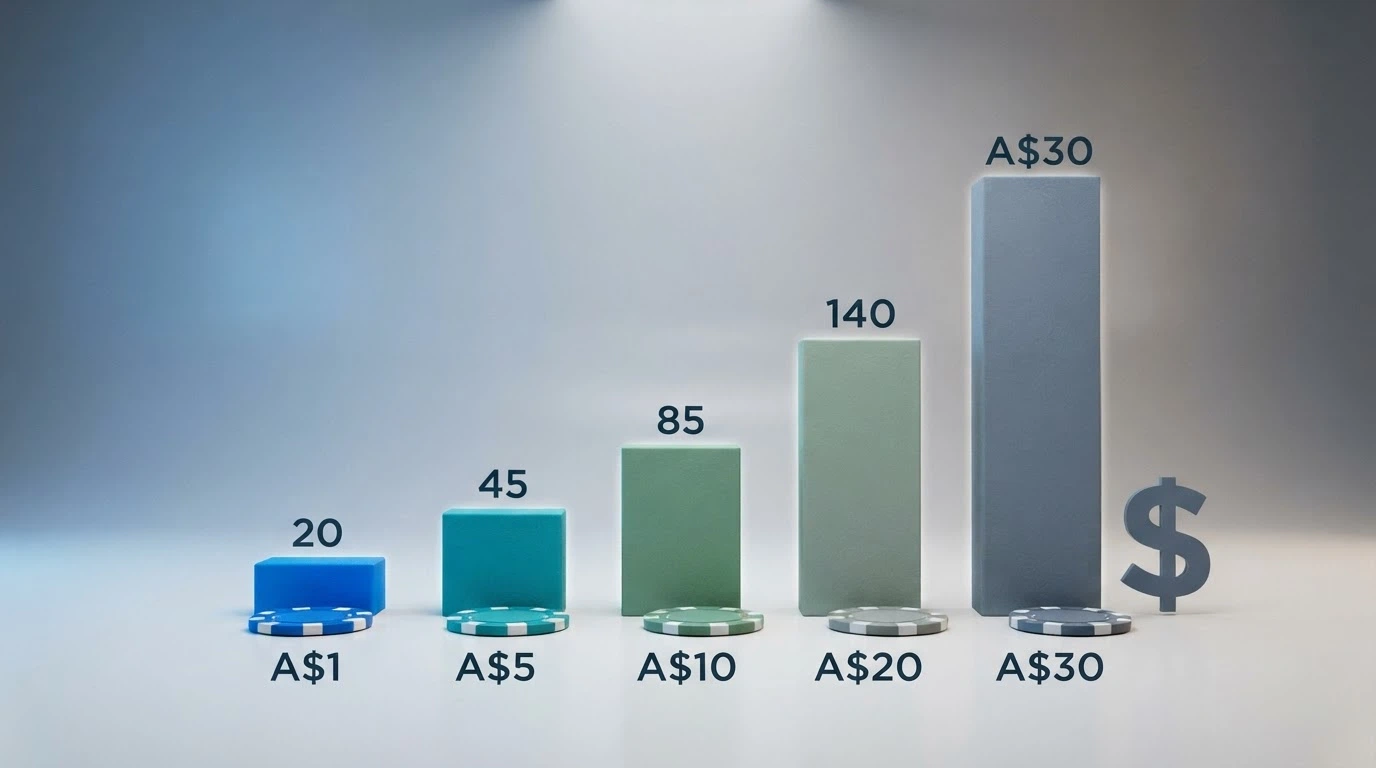
| Casino | Licence | Welcome Bonus | Wagering | Game Providers |
|---|---|---|---|---|
| Rocket Play | Curaçao (OGL/2024/1307/0748 — Scores55 Tech B.V.) | 100% up to A$1,000 + 100 FS (1st dep min A$30); 200% up to A$1,000 (2nd dep min A$75) | 30x–40x | Pragmatic Play, Evolution Gaming, thousands of titles |
| Skycrown | Curaçao (Hollycorn N.V.) | Up to A$8,000 + 400 FS over 4 deposits; 1st dep 120% up to A$1,200 + 125 FS (min A$30) | 40x | Evolution Gaming, Pragmatic Play Live, 300+ titles |
| Royal Reels | Curaçao | 100% up to A$500 (min A$30) + A$10 no-deposit bonus | 30x–40x | Pragmatic Play, Evolution Gaming, Yggdrasil, Hacksaw Gaming; 2,000+ games |
| WinSpirit | Unknown | 200% welcome bonus + 25 free spins | 40x | Unknown |
| Stake | Unknown | Crypto-focused; lowest genuine deposit approx. AU$0.10 BTC-equivalent | Unknown | Unknown |
| Rainbet | Malta Gaming Authority (per review source, not verified) | 100% up to A$200 + 50 FS | 30x | Unknown |
| Scream Casino | Unknown | Unknown | Unknown | Unknown |
| Fair Go | Curaçao (estimated; RTG-powered) | 100% up to A$200 × 5 = up to A$1,000; min deposit A$20 (A$5 via Lightning Bitcoin) | 30x on deposit + bonus | RTG (RealTime Gaming) |
| Bizzo Casino | Curaçao | Up to A$7,250 + 175 FS over 4 deposits; 1st dep 125% up to A$2,500 + 125 FS (min A$20) | 40x | 70+ providers, 8,000+ titles |
| Rocket Casino | Unknown | 100% up to A$150; min deposit A$20 | 30x | Unknown |
Three things show up the moment that table is read. First, every bonus sits behind a deposit floor of A$20 to A$30 — the dollar the page is supposed to be about never reaches the welcome-offer threshold at any of these operators. Second, four of the ten operators carry an “unknown” label for licence, providers or both, which means the comparison they offer is not a comparison of verifiable facts. Third, the share each operator holds of the AU market is concentrated at the top and thin at the bottom, so the table ranks who Australians actually reach, not who is best.
Rocket Play
Rocket Play is the largest AU-facing offshore casino by market share — 9.4% per the operator set drawn from Australian market data for this guide. The licence claim, Curaçao OGL/2024/1307/0748, points at Scores55 Tech B.V. The welcome package is a 100% match to A$1,000 plus 100 free spins on the first deposit — but the first deposit has to be A$30 or more to unlock it. A second deposit unlocks a 200% match to A$1,000, this time at a A$75 minimum. Wagering runs between 30x and 40x.
The game library runs Pragmatic Play and Evolution Gaming against several thousand titles, which makes Rocket Play the broadest mainstream catalog on this list outside Bizzo. For an Australian player with A$30 to spend and a preference for quantity of choice, Rocket Play sits at the top of the offshore tier. For a player with a dollar, Rocket Play is irrelevant — the floor is three thousand per cent of the deposit the search bar implied.
Skycrown
Skycrown comes second at 8.55% of AU share, run by Hollycorn N.V. under a Curaçao licence. The bonus is the largest headline figure on the list: A$8,000 plus 400 free spins, spread across four deposits. The first rung of that ladder is a 120% match to A$1,200 plus 125 free spins at a A$30 minimum — 40x wagering, with a 14-day validity window that is the only one named this run. The catalogue carries Evolution Gaming and Pragmatic Play Live against 300+ titles.
Skycrown is a package operator — the figure worth reading is the total reward across all four deposits, not any single rung. The 14-day expiry is also a comparison point: against offshore operators whose validity windows are unspecified and effectively indefinite, a named clock on the wagering is a fairer fight for the player who actually reads the terms. Against the A$1 promise at the top of the page, Skycrown is built for a different reader: someone with A$30 to lock in, four returns to come back on, and an appetite for the Live games coverage.
Royal Reels
Royal Reels holds 2.51% AU share under a Curaçao licence. The matched offer is a 100% bonus to A$500, available from a A$30 deposit, at 30x to 40x wagering. The genuinely interesting part of the offer is what sits beside it: an A$10 no-deposit bonus. That means an Australian player can sign up, claim ten dollars in bonus money without depositing a cent, run it through the wagering, and walk away with whatever clears before the cap. Royal Reels is the closest thing on this list to a true zero-cost entry.
The game library is broad by AU-offshore standards: Pragmatic Play, Evolution Gaming, Yggdrasil and Hacksaw Gaming, against 2,000+ titles. For a player testing whether an offshore casino is worth anything, the A$10 no-deposit piece is the right starting point. After that, the matched-deposit floor climbs to A$30, and the welcome package behaves much like the others — a match-and-wager task, with the player’s A$1 nowhere in sight.
WinSpirit
WinSpirit carries a 200% welcome bonus — the highest match percentage on the list — plus 25 free spins, at 40x wagering. The licence, providers, validity window and withdrawal minimum are all unknown this run. AU market share is 1.55%, which means real Australians are reaching it; the infrastructure to verify what is on offer is not.
WinSpirit is the operator where the caveat does most of the work. A 200% match is heavy by AU-offshore standards, but a bonus of that size on an unverified operator with unverified terms is a different kind of bet than the same percentage on a Curaçao-licensed brand with named providers and public wagering rules. Until the licence and the rest of the terms are confirmed, the bonus figure is what the marketing page publishes — not what the cashier delivers.
Stake
Stake is the structural anomaly on the list. AU share is 1.28%, the licence is unknown, the providers are unknown, and the welcome offer is not a matched deposit at all — it is a crypto-native platform whose lowest genuine deposit works out at roughly AU$0.10 in BTC-equivalent. Stake is not advertising A$1; it has built a cashier that clears at the network-fee level rather than the marketing-floor level. Of all the operators here, it is the only one where a true A$1 (or below) deposit is structurally possible.
The other half of that finding is the part the marketing page omits. Crypto is banned as a payment for licensed Australian wagering since 11 June 2024. Stake accepting a Bitcoin, Litecoin or Tether deposit from an Australian is operating outside the rules that govern the licensed market. The minimum deposit on this list runs as low as the rails allow — and the rails that allow it are the ones Australia has, by law, ruled off-limits for the licensed alternative.
Rainbet
Rainbet claims a Malta Gaming Authority licence — a regulatory anchor stronger than Curaçao on paper, though the licence was not verified against the MGA’s public register this run. The offer is a 100% match to A$200 plus 50 free spins at 30x wagering, with a named 30-day validity period and an A$20 minimum withdrawal. AU share is 1.28%.
The 30-day clock is the only one this run: it is what every other bonus on this list hides behind an “unknown” validity entry. A named window is a comparison point, but only in the sense that the rest of the field declines to name one. For a player willing to deposit above the A$30 minimum and clear the wagering inside a month, the Rainbet offer is, on its face, more legible than most. The unverified Malta licence is what keeps that legibility from being a clean win.
Scream Casino
Scream Casino holds 0.99% AU share and nothing else verified this run. The licence, the providers, the bonus, the wagering and the withdrawal minimum are all unknown. The information void is the operator — Australians are reaching it, and the page this guide writes cannot describe what it offers beyond the share figure.
A player looking at Scream Casino is buying into the smallest piece of the Australian market on the list, against an offer that has not been verifiable this run. The move that follows from that finding is to ask for the licence number, the registered company, and the T&Cs before any deposit — and to treat a refusal to provide them as the practical answer to whether the brand is worth a player’s time.
Fair Go
Fair Go runs an estimated Curaçao licence and is RTG-powered — the only single-provider library on the list. The bonus offer is a 100% match up to A$200 on each of the first five deposits, which compounds to a maximum of A$1,000 across the package. The minimum deposit is A$20 through standard rails, dropping to A$5 via Lightning Bitcoin. Wagering is 30x on deposit plus bonus. Minimum withdrawal is A$100.
Fair Go is the closest thing to a fiat-adjacent A$1 path this list admits. The Lightning Bitcoin route does not hit a true dollar, but it does hit A$5, which sits at the very edge of what the PayID rails are clearing in 2026. The trade-off is the A$100 minimum withdrawal: even a player who wins modestly may not reach that figure, in which case the money stays on the casino balance. The withdrawal floor is the trap on the most permissive deposit floor.
Bizzo Casino
Bizzo is the volume play on the list. 8,000+ titles across 70+ providers, Curaçao licensed, with a four-deposit package stretching to A$7,250 plus 175 free spins. The first rung is a 125% match to A$2,500 plus 125 free spins at a A$20 minimum, with lower tiers available for smaller deposits. Wagering is 40x.
For an Australian player set on a broad NetEnt–Pragmatic–Evolution experience with deposit flexibility below the A$30 standard, Bizzo is the strongest offering here. For a player with a single dollar, Bizzo is the largest library behind the largest minimum — the catalogue is the pull, and the price of admission is twenty times the search-bar figure.
Rocket Casino
Rocket Casino runs a flat 100% match to A$150 at a A$20 minimum and 30x wagering. The licence is unknown, the providers are unknown, the validity is unspecified. AU share is 0.57%. The whole offer amounts to two sentences: a matched-deposit bonus at a low ceiling, against an unverifiable operator.
A flat offer at a named minimum is, on its face, easier to evaluate than a complex package against an unknown one. The absence of a verifiable licence is the same absence that hangs over WinSpirit, Scream Casino and Rocket Casino — three operators, one structural blind spot, no Australian counterparty to address it to.
Payment Methods That Work at a Dollar (and the Ones That Don’t)
Three rails run through the offshore low-deposit market. Crypto actually clears a dollar and routinely clears less, but is banned for any licensed Australian wagering service since 11 June 2024. PayID is the everyday rail Australians search for, and its real floor is A$5. Neosurf holds the line at A$10. Everything else — debit cards, e-wallets like Skrill, credit cards — sits between those two extremes or sits outside Australian rules. The largest gulf on the rail chart sits between what an Australian can use legally on a licensed wagering service and what an offshore casino will actually accept.
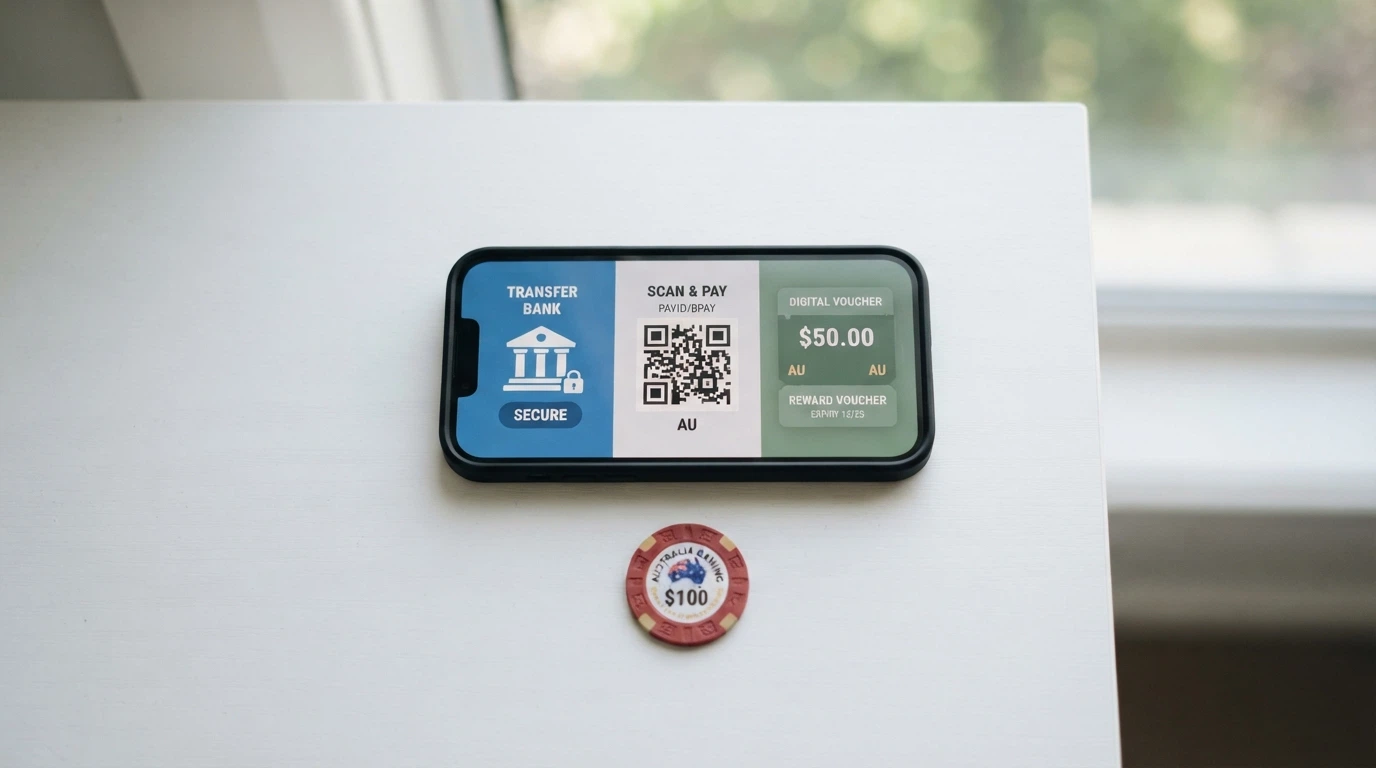
For licensed Australian wagering, the legal deposit routes are debit card, bank transfer, PayID/Osko and BPAY. Credit cards, credit-related products and crypto are banned as payment. The offshore casinos on this list accept what licensed operators cannot — credit card, crypto, larger bonuses, inducements. That is what “offshore” means on the rail chart.
PayID: Australia’s Favourite Hits a Wall at A$5
PayID is the payment method Australians search for first when they meet the offline rails on an offshore casino. It is also the one where the floor most reliably disappoints. The lowest confirmed PayID minimum across 12 platforms tested in Q2 2026 was A$5; PayID minimums typically run A$10 to A$20 across the offshore market, and several new sites launched in 2026 have raised their PayID floor to A$25 or A$30. Anti-fraud thresholds on the bank side, not on the casino side, are where the floor lives.
On the cost side, the news is better. Most platforms charge no PayID fee — by one 2026 audit, fees were zero at roughly 92% of the platforms tested, with about 8% applying a 1–2% surcharge. A A$20 PayID deposit is, in nine cases out of ten, a A$20 deposit all the way through. The constraint is the floor, not the fee.
Crypto: The Only Reliable Path to a True A$1 Deposit
Bitcoin, Litecoin and Tether clear a single dollar; PayID, Neosurf and the card networks do not. The mechanics explain the difference. A Bitcoin transaction in May 2026 averages around A$1.50 to A$3.00 in fees, which is enough to wipe out a one-dollar deposit; Litecoin runs under A$0.05, and Tether on the Tron network sits at about A$1.00 flat. The coins that clear a dollar are the coins whose network fees are small relative to the deposit itself.
The regulatory position is the reverse. Crypto is banned for licensed Australian wagering since 11 June 2024, under the Interactive Gambling Amendment (Credit and Other Measures) Act 2023. From 1 January 2027, banks and payment providers gain express authority to block transactions to illegal gambling operators, which means the offshore crypto route is narrowed at the bank before it is narrowed at the cashier. For now, the deposit works; the legal position on the consumer side does not change that.
Cards, E-Wallets and Neosurf: Where They Fit in the Low-Deposit Picture
Skrill clears at A$5 — by a 2026 test run, 16 of 18 sites tested accepted a A$5 Skrill deposit with no additional fee attached. E-wallets, broadly, are the lowest fiat entry points on the offshore market, beating both PayID and Neosurf on minimum. Neosurf holds the A$10 floor (the lowest voucher denomination) for a different reason: the voucher itself, printed at a set value, fixes the deposit size from the side of the payment instrument rather than from the side of the cashier.
Debit cards clear at the operator’s minimum, which ranges from A$10 to A$30 across the brands on this list. Credit cards clear the same way — except that a credit card deposit at any of these operators marks the operator as outside Australian rules, because credit cards have been banned for licensed Australian wagering since 11 June 2024. If a casino cashier asks an Australian player for a credit card, that single fact tells the player where the casino is licensed: not here.
What Your Dollar Actually Plays: Real Pokies at A$0.10 a Spin
A dollar plays pokies by spin count, and spin count is set by the minimum bet the title accepts. A$0.10 spins mean ten plays for a dollar; A$0.25 spins mean four. The RTP runs on every spin regardless of size — a 98% Blood Suckers spin returns 98 cents out of every dollar the player wagers through it, and a 96% Starburst spin returns 96 — but the absolute expected loss on a four-spin Blood Suckers session is roughly two cents, and on a ten-spin Starburst session it is closer to forty. The bigger the title’s RTP, the smaller the dollar the player loses across the session.

| Pokie | RTP | Provider | Volatility |
|---|---|---|---|
| Blood Suckers | 98.00% | NetEnt | Low |
| Starburst | 96.09% | NetEnt | Low–Medium |
| Big Bass Splash | 96.71% | Pragmatic Play | Medium |
| Sweet Bonanza | — | Pragmatic Play | — |
Blood Suckers returns 98 cents on the dollar across thousands of spins, and at A$0.25 per spin a dollar buys four of the lowest-cost plays on the offshore catalog. Starburst at A$0.10 per spin is the only title here that delivers ten spins for a single dollar. Big Bass Splash at A$0.10–A$0.20 sits in the middle of the volatility range and the middle of the spin count. Sweet Bonanza is the title the dollar plays at when a KatsuBet-style 30-free-spins promotion is active, at A$0.20 per spin against a 96.5%-ish return class. The exact RTP and volatility for Sweet Bonanza are not in research this run, which is why the row reads as a dash.
Why RTP Matters More When Your Deposit Is Tiny
A 98% pokie at A$1 — Blood Suckers at four A$0.25 spins — has an expected loss of about two cents across the session. A 94% pokie at A$1 has an expected loss of about six cents. The percentages look similar; the absolute gaps look tiny. The arithmetic inverts as the balance grows. At A$1,000 through a 98% title, expected loss is A$20; through a 94% title, it is A$60. A$40 of gap per thousand dollars staked is, in straight cash terms, the difference between a quiet session and a noticeable one.
The point is not the percentage in isolation. It is that on a dollar, the better-paying title lets a player see ten times as many spins before the balance runs out, which is the actual reason a low-RTP title on a tiny balance wastes the deposit in minutes while a high-RTP one lets the same player play out an evening. RTP is not a marketing number; it is a session length and a withdrawal probability, both compressed by the size of the stake.
Demo Mode: Playing for Free When a Dollar Isn’t Worth Depositing
Demo mode runs on most offshore casinos without sign-up — the same games, with the same random number generation and the same return-to-player figures, against a virtual balance that can be reloaded indefinitely. It is the cheap way to test a brand’s library, game speed and mobile performance before any money is at risk. For a player weighing whether a Curaçao-licensed brand is even worth a A$30 deposit, demo mode is the practical answer before any marketing-driven commitment.
The genuine answer to whether a real-money A$1 deposit is worth making over a demo session is mostly negative. Demo play returns the same entertainment — same animations, same bonus features, same hit frequency. Real-money play adds the chance of a withdrawal and the cost of a loss, which is the asymmetry the dollar exists to expose. A player who finds gameplay engaging in demo will likely find it engaging in real-money mode and may then find a winning balance is hard to clear at A$25–A$50 minimums, depending on the operator. The dollar is real for the entertainment it buys and modest for the prize it might turn into.
A$1 Deposit Casinos on Your Phone: Smaller Screen, Same Offshore Reality
The list of AU-facing operators is platform-independent. The minimum deposit a player sees in a mobile browser is the same minimum the cashier shows on desktop. The game library is the same. The bonus terms are the same. The licence status, the ACMA blocking risk and the absence of Australian consumer protection are the same. What the phone adds is a smaller screen, mobile-optimised HTML5 pokies, and the inclination to play in the small fragments of a day when a desktop is too far away.

For the low-deposit player, mobile means something practical: the ability to play out a dollar in ten spins during a commute or a wait. That is where A$0.10 Starburst and A$0.25 Blood Suckers do their work — short sessions, full screens, a balance that survives the time it was meant to fill.
Mobile Pokies at the Minimum Deposit
The four pokies named above all run on HTML5 and play identically on a phone: the spin button, the autoplay settings, the bonus features and the RTP figures are platform-identical. Spin speed on a phone is on par with desktop on a recent model; on older hardware it can stutter, particularly on bonus-heavy titles like Sweet Bonanza, but the outcome-per-spin does not change with screen size. The minimum bet, the RTP and the volatility are constants.
For a player with a single dollar and a phone, the play is simple: pick a high-RTP, low-stake pokie, set the autoplay to a tight bankroll stop, and let the session play out the way the engine means it to. The mobile experience does not change the math. The mobile experience makes the math easier to follow on a screen that fits in one hand.
New Low-Deposit Casinos in 2026: Fresh Branding, Same Offshore Structure
New 2026 brands entering the AU-facing market have not pushed the floor down — they have pushed it up. PayID minimums on the new entrants sit between A$25 and A$30, against A$10–A$20 for older sites. The path of the market, such as it is, runs in the opposite direction from the search-bar promise. A brand advertising an A$1 deposit in 2026 and routing to a A$30 cashier is, structurally, the same brand that routed to a A$20 cashier two years ago. The label is older than the rail.
The new-brand landscape is qualitatively distinctive: rebrands of established Curaçao operators, fresh domains and aggressive affiliate presence, and terms that mirror the established offshore tier without tightening onto Australian consumer norms. A player walking into a new brand is taking a track-record bet alongside the deposit-floor bet, and the floor they meet will not be lower than the floor at the established brand two clicks away.
What to Check Before Joining a New Offshore Casino
The verification checklist for any new brand, $1-deposit or otherwise, runs four checks. First, the licence number, ideally pulled directly from the named regulator’s public register rather than from the operator’s own footer. Second, the registered company — Curaçao sub-licences link back to a master licence holder and a per-brand sub-licence number, both of which should resolve. Third, the minimum withdrawal, which is usually A$25 to A$50 and is the single number most likely to trap a small balance. Fourth, the payment method and its minimum — the floor the bonus terms name is rarely the floor the cashier clears.
The Australian-specific check is also four pieces. BetStop does not cover offshore casinos, so the self-exclusion register is not a protection, but registering on BetStop does prevent the licensed side from accepting a deposit. The ACMA has had 1,564 illegal gambling and affiliate sites blocked since November 2019; a new brand is a candidate for that list while a player’s balance sits on it. Individual players are not prosecuted, but they also receive no Australian consumer protection, no Australian ombudsman and no Australian recourse when a withdrawal stalls. The dollars go off-shore with the brand.
The Legal Truth: Every A$1 Casino on This Page Is Offshore and Unlicensed
Online casino games, online pokies (slots) and in-play sports betting are prohibited in Australia under the Interactive Gambling Act 2001 (IGA), strengthened by the Interactive Gambling Amendment Act 2017. No online casino licence exists anywhere in the country — not federally, not in any state or territory. The ACMA, the federal regulator, is the body that enforces the prohibition: investigations, formal warnings, civil penalty proceedings, and ISP blocking of illegal sites.
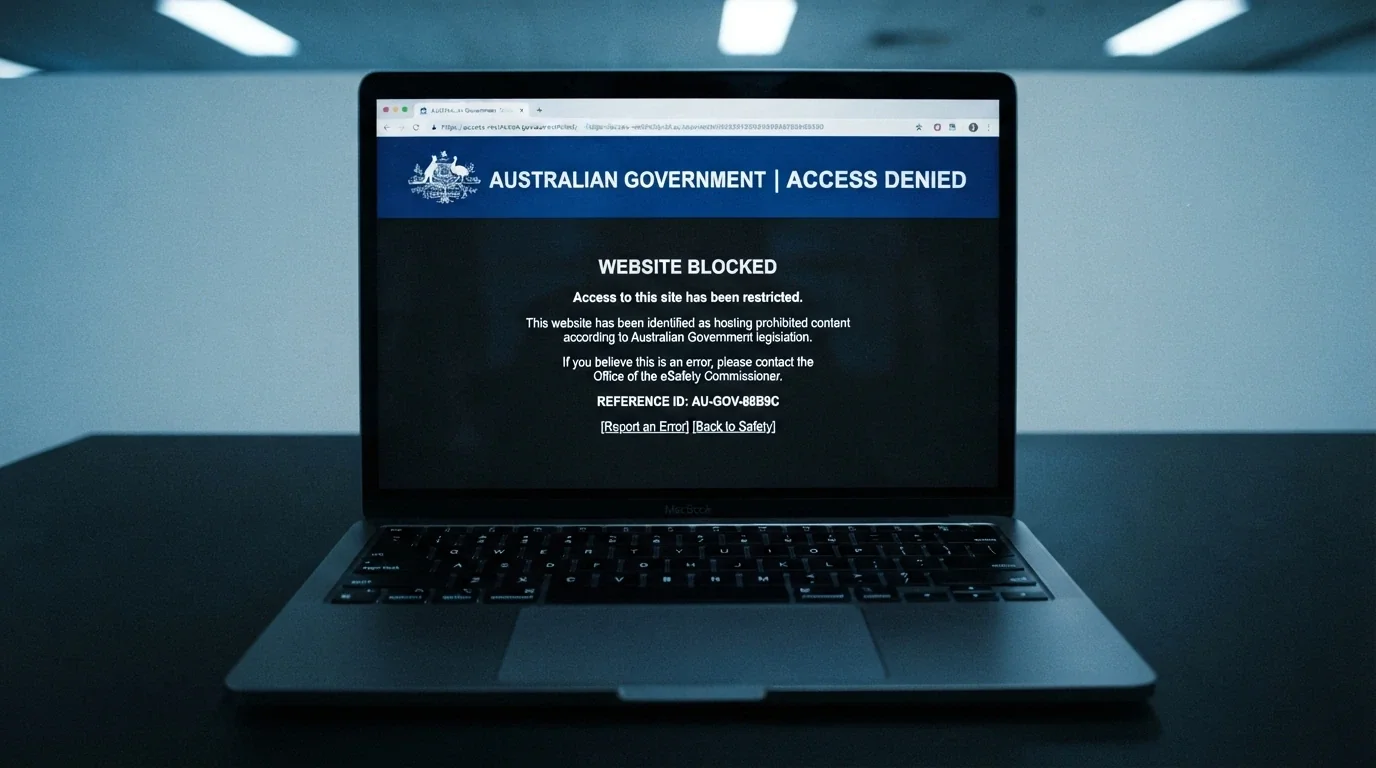
What is licensable in Australia is wagering on races and sport placed before the event begins, plus lotteries and keno, through operators licensed by a state or territory (the Northern Territory Racing and Wagering Commission is the de facto national licensor for online wagering). That is the legal market. Online casino is not on it. The Act targets the provider, not the player — but the provider is offshore, and “targeted by name from Australia” is not the same as “stopped from operating”.
What “Licensed” Means When the Licence Is Curaçao — Not Canberra
A Curaçao licence on Rocket Play, Skycrown, Royal Reels, Fair Go, Bizzo and the others is a sub-licence under a master authorisation issued by the Curaçao Gaming Control Board. The licence is real in the sense that it ties the operator to a Dutch-Caribbean regulator with its own compliance framework. It is not real in the sense Australians usually mean: there is no Australian ombudsman that takes a complaint from an Australian player against a Curaçao-licensed brand, no Australian complaints body, no Australian compensation regime for lost funds. The regulatory anchor is geographically real and jurisdictionally irrelevant to a player making a dispute from Sydney, Melbourne or Perth.
The “licensed” label on these brands is, in plain terms, a different word than the same label would mean on a Sportsbet or a Ladbrokes. Both operators accept Australian customers in different domains — one in racing and sports wagering under Australian conditions, one in casino products outside Australian conditions — but only one of them is auditable from an Australian seat.
ACMA Enforcement: 1,564 Sites Blocked and Counting
Since its first blocking request in November 2019, the ACMA has had 1,564 illegal gambling and affiliate websites blocked by Australian ISPs, as at March 2026. More than 225 illegal services have withdrawn from the Australian market since enforcement was strengthened in 2017. In 2025, the ACMA also warned influencers that promoting illegal online casinos and slot-style games to Australians can breach Australian law — a separate enforcement line aimed at the affiliate ecosystem that funnels Australians onto offshore brands.
The player-side risks of a blocking action are concrete. A blocking order lands on a domain; a player’s balance sits with the operator under that domain. Withdrawal queues stall; the cashier is sometimes still accessible via mirror domains or alternative URLs but most often not. The recourse is the licence holder in Curaçao, the payment processor, and whatever complaint process the operator’s terms page lists in twelve-point grey type. None of those is an Australian counterparty.
The 2026 Reform: What Changes on 1 January 2027
The Interactive Gambling Amendment (Gambling Reform) Bill 2026 passed Parliament on 19 August 2026. Its measures commence on 1 January 2027 and add four new constraints against the offshore market. Television wagering ads cap at three per hour between 6:00 am and 8:30 pm, with a live-sport blackout running fifteen minutes before to five minutes after live events. Athletes, celebrities and influencers are barred from promoting wagering products. Direct marketing of inducements is restricted for fourteen days after sign-up, three months after BetStop deregistration, and indefinitely for at-risk customers. And — most structurally — banks and payment providers gain express authority to block transactions to illegal gambling operators.
For an Australian player depositing with PayID or a bank transfer at an offshore casino, the practical change is bank-level transaction blocking: a deposit that Clears today may be declined or reversed on 1 January 2027. The casino account stays; the bank no longer lets the funds in. The reform does not dissolve the offshore market, but it does choke one of its main funding rails.
When the Deposit is Only a Dollar: Playing Safe with Micro Stakes
A low deposit does not mean low risk. The estimated 3.29 million Australians aged five and over are affected annually by their own or another person’s gambling; approximately 1.97 million Australian adults are classified as having at-risk or problem gambling. By March 2026, 15.1% of the Australian adult population — an estimated 3.32 million people — are experiencing some level of harm from their own or others’ gambling. The number of Australians in some form of harm outstrips the Australian population of every Australian capital city except Sydney.
The A$1 marketing label speaks to the same impulse the figures describe. A small deposit rate-limits a player’s ability to lose heavily in one session, but it does nothing to address the underlying behaviour that drives the deposit: a search query that names a dollar, typed into a phone at a moment when the player has been looking for something to play.
The Tools That Work — and the One That Doesn’t Reach Offshore Casinos
BetStop — the National Self-Exclusion Register — launched on 21 August 2023 and had 59,830 registrations by the end of Q3 FY 2025–2026, with 37,247 active exclusions as at 31 March 2026. One registration excludes a person from every Australian-licensed online and phone wagering provider in the country. The National Gambling Helpline — 1800 858 858 — is free, confidential, staffed 24/7 and routes callers into Gambling Help Online (gamblinghelponline.org.au) for chat and counselling.
The catching detail is the brand-specific scope. BetStop binds Australian-licensed wagering services only. An offshore casino is not licensed here, is not connected to the register, and will keep taking a self-excluded person’s money. The single most concrete harm of the offshore route is precisely this gap: a person registered on BetStop because they intend to stop gambling can still deposit, still play and still lose at any of the brands listed above. The register works for the licensed tier; it does not reach the offshore tier; and the offshore tier is where this page lives.
The Harm Behind the Low-Deposit Marketing
Gambling participation in Australia declined to 58.8% in 2025, but risky gambling increased from 13.7% in 2024 to 19.4% in 2025 — more than five percentage points, almost doubling since the COVID-19 lockdowns of 2020–2021. Roughly 430,000 Australian adults experience problem gambling; the high-risk gambling rate was at 1.8% in 2022 per the Australian Institute of Health and Welfare. The drift is in one direction, and the marketing of micro-deposit entry points has run in the same direction for at least as long.
The five largest wagering operators won A$5.4 billion from Australian customers in 2023–24, reported A$0.4 billion in taxable income and paid A$0.1 billion in company tax — approximately 2% of the amount won. The same five spent around A$600 million on advertising and promotion, six times what they paid in company tax. The Alliance for Gambling Reform’s 2026 statement — “we have long known the harm these companies cause in Australian communities. But now to hear that they give so little back through their tax minimisation schemes is appalling” — captures the asymmetry the dollar deposit sits inside.
The Australian Gambling Research Centre’s Dr Kei Sakata, in 2026: “Despite an estimated five million wagerers nationwide, including 400,000 high-risk gamblers, just 30,000 individuals currently have active exclusions through BetStop.” The 37,247-on-BetStop figure against the 400,000-high-risk figure is the gap a page like this one sits inside.
How We Picked and Ranked the Casinos on This Page
The set is drawn from the AU market-share data for the operators Australians actually reach. Licences were checked against the public registers of the regulators named in the operators’ footers, where a register exists and is accessible — and verified, where a review source named a licence number but it was not cross-checked against the regulator itself this run. The criteria ordering the table are: AU market share (the operators ranked by share, larger first); licence transparency (known and cross-checked, known but unverified, unknown); and bonus terms at the real deposit minimum (the listed welcome package as published, against the deposit floor research has named).
The methodology is qualitative. The ranking reflects what the inputs hold. No invented weightings, no invented criteria, no inferred figures. Where licence, providers, wagering or withdrawal was not verifiable this run, the cell carries nothing rather than a guessed figure.
Your Dollar, an Offshore Casino, and What to Actually Do
A genuine A$1 deposit exists. It is a crypto-only edge case in 2026, and getting to it means funding an account at an offshore, unlicensed operator with a coin whose network fees are small relative to a dollar. The realistic fiat floor for an Australian with a standard payment method has been A$5 to A$10 for the last few years, with newer sites lifting it rather than lowering it. The welcome offers on this page — the things the search bar is really after — start at A$20 to A$30.
The player-side checklist is short. Confirm the licence number against the named regulator. Confirm the minimum withdrawal in real money, not bonus money. Pick a payment method whose floor the operator actually clears, not one whose headline matches a search query. Read the wagering requirement as a multiplier of the deposited bonus, not as a marketing number. Above all, register on BetStop before depositing anywhere it does not reach, because BetStop is the only Australian tool that excludes a person from the operators it covers, and offshore casinos are not on that list.
The single most important fact about this page returns in every section. No Australian online casino licence exists. Every brand above is offshore and unlicensed under the IGA. A$1 is real; the Australian protection that would normally follow that dollar ends at the border. For anyone for whom that gap is not acceptable, the genuine alternative is a licensed land-based casino, a state or territory lottery, or a wagering product licensed by the Northern Territory Racing and Wagering Commission. The dollar that lands there carries Australian consumer law behind it; the dollar that lands here does not.
If gambling has stopped being entertainment and started becoming something else, the National Gambling Helpline on 1800 858 858 is free, 24/7 and confidential. Gambling Help Online (gamblinghelponline.org.au) carries chat and counselling for anyone who would rather type than talk.
Frequently Asked Questions
Can I really deposit just $1 at an Australian online casino?
Only at a handful of offshore operators and almost always on crypto rails. Across 32 AU-facing sites tested in 2026, only four accepted a true A$1 deposit, with two of those accepting crypto only — and crypto is banned for licensed Australian wagering since 11 June 2024, so the route itself is the offshore tell. For fiat, the practical floor is A$5 via PayID at a few sites, A$10 via Neosurf or debit card.
What is the minimum withdrawal amount at $1 deposit casinos?
Minimum withdrawals are typically A$25 to A$50 across the offshore tier, with Fair Go’s A$100 the high-water mark — and minimum deposits are A$5 to A$10 at the same operators. The gap between the deposit floor and the withdrawal floor is what traps small balances: a player wins A$5 at a low-deposit operator and may not be able to cash out.
Can I get a welcome bonus with a $1 deposit?
No, not a working welcome package on this list. Every bonus on the ranked operator table requires a A$20–A$30 minimum deposit to unlock — Skycrown’s 120% match, Royal Reels’ 100% plus A$10 no-deposit bonus, Bizzo’s 125% match, all of them gate the matched deposit behind a floor well above a dollar.
Is it safe to play at offshore $1 deposit casinos from Australia?
“Safe” here has three components the offshore market does not deliver. The product is unlicensed in Australia, so there is no Australian consumer protection. BetStop does not reach offshore sites, so self-exclusion does not follow a player across the border. And credit cards and crypto are banned for the licensed alternative since June 2024, so a casino accepting either is operating outside Australian rules.
What happens to my money if an offshore casino blocks Australian players?
The 1,564 sites already blocked under ACMA enforcement show the pattern: a blocking order lands on a domain, the operator’s cashier can become unreachable, and a player’s balance stays with the operator until the operator — not the player — releases it. The recourse runs through Curaçao dispute processes rather than Australian consumer law, and from 1 January 2027 the bank-level blocking power may also stop the deposit itself from leaving an Australian account.
Written by the editors at RTP Pokies Australia.