
Bitcoin Pokies in Australia — What the Marketing Glosses Over
 Available in AU
Every bitcoin pokies site that accepts Australian players is doing so against Australian law. The Interactive Gambling Act 2001 prohibits the provision of online casino games and online pokies to anyone in Australia, and since 11 June 2024 credit cards and cryptocurrency have been banned as a payment method for any licensed Australian wagering service. The casino the reader is looking at, in other words, is not licensed in Australia, is offering a product Australian law says cannot be offered to them, and is doing so under a Curaçao or other offshore licence that gives them none of the protections the Australian framework was built to provide.

What it offers instead is access, speed, and bonus volume no licensed Australian operator can lawfully match. The trade-off is real. What it costs the player is the subject of this page.
As of 18 October 2026, operator terms verified against the Curaçao Gaming Control Board register, ACMA enforcement records, and the operators’ own published bonus pages.
Table of Contents
- Why Australian Players Are Turning to Bitcoin Pokies in 2026
- The Most Popular Bitcoin Pokies Titles in 2026
- The Best Bitcoin Pokies Sites for Australian Players in 2026
- Paying and Cashing Out with Crypto at Bitcoin Pokies Sites
- Why Every Bitcoin Pokies Site Serving Australia Is Offshore
- Playing Bitcoin Pokies Without Losing Control
- How We Chose and Ranked These Bitcoin Pokies Sites
- Your Next Move: Deciding Whether to Play Bitcoin Pokies From Australia
- Frequently Asked Questions
Why Australian Players Are Turning to Bitcoin Pokies in 2026
Australian-licensed wagering is restricted to racing, sport, lotteries and keno. Online pokies sit outside that envelope, which is why the licensed market here does not offer them. The same restriction creates the demand the offshore market exists to satisfy.
The gap itself feeds demand: no AU-licensed pokie product means a player who wants to spin slots online has nowhere domestic to go. The speed advantage crypto offers over bank rails at offshore sites — payouts measured in minutes rather than days — pulls in another wave. And the volume of marketing these sites direct at Australians, with bonus offers, crypto cashback and VIP perks no licensed operator could lawfully advertise, rounds out the picture. The result is a market that is illegal at the supply end and conspicuously attractive at the demand end.
This page works through the offshore operators Australian players actually use, the bonus maths behind their welcome offers, the legal picture ACMA enforces, the practical limits of crypto anonymity, and the responsible-gambling tools that work and the ones that do not. It is honest about the trade-off and refuses to dress an unlicensed product up as something it is not.
What Bitcoin Pokies Actually Are
A bitcoin pokie is a standard online slot — reels, paylines, RNG-driven outcomes, bonus features — played at an online casino that accepts cryptocurrency as a deposit and withdrawal method. The reels are the same. The maths behind them is the same. The currency the player funds the account with is what changes.
The term exists because Australian players search for it as a category. The underlying product is an offshore online casino’s slot library; the search term “bitcoin pokies” simply filters that library down to the operators willing to take BTC, ETH, USDT or other digital assets. There is no separate bitcoin-pokie genre in the way there is a separate live-dealer or crash-game genre. The slot portfolio is whatever the operator has licensed from Pragmatic Play, NetEnt, BGaming, Play’n GO and the rest.
That is also the limit of what “bitcoin pokies” delivers. The currency is a payment rail, not a game feature. The player who buys BTC, transfers it to an offshore casino, and plays Sweet Bonanza is playing the same Sweet Bonanza a fiat-funded player at the same operator is playing, with the same RTP, the same volatility and the same outcome distribution. The currency is the wrapper, not the contents.
How Crypto Slots Differ From Regular Online Pokies
Three differences matter, and only three. None of them is the marketing one.
Provably fair verification is the difference most often advertised. Crypto-native operators sometimes publish cryptographic hashes that let a player verify the outcome of a spin against an encrypted seed after the fact. A traditional online pokie relies on an RNG certified by an external testing lab — eCOGRA, GLI, iTech Labs — and disclosed through the operator’s licence terms. Both systems can be legitimate; the difference is in the audit trail, not in the fairness itself. The crypto model is verifiable after the spin. The licensed model is verifiable before it, by the regulator.
Settlement speed is the practical advantage that matters to the player. A fiat withdrawal from an offshore casino can take several days; a bank transfer back to an Australian account adds more on top. Crypto settled at the casino wallet arrives in minutes. The Australian on-ramp and the off-ramp are the parts that take time. USDT on the TRC-20 network confirms in under a minute with sub-50-cent fees. For an Australian player who wants their winnings settled today rather than next week, that is the point of the rail.
No chargeback is the cost of the same rail. A crypto transaction, once confirmed on-chain, is irreversible. There is no Visa dispute, no bank recall, no “I didn’t authorise that” path. If the operator refuses a withdrawal, voids a win or simply disappears, the player has no route back through the payment system. That is the genuine trade crypto imposes, and it sits alongside the genuine benefit.
What is not different is the RTP. The return-to-player on a slot is set by the provider and the maths of the game. It does not move when the deposit currency changes. The popular bitcoin pokies played in 2026 carry the same RTPs as the same titles at fiat-only offshore sites — a point the slot table later in this page makes plain.
Getting Started: Your First Bitcoin Pokies Deposit
The route from an Australian bank account to spinning offshore reels runs in four steps. None of them is technically complex, and all of them create a paper trail the Australian tax and financial-intelligence systems can read.
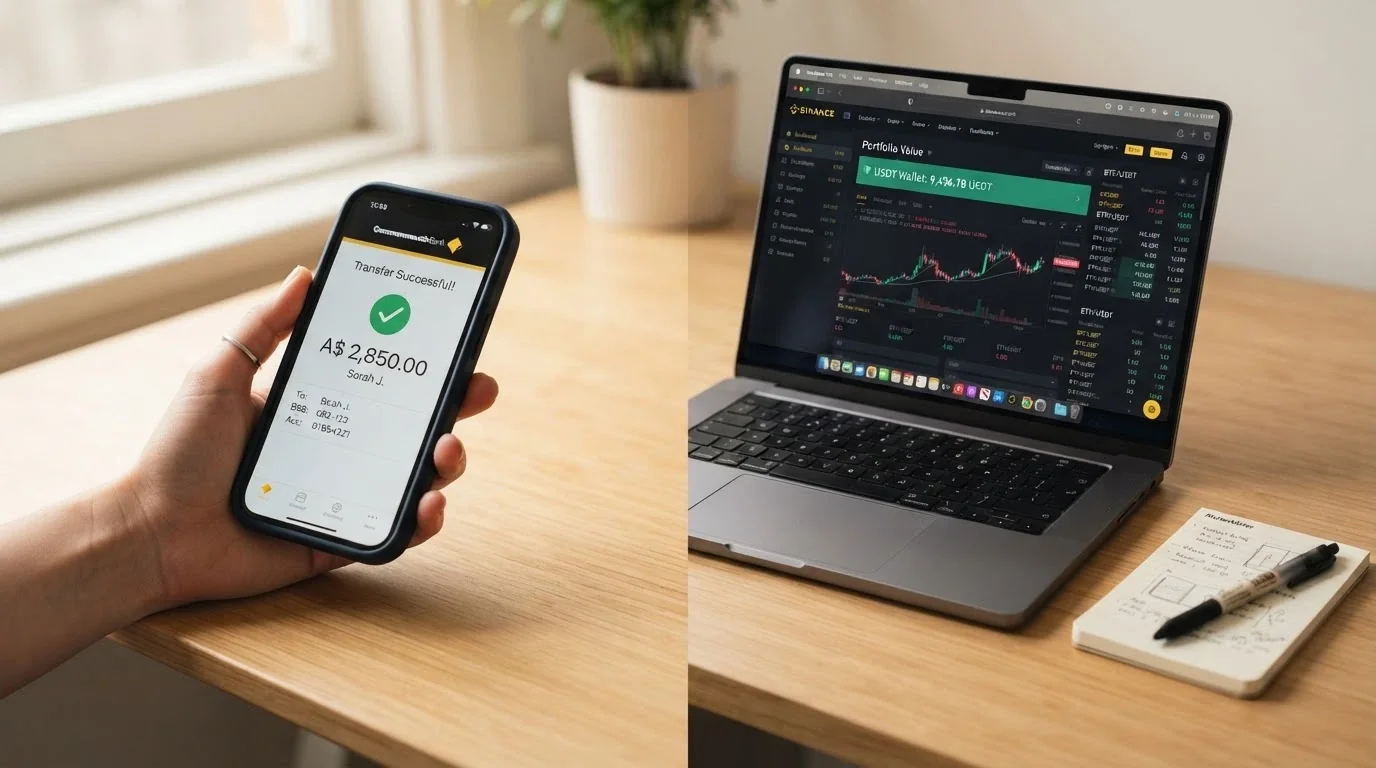
The first step is buying crypto at a registered Australian exchange. CoinSpot and Independent Reserve are the AUSTRAC-registered platforms most Australian players use. KYC is mandatory; the exchange has the player’s name, address and bank account on file from the first deposit. Funding is by POLi, PayID, OSKO or direct bank transfer, depending on the bank.
The second step is transferring to a private wallet, then to the casino. Most exchanges do not allow direct transfer to a gambling operator. The cleanest route is exchange → personal wallet → casino wallet. USDT on TRC-20 is the default for Australian players who want stable value and fast settlement — sub-50-cent fees, under-60-second confirmations, no price volatility between deposit and play.
The third step is picking a pokie and setting a stake. The casino’s slot library is browsable by provider, theme, volatility or feature. A typical first session uses a low-volatility title at a modest stake — Starburst at A$1 a spin, say — to test the deposit and withdrawal round-trip before committing real bankroll.
The fourth step is knowing the reporting threshold. AUSTRAC’s Travel Rule triggers reporting requirements at AU$10,000 for crypto transactions. A player moving under that threshold sits inside an ordinary commercial footprint; a player crossing it sits inside the regulatory footprint. The threshold is not a ban, but it is a line.
The whole round trip — AUD out of an Australian bank, AUD back into it after a winning session — takes a few hours at best and a couple of days at worst. The casino-to-wallet leg is fast. The bank end of the trip is the bottleneck, and the bank end is where Commonwealth Bank and Westpac have been known to silently restrict outbound transfers to crypto exchanges. ANZ and NAB flag without blocking. ING and Macquarie are the most permissive. The choice of bank is part of the player setup, not just the choice of casino.
The Most Popular Bitcoin Pokies Titles in 2026
The titles below dominate Australian search interest for bitcoin pokies and the offshore slot libraries that take crypto deposits. The RTPs and max wins are provider-published, not casino-modified, and they are the same figures a fiat-funded player at the same operator sees.
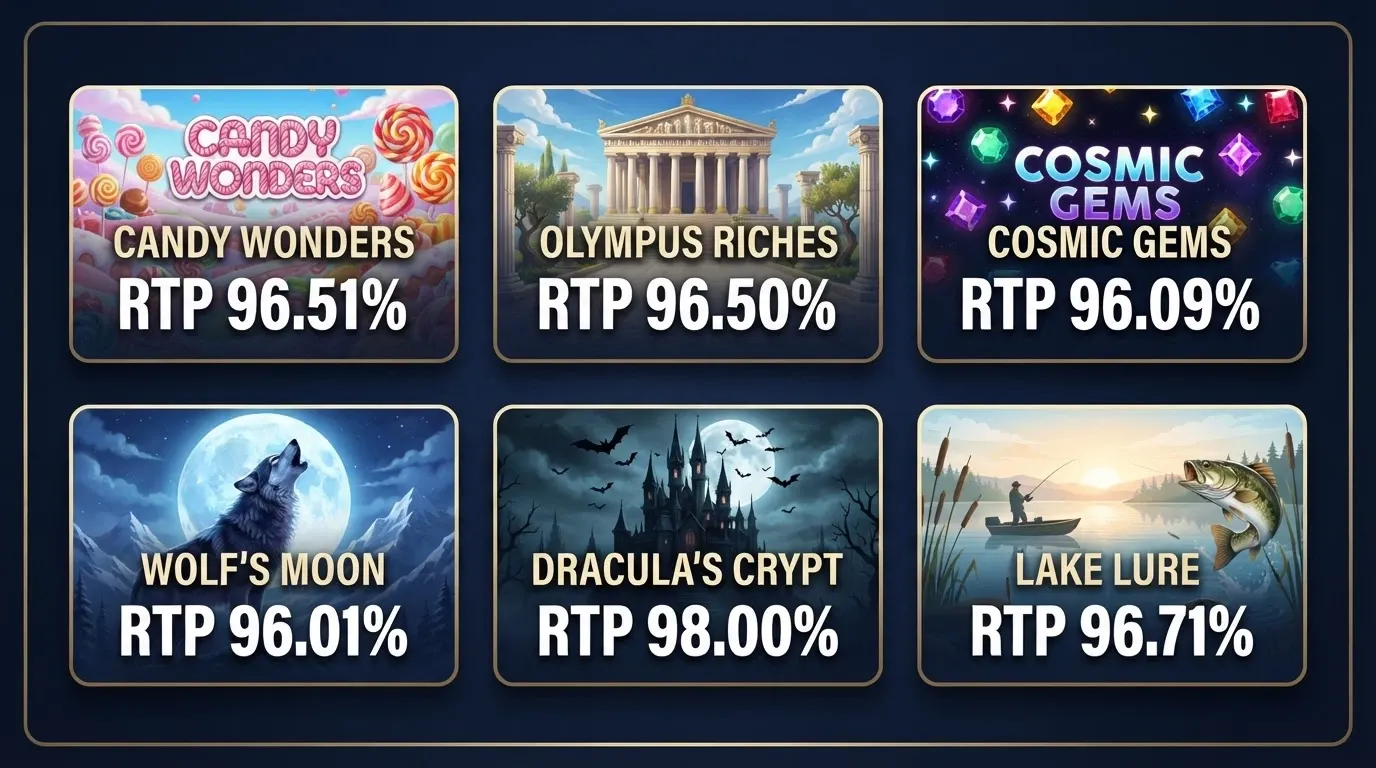
| Slot Title | Provider | RTP | Volatility | Max Win |
|---|---|---|---|---|
| Mega Joker | NetEnt | 99.00% | — | — |
| Blood Suckers | NetEnt | 98.00% | Low | 900x |
| Starburst | NetEnt | 96.09% | Low-medium | 500x |
| Sweet Bonanza | Pragmatic Play | 96.51% | High | 21,100x |
| Gates of Olympus | Pragmatic Play | 96.50% | High | 5,000x |
| Book of Dead | Play’n GO | 96.21% | High | — |
| Wolf Gold | Pragmatic Play | 96.01% | Medium | 2,500x |
| Dead or Alive 2 | NetEnt | 96.82% | Extreme | 111,111x |
| Big Bass Bonanza | Pragmatic Play | 96.71% | High | — |
| Sugar Rush | Pragmatic Play | 96.50% | High | — |
| The Dog House | Pragmatic Play | 96.51% | High | — |
Two patterns sit inside the table. Volatility, not RTP, is what separates the budget-friendly pokies from the jackpot-style ones: Blood Suckers and Starburst give back nearly 100% of every dollar cycled through them, slowly, while Sweet Bonanza and Dead or Alive 2 give back a smaller share over more spins, with most of it concentrated in bonus rounds that hit rarely. The spread of max wins tells the same story from the other side: the high-volatility titles offer payouts an order of magnitude larger than the low-volatility ones, which is why the marketing leans on them. A 21,100x or 111,111x headline says nothing about how often those wins actually land. The RTP is the figure that says what the slot is worth in steady-state; the max win is a ceiling that matters to the player who hits it and to nobody else.
The Best Bitcoin Pokies Sites for Australian Players in 2026
The ten offshore operators below accept Australian players, take crypto deposits and dominate the search-result set for “bitcoin pokies australia”. Every one of them is unlicensed in Australia, holds a Curaçao licence (Bizzo adds Kahnawake), and operates under the prohibition the Interactive Gambling Act 2001 sets. The table compares what they publicly offer; the write-ups below assess what those offers are worth in practice.
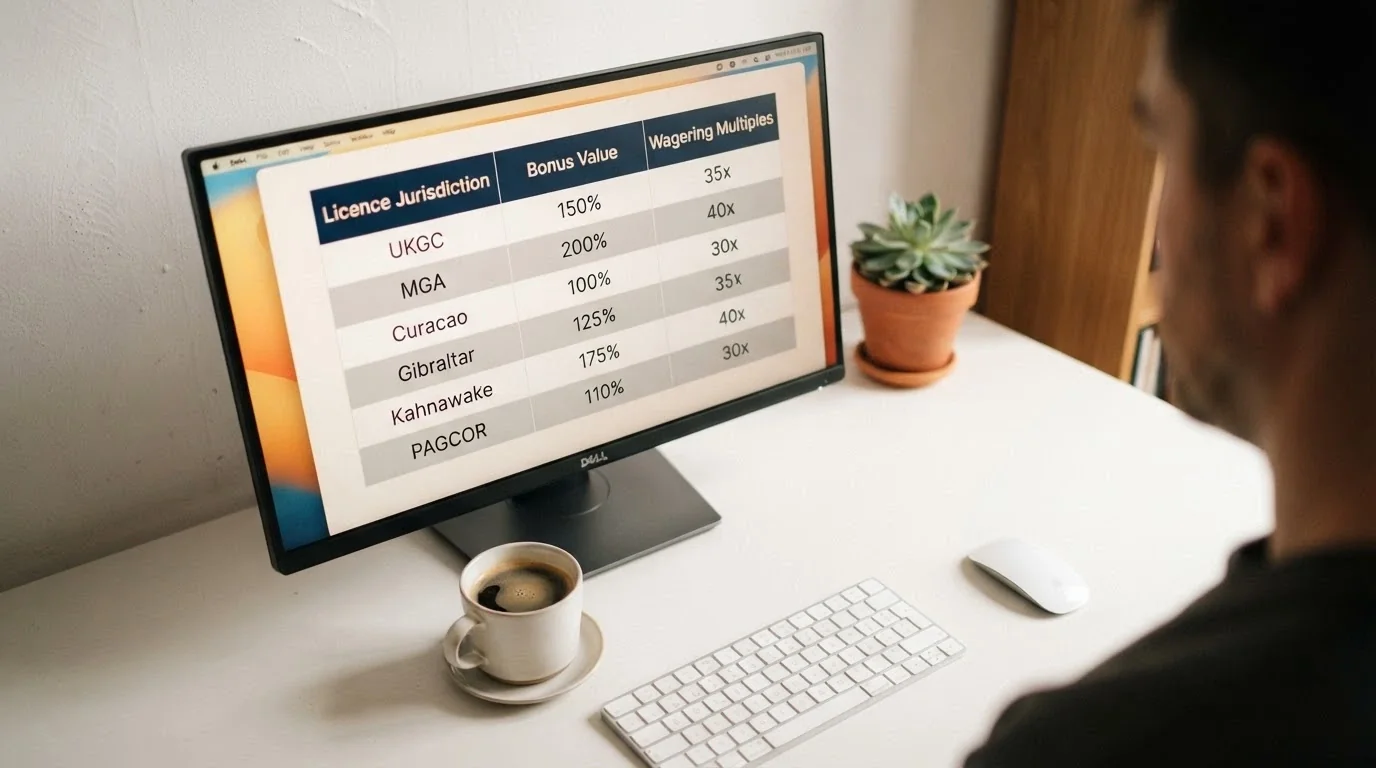
| Operator | AU Licence Status | Offshore Licence | Welcome Bonus | Wagering | Free Spins |
|---|---|---|---|---|---|
| RocketPlay | None | Curaçao (OGL/2024/1307/0748) | 100% up to A$300 + 100 FS | 40x | 100 |
| WinSpirit | None | Curaçao | 100% up to A$300 + 100 FS, then 200% up to A$1,000 | 40x | 100 |
| SkyCrown | None | Curaçao (Hollycorn N.V.) | Up to A$4,000 + 350 FS across 5 deposits | 40x | 350 |
| Stake | None | Curaçao + Mexico (2026) | No welcome bonus — VIP rakeback, races, raffles | n/a | n/a |
| Bizzo Casino | None | Curaçao + Kahnawake | Up to A$7,750 + 175 FS across 4 deposits | 40x | 175 |
| Royal Reels | None | Curaçao | A$10 no-deposit + 100% up to A$500 | 35x | 50 |
| FairGO | None | Curaçao | — | — | — |
| Rainbet | None | Curaçao | — | — | — |
| Scream Casino | None | Curaçao | — | — | — |
| Rocket Casino | None | Curaçao | — | — | — |
The split in the table is real. Six operators carry a fully-documented welcome offer the player can read before depositing; four carry thin public data — Curaçao licence, crypto support, no independently confirmed bonus terms in this round. The four should be approached with a more cautious read of the terms page before any deposit. The rest of the comparison below treats the documented six in depth and the thin four as listings the player should verify directly.
RocketPlay
RocketPlay runs under Curaçao OGL/2024/1307/0748, operated by Scores55 Tech B.V. — a mid-tier Curaçao licence, recent (2024) and unremarkable for the jurisdiction. The first deposit bonus is a clean 100% match up to A$300 plus 100 free spins, with a A$30 minimum deposit, 40x wagering and a A$7.50 maximum bet during playthrough. The second deposit adds a 200% match. The Pragmatic Play, BGaming, NetEnt and Play’n GO library is wide and deep — most of the popular titles in the table above are present.
Withdrawal limits are €5,000 per week and €15,000 per month on fiat rails, with a separate A$30,000 monthly cap on the site as a whole. Crypto deposits start at 0.0001 BTC or 5 USDT, which is a low floor for casual play. The licence is recent but unverified by any Australian regulator; the terms are standard for the segment; the game library is the strongest argument for choosing this operator over the rest.
RocketPlay suits a player who wants a straightforward first-deposit match and a familiar Pragmatic-heavy library, and who accepts that the A$7.50 max bet during playthrough will slow a high-roller bonus clear.
WinSpirit
WinSpirit’s first-deposit offer mirrors RocketPlay’s on the headline — 100% up to A$300 plus 100 free spins, A$30 minimum, 40x wagering — but the second deposit goes further: 200% up to A$1,000, A$60 minimum, 40x. The relevant constraints are the A$5 max bet during playthrough, the A$300 free-spin cashout cap and the A$3,000 deposit-bonus win cap. Bonus cash expires 7 days after reception and the first deposit bonus must be activated within 31 days of registration.
The 7-day wagering window is the clause that does the work. A 40x playthrough on a A$300 bonus requires A$12,000 of wagering in seven days — over A$1,700 a day, at the A$5 max bet, that is 343 spins a day of constant play. A player who signs up on a Sunday and lets life intervene loses the bonus by the following Sunday. WinSpirit’s package rewards urgency and punishes delay.
The 7-day window is the clause that does the work: WinSpirit is the right fit only for a player who can clear A$1,700 of daily wagering without interruption. For anyone else, the same headline number at a longer-window competitor is the better deal.
SkyCrown
SkyCrown, run by Hollycorn N.V. in Curaçao, launched in 2022 and carries the largest headline in the segment after Bizzo: up to A$4,000 plus 350 free spins across five deposits, plus 10% crypto cashback and 1% rakeback. The 7,000-game library is wider than RocketPlay’s. Wagering sits at 40x, standard for the segment.
The cashback and rakeback layer is the differentiator. A 10% crypto cashback softens a bad week; 1% rakeback paid in real money with no wagering is a small steady return on volume. SkyCrown’s “no wagering” weekly cashback up to 10% is the only cashback in this comparison that does not ask the player to replay the returned amount.
SkyCrown’s headline is bigger than RocketPlay’s and WinSpirit’s, but the player who only ever makes one deposit pays for an offer they will not claim.
Stake
Stake is the structural outlier. There is no welcome bonus. There is no deposit match. Rewards come through the VIP Club’s 3.5% rakeback, A$100,000 daily races and A$75,000 weekly raffles — all paid in crypto, none gated by wagering. The operator is Medium Rare N.V., Curaçao-licensed since 2017, with a Mexican gaming authorisation added in 2026. The site is crypto-only — no fiat support at all.
For a player who would not clear a bonus anyway, Stake’s model is the more honest one. Rakeback at 3.5% with no wagering pays back a steady slice of turnover regardless of whether the player wins or loses. The races and raffles pay the active player without asking them to lock up a deposit. The absence of a headline welcome number is the tell that this operator does not buy players with bonus money.
The difference is structural: Stake does not buy players with bonus money, it pays them back in rakeback. For a player who would never clear a bonus anyway, that is the more honest arrangement. The catch is that Stake has no Australian consumer-protection fallback — Curaçao dispute resolution is the only path if a withdrawal is refused.
Bizzo Casino
Bizzo carries the largest headline in the comparison: up to A$7,750 plus 175 free spins across four deposits. The dual licence — Curaçao 8048/JAZ2017-067 and Kahnawake — is rarer than the standard Curaçao-only entry and gives the operator two regulator relationships to answer to. TechSolutions Group N.V. runs the site. The first deposit is tiered (50% to 125% depending on the amount), wagering sits at 40x and the max bet during playthrough is A$6.50.
The library is 3,000+ games from 70+ providers; AUD plus 22+ cryptocurrencies (BTC, ETH, LTC, DOGE, USDT, XRP, BCH, BNB) are accepted. The breadth of payment rails — including PayID for AUD — is unusual for a Curaçao-licensed operator and makes Bizzo a more flexible option for a player who wants to mix crypto and fiat deposits.
The headline is real but spread across four deposits; a one-deposit player sees a slice of it. The dual licence and PayID support are the longer-term reasons to choose Bizzo. The headline number is the largest in this set; the per-deposit value depends on how many of the four the player actually claims.
Royal Reels
Royal Reels is the only operator in this comparison with a no-deposit bonus: A$10 credited after phone verification. The first deposit bonus is 100% up to A$500 with 35x wagering — lower than the 40x standard. Digibrite SRL runs the site under a Curaçao licence; the library runs to 5,500+ games from 40+ providers.
Royal Reels is also where the payment-rail testing data lands. Crypto withdrawals (BTC, ETH, USDT, USDC) settle in under an hour. PayID deposits clear in under 90 seconds. A PayID withdrawal post-KYC tested at 4 hours 12 minutes on a weekday — not instant, but faster than the multi-day cycle the offshore fiat rails typically deliver.
Royal Reels is the only operator in this set offering a no-deposit test, the lowest wagering multiple, and tested PayID withdrawals under five hours. For a player who values those three points, the choice is straightforward.
FairGO
FairGO is an offshore Curaçao-licensed casino that targets Australian players and sits at around 0.8% market share in segment tracking. Independent confirmation of current bonus terms, wagering multipliers and withdrawal limits was not available in the round this page was researched; the operator’s public listing is the only source for any current spec.
That gap is the point. A player considering FairGO should treat the operator as licensed-but-undocumented at the AU-segment level: the Curaçao licence is real, but the bonus page, terms page and withdrawal policy need to be read directly before any deposit, because no secondary source has carried the relevant figures here. The 0.8% market share figure is the only quantitative fact on file, and it comes from operator-tracking data rather than a published financial statement.
Rainbet
Rainbet is a Curaçao-licensed crypto-native casino accepting BTC, ETH, LTC and a range of altcoins. Public bonus terms were not independently confirmed this round. The site sits inside the crypto-only segment alongside Stake — no fiat support, no PayID rail, no AUD balance — and its appeal to an Australian player is the breadth of supported altcoins rather than a headline welcome figure.
Rainbet is for the crypto-native player who wants altcoin support rather than a headline welcome figure. A player evaluating Rainbet should treat the licence as real but the bonus page as unverified. The crypto rail coverage is the documented point; everything else on the marketing page needs reading at source.
Scream Casino
Scream Casino holds a Curaçao licence and accepts Australian players. No independently confirmed current bonus terms, wagering multiples or withdrawal limits were available this round. The site is in the comparison on licence status and Australian-market presence rather than on documented commercial terms.
Scream is for a player who has read the current terms page and accepts that those terms are not on file anywhere else in this comparison. A deposit at Scream should be preceded by a direct read of the bonus page and terms page, because the figures other operators in this set publish are not on file here.
Rocket Casino
Rocket Casino is a Curaçao-licensed offshore operator with a documented licence status but no independently confirmed current bonus terms in this research round. As with Scream Casino and Rainbet, the operator is listed because it appears in the segment’s Australian-facing search results; the bonus, wagering and withdrawal figures need to be verified against the operator’s own current page before any deposit.
Rocket Casino sits in the same position as Scream: licensed, listed, and requiring direct verification of any current bonus or withdrawal terms before a deposit.
What Your Welcome Bonus Actually Costs: The Expected-Loss Calculation
The “100% match” looks like free money until the maths are run. Take the representative welcome offer across this set: a A$300 bonus with a 40x wagering multiplier, played on Starburst (NetEnt, RTP 96.09%). The turnover the player must cycle through is A$300 × 40 = A$12,000. The expected loss on that turnover, at Starburst’s published 96.09% RTP, is A$12,000 × (1 − 0.9609) = A$12,000 × 0.0391 = A$469.20.
That is the real cost of a A$300 bonus played to completion at a representative slot. The player who clears the wagering requirement with the bonus money intact walks away with A$300 in cashable balance, having lost an expected A$469 in the process. The bonus is not free money; it is a product the player buys at a 156% premium to its face value, with the small consolation that the bonus itself survives the playthrough.
Two corollaries follow. The first is that the 35x wagering at Royal Reels is meaningfully cheaper than the 40x standard elsewhere: A$300 × 35 = A$10,500 turnover, expected loss A$10,500 × 0.0391 = A$410.55 — about A$58 less than the 40x version on the same bonus size. The second is that bonus size scales the cost linearly: a A$1,000 bonus at 40x wagering implies A$40,000 of turnover and an expected loss of A$1,564 at the same RTP. The headline “A$7,750 welcome package” at Bizzo is a A$7,750 face value purchased at an expected cost north of A$12,000 if cleared at a representative 96%-RTP slot. The result is a statistical estimate of cost over many spins under the stated assumptions; it is not a forecast for any individual session, but it is the right ballpark for what the offer actually costs a player who plays it as written.
What Separates the Best Bitcoin Pokies Sites From the Rest
Four traits separate the documented six from the thin four. Licence transparency is the first. Bizzo’s dual Curaçao + Kahnawake position, Stake’s Mexican authorisation layered on top of its original Curaçao licence, and RocketPlay’s clearly-stated licence number are the operators that publish licence details on the footer of every page. The thin four publish the jurisdiction but not the specific licence number in any source on file.
Wagering terms are the second. The 35x at Royal Reels is the lowest in the set. WinSpirit’s 7-day bonus validity is the tightest window. Bizzo’s A$6.50 max bet during playthrough is the most restrictive ceiling. Each operator uses the same multiplier-and-window structure to extract slightly different value from the player who claims the bonus.
The presence or absence of a no-deposit offer is the third. Royal Reels is alone with one — A$10 after phone verification. For a player who wants to test a casino before committing, that is the only such offer in this comparison.
Withdrawal speed where it has been tested is the fourth. Royal Reels’ PayID withdrawal at 4 hours 12 minutes and crypto withdrawals under an hour are the figures that have been publicly tested. Comparable tested data for the other operators is not on file, which is itself information — the casino that does not publish a tested withdrawal time is the casino whose withdrawal time the player cannot verify in advance.
The split between the documented six and the thin four is the more consequential one. A player choosing among RocketPlay, WinSpirit, SkyCrown, Stake, Bizzo and Royal Reels has full public terms to compare. A player choosing among FairGO, Rainbet, Scream Casino and Rocket Casino has only licence status and market presence — the rest is to be read at source.
Paying and Cashing Out with Crypto at Bitcoin Pokies Sites
The payment rail is the reason this category exists and the source of its specific risks. Two features define it for an Australian player.
The rail is offshore by definition. Since 11 June 2024, cryptocurrency has been banned as a payment method for licensed Australian wagering services. A licensed bookmaker or TAB operator cannot lawfully accept BTC, ETH or USDT from an Australian customer. Any gambling site that does is, by that fact alone, operating outside Australian rules. The deposit method is the tell — and the ACMA knows it.
The rail is irreversible. A crypto transfer, once confirmed on-chain, cannot be recalled by the sender, the sender’s bank or any intermediary. There is no Visa chargeback on a USDT TRC-20 transfer. There is no bank dispute on a BTC settlement. The player who sends funds to an offshore casino and is later refused a withdrawal has no payment-system path back. The same irreversibility that makes crypto fast makes it unforgiving.
The bank attitudes toward outbound crypto transfers vary. Commonwealth Bank and Westpac silently restrict transfers to known crypto-exchange recipients; ANZ and NAB flag transactions without blocking them; ING and Macquarie are the most permissive. A player whose bank is CBA or Westpac faces an extra friction layer at the AUD-to-crypto on-ramp before the casino even sees a deposit. The friction is operational, not regulatory — it is the bank’s risk policy, not Australian law.
How to Deposit Bitcoin and Crypto at an Online Pokies Site
The four-step route from an Australian bank account to offshore reels is straightforward in sequence and unforgiving in detail.
The first step is buying the crypto. AUSTRAC-registered exchanges CoinSpot and Independent Reserve are the standard Australian on-ramp. The exchange takes the AUD, sells BTC, ETH, USDT or another supported asset and credits the player’s exchange wallet. KYC is completed at the exchange, not at the casino — the player’s name, address and bank account are on file at CoinSpot or Independent Reserve from this point onward, regardless of how anonymous the casino later claims to be.
The second step is moving the crypto to a private wallet. Most exchanges do not transfer directly to a gambling operator. The intermediate wallet is the player’s own, and the transfer from exchange to wallet is on-chain.
The third step is moving it from the wallet to the casino. The casino generates a deposit address for the chosen asset. The player sends the funds, the network confirms, and the casino’s balance updates. Confirmation is sub-one-minute for USDT TRC-20, several minutes for BTC.
The fourth step is the spin. The casino balance is now in USDT (or BTC, or whatever was deposited) and is converted to the operator’s internal credit at the prevailing exchange rate. The player chooses a pokie, sets a stake, and plays.
AUSTRAC’s Travel Rule triggers reporting at AU$10,000. A player whose deposits stay below that threshold sits inside the ordinary commercial footprint; a player crossing it sits inside the regulatory one. The threshold is not a prohibition — it is a reporting line the exchange handles automatically.
The Fastest Withdrawal Routes for Australian Players
The withdrawal path is the same in reverse, and the speed of the return leg is the genuine advantage the crypto rail offers.
The fastest documented route in this comparison is Royal Reels’ crypto withdrawals, which settle in under an hour. The PayID rail at the same operator tested at 4 hours 12 minutes for a withdrawal post-KYC, with deposits clearing in under 90 seconds. Comparable tested figures for the other operators are not on file, but the practical upper bound for any crypto withdrawal at any of them is the casino’s own internal processing window — typically minutes to a few hours — plus the on-chain confirmation time, which is under a minute for USDT TRC-20 and longer for BTC.
For an Australian player who wants their winnings settled today, USDT on TRC-20 is the clearest answer. The fees are sub-50-cent per transfer. The confirmations are under a minute. And the value is stable between withdrawal and cash-out — a player who withdraws A$300 in USDT does not discover the next morning that BTC’s overnight move has turned the same USDT into A$240. BTC and ETH can and do move while the transfer is in flight; USDT on TRC-20 does not.
The bank end of the return trip is where speed gives way to routine. The exchange converts USDT to AUD, the bank credits the player’s account, and the funds clear in line with the bank’s standard processing window. The casino-to-wallet leg is fast. The wallet-to-AUD leg is routine. The combined round-trip is a few hours at best, a couple of days at worst.
What Crypto Anonymity Actually Means at a Pokies Site
“No KYC” casinos are real but partial. The casino does not always ask for ID at signup. Some operators let the player deposit, play and withdraw small amounts without verifying identity. The gap is at the AUD end of the trip, not the casino end.
The exchange on-ramp is where Australian identity attaches. CoinSpot and Independent Reserve are AUSTRAC-registered; both complete KYC at account creation. The player’s name, address and bank account are on file at the exchange before any crypto leaves it. When the same crypto arrives at an offshore casino, the casino holds a wallet address. The casino does not, on its own, know whose wallet it is. But the exchange does, and AUSTRAC can ask.
AUSTRAC’s Travel Rule triggers reporting at AU$10,000 per transaction. Below the threshold, the player is invisible to AUSTRAC’s reporting machinery. Above it, the exchange files a report that names the sender and recipient. The threshold is high enough that most recreational play sits beneath it — but a winning streak or a high-roller session crosses it quickly.
The practical limit of crypto anonymity at an offshore casino is therefore this: the casino does not know who the player is, but the player’s exchange does, the player’s bank does, and AUSTRAC can connect those records if the threshold is crossed. The no-KYC claim is about the casino, not about the wider financial system. For a player who wants genuine anonymity, the only path is peer-to-peer crypto acquisition outside the registered exchange system — a path that carries its own legal and tax exposure.
Why Every Bitcoin Pokies Site Serving Australia Is Offshore
The Interactive Gambling Act 2001 is the structural fact of this entire market. There is no grey area. There is no loophole. There is no licensed Australian online casino, and there is no path to becoming one.

The IGA prohibits the provision of online casino games and online pokies to people in Australia. Providing such a service is the offence. The player is not prosecuted; the operator is. That is the architecture of the Australian framework, and it has held since 2001.
The 2017 amendments gave the regulator its teeth. The Interactive Gambling Amendment Act 2017 authorised ACMA to request ISP-level blocking of prohibited services, formalised civil penalty proceedings and produced the enforcement record that has since grown to 1,788 blocked sites. The amendments did not legalise online pokies. They made enforcing the prohibition easier.
In 2024 the prohibition was extended to the payment method itself. From 11 June 2024, credit cards and digital currency are banned as payment for online wagering in Australia. The ban applies to any licensed Australian wagering service. The civil penalty for a violation is up to AU$234,750 per offence. The amendment did not change the offshore status of online pokies; it added a second lock to the same door, ensuring that an Australian-licensed operator cannot route around the IGA by offering a crypto deposit rail.
The Interactive Gambling Act: What It Actually Prohibits
The IGA’s prohibition is on provision, not play. An Australian-licensed operator cannot lawfully offer online casino games, online pokies, in-play sports betting, or betting on lottery outcomes to a person in Australia. The player who uses such a service is not committing an offence under the IGA itself. The operator is.
What is licensed under the Australian framework is more limited than the offshore market suggests. Wagering on racing and on pre-event sport, placed with an Australian-licensed bookmaker, is permitted. Lotteries and keno are permitted, through state and territory licence holders. The Northern Territory Racing and Wagering Commission, administered through Licensing NT, is the de facto national regulator for online wagering — not because it licenses online pokies, which it does not, but because most licensed online bookmakers operate from the NT.
The 2024 credit-and-crypto ban is the most recent tightening. The Interactive Gambling Amendment (Credit and Other Measures) Act 2023 commenced on 11 June 2024 and added credit cards, credit-related products and digital currency to the list of banned payment methods for licensed Australian wagering. The civil penalty for a breach is up to AU$234,750. The intent is to prevent licensed operators from routing players around responsible-gambling controls via credit — but the practical effect on the offshore market is to make the crypto deposit method a structural tell of an unlicensed operator.
ACMA Enforcement: 1,788 Sites Blocked and AU$29.24 Million in Penalties
ACMA is not passive. Since its first blocking request in November 2019, the regulator has had 1,788 illegal gambling and affiliate websites blocked at the ISP level in Australia. Since the 2017 amendments came into force, over 230 illegal services have voluntarily withdrawn from the Australian market — a figure that includes both operators who quit and operators who redirected their marketing elsewhere.
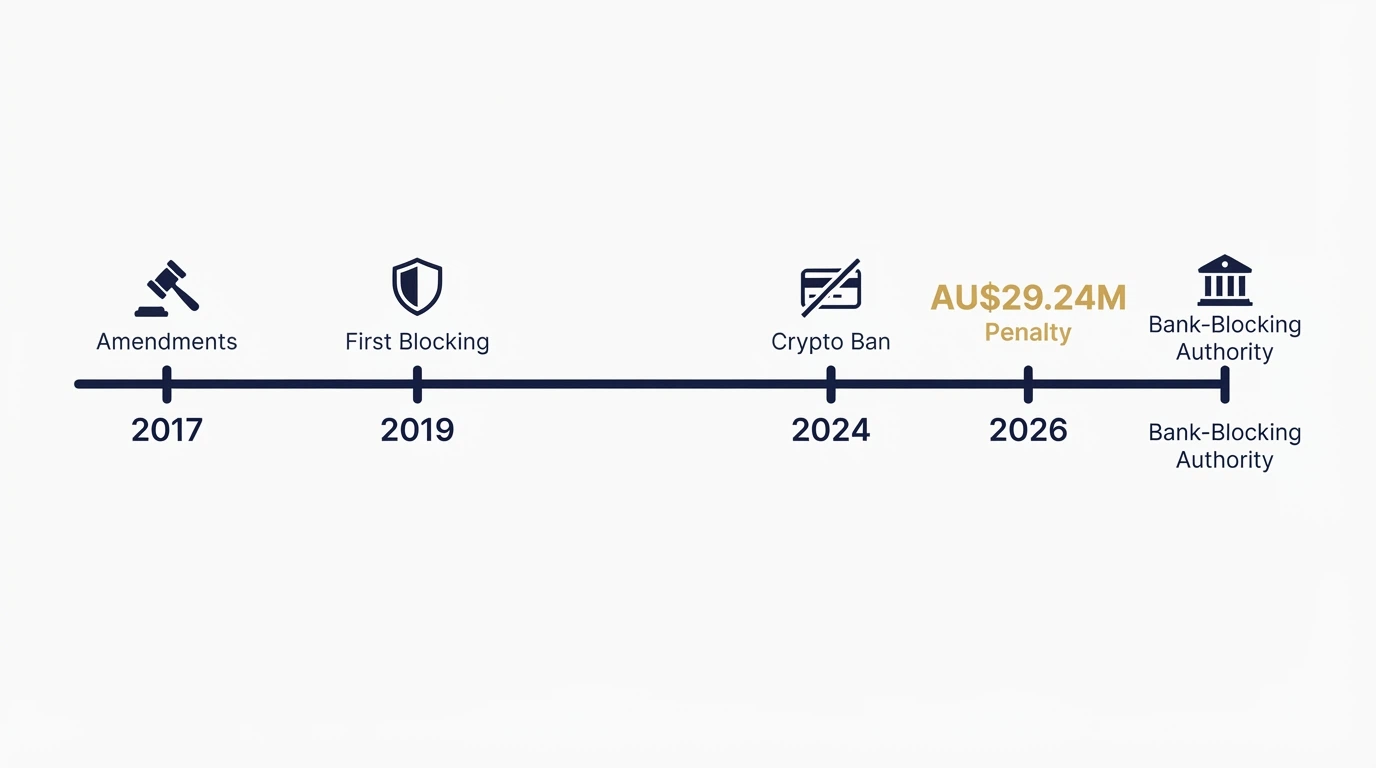
The penalty record has grown alongside the blocking record. In ACMA v Jones (No 7) FCA 860, the Federal Court ordered pecuniary penalties totalling A$24.24 million against operators and a promoter of prohibited online poker services marketed to Australians. Combined with the earlier A$5 million penalty against Diverse Link Pty Ltd in March 2023, the ACMA v Jones litigation has produced A$29.24 million in total penalties. The cases are public, the orders are public, and the precedent is that the Australian courts will impose eight-figure penalties on offshore operators who target Australian customers.
The 2026 reform extends that reach. The Interactive Gambling Amendment (Gambling Reform) Bill 2026 passed Parliament on 19 August 2026; its measures commence 1 January 2027. From that date, banks and payment providers gain express statutory authority to block transactions to illegal gambling operators — a measure that closes a long-standing gap between the IGA’s prohibition and the payment system’s willingness to enforce it. Direct marketing of inducements will also be banned for 14 days after a customer signs up, for 3 months after a person deregisters from BetStop, and indefinitely for customers identified as at risk of gambling-related harm. Online keno “pocket pokies” and foreign-matched lotteries will be added to the prohibition.
ACMA is still blocking sites. The courts are still issuing penalties. The Parliament is still extending the prohibition. The offshore market Australian players use is operating in the path of all three.
What Australian Players Give Up at an Unlicensed Casino
Three protections are missing at every offshore casino on this page, and the missing pieces are not minor.
The first is BetStop coverage. The National Self-Exclusion Register, launched on 21 August 2023, lets an Australian register once and be excluded from every Australian-licensed online and phone wagering service. As of 31 March 2026, 59,830 people had registered and 37,247 had active exclusions. The register is the strongest single self-exclusion tool Australia has built. It binds only Australian-licensed services. An offshore casino is not connected to BetStop and will keep accepting deposits and bets from a self-excluded person. A player who has registered with BetStop and then plays at an offshore casino is playing in exactly the space the register cannot reach. The offshore gap is the most concrete harm of the trade-off.
The second is Australian consumer protection. There is no Australian complaints body with jurisdiction over an offshore Curaçao-licensed casino. ACMA cannot order a refund. The Australian Financial Complaints Authority cannot mediate a dispute. The casino’s own Curaçao dispute process is the only path, and it is a private process governed by Curaçao law. A player whose withdrawal is refused, whose bonus is voided or whose account is closed has no domestic recourse.
The third is the chargeback path. Crypto transactions are irreversible. There is no Visa dispute, no bank recall, no payment-system recovery. A player who deposits USDT at an offshore casino, plays, requests a withdrawal and is refused has lost the funds as surely as if they had been handed over in cash. The same irreversibility that makes the rail fast makes it final.
The site can also be blocked at any time. ACMA has blocked 1,788 sites since November 2019; the operator the player has an account with today can carry an ACMA-blocked notice tomorrow. A balance sitting in a blocked account is a balance the player cannot access from an Australian IP, through the Australian internet. The offshore casino is still running; the player’s route to it is closed.
Playing Bitcoin Pokies Without Losing Control
Crypto pokies carry the structural risks of all gambling, plus three specific to the rail: irreversibility, no BetStop coverage, and 24/7 access with no bank-side friction to slow impulse deposits.
The Australian prevalence data puts the scale of gambling harm in perspective. Between March 2025 and March 2026, Australians lost A$36.0 billion to gambling — over A$104 billion since the Murphy Review. Approximately 3.29 million Australians are affected annually by their own or another person’s gambling. An estimated 1,970,000 Australian adults are classified as at-risk or problem gamblers. About 2.1% of Australian adults — roughly 430,000 people — experience problem gambling. The annual health loss associated with gambling-related harm in Australian adults is estimated at over 400,000 Years Lived with Disability (YLDs).
These figures predate the offshore market entirely. They describe gambling in licensed Australian venues and on licensed Australian wagering services. The offshore crypto-pokie layer sits on top of that baseline, with the protections the licensed layer provides stripped away.
BetStop and Why It Cannot Protect You at Offshore Casinos
BetStop is the right tool for the right problem. One registration excludes a person from every Australian-licensed online and phone wagering service. The 59,830 registrations to end of Q3 FY 2025–2026 and the 37,247 active exclusions as of 31 March 2026 show that Australians use it in volume.
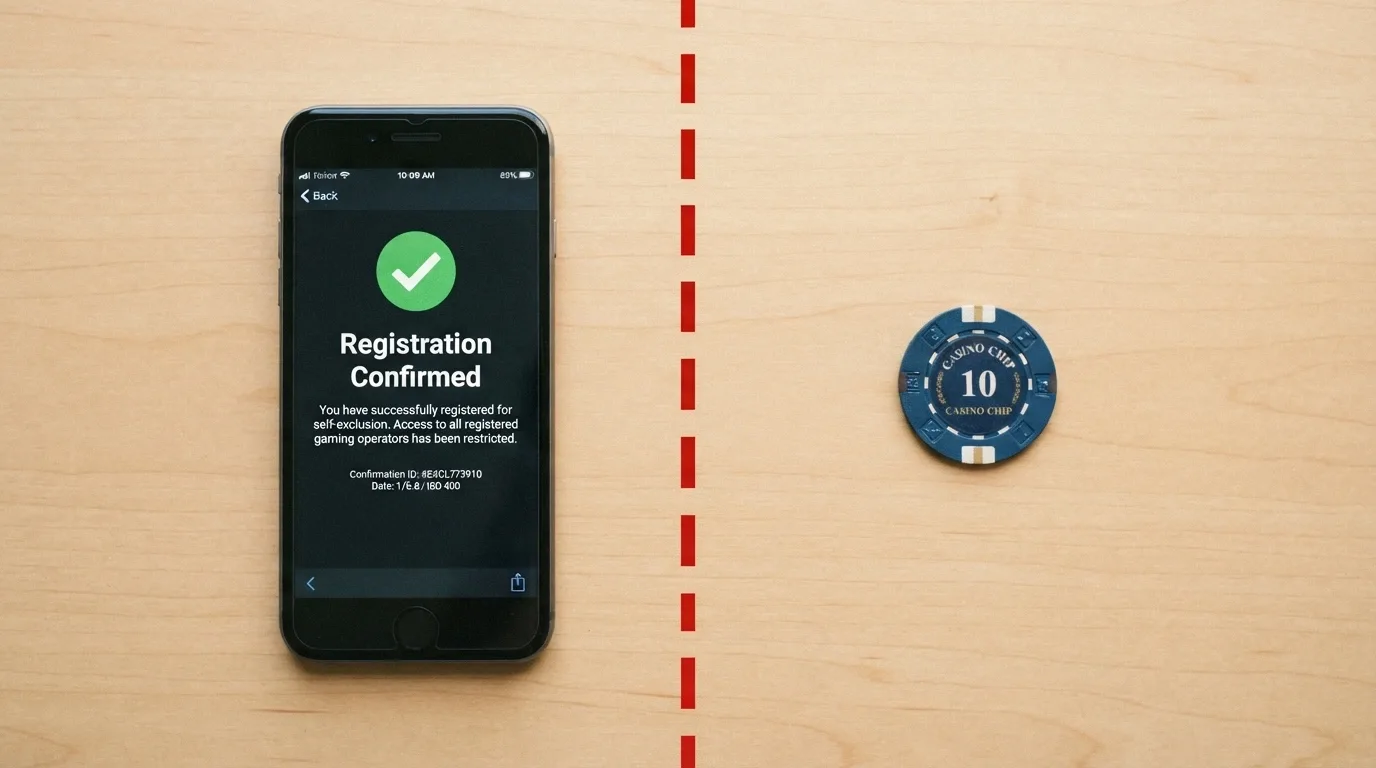
The problem is the offshore gap. BetStop binds Australian-licensed wagering services only. An offshore casino is not connected to the register and will keep accepting a self-excluded person’s deposits and bets. The player who has done the right thing and registered with BetStop can keep playing at any of the ten operators in the comparison above — RocketPlay, WinSpirit, SkyCrown, Stake, Bizzo, Royal Reels, FairGO, Rainbet, Scream Casino and Rocket Casino — without those operators knowing or caring that the player has self-excluded elsewhere.
This is the most concrete harm of the offshore trade-off. The strongest single self-exclusion tool in Australia cannot reach the product this page is about. A player who needs BetStop and chooses an offshore casino has chosen the one venue where BetStop cannot help them.
The 2026 reform strengthens BetStop’s operation — better enforcement, tighter deregistration controls, longer cooling-off periods — but the reform binds the same set of operators. Offshore casinos remain outside the register.
Deposit Limits, Session Timers and Other Tools That Work
The tools that work at offshore casinos are the ones the casino itself offers, plus the discipline the player imposes on the on-ramp.
Casino-native deposit and loss limits are the most consistent feature. Most Curaçao-licensed operators allow the player to set daily, weekly or monthly deposit caps from the account dashboard. The cap is casino-side and self-imposed, not regulator-imposed; the player can usually raise it with a request, sometimes instantly. The cap is also real — exceeding it requires a deliberate action, not a missed prompt.
Session timers and reality checks are standard. A pop-up at 30, 60 or 90 minutes reminding the player how long they have been playing is the second line of defence. None of the operators in this comparison is required to offer these tools by an Australian regulator; most offer them because the underlying software provider builds them in as configurable features.
The irreversibility of crypto is itself a structural limit. There is no chargeback to undo a regretted deposit; the funds are gone from the player’s exchange wallet the moment the on-chain transfer confirms. A player who treats the deposit as a one-way door — decide the amount, send it, walk away once it is spent — imposes a discipline that the fiat rail does not. The discipline is not a tool the casino provides. It is a choice the player makes.
The 2026 reform adds inducement-marketing restrictions from 1 January 2027: direct marketing of inducements prohibited for 14 days after a customer signs up, for 3 months after BetStop deregistration, and indefinitely for customers identified as at-risk. The reform binds licensed operators; offshore casinos are not subject to it, and an offshore casino’s “welcome bonus” email is unaffected.
Recognising Problem Gambling Before It Starts
The early-warning signs sit inside the player’s own behaviour, not inside the casino’s reporting. Australian prevalence data gives the baseline — 1,970,000 at-risk or problem-gambling adults, 430,000 with problem gambling specifically — and the behavioural red flags are well-mapped.
The first is escalation. A player who started at A$1 spins and is now at A$10 spins, or who started with weekly deposits and is now depositing daily, is moving in a direction the data associates with harm. The second is chasing losses. The player who increases stake size after a losing session to “win it back” is the player the data flags most consistently. The third is time. Sessions that stretch past the player’s own intended limit, deposits that happen outside the player’s own intended schedule, late-night play that displaces sleep — these are the markers.
Crypto’s specific feature is that it can mask escalation. A fiat player who reaches a credit-card limit or a bank-balance floor hits a hard stop. A crypto player whose exchange balance is in USDT and whose casino balance is also in USDT has a fluid pool with no built-in friction. The speed of the rail makes impulse deposits easy to execute and easy to forget. A player who notices their own escalation is the player who can act on it; a player who does not is the player for whom the offshore rail is doing exactly what its structure encourages.
Where to Get Help in Australia Right Now
Three free, confidential services are available to any Australian affected by their own or someone else’s gambling.

The National Gambling Helpline on 1800 858 858 is free, confidential and staffed 24/7. It is the single most important number on this page. The same service is available online through Gambling Help Online, with chat and counselling 24/7. BetStop registration is at the federal government’s National Self-Exclusion Register — one registration excludes a person from every Australian-licensed online and phone wagering service.
State and territory services supplement the national line. Each state runs its own face-to-face counselling, financial counselling and peer-support programs, accessible through the national helpline or the Gambling Help Online directory. The services are free, they are confidential, and they exist for the player who needs them before the next deposit, not after the next loss.
How We Chose and Ranked These Bitcoin Pokies Sites
The ranking is built on five inputs: operator websites and bonus terms, AU and international casino databases, ACMA public enforcement records, player-forum data on withdrawal experiences, and a licence-status check against the ACMA prohibited-services record and the Curaçao Gaming Control Board register.
The criteria that ordered the comparison are licence transparency, bonus terms quality, game library depth, withdrawal speed where tested, and AU-specific payment rail availability. Licence transparency puts Bizzo’s dual Curaçao + Kahnawake position ahead of single-jurisdiction entries; Royal Reels’ Curaçao licence is clearer than the licence-light entries for FairGO, Rainbet, Scream Casino and Rocket Casino. Bonus terms quality is what separates the documented six from the thin four — wagering multiple, max bet during playthrough, bonus validity window and max cashout caps are the figures the player needs before claiming, and the documented six publish them in a way the thin four do not. Game library depth is RocketPlay’s and SkyCrown’s strongest argument; Royal Reels’ 5,500-game library and SkyCrown’s 7,000+ library are well ahead of the segment norm. Withdrawal speed is Royal Reels’ tested PayID and crypto figures; comparable data is not on file for the other operators. AU-specific payment rail availability is Bizzo’s PayID support and Royal Reels’ tested PayID withdrawals.
The ranking does not measure fairness of the underlying games (all Curaçao-licensed operators in the comparison use the same certified RNG providers) and does not measure the player’s individual experience. It is a comparison of publicly disclosed terms, not a recommendation. A player choosing among these ten operators should read the current terms page before depositing; the comparison above is a starting point, not a substitute.
Your Next Move: Deciding Whether to Play Bitcoin Pokies From Australia
The decision this page has walked around is whether to play at all. The trade-off is real and it has not been dressed up.
On one side: access to online pokies, which the Australian licensing framework does not provide; payout speed measured in minutes rather than days; bonus volume no licensed operator could lawfully match. On the other side: no Australian consumer protection, no BetStop coverage, no chargeback path, an offshore site that ACMA can block at any time, and an expected bonus cost that exceeds the bonus face value at representative RTPs.
The expected-loss calculation in the section above is the cleanest way to see what the offer is worth. A A$300 bonus at 40x wagering on a representative slot costs an expected A$469 to clear. That is the price of the bonus, paid in expected losses. The player who clears the wagering requirement and walks away with the bonus cash has paid for it; the player who clears it and wins on top has had a good run; the player who does not clear it has paid the partial price and lost the bonus. The arithmetic does not depend on which of the ten operators the player chose.
The legal picture is unambiguous. The IGA prohibits the provision of online pokies to Australians; the 2024 amendments prohibit the payment method the offshore operators rely on. ACMA is blocking sites, the courts are issuing eight-figure penalties, and the 2026 reform will give banks transaction-blocking authority from 1 January 2027. The market is not heading toward legalisation; it is heading toward tighter enforcement on the same illegal supply.
The responsible-gambling tools are real but partial. BetStop does not reach offshore casinos. Casino-native deposit limits work as long as the player sets them and does not raise them. Crypto’s irreversibility is a structural limit on chasing losses, not on losses themselves. The National Gambling Helpline on 1800 858 858 and Gambling Help Online are free, confidential and staffed 24/7 for any Australian who needs them.
The decision is the player’s. This page has laid out the operators, the maths, the law and the protections. What the player does with that picture is not the page’s call.
Frequently Asked Questions
Can I play crypto pokies on my mobile phone in Australia?
Yes. The mobile experience at every operator in this comparison is browser-based, with no app download required. The same offshore licence, the same Curaçao regulator, the same prohibition under Australian law apply whether the player is on a desktop or a phone; the device does not change the legal status of the product.
How fast are bitcoin withdrawals from online pokies sites?
Crypto withdrawals at tested operators settle in under an hour. USDT on TRC-20 confirms in under a minute on-chain, with sub-50-cent fees. The exchange-to-bank leg adds routine processing time, taking the full round trip from a few hours to a couple of days.
Is my money safe at an offshore bitcoin casino from Australia?
There is no Australian consumer-protection framework covering an offshore Curaçao-licensed casino. Disputes are governed by the operator’s Curaçao licence terms. ACMA cannot order a refund, and crypto transactions are irreversible. ACMA can also block the operator’s domain at the Australian ISP level at any time, potentially with a player balance still on it.
What cryptocurrencies can I use to play pokies online?
Bitcoin (BTC), Ethereum (ETH), Litecoin (LTC), Tether (USDT) and USD Coin (USDC) are the standard. Some operators accept additional assets — Dogecoin, Bitcoin Cash, XRP, BNB. USDT on TRC-20 is the typical Australian-player recommendation because of sub-50-cent fees, under-60-second confirmations and stable value during the transfer window.
Do bitcoin pokies have better RTP than regular online pokies?
No. The return-to-player is set by the slot provider and does not change with the deposit currency. A 96.51% pokie returns 96.51% whether the player funds the account in AUD or USDT. The popular bitcoin pokies listed in this page’s title table carry the same RTPs as those same titles at fiat-only offshore sites.
What happens if an offshore bitcoin casino blocks Australian players?
ACMA has blocked 1,788 illegal gambling and affiliate websites at the Australian ISP level since November 2019. If the operator the player uses is added to the list, the player cannot reach the site from an Australian IP. Recourse is through the operator’s own Curaçao dispute process, not any Australian body.
Written by the editors at RTP Pokies Australia.